
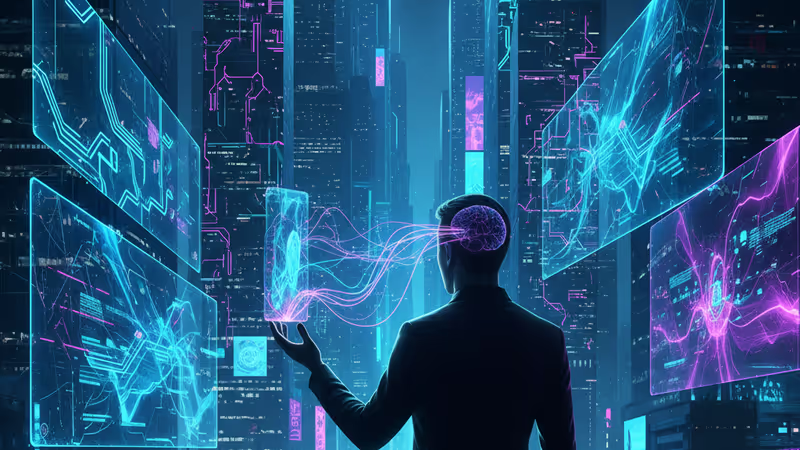
Is Your Phone Literally Your Brain? Why a Smartphone Extended Mind 2026 is Permanent
In 2026, the smartphone extended mind hypothesis reveals why ditching your device feels like brain damage. Explore the cognitive and social costs of going dumb.
The panic you feel when you misplace your phone isn't just about losing an expensive gadget. It's visceral and existential, as if a piece of your physical body is missing. In 2026, we've moved beyond mere connectivity into a state of cognitive enmeshment. While the 'dumbphone' movement promises digital freedom, the reality of ditching your device is far more complex than just deleting apps.
Smartphone Extended Mind 2026: Why We Can't Let Go
In 1998, Andy Clark and David Chalmers introduced the extended mind hypothesis. They argued that external tools don't just help the brain; they become part of it. Whether you're using Google Maps to navigate or a Notes app for your grocery list, you're functioning as a single cognitive system. Clark suggests that interfering with this system is akin to causing actual brain damage.
The Trauma of the Digital Breakup

Psychologist Daniel Wegner’s theory of transactive memory explains how long-term partners share a memory pool. For the modern generation, that partner is the iPhone. When data isn't backed up, memories of road trips or social milestones can literally vanish. Without the digital trigger, the biological brain struggles to retrieve the specific images that constitute our past.
The Invisible Disability of a Smartphoneless Life
In the US, 98% of adults aged 18 to 29 own a smartphone. In a society built for the 'mild cyborg,' opting out creates a disempowered class. From two-factor authentication for work to apps required for basic laundry, the world is no longer designed for the un-enmeshed.
- Basic communication becomes a chore, sometimes taking 9 minutes to type a single message.
- Spontaneity is lost as plans move to real-time group chats.
- A sudden drop in 'behavioral competence' as the external brain is removed.
Authors
Related Articles
YouTube introduces industry-first parental controls for Shorts, allowing screen time limits and 'zero-scrolling' options. New AI age verification and educational content focus included.
NY Governor Kathy Hochul signs a bill requiring social media warning labels for younger users. Platforms must warn about infinite scroll and autoplay.
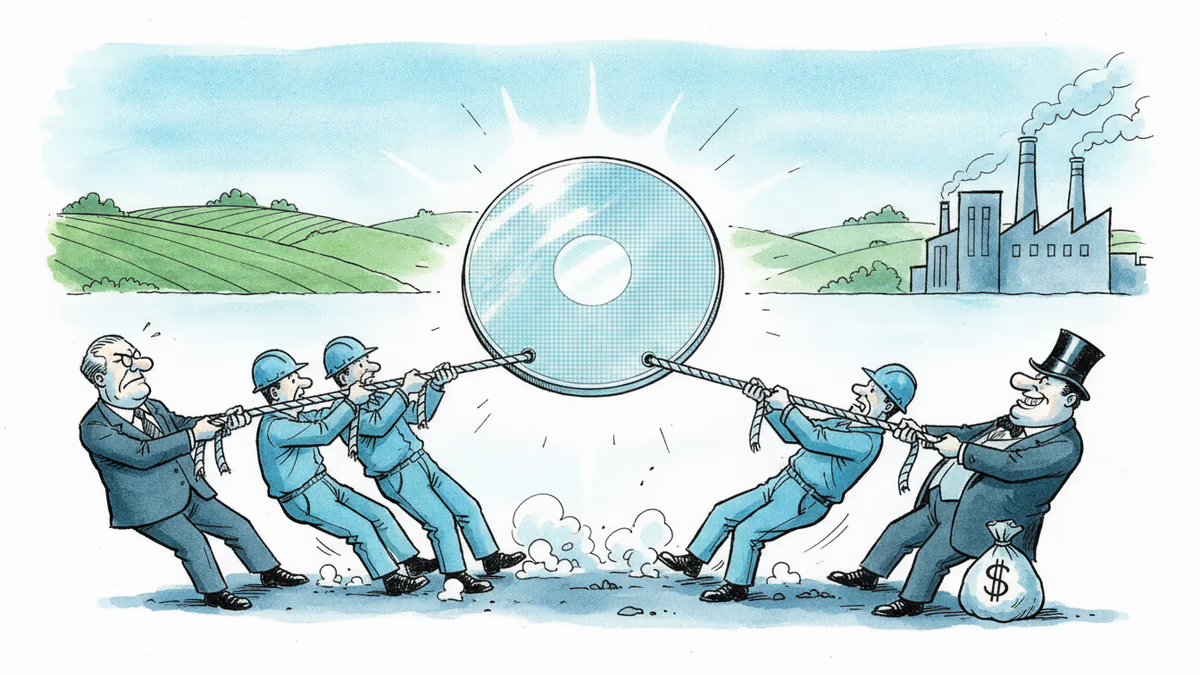
Samsung Electronics' union branch revealed that 84% of survey respondents oppose the government's roughly $290 billion (₩400 trillion) semiconductor megaproject in Gwangju. Government, management, the union and shareholders are all reading the same national project in sharply different ways.
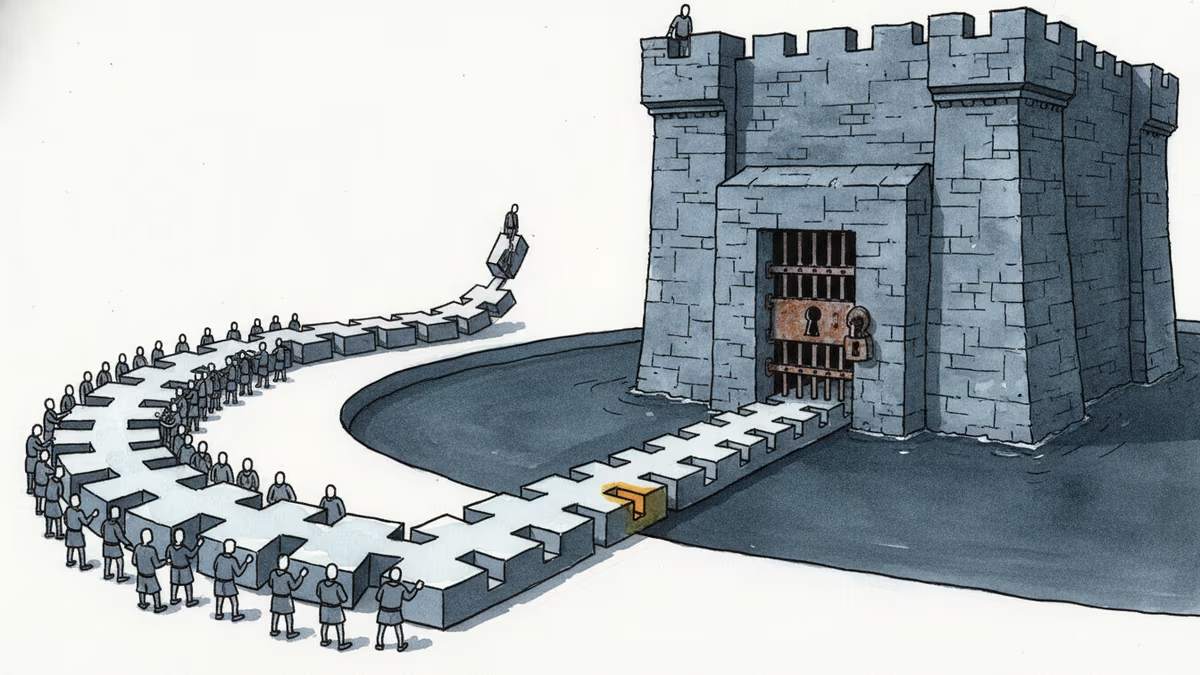
Nvidia shipped roughly a billion RISC-V cores in 2024, then announced it would run CUDA on the open standard. We break down how royalty-free instruction sets and open software stacks are trying to route around CUDA's lock-in. Part 2 of the Semiconductor Sovereignty series.
YouTube introduces industry-first parental controls for Shorts, allowing screen time limits and 'zero-scrolling' options. New AI age verification and educational content focus included.
NY Governor Kathy Hochul signs a bill requiring social media warning labels for younger users. Platforms must warn about infinite scroll and autoplay.
Samsung Electronics' union branch revealed that 84% of survey respondents oppose the government's roughly $290 billion (₩400 trillion) semiconductor megaproject in Gwangju. Government, management, the union and shareholders are all reading the same national project in sharply different ways.
Nvidia shipped roughly a billion RISC-V cores in 2024, then announced it would run CUDA on the open standard. We break down how royalty-free instruction sets and open software stacks are trying to route around CUDA's lock-in. Part 2 of the Semiconductor Sovereignty series.
Thoughts
Share your thoughts on this article
Sign in to join the conversation