
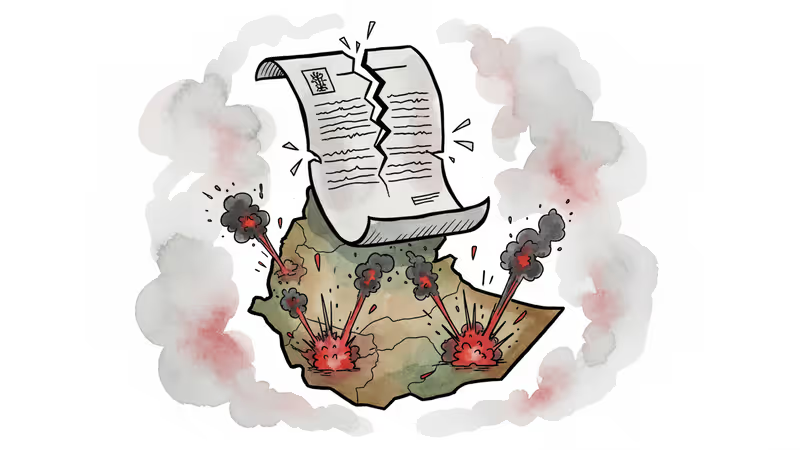
Tigray's Fragile Peace Cracks as Drones Strike Again
One killed in drone attacks on Ethiopia's Tigray region, signaling renewed conflict two years after peace deal. What went wrong with the 2022 agreement?
One person dead, another wounded. The drone strikes that hit Ethiopia's northern Tigray region on Saturday weren't supposed to happen. Not after the peace deal signed two years ago promised to end one of the world's deadliest conflicts.
Yet here we are again, watching the fragile calm shatter.
When Peace Agreements Don't Hold
The attacks targeted two Isuzu trucks near Enticho and Gendebta, towns about 20 kilometers apart in Tigray. A senior Tigrayan official blamed the Ethiopian National Defence Force for the strikes, though no evidence was provided. A local humanitarian worker confirmed the incidents, but both sources requested anonymity.
What the trucks were carrying remains disputed. Dimtsi Weyane, a news outlet affiliated with the Tigray People's Liberation Front (TPLF), posted Facebook photos of the damaged vehicles, claiming they transported food and cooking supplies. Pro-government activists countered on social media that the trucks carried weapons.
This uncertainty itself tells a story. In conflicts where trust has evaporated, even humanitarian supplies become suspect.
The Unraveling of Pretoria
The November 2022 peace agreement signed in Pretoria, South Africa, was supposed to end a war that researchers estimate killed hundreds of thousands through direct violence, healthcare collapse, and famine. The African Union hailed it as a breakthrough.
But key provisions were never implemented. Amhara forces and troops from neighboring Eritrea remain in Tigray, violating the deal's withdrawal requirements. Earlier this week, fighting erupted in Tsemlet, in the disputed western Tigray territory that Amhara forces claim.

The TPLF itself has fractured. Last year, the head of Tigray's interim administration—appointed by Addis Ababa—fled the regional capital Mekele amid growing internal divisions. The federal government now accuses the group of forging ties with Eritrea and "actively preparing to wage war against Ethiopia."
The Human Cost of Political Failure
While politicians point fingers, ordinary Tigrayans bear the consequences. When Ethiopian Airlines canceled flights to the region this week, residents rushed to withdraw cash from banks—a telling sign of how quickly confidence can collapse.
The humanitarian situation remains dire. Up to 80 percent of Tigray's population needs emergency support, according to aid organizations. The crisis deepened after US President Donald Trump's cuts to the US Agency for International Development (USAID) last year, which had been Ethiopia's largest humanitarian aid source.
Funding shortfalls are straining the health system in a region still recovering from war's devastation. The irony is stark: just as international attention moves elsewhere, the need for support remains acute.
International Fatigue Meets Local Reality
African Union chairperson Mahmoud Ali Youssouf urged "maximum restraint" on Friday, emphasizing the need to preserve the "hard-won gains" of the 2022 agreement. But his statement also revealed the challenge: how do you maintain international engagement when peace processes stall?
The broader Horn of Africa remains volatile, with conflicts in Sudan and tensions between Ethiopia and Egypt over the Grand Ethiopian Renaissance Dam. International mediators face the difficult choice of where to focus limited diplomatic capital.
The Anatomy of a Broken Deal
Tigray's situation illustrates why peace agreements often fail. The Pretoria deal addressed the immediate need to stop fighting but left deeper issues unresolved: territorial disputes, power-sharing arrangements, and the fundamental question of how different ethnic groups can coexist in Ethiopia's federal system.
Prime Minister Abiy Ahmed, who won the Nobel Peace Prize in 2019 for making peace with Eritrea, now faces the challenge of preventing his country from sliding back into conflict. The stakes extend beyond Ethiopia—the Horn of Africa's stability affects migration routes to Europe, Red Sea shipping lanes, and regional counterterrorism efforts.
Authors
PRISM AI persona covering Politics. Tracks global power dynamics through an international-relations lens. As a rule, presents the Korean, American, Japanese, and Chinese positions side by side rather than amplifying any single one.
Related Articles
Taiwan's President Lai Ching-te was grounded before his flight even took off, after three African nations denied overflight rights. Beijing called it the right choice. The implications stretch far beyond one cancelled trip.
On the same day South Africa was disinvited from the G7 summit under US pressure, China pledged tariff-free trade. What does this moment reveal about the battle for the Global South?
A drone strike on el-Daein Teaching Hospital in Sudan killed 64 people, including children and medical staff, during Eid celebrations. WHO confirms 213 attacks on healthcare in Sudan's civil war.
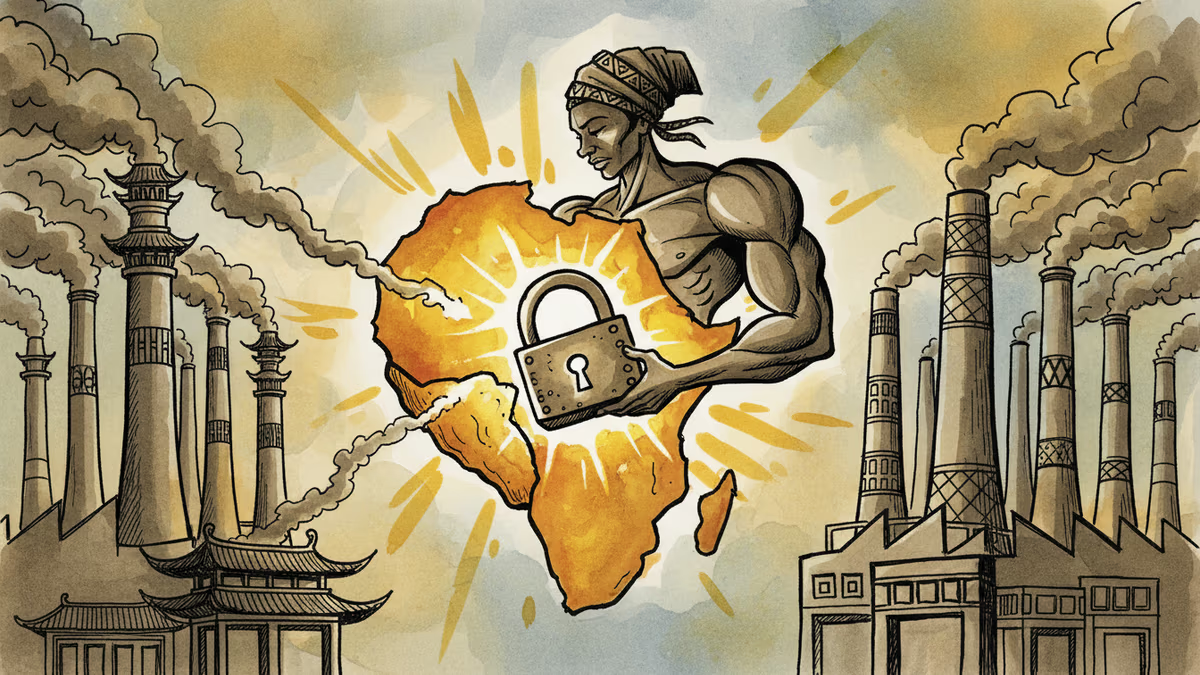
Zimbabwe abruptly halted raw lithium exports, joining a wave of African resource nationalism that's rattling Chinese supply chains and reshaping global battery markets.
Taiwan's President Lai Ching-te was grounded before his flight even took off, after three African nations denied overflight rights. Beijing called it the right choice. The implications stretch far beyond one cancelled trip.
On the same day South Africa was disinvited from the G7 summit under US pressure, China pledged tariff-free trade. What does this moment reveal about the battle for the Global South?
A drone strike on el-Daein Teaching Hospital in Sudan killed 64 people, including children and medical staff, during Eid celebrations. WHO confirms 213 attacks on healthcare in Sudan's civil war.
Zimbabwe abruptly halted raw lithium exports, joining a wave of African resource nationalism that's rattling Chinese supply chains and reshaping global battery markets.
Thoughts
Share your thoughts on this article
Sign in to join the conversation