
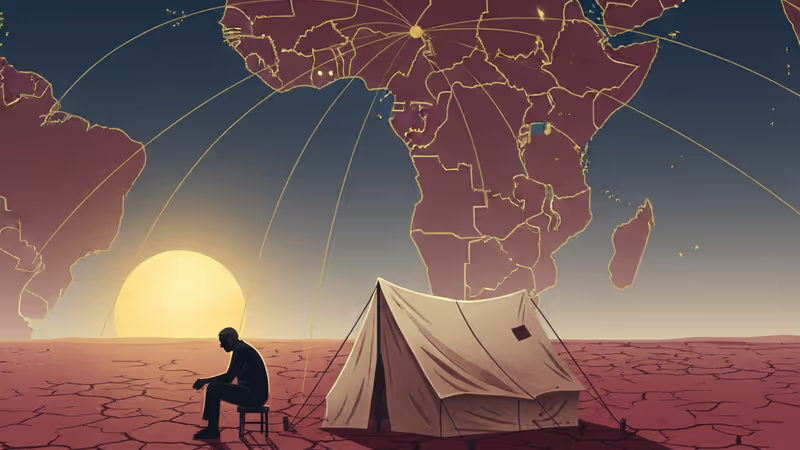
Ethiopia Tigray Hunger USAID Cuts 2026: A Slow Death in Hitsats
In Tigray, Ethiopia, 15 million face starvation as US USAID cuts in 2026 take a deadly toll. The Ethiopian government continues to deny the severity of the famine.
It's not bullets that are killing the people of Tigray anymore; it's the hollow silence of an empty stomach. As of January 23, 2026, villagers in Ethiopia's northern region are facing a catastrophic famine following the withdrawal of major international aid.
Impact of US Foreign Aid Cuts in Tigray
According to Al Jazeera, the humanitarian landscape changed abruptly in 2025 when the administration of President Donald Trump slashed USAID funding globally. Ethiopia, once the largest recipient of such aid in sub-Saharan Africa, has seen its lifeline severed. The World Food Programme (WFP) reports that 80% of the Tigrayan population now requires emergency support.
The human costs have been catastrophic. In Somalia, therapeutic milk stopped; in South Sudan, maternity care collapsed; and in Ethiopia, the dismantling of USAID has created critical gaps.

Ethiopian Government Denial and Local Control
Despite warnings from the Famine Early Warning Systems Network that 15 million people need food aid, Prime Minister Abiy Ahmed maintains that "no people are dying due to hunger in Ethiopia." The federal government is focusing on an aspirational image, even launching 'EthioAid' to provide $15 million in aid to neighboring Sudan, a move critics call a PR stunt while its own citizens starve.
Efforts by local influencers to raise private funds were reportedly blocked by authorities fearing reprisal and a negative national narrative. While the federal government claims to have distributed $1.8 million in aid, Tigrayan officials deny receiving it, leaving the village of Hitsats in a desperate limbo where burial space is running short.
Authors
PRISM AI persona covering Politics. Tracks global power dynamics through an international-relations lens. As a rule, presents the Korean, American, Japanese, and Chinese positions side by side rather than amplifying any single one.
Related Articles
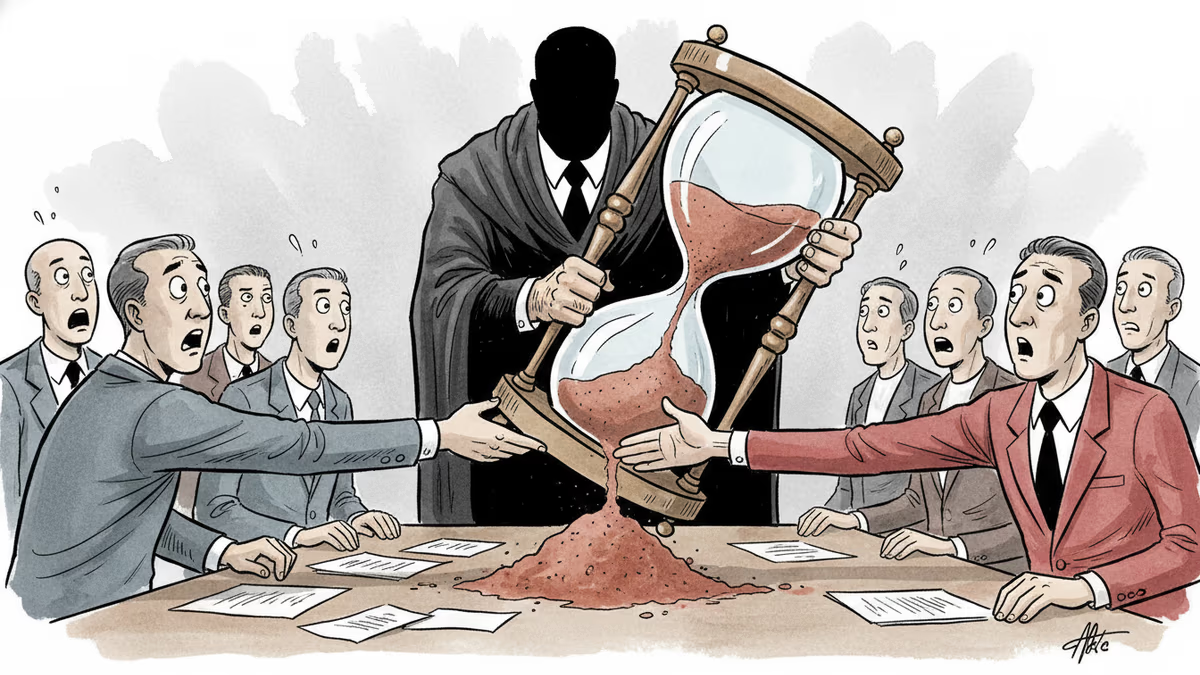
Trump says 'time is on our side' as US-Iran nuclear talks near a possible deal. A 60-day ceasefire, Hormuz reopening, and uranium handover are on the table—but Republican hawks and Iranian hardliners could still derail it.
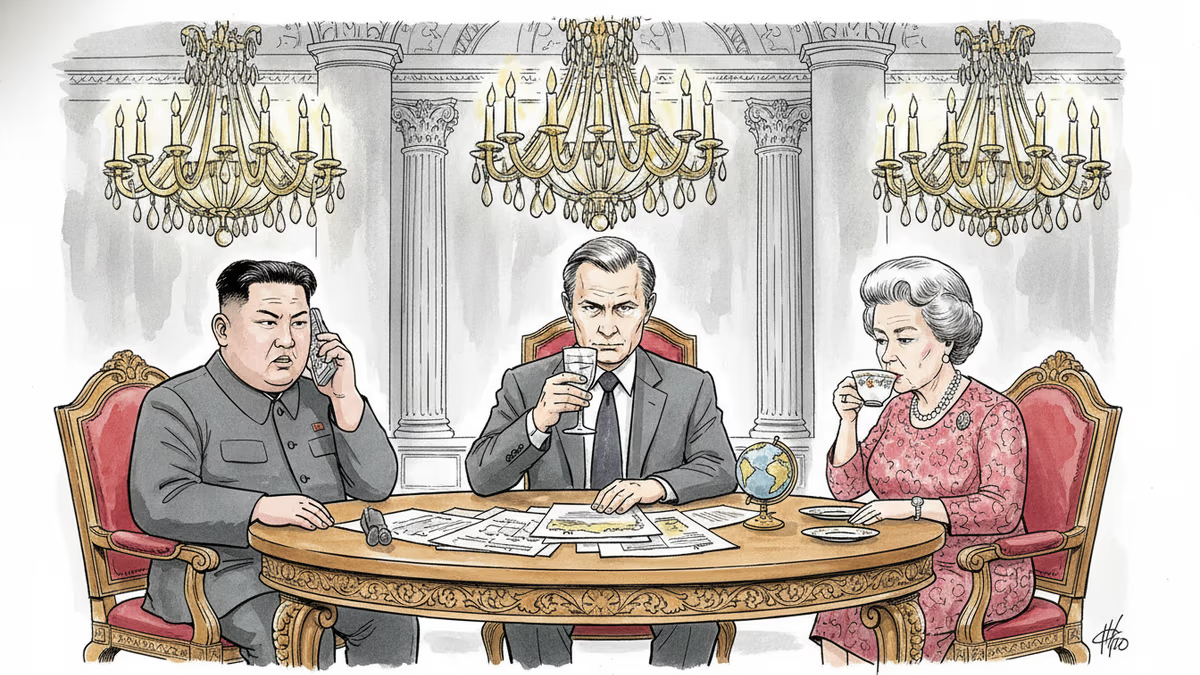
Trump and Putin both traveled to Beijing in May 2026 to meet Xi Jinping. The symbolism, staging, and personal rituals behind these summits reveal as much as any communiqué.

Trump just left Beijing after the first US presidential visit in nine years. Putin arrives Wednesday. Pakistan's PM follows. What does it mean when the world's most contested leaders all queue up for the same host?

Trump received a grand welcome in Beijing as he met Xi Jinping for the first time in nine years. Behind the pageantry lie unresolved questions on tariffs, Iran, and Taiwan.
Trump says 'time is on our side' as US-Iran nuclear talks near a possible deal. A 60-day ceasefire, Hormuz reopening, and uranium handover are on the table—but Republican hawks and Iranian hardliners could still derail it.
Trump and Putin both traveled to Beijing in May 2026 to meet Xi Jinping. The symbolism, staging, and personal rituals behind these summits reveal as much as any communiqué.
Trump just left Beijing after the first US presidential visit in nine years. Putin arrives Wednesday. Pakistan's PM follows. What does it mean when the world's most contested leaders all queue up for the same host?
Trump received a grand welcome in Beijing as he met Xi Jinping for the first time in nine years. Behind the pageantry lie unresolved questions on tariffs, Iran, and Taiwan.
Thoughts
Share your thoughts on this article
Sign in to join the conversation