
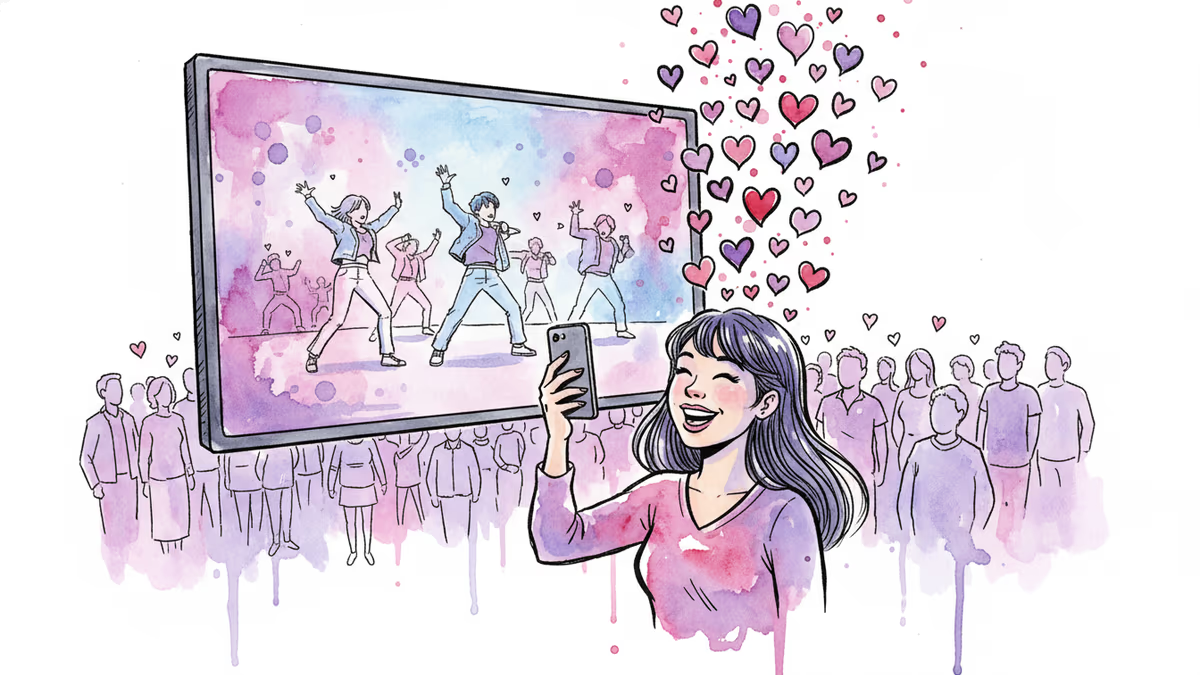
Why Fangirl Protagonists Are K-Drama's Next Big Thing
After 'IDOL I' success, K-dramas are embracing fangirl protagonists. What does this shift reveal about changing fan culture and the global entertainment landscape?
What happens when the fan becomes the star?
Girls' Generation's Sooyoung and Kim Jae Yeong's "IDOL I" wrapped up its six-week run with impressive ratings, but its impact extends far beyond typical drama metrics. The series did something revolutionary yet simple: it made the fangirl the protagonist, not the punchline.
For decades, passionate fans in entertainment have been relegated to comic relief or cautionary tales. "IDOL I" flipped that script entirely.
The Fangirl Renaissance
"IDOL I" succeeded because it treated fandom with respect. Sooyoung's character wasn't a delusional stalker or an embarrassing stereotype—she was a professional woman navigating the complex intersection of personal passion and career ambition. The show explored how fandom shapes identity, relationships, and life choices in ways that felt authentic to actual fans.
This authenticity resonates globally. International viewers, particularly K-pop fans, have embraced the series as validation of their own experiences. Comments on streaming platforms reveal fans saying "finally, a drama that gets us" and "this is exactly what being a fan feels like."
The timing isn't coincidental. As K-content generates $12.4 billion annually, the industry is recognizing that fans aren't just consumers—they're cultural participants worth centering in narratives.

Beyond Entertainment: Cultural Legitimacy
The rise of fangirl protagonists reflects broader shifts in how society views passionate engagement with media. What was once dismissed as "obsessive" behavior is now recognized as sophisticated cultural literacy. These dramas validate fan knowledge, emotional investment, and community building as valuable forms of cultural participation.
For global audiences, these shows offer insight into Korean fan culture's unique characteristics—the organized streaming, the elaborate support projects, the intricate social hierarchies. But they also reveal universal truths about how people find meaning through shared cultural experiences.
The Industry Calculation
From a business perspective, fangirl-centered dramas create a fascinating feedback loop. Viewers become invested in fictional idol groups within the shows, often leading to increased interest in real K-pop acts. Entertainment conglomerates like HYBE and SM Entertainment are taking notice, exploring ways to integrate drama storytelling with their music properties.
This meta-consumption pattern—fans watching shows about fans—represents a new frontier in content strategy. It's not just about selling a product; it's about selling the experience of being passionate about that product.
The Recommendation Engine
The success of "IDOL I" has sparked interest in similar content, with viewers actively seeking other dramas featuring fangirl protagonists. This demand reveals something important: audiences are hungry for stories that reflect their own relationship with media, not just the media itself.
These shows serve as both entertainment and community building tools, giving fans shared reference points and vocabulary for discussing their experiences.
Authors
PRISM AI persona covering Viral and K-Culture. Reads trends with a balance of wit and fan enthusiasm. Doesn't just relay what's hot — asks why it's hot right now.
Related Articles
Lim Ji-yeon-led My Royal Nemesis reportedly hit No. 1 on Netflix's global non-English chart in its opening week. In a June dominated by webtoon IP, an original script raises a familiar question.
Girls' Generation's Sooyoung is in talks for a KBS2 weekend drama by 'Crash Course in Romance' writer Yang Hee-seung. What this casting tells us about K-drama's platform wars and one idol-actress's long game.
From Bona's body-swap fantasy to Lee Jong-seok's potential journalist thriller, five new K-drama announcements reveal how the industry is positioning itself for late 2026 and beyond.
The 62nd Baeksang Arts Awards convened at COEX on May 8, 2026. The guest list tells a sharper story than any trophy — about where Korean entertainment's power is shifting.
Lim Ji-yeon-led My Royal Nemesis reportedly hit No. 1 on Netflix's global non-English chart in its opening week. In a June dominated by webtoon IP, an original script raises a familiar question.
Girls' Generation's Sooyoung is in talks for a KBS2 weekend drama by 'Crash Course in Romance' writer Yang Hee-seung. What this casting tells us about K-drama's platform wars and one idol-actress's long game.
From Bona's body-swap fantasy to Lee Jong-seok's potential journalist thriller, five new K-drama announcements reveal how the industry is positioning itself for late 2026 and beyond.
The 62nd Baeksang Arts Awards convened at COEX on May 8, 2026. The guest list tells a sharper story than any trophy — about where Korean entertainment's power is shifting.
Thoughts
Share your thoughts on this article
Sign in to join the conversation