
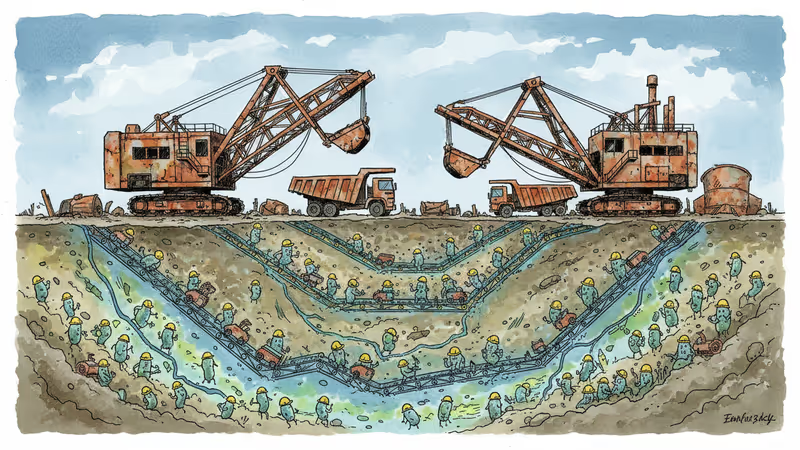
Microbes Could Mine the Metals That Power Our Digital Future
As demand for nickel, copper, and rare earth elements explodes, biotechnology offers a cleaner path to extract the metals essential for EVs, data centers, and renewable energy.
In Michigan's Upper Peninsula, America's only active nickel mine is running out of time. Eagle Mine sits in a pine forest where nickel concentrations are dropping fast—just as automakers desperately need the metal for electric vehicle batteries.
This timing couldn't be worse. Demand for nickel, copper, and rare earth elements is skyrocketing as data centers multiply, EVs flood the market, and renewable energy projects expand globally. But here's the problem: we've already mined the easy stuff.
The Resource Crunch Is Real
Mining companies have exploited the best, highest-grade deposits for decades. What's left requires digging deeper, processing more rock, and spending more money—all while causing greater environmental damage. The numbers tell the story: copper grades in major mines have fallen by 30% over the past decade, while extraction costs have doubled.
This supply squeeze is hitting tech companies hard. Tesla has locked in nickel supplies through 2030, while Apple is scrambling to secure rare earth elements for iPhones. Even Microsoft and Google are investing in mining projects to fuel their AI data center expansion.
Enter the Microscopic Miners

Biotechnology offers an intriguing alternative: biomining. Certain microorganisms naturally extract and concentrate metals from ore. Some bacteria dissolve copper from sulfide minerals, while specific plants absorb nickel from soil and store it in their leaves.
Unlike traditional mining, biomining works on low-grade ores that conventional methods can't profitably extract. Chile's copper industry already uses bacterial leaching for 20% of its production. The process is slower but far less environmentally destructive than blasting and grinding rock.
BioMetallica, a startup in Colorado, claims its engineered bacteria can extract lithium from brines 10 times faster than conventional evaporation methods. If true, this could unlock lithium deposits previously considered uneconomical.
The Scaling Challenge
But biomining faces significant hurdles. Microorganisms work on biological timescales—months or years instead of hours. Scaling from laboratory flasks to industrial operations requires massive bioreactors and precise environmental controls.
There's also the infrastructure question. Traditional mines employ thousands of workers and support entire communities. Biomining facilities need fewer people but require different skills—microbiologists instead of heavy equipment operators.
Rio Tinto is testing biomining at several sites, but executives admit commercial viability remains 5-10 years away. The company's CFO recently noted that "biology doesn't follow quarterly earnings schedules."
Authors
Related Articles
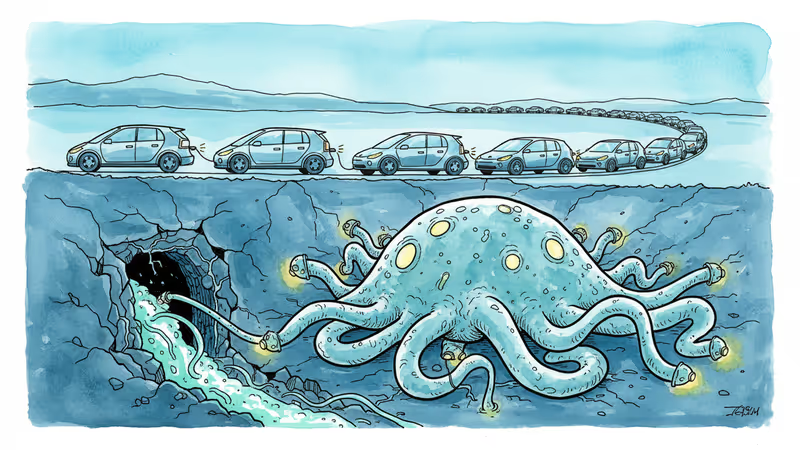
As high-grade ore depletes, biotech startups are engineering microbes to extract metals from aging mines and waste. But can biology scale fast enough for the EV boom?
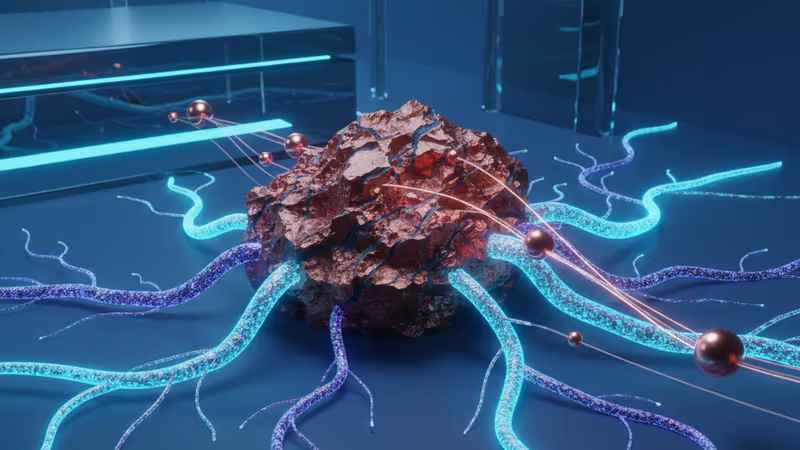
Transition Metal Solutions raises $6M to boost copper production by 30% using microbial prebiotics. A potential game-changer for the 2040 copper shortage.
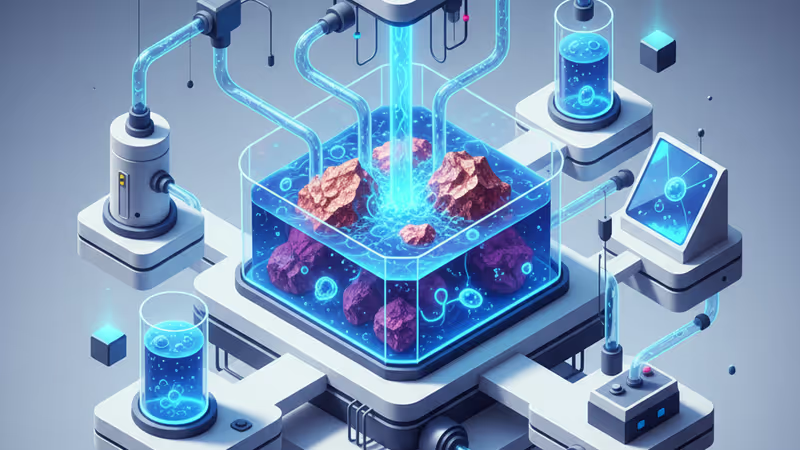
Transition Metal Solutions raised $6M to solve the looming copper shortage using microbial 'probiotics' that boost extraction rates by up to 30%.
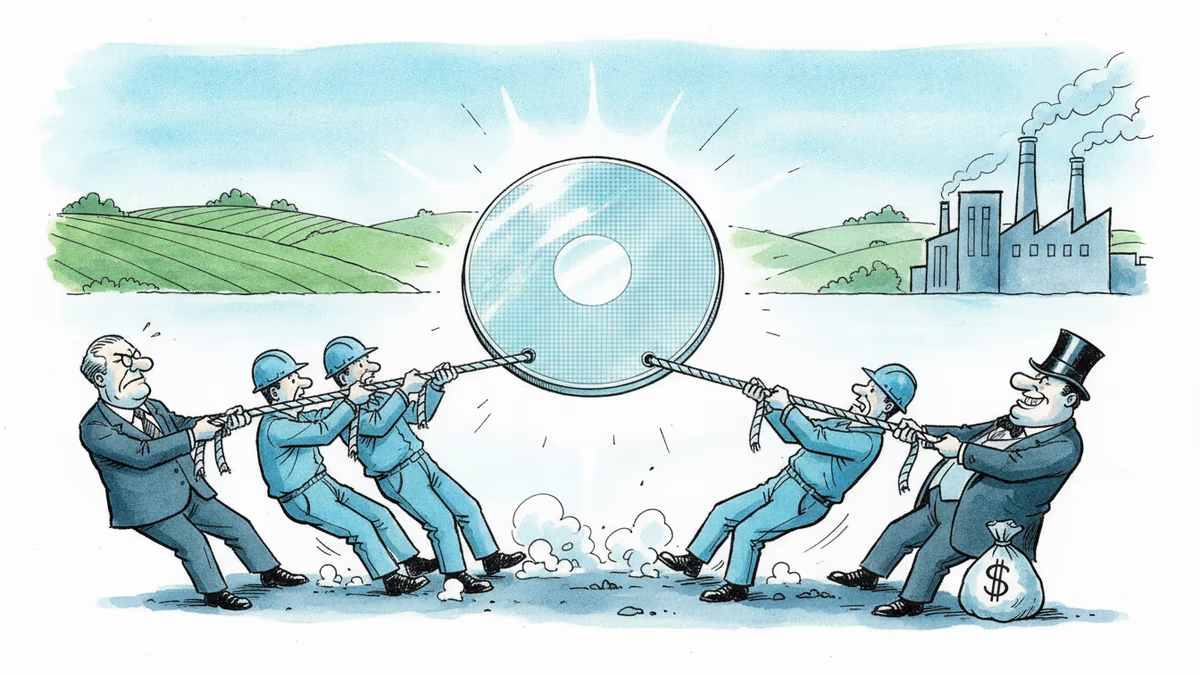
Samsung Electronics' union branch revealed that 84% of survey respondents oppose the government's roughly $290 billion (₩400 trillion) semiconductor megaproject in Gwangju. Government, management, the union and shareholders are all reading the same national project in sharply different ways.
As high-grade ore depletes, biotech startups are engineering microbes to extract metals from aging mines and waste. But can biology scale fast enough for the EV boom?
Transition Metal Solutions raises $6M to boost copper production by 30% using microbial prebiotics. A potential game-changer for the 2040 copper shortage.
Transition Metal Solutions raised $6M to solve the looming copper shortage using microbial 'probiotics' that boost extraction rates by up to 30%.
Samsung Electronics' union branch revealed that 84% of survey respondents oppose the government's roughly $290 billion (₩400 trillion) semiconductor megaproject in Gwangju. Government, management, the union and shareholders are all reading the same national project in sharply different ways.
Thoughts
Share your thoughts on this article
Sign in to join the conversation