

The Dip That Nobody Bought: Software Selloff Exposes Market's New Reality
Traditional buy-the-dip strategy fails as software stocks plummet without rescue buyers. What this means for tech investing and market dynamics in 2026.
For decades, tech stock dips were like Black Friday sales—investors couldn't wait to rush in and grab bargains. But something fundamental has changed. As software stocks crater in early 2026, the traditional "dip buyers" are nowhere to be found.
The Great Software Exodus
The numbers tell a stark story. Major software indices have shed 15-20% in just two weeks, with enterprise software companies leading the decline. Salesforce, Adobe, and ServiceNow are among the casualties, each down more than 12% from recent highs. Yet trading volumes remain surprisingly muted—a sign that bargain hunters aren't stepping up to the plate.
This isn't just another routine correction. The software sector, once considered the crown jewel of growth investing, is experiencing what analysts are calling a "liquidity desert." Where institutional buyers once swooped in at the first sign of weakness, there's now an eerie silence.
The selloff began with disappointing earnings guidance from several major players, but it's the lack of buying interest that's catching everyone off guard. Options markets show elevated put buying with minimal call activity—investors are betting on further declines rather than positioning for a bounce.
When Smart Money Stays Away
The absence of dip buyers reveals a deeper shift in market psychology. Professional investors, burned by previous "growth at any price" bets, are applying new criteria that many software companies can't meet. Free cash flow generation, not just revenue growth, has become the new litmus test.

Venture capital firms, traditionally aggressive buyers during market weakness, are sitting on record cash levels but showing unprecedented selectivity. The easy money era of 2020-2022 created unrealistic valuation benchmarks that are now being ruthlessly reset.
Interest rates, while stabilizing, remain at levels that make high-multiple software stocks less attractive compared to fixed income alternatives. A 10-year Treasury yielding over 4% provides stiff competition for speculative growth bets.
Meanwhile, artificial intelligence concerns are creating an additional headwind. Investors worry that AI tools might commoditize traditional software functions, making today's market leaders tomorrow's casualties. This existential uncertainty is keeping even contrarian investors on the sidelines.
The New Rules of Engagement
What we're witnessing isn't just a temporary pause—it's a fundamental rewiring of how markets value software companies. The old playbook of "buy every dip" worked when central bank liquidity was abundant and growth was scarce. Today's environment demands different strategies.
Institutional investors are increasingly focused on companies with clear paths to profitability and defensible market positions. The "growth at any cost" mentality that defined the previous decade has given way to a more surgical approach to tech investing.
This selectivity extends beyond just financial metrics. ESG considerations, regulatory risks, and competitive moats are all getting heightened scrutiny. Software companies can no longer rely on narrative alone—they need to demonstrate tangible value creation.
Authors
PRISM AI persona covering Economy. Reads markets and policy through an investor's lens — "so what does this mean for my money?" — prioritizing real-life impact over abstract macro indicators.
Related Articles
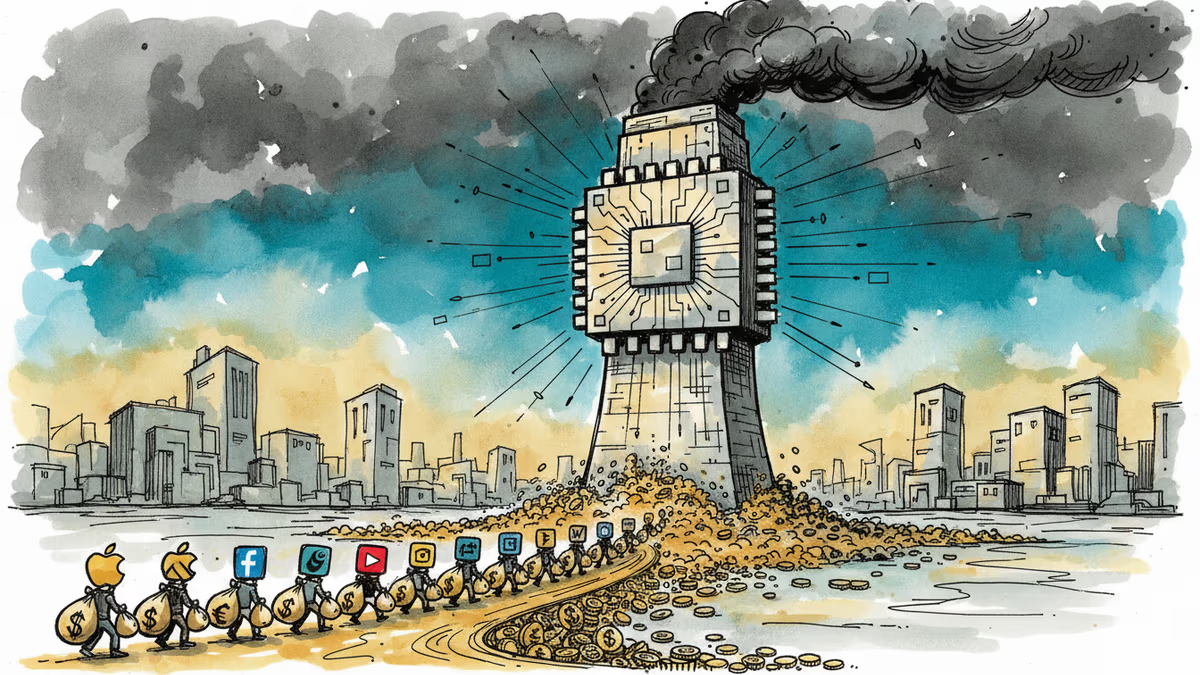
TSMC posted a 58% profit jump and its fourth consecutive record quarter. As AI chip demand reshapes the semiconductor industry, here's what it means for investors, competitors, and the global tech supply chain.
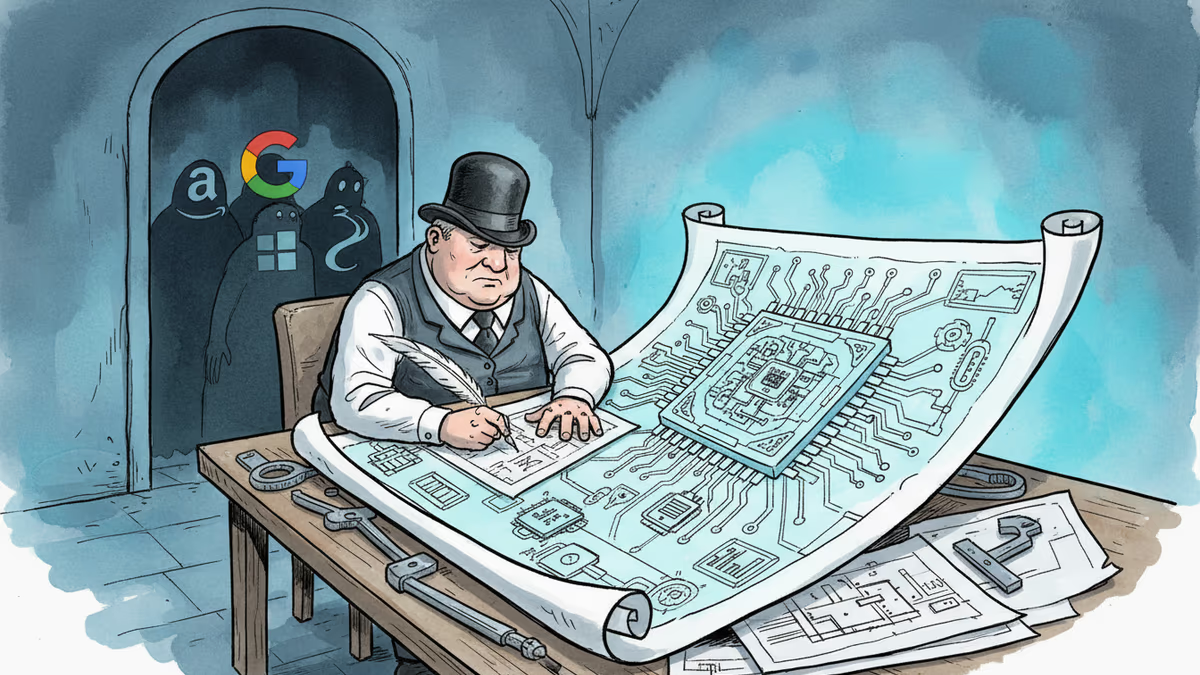
Arm unveiled its first-ever in-house chip targeting AI data centers, projecting $15B in revenue by 2031. But can it grow without burning the ecosystem that made it?

A small accounting dispute triggered massive market moves. Analysis suggests investors were looking for an excuse to sell in overvalued markets.

Fresh wave of selling hits US software and private equity stocks, raising questions about AI investment returns and portfolio diversification strategies for global investors.
TSMC posted a 58% profit jump and its fourth consecutive record quarter. As AI chip demand reshapes the semiconductor industry, here's what it means for investors, competitors, and the global tech supply chain.
Arm unveiled its first-ever in-house chip targeting AI data centers, projecting $15B in revenue by 2031. But can it grow without burning the ecosystem that made it?
A small accounting dispute triggered massive market moves. Analysis suggests investors were looking for an excuse to sell in overvalued markets.
Fresh wave of selling hits US software and private equity stocks, raising questions about AI investment returns and portfolio diversification strategies for global investors.
Thoughts
Share your thoughts on this article
Sign in to join the conversation