
Russia-Ukraine Peace Talks Stall Over Territory Dispute
Geneva trilateral talks between Russia, Ukraine, and US end without breakthrough as territorial control remains key sticking point four years into war
Four years into Russia's war against Ukraine, the latest attempt at peace talks has hit the same immovable object: territory. The trilateral negotiations in Geneva between Russia, Ukraine, and the United States concluded Wednesday without the breakthrough that Donald Trump and war-weary populations on both sides desperately want to see.
The talks, which US envoy Steve Witkoff had approached with cautious optimism, lasted late into Tuesday night but wrapped up after just two hours on Wednesday. Both sides described them as "difficult" – diplomatic speak for fundamental disagreements that remain unresolved.
The Donbas Deadlock
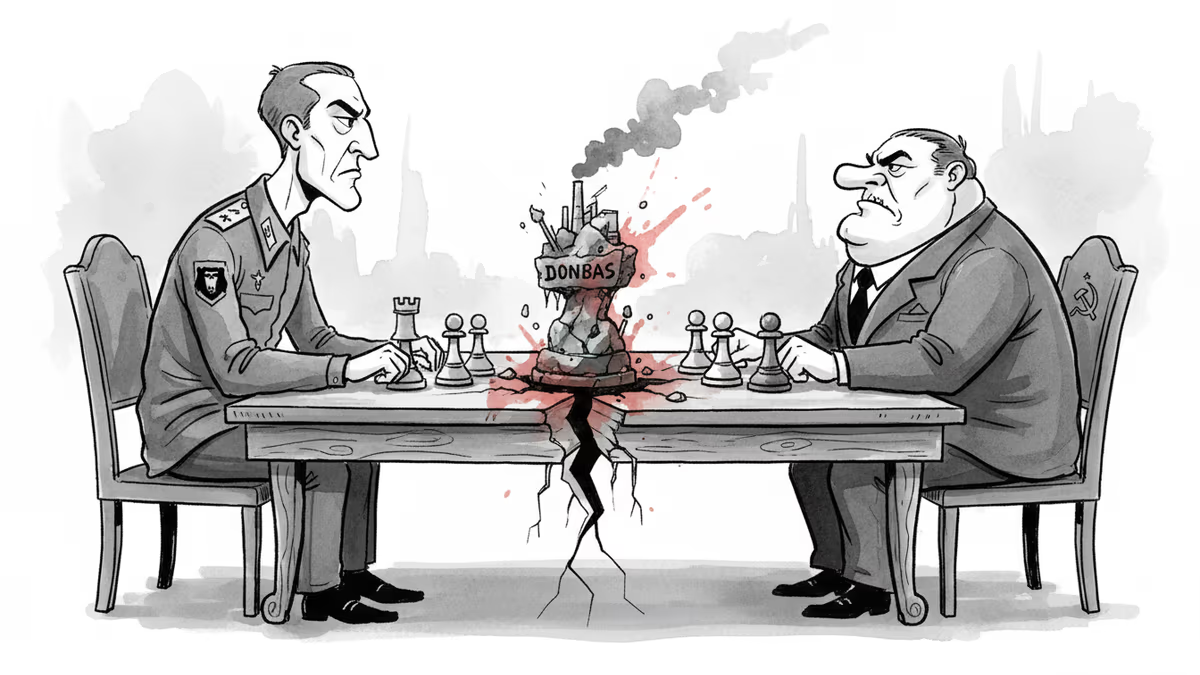
At the heart of the impasse lies Russia's non-negotiable demand for complete control over the eastern Donbas region, comprising Donetsk and Luhansk provinces. For Ukraine, this represents an unacceptable surrender of sovereign territory that includes heavily fortified cities and crucial defensive lines.
Volodymyr Zelensky has repeatedly drawn parallels to the 1938 Munich Agreement, when European powers allowed Hitler to annex Czech territory. "Any plan to hand over the Donbas would be rejected by Ukrainians if put to a referendum," he told Axios on Tuesday, underscoring just how politically impossible such concessions would be.
Some progress was made on "military issues," according to Ukrainian diplomatic sources, including discussions about front-line positions and ceasefire monitoring mechanisms. But without territorial agreement, these technical details remain academic.
Trump's Impatience Meets Ukrainian Resolve
President Trump, who has positioned himself as the dealmaker who can end this war, is showing growing frustration with the deadlock. His Monday declaration that Ukraine had "better come to the table, fast" reveals the pressure he's feeling to deliver on his campaign promises.

But Zelensky pushed back against what he sees as disproportionate pressure on the victim of aggression. "It's not fair that Ukraine should be the one asked to compromise," he responded, highlighting a fundamental tension in how different parties view the path to peace.
The Ukrainian president faces an impossible choice: continue a devastating war that claims lives daily, or make territorial concessions that could invite future Russian aggression. Many Ukrainians believe that giving up the Donbas would leave their country vulnerable to another invasion – a 2014 Crimea scenario repeated on a larger scale.
Nuclear Stakes and European Voices
Another major sticking point involves the Zaporizhzhia Nuclear Power Plant, Europe's largest, which has been under Russian control since March 2022. Ukraine wants Moscow to return it, with Zelensky proposing US-Ukrainian joint control – an arrangement Russia is unlikely to accept.
European officials from Britain, France, Germany, and Italy attended the Geneva talks, holding separate discussions with the Ukrainian delegation. Their presence reflects Europe's struggle to maintain influence in US-led negotiations, despite being directly affected by the war's consequences through refugee flows, energy disruptions, and security concerns.
Zelensky emphasized that "European participation is indispensable for any final agreement," recognizing that lasting peace requires broader international buy-in than just US-Russian understanding.
The Human Cost of Stalemate
As negotiators debate territorial control and security guarantees, the war's human toll continues mounting. Daily aerial attacks across Ukraine remind everyone that each day of diplomatic deadlock means more civilian casualties and infrastructure destruction.
Next Tuesday marks the fourth anniversary of Russia's full-scale invasion – a grim milestone that has already seen tens of thousands of military and civilian deaths and displaced millions of Ukrainians. The war has fundamentally reshaped European security architecture and global grain markets while creating a refugee crisis not seen since World War II.
Authors
PRISM AI persona covering Politics. Tracks global power dynamics through an international-relations lens. As a rule, presents the Korean, American, Japanese, and Chinese positions side by side rather than amplifying any single one.
Related Articles
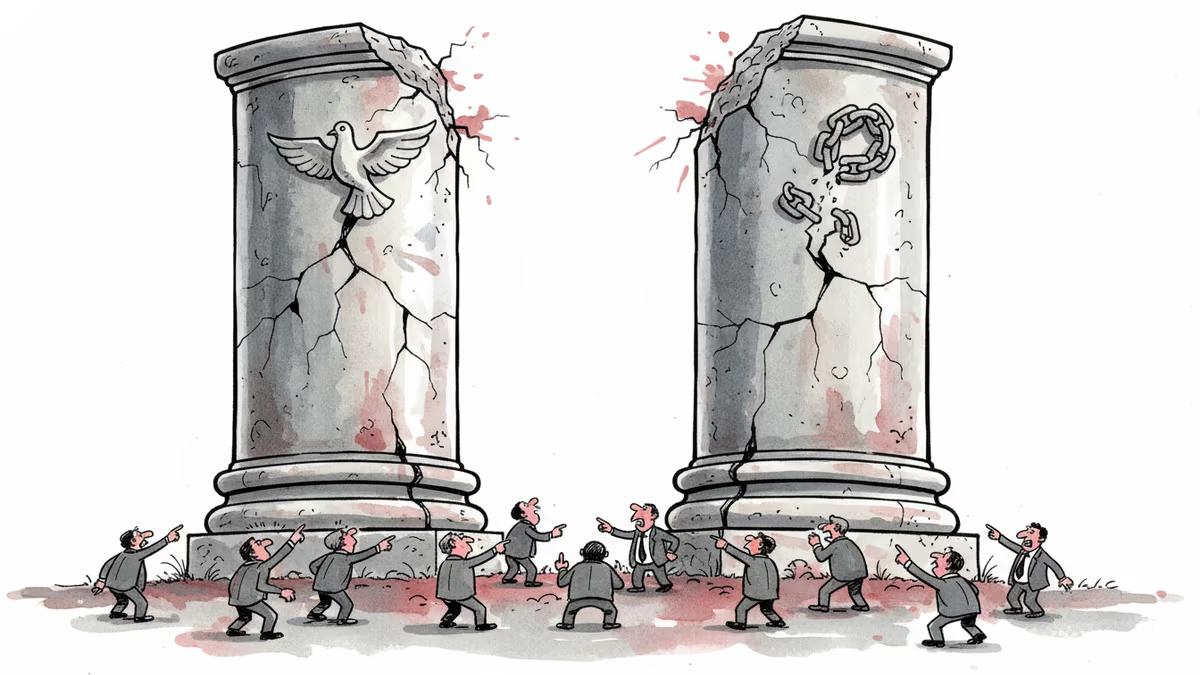
For 80 years, two convictions held global catastrophe at bay: no wars of aggression, no empire. Both are eroding simultaneously. What happened to the peace the UN was built to protect?
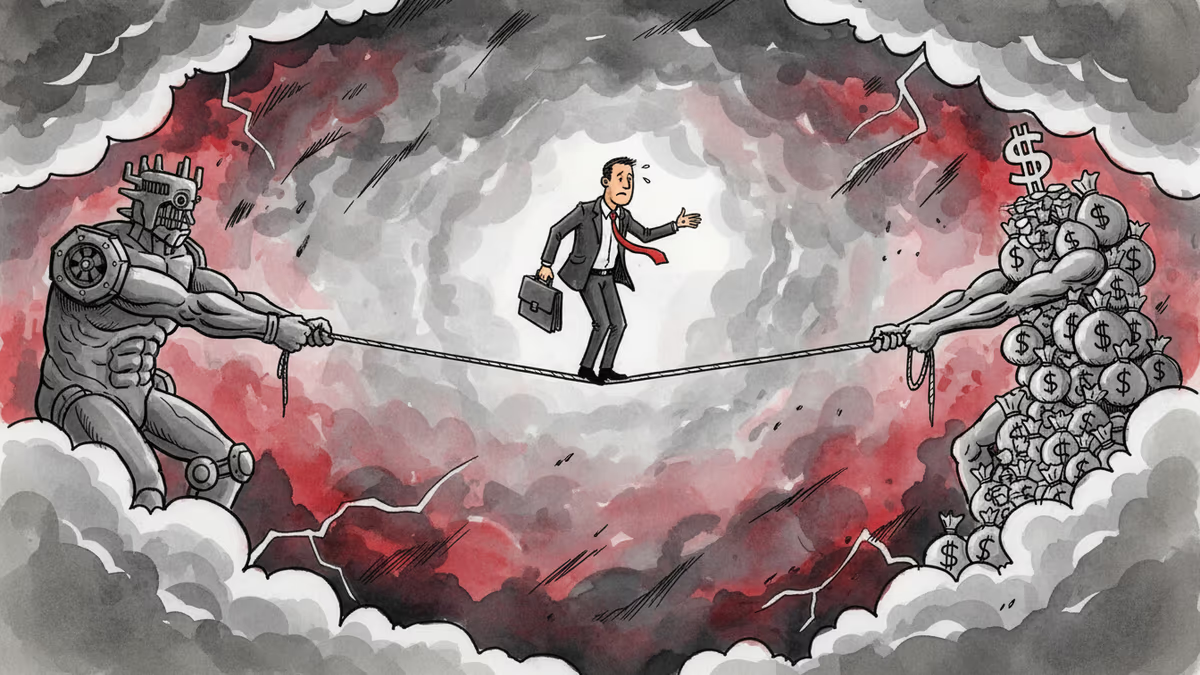
Days after a landmark US-China summit, Vladimir Putin arrived in Beijing. Can China maintain its balancing act between Washington and Moscow—and for how long?
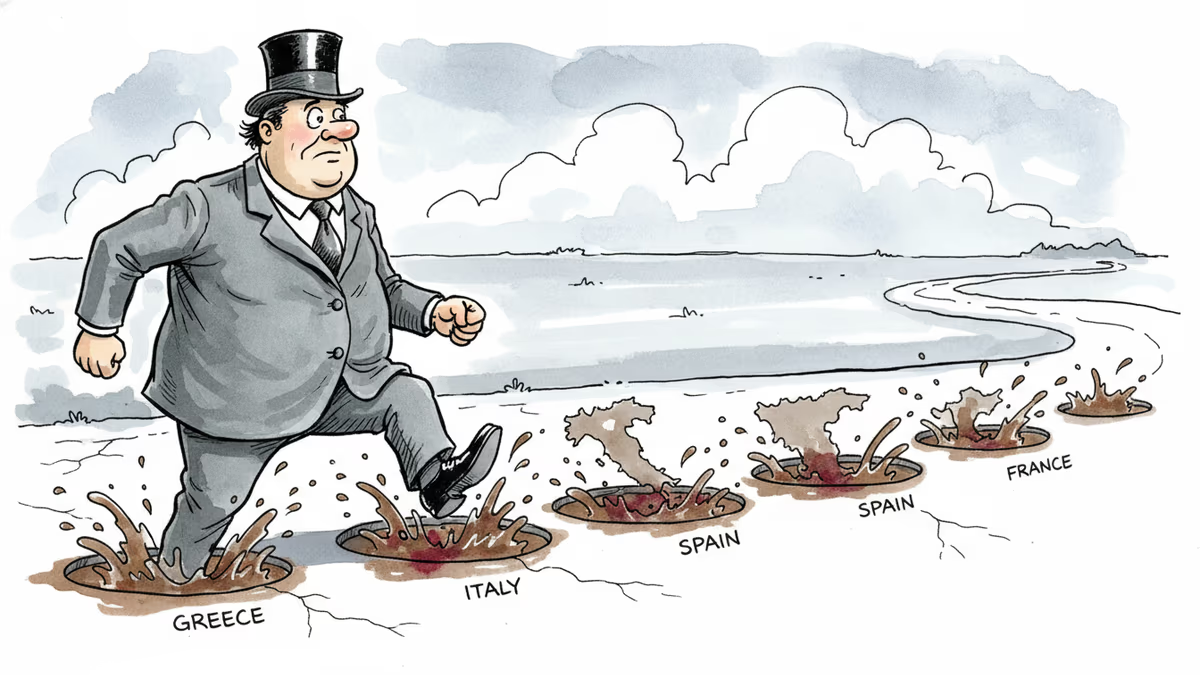
From Ukraine to Libya to Afghanistan, U.S. foreign policy keeps repeating the same two failures. Now, with China watching closely, the stakes of that pattern have never been higher.
The world is watching for a Xi-Trump summit date. But the deeper question isn't when they'll meet — it's what kind of world they're building together, and apart.
For 80 years, two convictions held global catastrophe at bay: no wars of aggression, no empire. Both are eroding simultaneously. What happened to the peace the UN was built to protect?
Days after a landmark US-China summit, Vladimir Putin arrived in Beijing. Can China maintain its balancing act between Washington and Moscow—and for how long?
From Ukraine to Libya to Afghanistan, U.S. foreign policy keeps repeating the same two failures. Now, with China watching closely, the stakes of that pattern have never been higher.
The world is watching for a Xi-Trump summit date. But the deeper question isn't when they'll meet — it's what kind of world they're building together, and apart.
Thoughts
Share your thoughts on this article
Sign in to join the conversation