
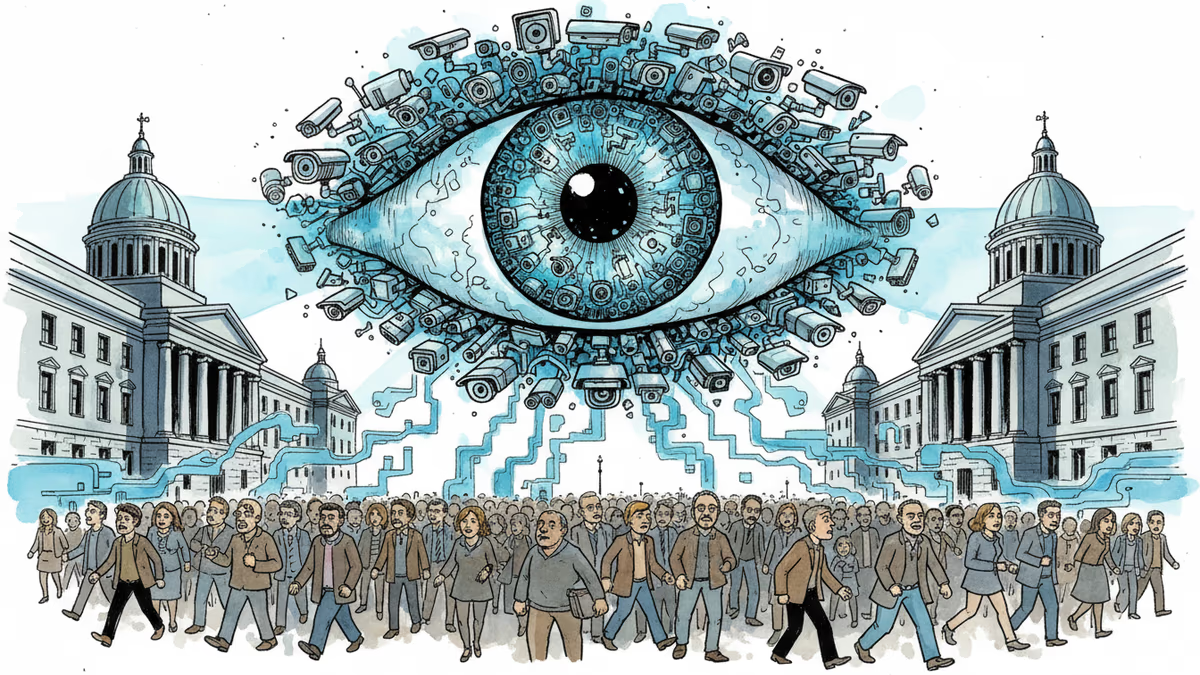
DHS Builds Mega-Database Linking Faces, Fingerprints, and Iris Scans Across Agencies
The Department of Homeland Security is consolidating biometric technologies into a unified system, raising concerns about political surveillance and civil liberties as the tech spreads beyond borders.
Billions of Biometric Records, One Search Button
The Department of Homeland Security is building what could become America's most comprehensive biometric surveillance system. Internal documents reviewed by WIRED reveal plans to unify facial recognition, fingerprints, iris scans, and voice analysis into a single platform that connects six major agencies—from border patrol to the Secret Service.
Right now, these agencies can't easily share biometric data. Customs uses one company's facial recognition system, ICE uses another, and TSA has its own setup. It's like having different keys for every door in your house. DHS wants to change that, creating what they call a unified "matching engine."
From Airports to Your Neighborhood
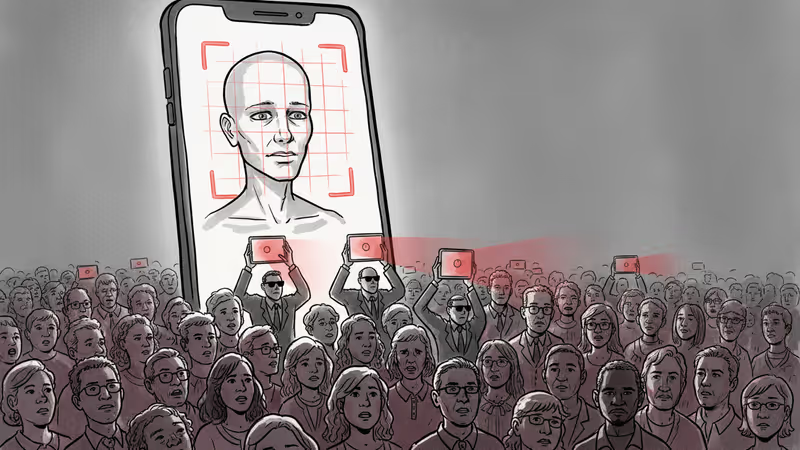
Here's where it gets concerning: this technology isn't staying at border checkpoints. DHS has already deployed Mobile Fortify, a smartphone-based facial recognition tool, to field agents operating hundreds of miles from any border. Masked enforcement teams are using it during raids, and intelligence units are scanning faces at protests.
The system would support "watch-listing, detention, or removal operations," according to the documents. Translation: it's not just about checking passports anymore.
The Technical Reality Check
Building this mega-database isn't as simple as flipping a switch. Different agencies have bought biometric systems from different companies over many years. Each system converts a face or fingerprint into numbers, but many only work with their original software—like trying to play a PlayStation game on an Xbox.

DHS would need to convert billions of old records into a common format or build software bridges between systems. Both approaches are expensive, time-consuming, and can affect accuracy. Even small compatibility issues become massive problems at this scale.
The Accuracy Trade-Off
The documents reveal DHS wants control over how strict matches need to be, depending on the situation. For identity verification (like at an airport), the system would be more cautious, reducing false positives but missing some real matches if photos are blurry or angled.
For investigations, it would cast a wider net, returning ranked lists of similar-looking faces for human review. This catches more suspects but also flags more innocent people—a trade-off that becomes politically charged when the technology moves from borders to protests.
Congress Pushes Back
Senator Ed Markey isn't buying DHS's security rationale. His ICE Out of Our Faces Act, introduced in February, would ban ICE and CBP from acquiring or using facial recognition systems entirely. The bill goes beyond symbolic restrictions—it requires agencies to delete biometric data they've already collected.
"ICE and CBP are using [facial recognition] to track, target, and surveil individuals across the country," Markey argues. "The point is not simply identification, but intimidation."
The Civil Rights Reckoning
Jeff Migliozzi from Freedom for Immigrants calls the expansion "deeply alarming." He points to the technology's documented racial biases and its use against "political dissidents and anyone in this country regardless of citizenship status."
The concern isn't just about immigrants anymore. When biometric surveillance tools designed for border security start scanning American citizens at protests, the line between immigration enforcement and political policing begins to blur.
Authors
Related Articles
CBP contracts with Clearview AI for facial recognition access to billions of internet-scraped images, raising concerns about routine surveillance infrastructure and civil liberties
New bill would prohibit ICE and CBP from using facial recognition technology, delete existing data, and allow citizens to sue for damages. The privacy vs security debate intensifies.
DHS's Mobile Fortify app, used 100,000 times since launch, scans faces of immigrants, citizens, and protesters despite inability to confirm identities. Privacy concerns mount over biometric data collection.
DHS reveals Mobile Fortify app details - NEC-developed tool operational since May 2025. Misidentifications lead to detention. AI surveillance reality check.
CBP contracts with Clearview AI for facial recognition access to billions of internet-scraped images, raising concerns about routine surveillance infrastructure and civil liberties
New bill would prohibit ICE and CBP from using facial recognition technology, delete existing data, and allow citizens to sue for damages. The privacy vs security debate intensifies.
DHS's Mobile Fortify app, used 100,000 times since launch, scans faces of immigrants, citizens, and protesters despite inability to confirm identities. Privacy concerns mount over biometric data collection.
DHS reveals Mobile Fortify app details - NEC-developed tool operational since May 2025. Misidentifications lead to detention. AI surveillance reality check.
Thoughts
Share your thoughts on this article
Sign in to join the conversation