
When Immigration Enforcement Kills American Citizens
Two American citizens died while documenting ICE operations in Minneapolis, raising questions about government overreach and the limits of federal power in immigration enforcement.
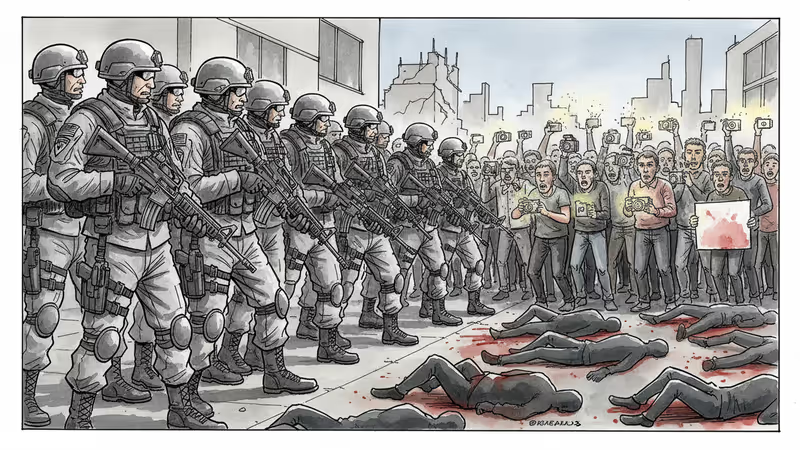
Two American citizens are dead, shot by federal agents while documenting government operations. Their crime? Bearing witness to immigration enforcement.
What began in late 2025 as a targeted response to fraud allegations from a right-wing influencer has spiraled into something far more troubling. The Department of Homeland Security's focus on Minnesota's Twin Cities has resulted in thousands of immigrants swept up by ICE operations, but the casualties now include American citizens whose only offense was trying to document what their government was doing.
When Documentation Becomes Deadly
The latest victim, Alex Pretti, was killed on January 24th by Customs and Border Protection agents deployed to Minneapolis. He wasn't an immigrant facing deportation—he was an American citizen protesting at the site where previous victims had died. Two CBP agents opened fire, turning a demonstration into a crime scene.
The killing triggered another wave of protests throughout the city, met predictably with another DHS crackdown. One local resident was arrested simply for protesting at the site of Alex's death, illustrating how quickly the circle of enforcement can expand beyond its stated targets.
From Online Claims to Federal Operations
The entire operation traces back to fraud allegations made by a right-wing influencer—not a federal investigation, not credible intelligence, but social media content. This raises uncomfortable questions about how unverified online claims can trigger massive federal responses with deadly consequences.

In an era where information travels faster than verification, we're witnessing how digital narratives can shape physical reality. The gap between online allegations and federal action has effectively disappeared, with lethal results.
The Expanding Scope of Enforcement
What's particularly striking is how immigration enforcement has evolved beyond targeting undocumented immigrants. American citizens documenting these operations are now being treated as threats worthy of deadly force. The constitutional right to observe and record government activities—a cornerstone of democratic accountability—is being met with bullets.
This expansion reflects a broader trend in federal enforcement: the gradual erosion of boundaries between different types of government power. Immigration enforcement, traditionally focused on deportation, now resembles domestic counterterrorism operations.
The Chilling Effect on Civil Society
When American citizens can be killed for documenting government operations, it creates a chilling effect that extends far beyond immigration policy. Journalists, activists, and ordinary citizens may think twice before recording federal agents at work. This erosion of transparency serves no legitimate law enforcement purpose while undermining democratic oversight.
The message is clear: document government operations at your own risk. For a democracy that depends on public scrutiny of power, this represents a fundamental breakdown.
Authors
Related Articles
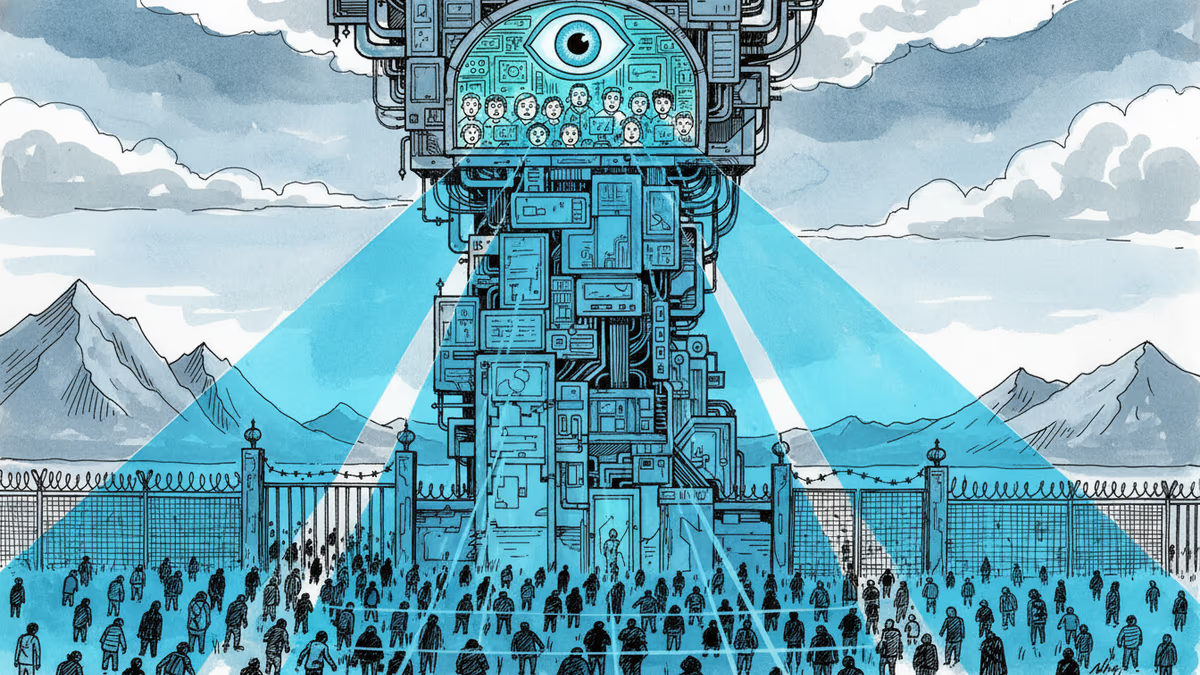
Palantir has become the tech backbone of Trump's immigration enforcement. Former employees are calling it a 'descent into fascism.' What happens when the people who build surveillance tools start asking uncomfortable questions?
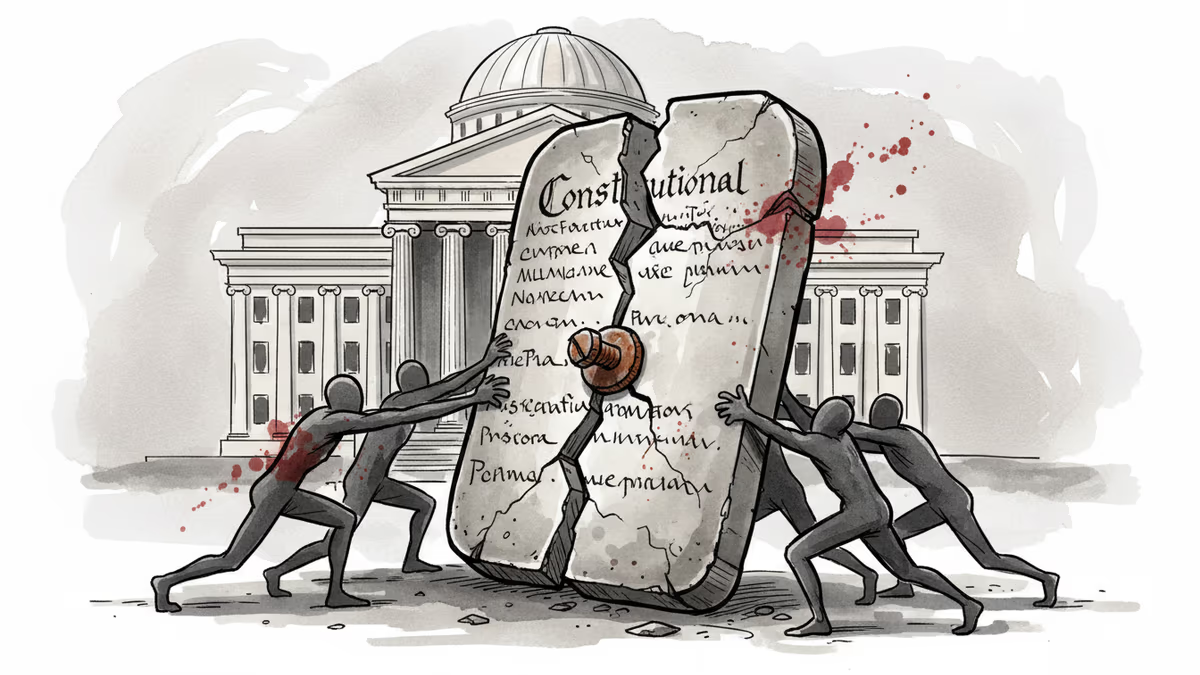
The Supreme Court heard arguments over Trump's birthright citizenship order. The justices seemed skeptical—but the fact that this case made it to the highest court signals something bigger.
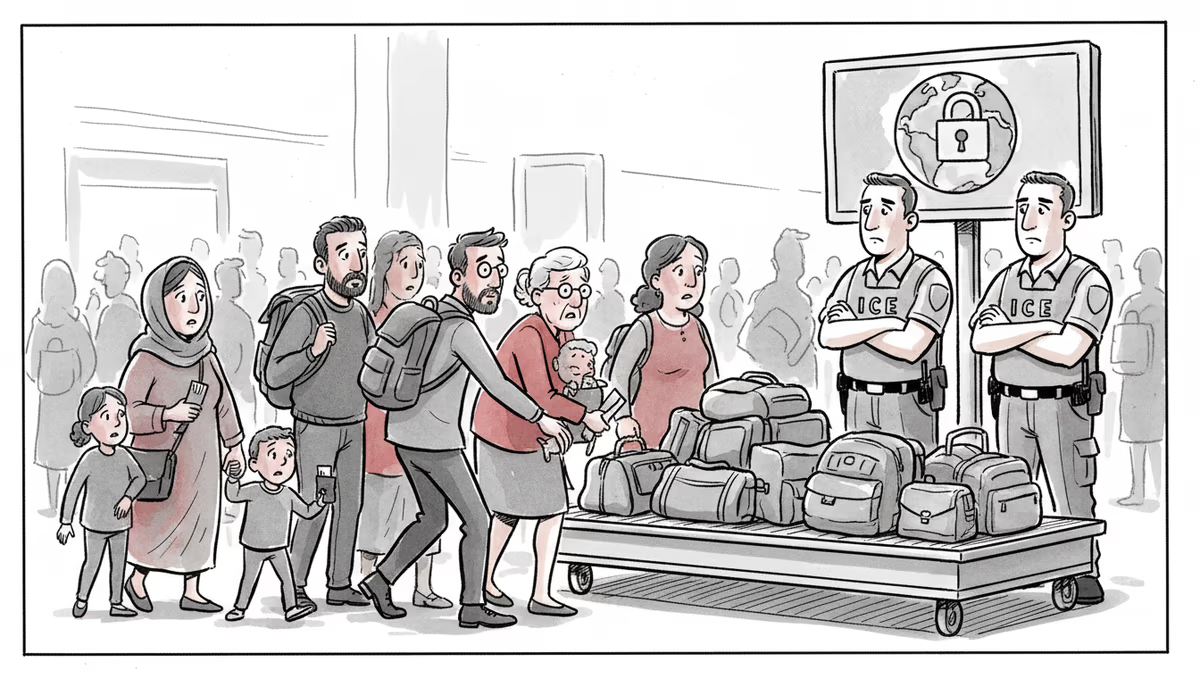
ICE agents have been deployed to 14 US airports, officially to fill TSA staffing gaps during the government shutdown. But the line between security assistance and immigration enforcement is blurring fast.
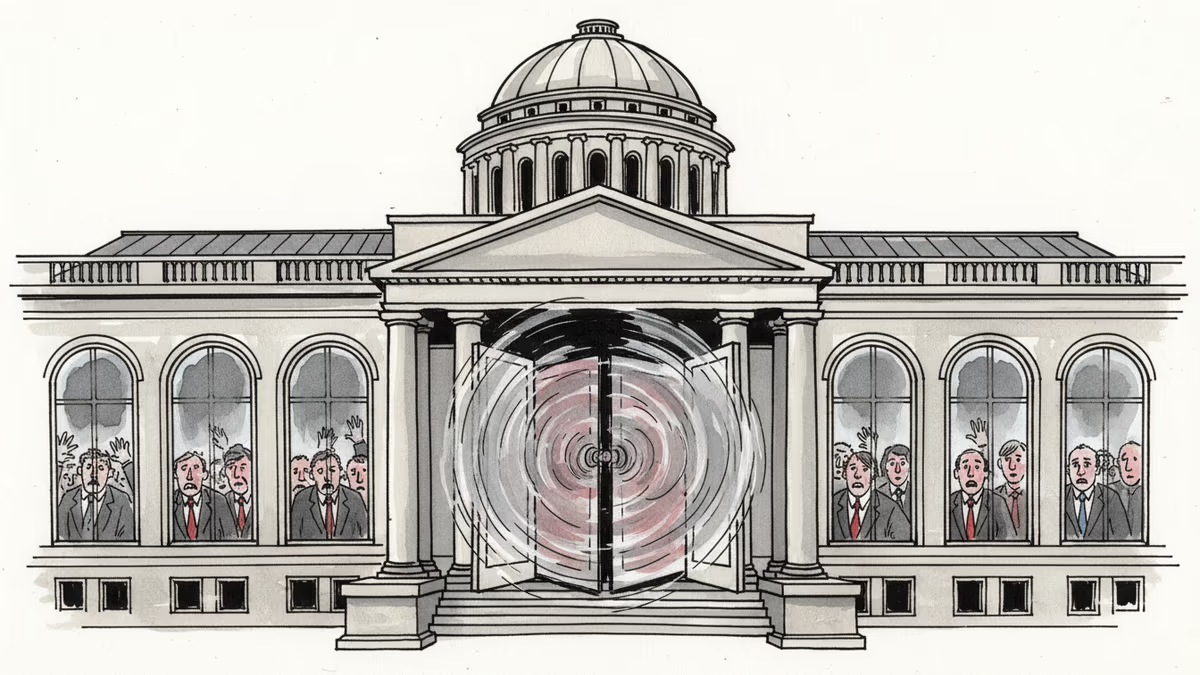
Months of reporting point to a power vacuum inside the Department of Homeland Security. What happens when the agency guarding America's borders loses its own chain of command?
Palantir has become the tech backbone of Trump's immigration enforcement. Former employees are calling it a 'descent into fascism.' What happens when the people who build surveillance tools start asking uncomfortable questions?
The Supreme Court heard arguments over Trump's birthright citizenship order. The justices seemed skeptical—but the fact that this case made it to the highest court signals something bigger.
ICE agents have been deployed to 14 US airports, officially to fill TSA staffing gaps during the government shutdown. But the line between security assistance and immigration enforcement is blurring fast.
Months of reporting point to a power vacuum inside the Department of Homeland Security. What happens when the agency guarding America's borders loses its own chain of command?
Thoughts
Share your thoughts on this article
Sign in to join the conversation