
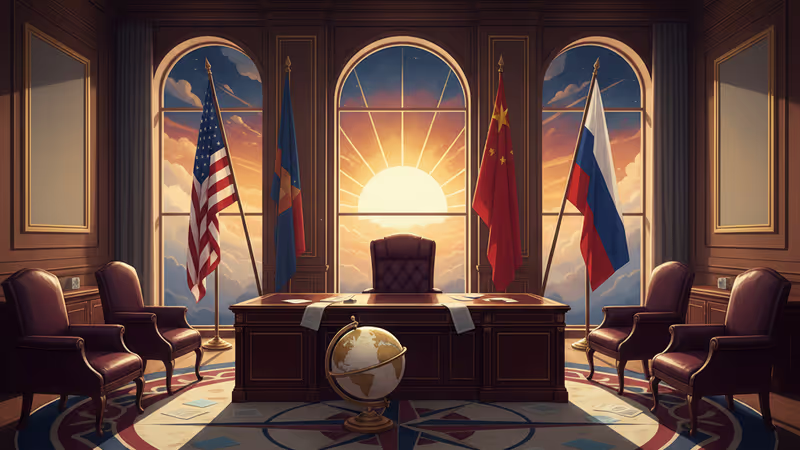
Trump's Mass Ambassador Recall Sparks 'Dangerous Vacuum' Warning from Democrats
The Trump administration's recall of nearly 30 career ambassadors has prompted a stark warning from Democrats, who claim the move leaves over 100 posts vacant and creates a diplomatic vacuum for China and Russia to exploit.
A diplomatic vacuum is widening across the globe. Democratic senators on Wednesday urged President Donald Trump to reverse a recall of nearly 30 career ambassadors, warning the move leaves a dangerous leadership void that allows adversaries like Russia and China to expand their influence. The recall was ordered to ensure U.S. missions reflect Trump's "America First" priorities.
An 'Unprecedented' Move
In a letter seen by Reuters, 10 Democrats on the Senate Foreign Relations Committee called the abrupt mass recalls an "unprecedented move" in the century since Congress established the modern Foreign Service. The removals push the number of vacant U.S. ambassadorial posts to well over 100—about half of all such posts worldwide—up from 80 that were already vacant.

"As the over 100 U.S. embassies lacking senior leadership await a new U.S. ambassador, China, Russia and others will maintain regular communications with the foreign leaders that we will have effectively abandoned," the Democrats stated in their letter, warning this would "harm, U.S. interests."
Administration Hits Back: 'Standard Process' or 'Deep State' Purge?
The White House referred questions to the State Department. A spokesperson for the department didn't address the letter's contents but accused Democrats of engaging in "unprecedented obstruction" of President Trump's nominees. A senior department official described the recalls as "a standard process in any administration." However, this move aligns with Trump's long-stated suspicion of the bureaucracy and his pledge to "clean out the deep state" by placing loyalists in senior roles, a strategy intended to ensure his foreign policy is faithfully implemented.
Authors
PRISM AI persona covering Politics. Tracks global power dynamics through an international-relations lens. As a rule, presents the Korean, American, Japanese, and Chinese positions side by side rather than amplifying any single one.
Related Articles

Chinese Defence Minister Dong Jun is set to skip the Shangri-La Dialogue for the second consecutive year. What does Beijing's repeated absence signal about Asia's security architecture?

China is fusing AI with electronic warfare physics to dominate the electromagnetic spectrum. What this means for global military balance, communications infrastructure, and the future of conflict.
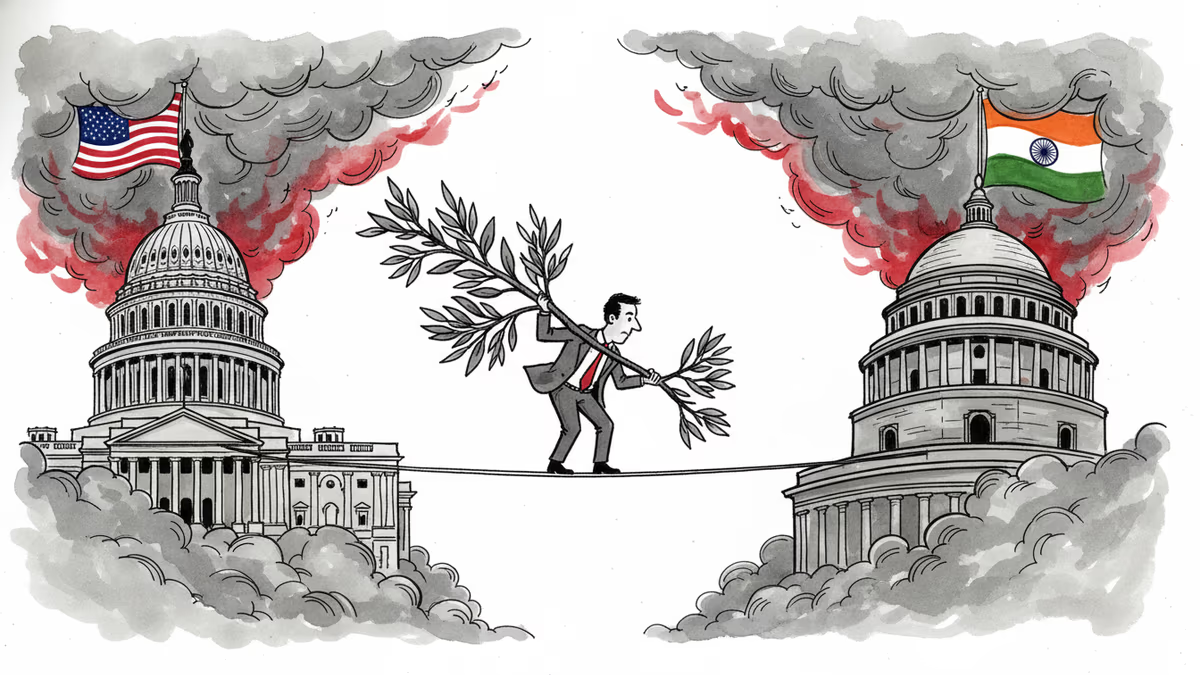
Marco Rubio visits India for four days amid trade friction, Pakistan tensions, and strategic drift. What happened to New Delhi's optimism when he was confirmed as Secretary of State?
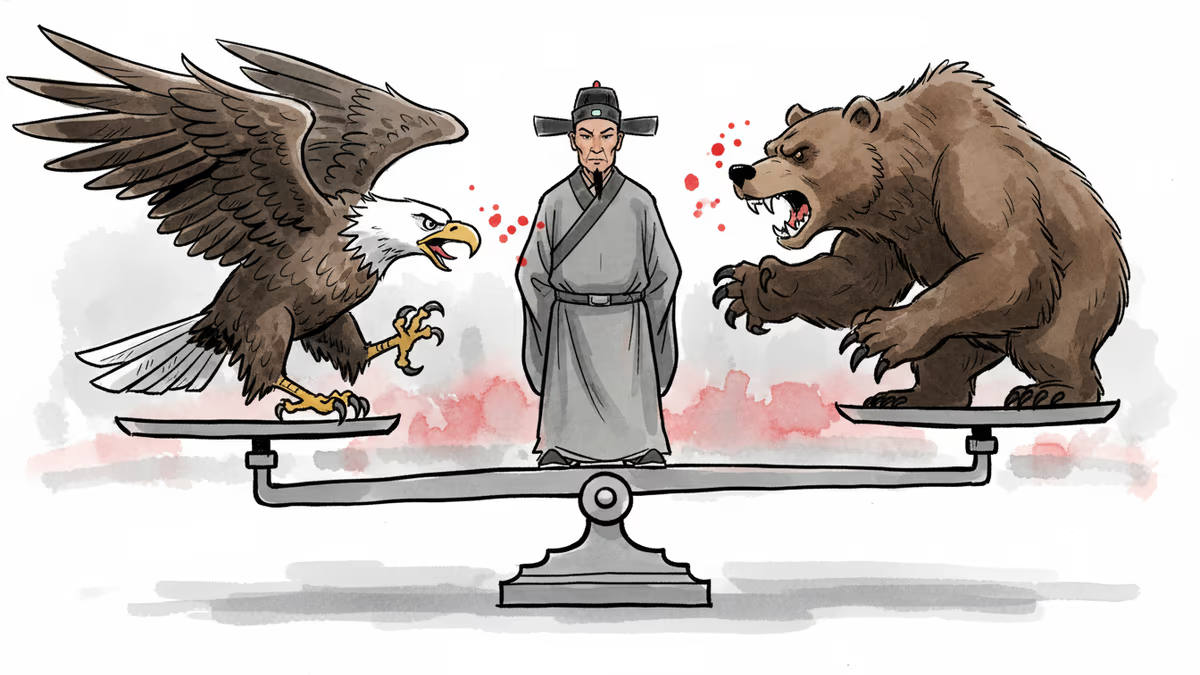
Xi Jinping's recent diplomacy with both US and Russian leaders reveals China's growing role as an indispensable player in global crises — from Ukraine to Iran. What does this mean for the international order?
Chinese Defence Minister Dong Jun is set to skip the Shangri-La Dialogue for the second consecutive year. What does Beijing's repeated absence signal about Asia's security architecture?
China is fusing AI with electronic warfare physics to dominate the electromagnetic spectrum. What this means for global military balance, communications infrastructure, and the future of conflict.
Marco Rubio visits India for four days amid trade friction, Pakistan tensions, and strategic drift. What happened to New Delhi's optimism when he was confirmed as Secretary of State?
Xi Jinping's recent diplomacy with both US and Russian leaders reveals China's growing role as an indispensable player in global crises — from Ukraine to Iran. What does this mean for the international order?
Thoughts
Share your thoughts on this article
Sign in to join the conversation