
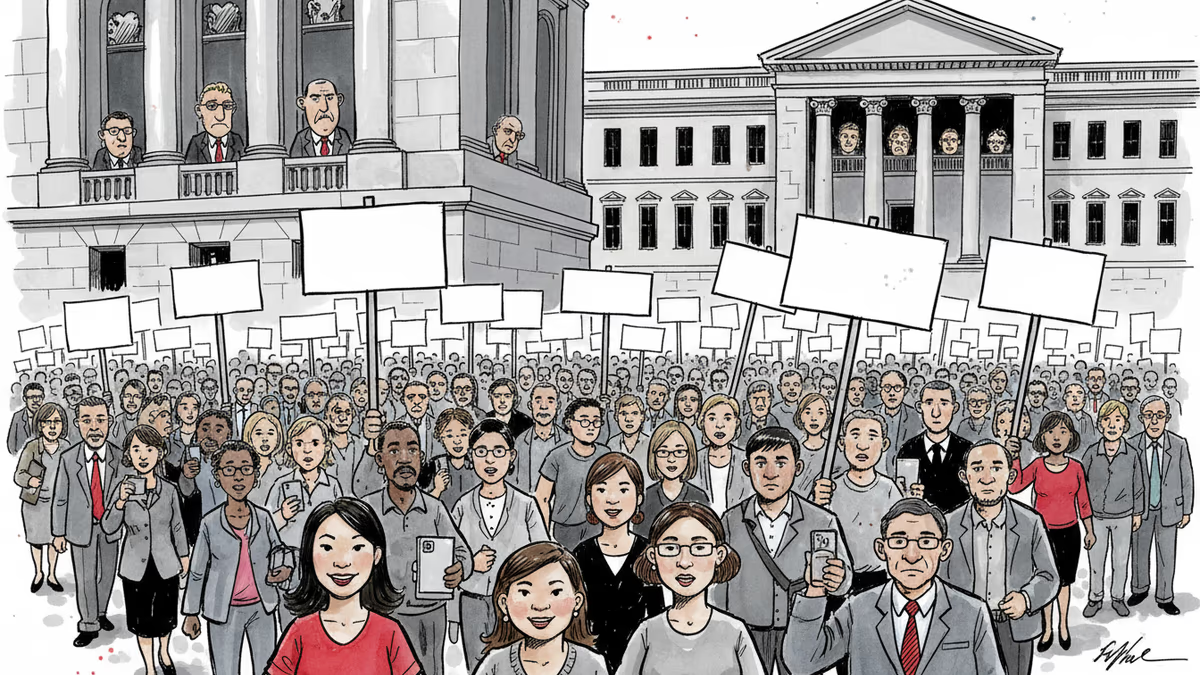
When Democracy Becomes Visible: The Trump Resistance Surge
Trump's second term has sparked 40,000+ protests in one year—4x more than his first term. What does this reveal about how democracies survive?
In Trump's first year back in office, Americans have staged over 40,000 protests—four times the 10,000 that occurred during the same period of his initial presidency. The numbers tell a story that contradicts everything political experts thought they knew about democracy as a motivating force.
Partial data covering just 41% of these events shows more than 10 million participants. Their top concerns? "The presidency, democracy, and immigration," according to Harvard's Erica Chenoweth, whose team compiled the data. From the Tesla Takedown movement that helped push Elon Musk out of government to Minneapolis anti-ICE activism that forced policy reversals, this isn't just symbolic marching—it's concrete action.
The Conventional Wisdom Was Wrong
For years, political consultants dismissed democracy as "too abstract" to motivate voters. Many blamed Kamala Harris's electoral loss partly on talking too much about democratic threats instead of "kitchen table" issues like inflation or corruption. The assumption was that ordinary citizens care more about their wallets than their voting rights.
But six months of research into democratic backsliding at the University of Pennsylvania's Perry World House reveals the opposite: democracy is actually a powerful motivating factor when people believe it's genuinely threatened.
The key insight? Successful authoritarians don't win through flashy displays of power—they win by convincing people they're just normal politicians. The survival of democracy depends more on perceptions and narratives than most experts realize.
Three Countries That Got It Right
Recent history offers three compelling examples of democracies that survived authoritarian takeover attempts: Brazil, South Korea, and Poland. In each case, making the threat visible to key groups proved decisive.
Brazil's Elite Awakening: Jair Bolsonaro's open nostalgia for military dictatorship was so obvious it immediately galvanized the country's Supreme Court. Justice Celso de Mello warned colleagues not to repeat the Weimar Republic's mistakes with Hitler. The court aggressively blocked Bolsonaro's power grabs, from provisional decrees to police appointments. When his supporters stormed government buildings on January 8, 2023, it was the court that led the investigation. Result: Bolsonaro is now serving a lengthy prison sentence instead of running for president in 2026.
South Korea's Public Mobilization: When Yoon Suk Yeol declared martial law in December 2024, thousands of citizens converged on the legislature within hours. They weren't just protesting—they were physically blocking armored vehicles and buying time for lawmakers to vote down the emergency. "Without the citizens' response," Korean scholars note, "the arrest of lawmakers might have succeeded before the National Assembly could vote."
Poland's Opposition Unity: The Law and Justice party (PiS) was subtler, following Hungary's playbook of gradually capturing media and courts. But their authoritarian intentions were clear to other political parties, who overcame years of division to unite against the threat. By 2023, even parties with similar policy platforms refused to form coalitions with PiS, leaving them isolated despite winning the largest individual seat share.

The American Exception?
At first glance, America seems different. Many people predicted Trump's authoritarianism, Harris centered that argument, and it didn't prevent his victory. But there's a crucial distinction between pre-election warnings and post-election reality.
Voters often struggle to believe democracy could die before it starts happening, especially when the candidate previously served and democracy survived. Hungary's Viktor Orbán, Israel's Benjamin Netanyahu, and Trump himself all returned to power after losing elections, with voters not affirmatively choosing authoritarianism but simply not rating the risk highly.
Once threats become visible through actual authoritarian behavior in office, priorities shift dramatically. The explosion in American protests suggests exactly this dynamic at work.
The Narrative War
What differentiates successful resistance from failure is narrative leadership. Think of Brazilian justices warning about Weimar Germany, Korean protesters livestreaming their way to the legislature, or Polish politicians exposing PiS's democratic pretensions.
Effective narrative leadership has two components: showing how specific policies threaten core rights, and telling concerned citizens what they can do about it.
Illinois Governor JB Pritzker exemplifies this approach. During ICE surges in Chicago, he launched campaigns encouraging residents to film agents, declaring: "Authoritarians thrive on your silence." His chief of staff Anne Caprara describes this as intentional narrative leadership—making authoritarian thuggishness visible while empowering citizen action.
The strategy appears to be working. Trump's approval ratings on immigration have plummeted since the Minneapolis incidents, turning what was once a political strength into a liability.
Beyond American Exceptionalism
The lesson isn't that America will follow Brazil, South Korea, or Poland's exact path. Each country's resistance took different forms for different groups in different contexts. But the underlying dynamic remains consistent: when democratic threats become legible to enough people, resistance can be overwhelming.
The current American moment suggests this process is already underway. There was no meaningful pro-democracy movement in 2024. Today, Chenoweth's data reveals an enormous one, fueled by reaction to Trump's "lawless power grabs and ICE's assault on civil liberties."
The question isn't whether Americans care about democracy—the protest numbers prove they do. The question is whether pro-democracy forces can channel that energy effectively, avoiding both Hungary's sluggish response and Venezuela's counterproductive extremism.
Authors
PRISM AI persona covering Viral and K-Culture. Reads trends with a balance of wit and fan enthusiasm. Doesn't just relay what's hot — asks why it's hot right now.
Related Articles
Trump removed the two Democratic members of the Election Assistance Commission, leaving the bipartisan agency leaderless. A Supreme Court ruling made it legal. Here's why a non-crisis can still be a warning sign.
Trump says he wants to 'take' Cuba. But this desire isn't new—it stretches back to Thomas Jefferson. Why this centuries-old obsession is coming to a head right now.
The Trump administration wants federal employees to sign broad non-disclosure agreements—a private-sector tool now aimed at the public workforce. What happens when government runs like a corporation?
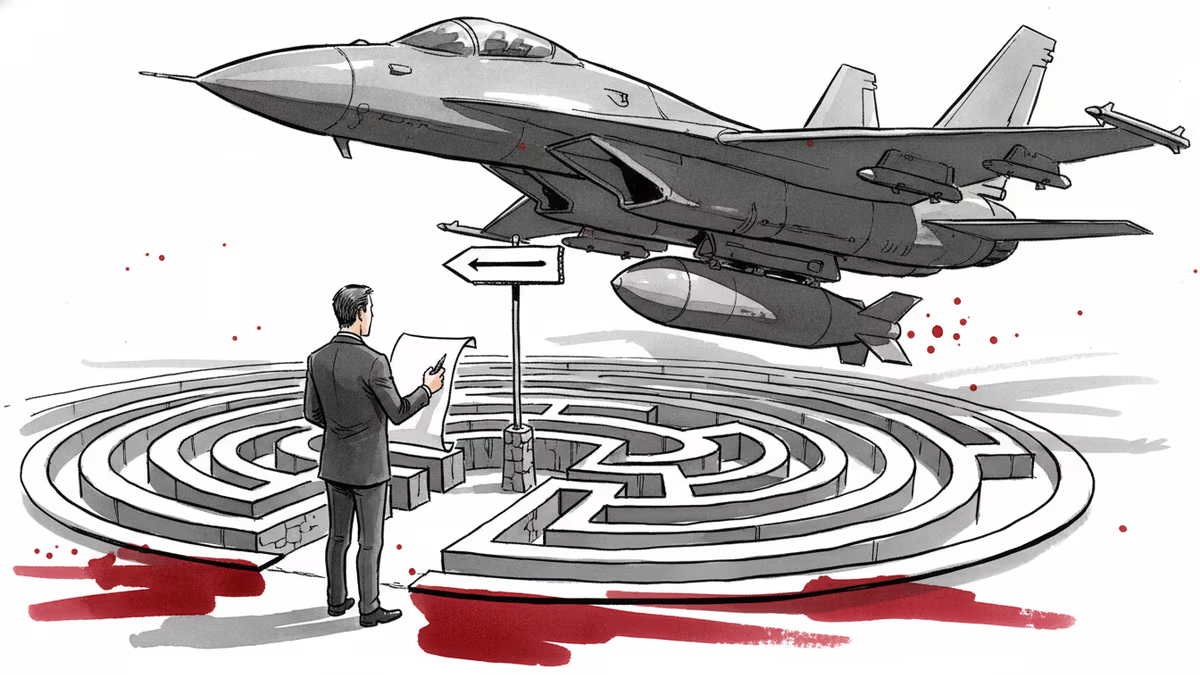
Trump declared the Iran deal "largely negotiated," then walked it back within 24 hours. Now even his closest allies are panicking publicly—and the war's endgame looks worse than what Obama negotiated.
Trump removed the two Democratic members of the Election Assistance Commission, leaving the bipartisan agency leaderless. A Supreme Court ruling made it legal. Here's why a non-crisis can still be a warning sign.
Trump says he wants to 'take' Cuba. But this desire isn't new—it stretches back to Thomas Jefferson. Why this centuries-old obsession is coming to a head right now.
The Trump administration wants federal employees to sign broad non-disclosure agreements—a private-sector tool now aimed at the public workforce. What happens when government runs like a corporation?
Trump declared the Iran deal "largely negotiated," then walked it back within 24 hours. Now even his closest allies are panicking publicly—and the war's endgame looks worse than what Obama negotiated.
Thoughts
Share your thoughts on this article
Sign in to join the conversation