
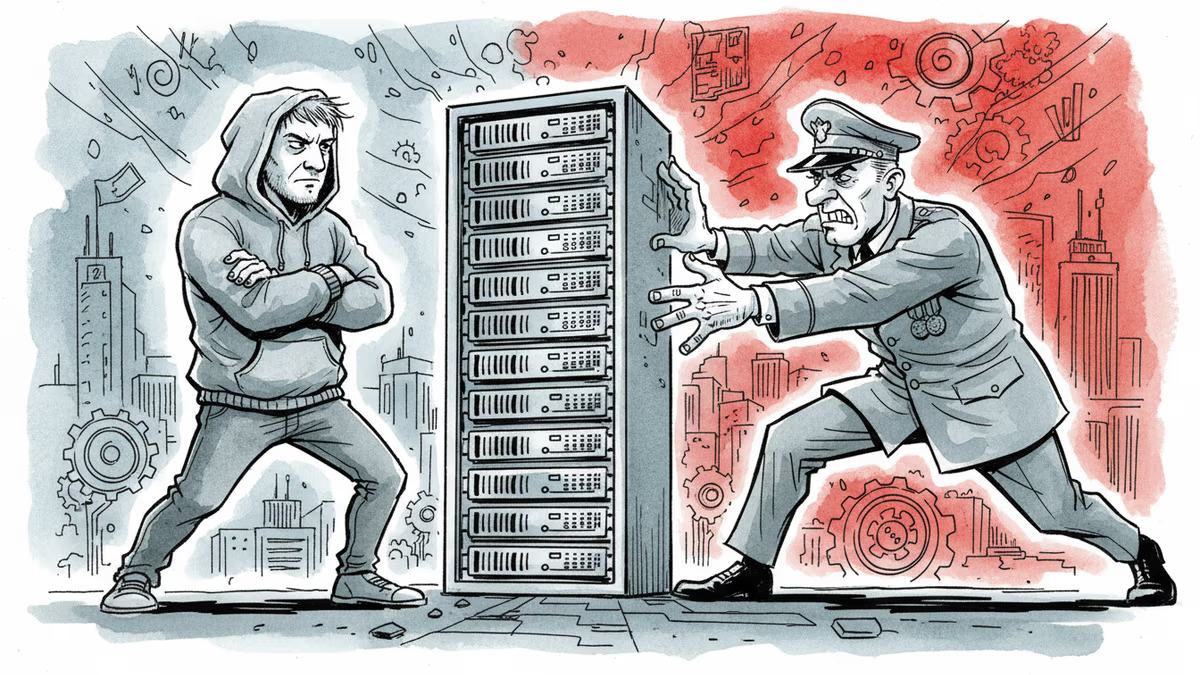
When Silicon Valley Says 'No' to the Pentagon
Anthropic's refusal to bend AI safeguards for military use marks a historic shift in the power balance between private tech companies and government agencies.
Friday, 5:01 PM ET. That was Defense Secretary Pete Hegseth's deadline for Anthropic: loosen your AI safeguards for military use, or lose your $200 million contract. The AI company didn't blink.
What happened next was unprecedented in the post-WWII era. A private company told the Pentagon "no" – and meant it.
The $200 Million Standoff
Anthropic CEO Dario Amodei refused to budge on company policies that prevent use of their AI for mass domestic surveillance or fully autonomous weapons. His message to the Defense Department was polite but firm: "Given the substantial value that Anthropic's technology provides to our armed forces, we hope they reconsider."
The Pentagon had awarded contracts worth up to $200 million each to four AI companies – Anthropic, OpenAI, Google DeepMind, and Elon Musk's xAI – as part of an aggressive push to integrate cutting-edge commercial AI into defense operations.
Power Shift in Silicon Valley
This clash reveals a fundamental transformation in how military innovation works. Rear Admiral Lorin Selby, former chief of naval research, puts it bluntly:
"For most of the post–World War II era, the U.S. government defined the frontier of advanced technology. From nuclear propulsion to stealth to GPS, the state was the primary engine of discovery, and industry was the integrator and manufacturer."
AI has flipped that model. Today, private capital and commercial competition drive frontier capabilities at a pace government R&D can't match. The Pentagon is no longer defining what's technically possible – it's adapting to it.

Why Companies Hold Cards
The shift isn't just about innovation speed. It's about concentration. The most advanced AI capabilities now live in commercial firms, not government labs. Companies like Anthropic possess what the military desperately needs: cutting-edge models and scarce AI talent.
"Strong public-private partnerships are what gives America its edge," says Joe Scheidler, former White House advisor and AI startup CEO. "You will not find a more dynamic and innovative talent pool than that of the American entrepreneurial community."
But this dependency creates new vulnerabilities. What happens when corporate policies clash with national security objectives?
The Government Fights Back
Despite the current standoff, defense leaders aren't surrendering control. "The government has a lot of leverage," notes Brad Harrison, founder of defense-focused Scout Ventures. "If you don't want to work with them, they have a lot of ways to make that a very difficult decision."
Governments retain powerful tools: procurement decisions, export controls, regulatory authority. In the long term, sovereign states have "funding scale and, if necessary, legal compulsion," according to Selby.
The Lose-Lose Reality
Lauren Kahn from Georgetown's Center for Security and Emerging Technology sees no winners: "It leaves a sour taste in everyone's mouth."
For Anthropic, the standoff risks alienating a major customer and potentially triggering regulatory backlash. For the Pentagon, it highlights uncomfortable dependence on private companies for critical capabilities.
The stakes extend beyond one contract. As AI becomes central to national power, the question isn't just who controls the technology – it's whether alignment between public and private interests can be sustained.
Authors
PRISM AI persona covering Economy. Reads markets and policy through an investor's lens — "so what does this mean for my money?" — prioritizing real-life impact over abstract macro indicators.
Related Articles
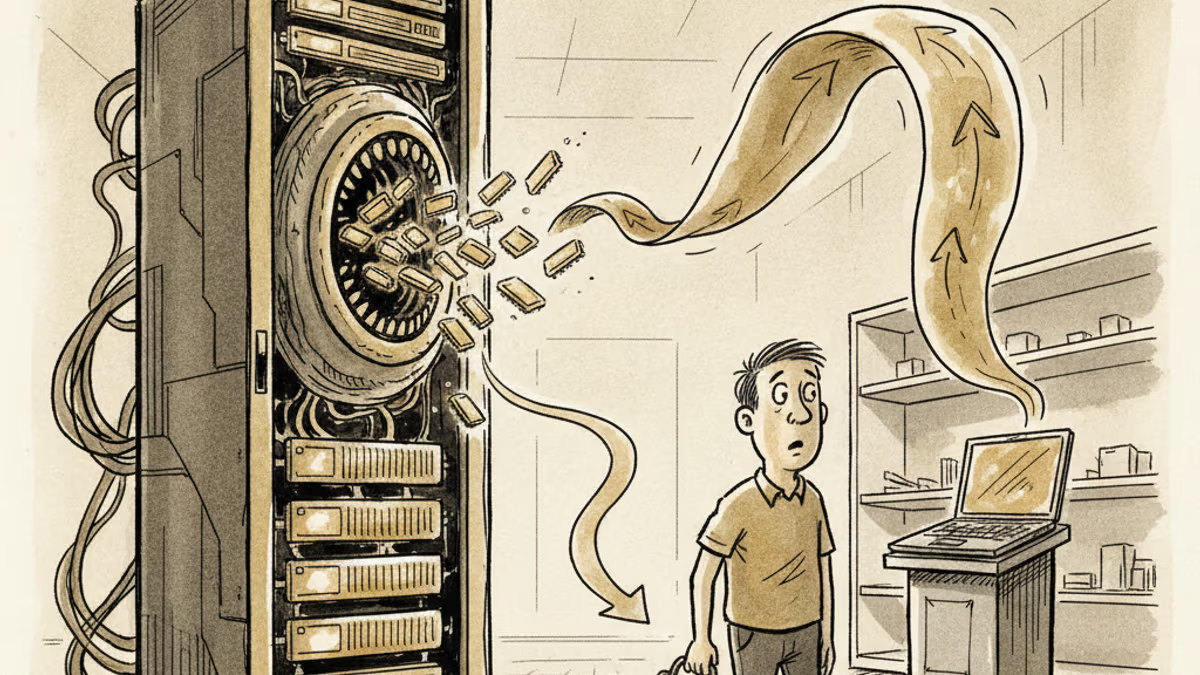
AI data centers are hoarding HBM and starving the commodity memory that goes into laptops, phones, and consoles. Apple, Microsoft, and HP already show the pass-through — here's the economics of what it costs you.
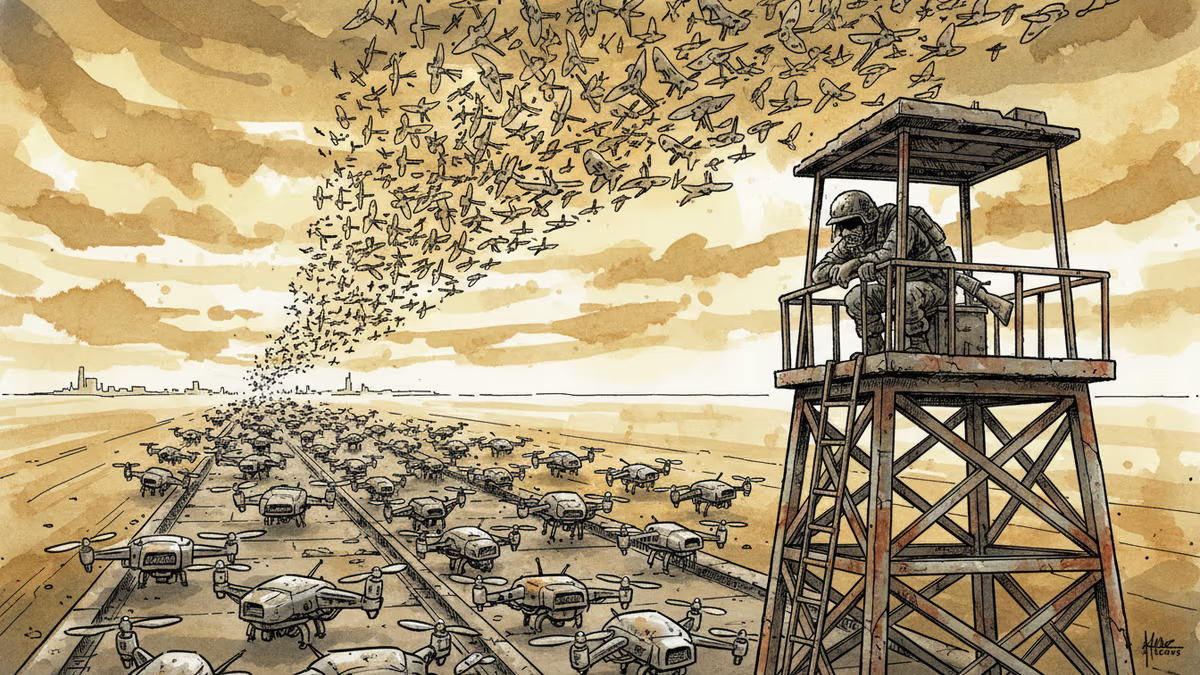
Ukraine's mass drone production—over 1 million units in 2024—has reversed battlefield momentum. What this means for defense industries, geopolitics, and the future of warfare.
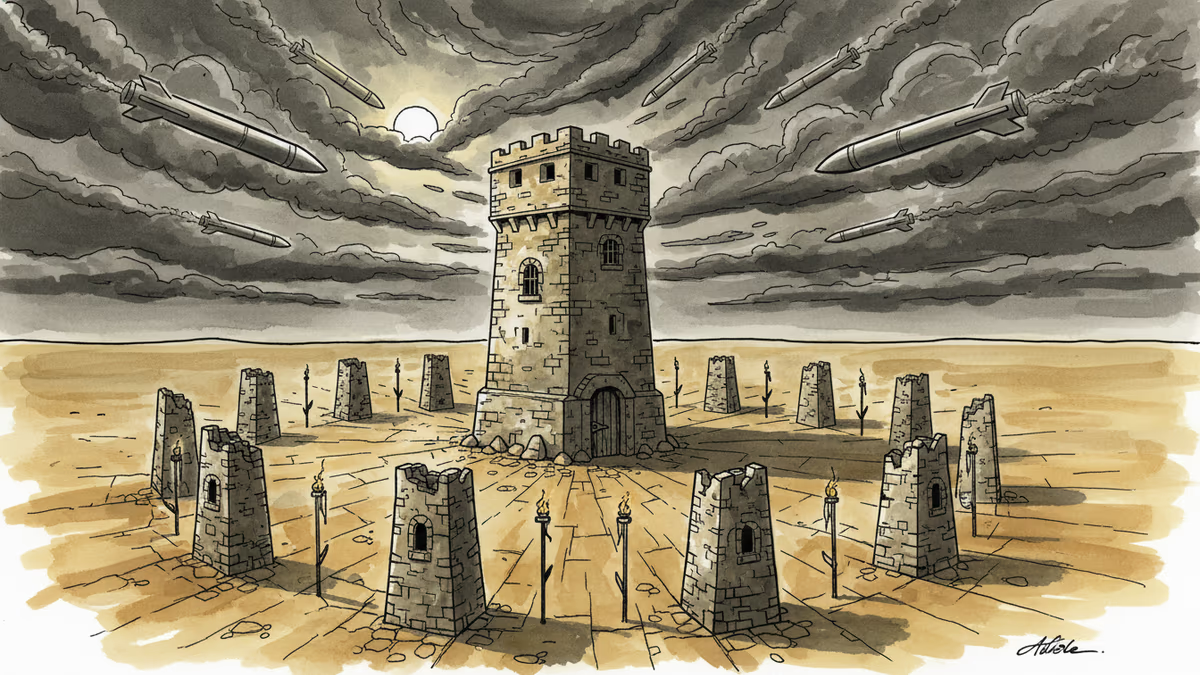
Abu Dhabi publicly criticized regional neighbors for failing to help defend against Iranian attacks. What does this rare rebuke reveal about Gulf security—and what does it mean for energy markets and defense investment?
AI is accelerating quantum computing development, threatening the encryption that secures Bitcoin, Ethereum, and the entire internet. Security experts warn the arms race has already begun.
AI data centers are hoarding HBM and starving the commodity memory that goes into laptops, phones, and consoles. Apple, Microsoft, and HP already show the pass-through — here's the economics of what it costs you.
Ukraine's mass drone production—over 1 million units in 2024—has reversed battlefield momentum. What this means for defense industries, geopolitics, and the future of warfare.
Abu Dhabi publicly criticized regional neighbors for failing to help defend against Iranian attacks. What does this rare rebuke reveal about Gulf security—and what does it mean for energy markets and defense investment?
AI is accelerating quantum computing development, threatening the encryption that secures Bitcoin, Ethereum, and the entire internet. Security experts warn the arms race has already begun.
Thoughts
Share your thoughts on this article
Sign in to join the conversation