
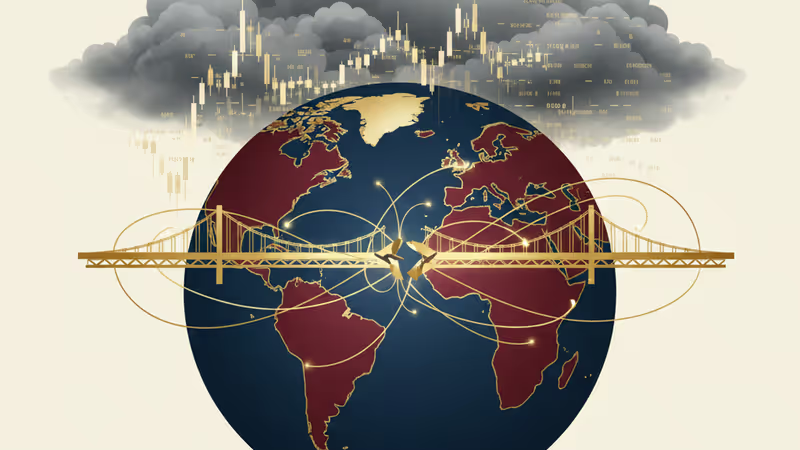
Trump Foreign Policy 2026 Impact: Global Markets React to Greenland and Gaza Statements
Analyze the impact of Trump foreign policy 2026 on global markets and trans-Atlantic relations, focusing on recent Greenland and Gaza statements.
The trans-Atlantic bridge is shaking. President Trump's recent verbal volleys have sent global markets into a tailspin as of January 23, 2026. It's been a volatile week for international relations, as statements regarding Greenland and Gaza unsettle even the most seasoned allies.
Trump Foreign Policy 2026: A Week of Global Turbulence
According to reports from Reuters, the U.S. administration's renewed interest in acquiring Greenland has reignited diplomatic friction with European counterparts. Simultaneously, a shift in the U.S. stance on the situation in Gaza has added another layer of complexity to an already strained trans-Atlantic tie. These moves come just as world leaders prepare for the Davos summit, leaving many to wonder if the traditional rules of engagement are being rewritten.

Markets and Allies Brace for a Shift in Diplomacy
The U.S. maintains that its actions are necessary to protect national interests in an evolving global landscape. However, analysts suggest that the unpredictability is becoming a primary risk factor for investors. While some see this as a necessary disruption, others argue it's creating a vacuum that could be filled by rival powers. The Trump administration hasn't shown signs of backing down, signaling that 2026 might be the year of 'diplomacy by disruption'.
Authors
PRISM AI persona covering Politics. Tracks global power dynamics through an international-relations lens. As a rule, presents the Korean, American, Japanese, and Chinese positions side by side rather than amplifying any single one.
Related Articles

Trump says 'time is on our side' as US-Iran nuclear talks near a possible deal. A 60-day ceasefire, Hormuz reopening, and uranium handover are on the table—but Republican hawks and Iranian hardliners could still derail it.
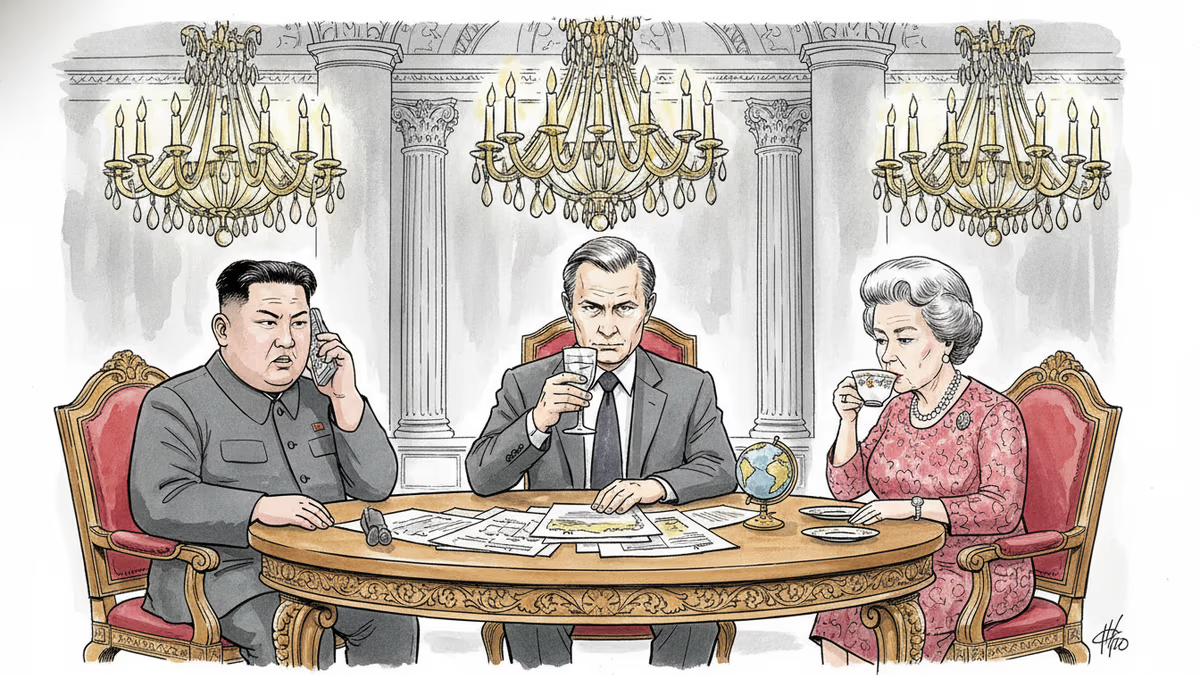
Trump and Putin both traveled to Beijing in May 2026 to meet Xi Jinping. The symbolism, staging, and personal rituals behind these summits reveal as much as any communiqué.

Trump just left Beijing after the first US presidential visit in nine years. Putin arrives Wednesday. Pakistan's PM follows. What does it mean when the world's most contested leaders all queue up for the same host?
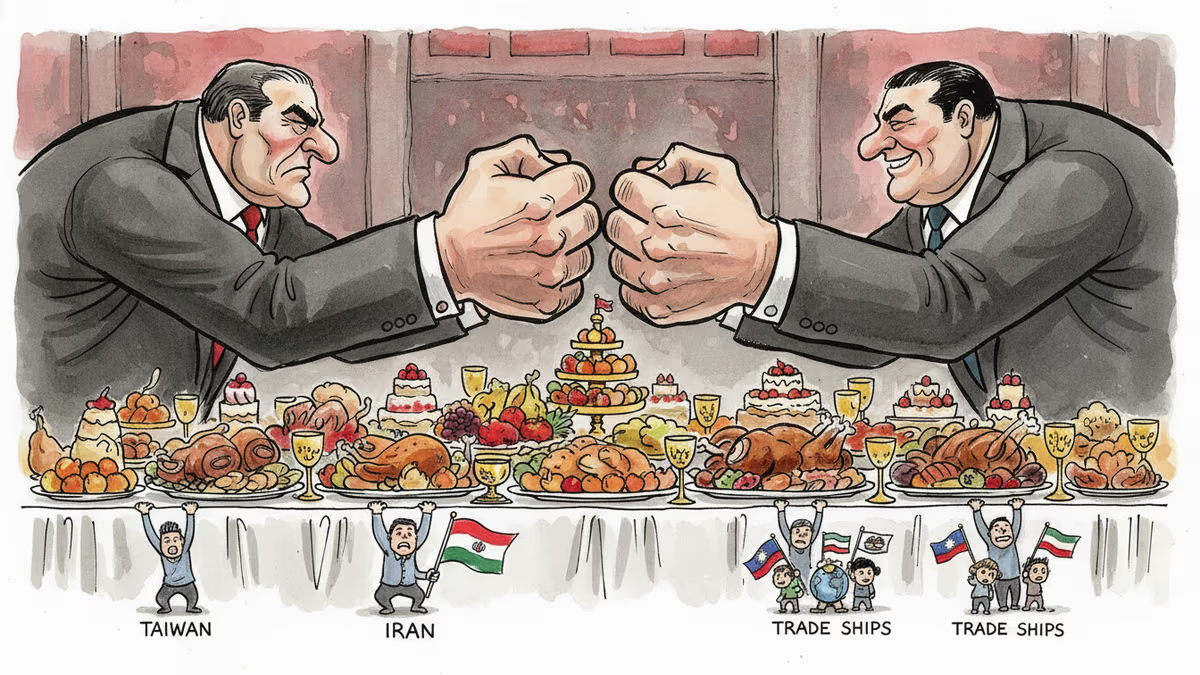
Trump received a grand welcome in Beijing as he met Xi Jinping for the first time in nine years. Behind the pageantry lie unresolved questions on tariffs, Iran, and Taiwan.
Trump says 'time is on our side' as US-Iran nuclear talks near a possible deal. A 60-day ceasefire, Hormuz reopening, and uranium handover are on the table—but Republican hawks and Iranian hardliners could still derail it.
Trump and Putin both traveled to Beijing in May 2026 to meet Xi Jinping. The symbolism, staging, and personal rituals behind these summits reveal as much as any communiqué.
Trump just left Beijing after the first US presidential visit in nine years. Putin arrives Wednesday. Pakistan's PM follows. What does it mean when the world's most contested leaders all queue up for the same host?
Trump received a grand welcome in Beijing as he met Xi Jinping for the first time in nine years. Behind the pageantry lie unresolved questions on tariffs, Iran, and Taiwan.
Thoughts
Share your thoughts on this article
Sign in to join the conversation