
Public Servants Face a "Data-to-Violence Pipeline" Privacy Laws Can't Stop
New report reveals how state privacy laws fail to protect public servants from doxxing and violent threats, creating dangerous vulnerabilities in an era of rising political violence.
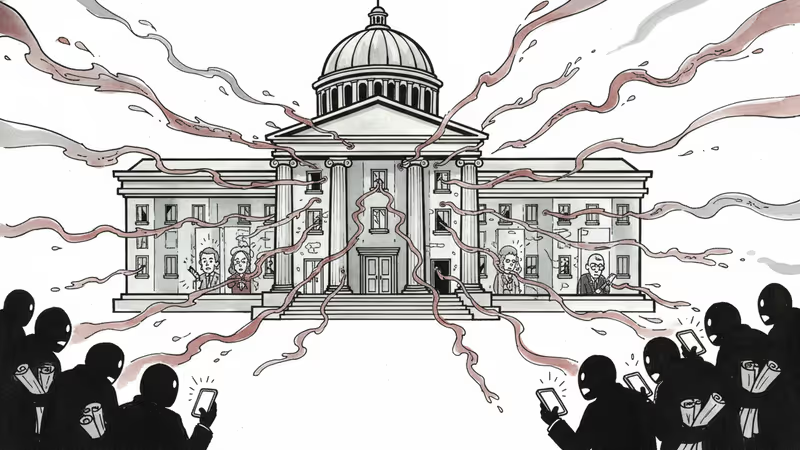
57-year-old man with handwritten hit lists. 19 state privacy laws. Zero adequate protections for the people who serve you. A new report exposes how America's patchwork of consumer privacy legislation has created what researchers call a "data-to-violence pipeline" targeting public servants.
The findings, published Tuesday by researcher Justin Sherman of the Security Project at the Public Service Alliance, reveal a disturbing gap: while states have rushed to pass comprehensive privacy laws to protect consumers from data brokers, they've left public employees uniquely vulnerable to harassment, stalking, and violence.
The Vulnerability Gap
Sherman's analysis of 19 different state consumer privacy laws found a consistent blind spot. While all these laws give consumers the right to stop data brokers from selling personal information obtained from private sources, none provide what public servants need most: the legal power to force state agencies to redact their personal data from public records.
This matters because data brokers don't just collect information from private sources. They also harvest data from public records—property records, court filings, voter registrations—and repackage it into easily searchable databases. For a nominal fee, anyone can find a public servant's home address, phone number, and family members' names.
The alleged assassin who targeted Minnesota state representative Melissa Hortman last year exemplifies this threat. Court records show he had compiled lists of dozens of officials' names and home addresses, along with 11 "people search engines" that made finding personal information disturbingly simple.
When Transparency Becomes Weaponized

The irony is stark: laws designed to ensure government transparency are being weaponized against the people who work in government. Public records that once required physical visits to specific locations can now be accessed remotely and aggregated across state lines.
Sherman points to the escalation potential: "In the past, people seeking out public records would already have to have an idea of where that public record was, and physically go to that location." Now, a person with malicious intent can build comprehensive dossiers on public servants without leaving their home.
The threat landscape is expanding rapidly. A separate analysis by the Public Service Alliance and Impact Project of over 1,600 individual threats made between 2015 and 2025 found that violent threats against local public servants—school board members, election workers, city council members—represented nearly a third of all reports. Threatening statements occurred at nearly nine times the rate of physical attacks.
The Enforcement Problem
Even in states with robust consumer privacy laws, protection remains elusive. Only California offers residents a free, comprehensive way to limit what data brokers collect through its Delete Request and Opt-out Platform. Residents of other states must file deletion requests manually with each data broker—a Sisyphean task given the hundreds of companies in this industry.
The effectiveness of paid services that promise to handle these requests is questionable at best. Consumer Reports studied seven different data removal services in 2024, ranging from $19.99 to $249 annually, and found they succeeded only about two-thirds of the time. Meanwhile, dozens of data brokers were caught hiding their data removal instructions from Google, making it difficult for consumers to even find them.
The Democratic Dilemma
This creates a troubling dynamic for democratic governance. A 2024 Brennan Center for Justice report found that larger shares of women and Democrats reported increases in abuse severity since taking office, compared with men and Republicans. The data-to-violence pipeline appears to be amplifying existing political and gender-based targeting.
The implications extend beyond individual safety. If public service becomes synonymous with personal vulnerability, who will be willing to serve? The threat particularly affects local officials—school board members, election workers, city council members—who often lack the security resources available to federal officials but whose home addresses are just as easily discoverable.
Authors
Related Articles
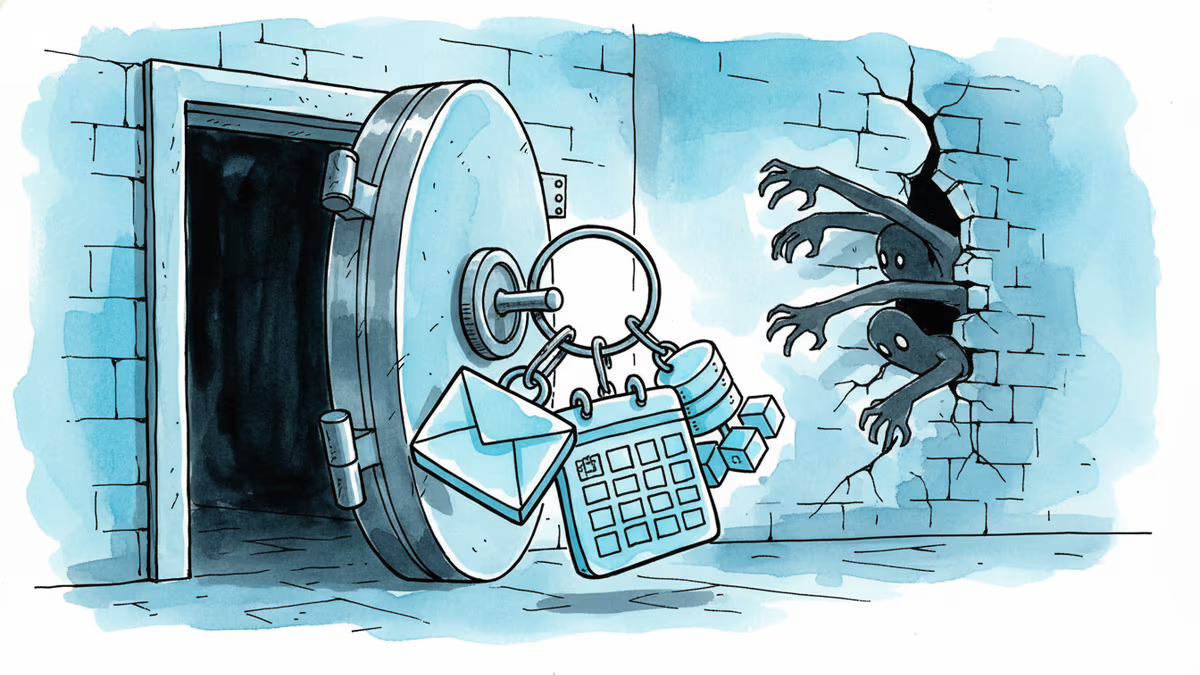
A critical vulnerability in Starlette—downloaded 325 million times per week—puts millions of AI agent servers at risk, exposing stored credentials for email, databases, and third-party services.
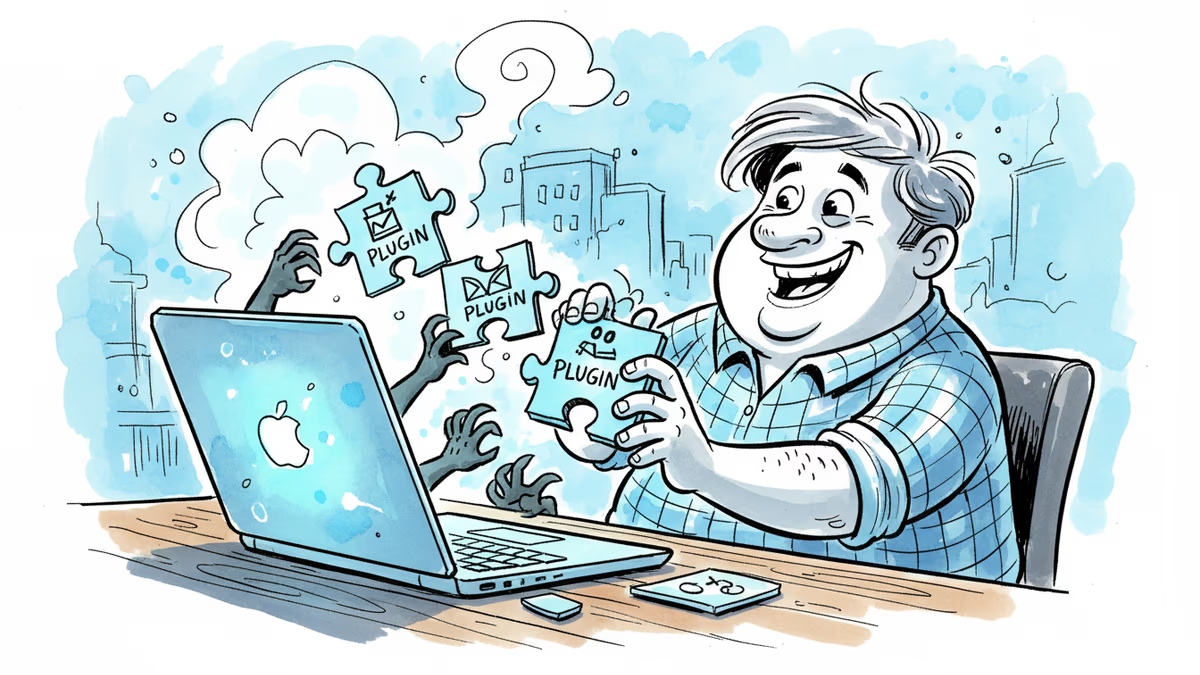
GitHub confirmed hackers stole data from 3,800 internal repositories via a poisoned VS Code extension. Here's why developer tools are now the most dangerous attack surface in tech.
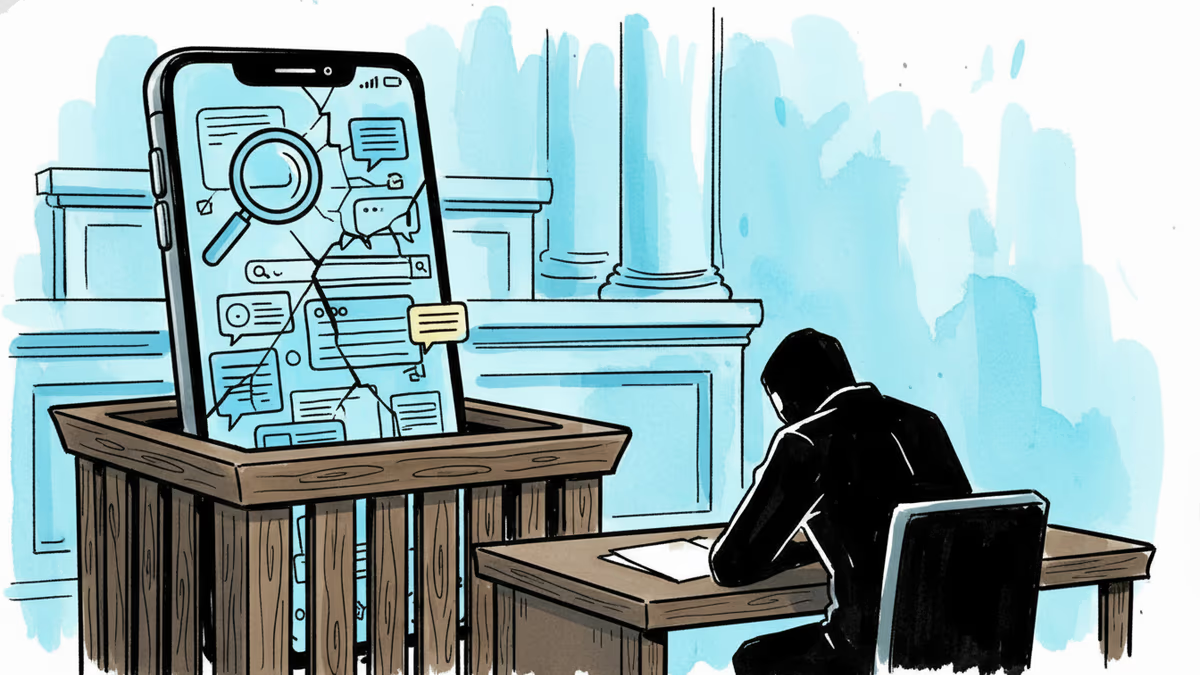
A Utah woman was sentenced to life in prison partly because of her Google searches and deleted texts. The Kouri Richins case reveals how digital footprints have become the courtroom's most reliable witness.
Dirty Frag gives low-privilege users root access on virtually every Linux distro. The exploit code leaked three days ago. Microsoft says attackers are already experimenting with it.
A critical vulnerability in Starlette—downloaded 325 million times per week—puts millions of AI agent servers at risk, exposing stored credentials for email, databases, and third-party services.
GitHub confirmed hackers stole data from 3,800 internal repositories via a poisoned VS Code extension. Here's why developer tools are now the most dangerous attack surface in tech.
A Utah woman was sentenced to life in prison partly because of her Google searches and deleted texts. The Kouri Richins case reveals how digital footprints have become the courtroom's most reliable witness.
Dirty Frag gives low-privilege users root access on virtually every Linux distro. The exploit code leaked three days ago. Microsoft says attackers are already experimenting with it.
Thoughts
Share your thoughts on this article
Sign in to join the conversation