
Apple Starts Hiding Your Location Data From Cell Carriers
Apple introduces new security feature limiting precise location data sharing with carriers on select iPhone and iPad models. A privacy win or just the beginning?
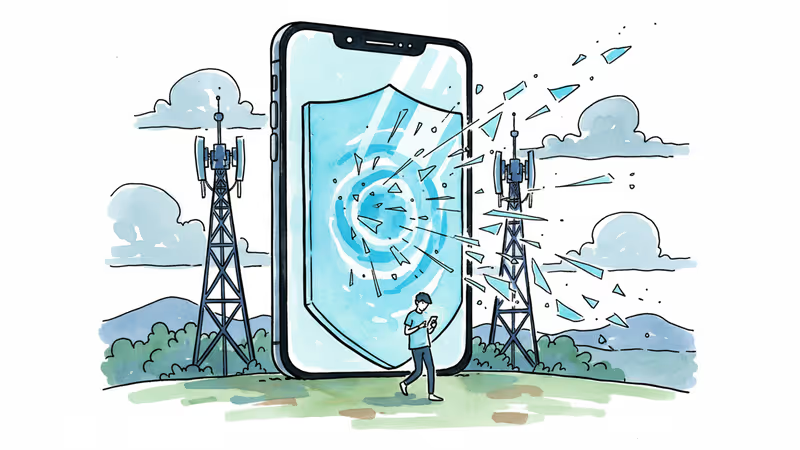
Your iPhone just got a little more secretive about where you are. This week, Apple quietly rolled out a new security feature that limits how precisely your phone shares location data with your cell carrier—and it could change how we think about mobile privacy.
The "limit precise location" feature, available on select iPhone Air, iPhone 16e, and iPad Pro (M5) models running iOS 26.3, reduces the accuracy of location data shared with carriers. Instead of pinpointing your exact street address, your device now shares only your general neighborhood. Crucially, this doesn't affect location sharing with apps or emergency responders—just the data your carrier collects behind the scenes.
Why Now? The Perfect Storm of Surveillance
The timing isn't coincidental. Law enforcement agencies are increasingly demanding real-time location data from carriers to track individuals, while hackers have been feasting on the treasure trove of personal data that telecom companies collect. Over the past year, Chinese hackers dubbed Salt Typhoon have persistently infiltrated major U.S. carriers including AT&T and Verizon, targeting call logs and messages of senior American officials.
But the threat goes deeper than headline-grabbing nation-state attacks. Long-standing vulnerabilities in global cellular networks have allowed surveillance vendors to track anyone, anywhere in the world. "Most people aren't aware that devices can send location data outside of just apps," explains Gary Miller, a mobile security expert at Citizen Lab and iVerify. "While devices can limit GPS disclosure at the app level, they haven't been able to lock down precise location disclosure to the network."
Limited Rollout, Unlimited Implications
Currently, the feature works with just a handful of global carriers: Telekom in Germany, AIS and True in Thailand, EE and BT in the UK, and Boost Mobile in the US. This limited availability raises questions about the technical complexity involved and the level of carrier cooperation required.

Apple declined to explain why they introduced this feature, and their silence speaks volumes. The company has built its brand around privacy, but this move goes beyond marketing—it's a technical solution to a systemic problem that most users didn't even know existed.
The Bigger Privacy Picture
This development highlights a fundamental shift in how we think about location privacy. For years, the focus has been on app permissions and GPS settings. But your phone constantly communicates with cell towers to maintain service, and that communication reveals your location whether you realize it or not.
"Apple's feature, while limited to very few operator networks, is a step in the right direction in providing users with greater privacy controls," Miller notes. It's a recognition that true privacy requires controlling data at every level—not just what you consciously share, but what your device shares automatically.
What This Means for You
If you're not on one of the supported carriers, you're still vulnerable to the old system of precise location sharing. But this could be the beginning of a broader industry shift. As more users become aware of how much location data their carriers collect, pressure will likely mount for wider implementation.
For businesses and governments that rely on location data for legitimate purposes—from urban planning to emergency response—this creates new challenges. How do you balance individual privacy with collective benefits that location data can provide?
Authors
Related Articles
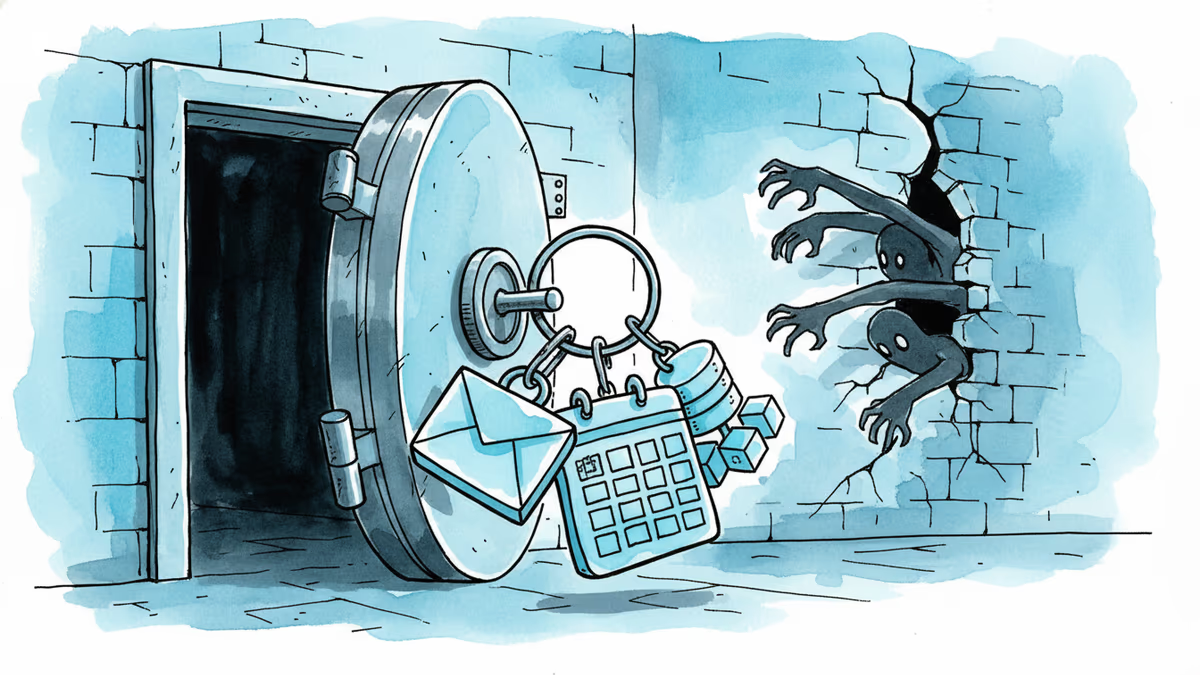
A critical vulnerability in Starlette—downloaded 325 million times per week—puts millions of AI agent servers at risk, exposing stored credentials for email, databases, and third-party services.
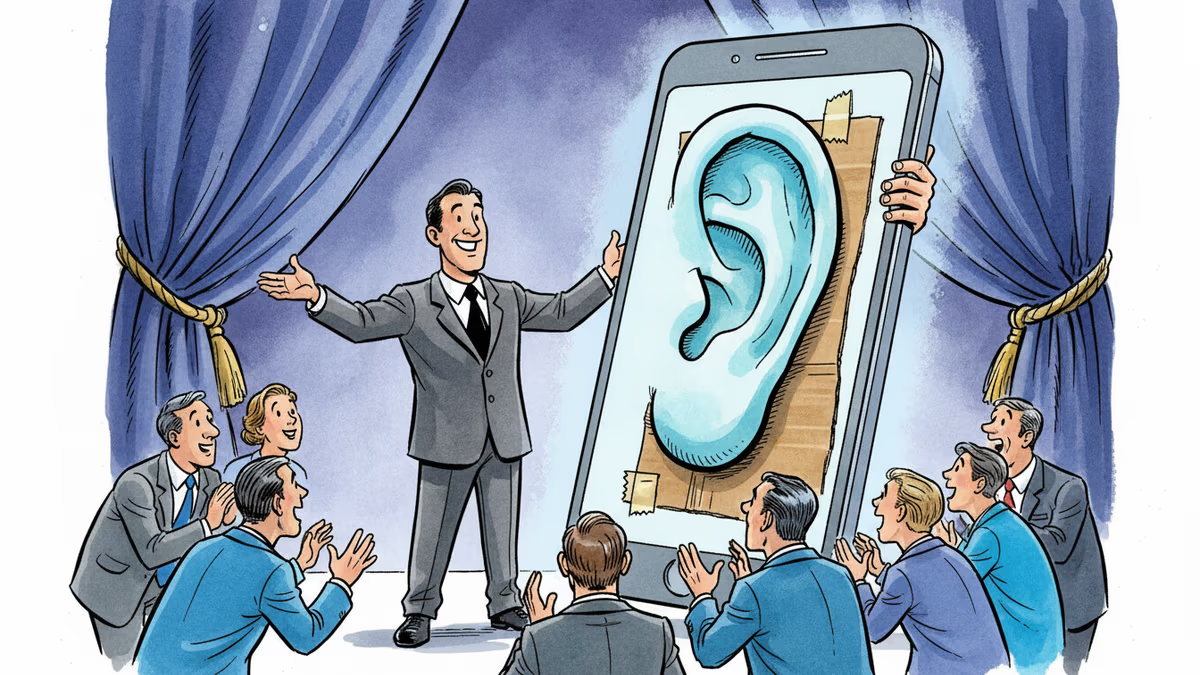
The FTC fined Cox Media and two ad firms $930,000 — not for actually eavesdropping on users, but for falsely claiming they could. The case raises uncomfortable questions about surveillance capitalism.
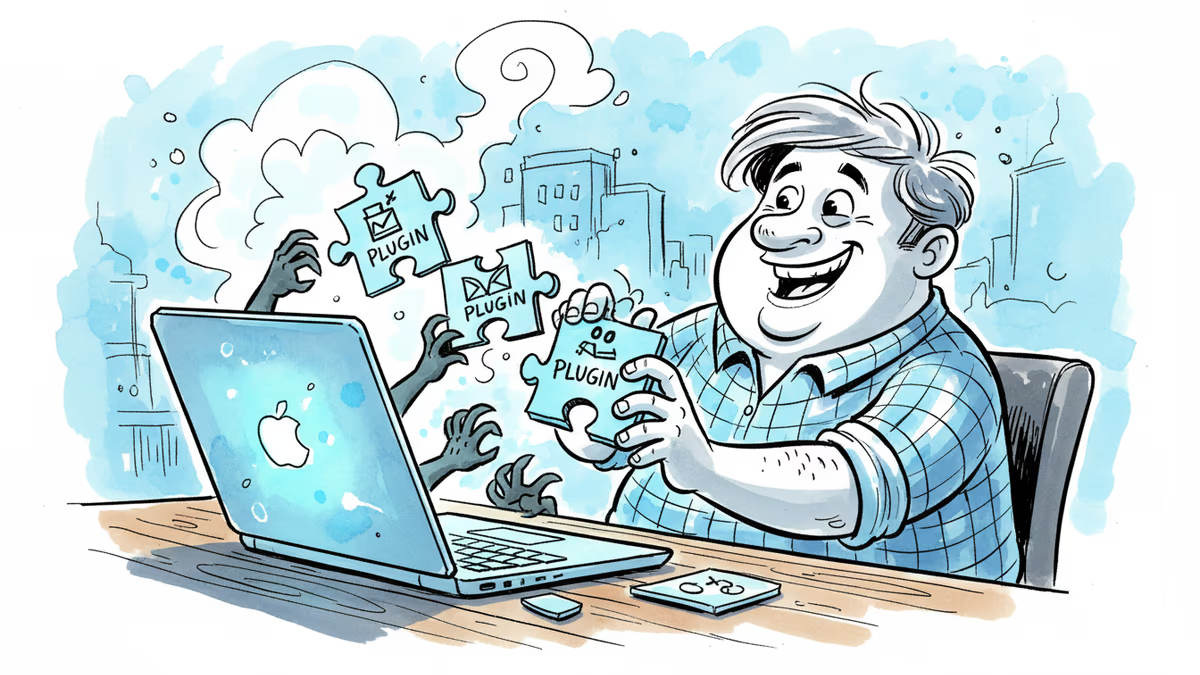
GitHub confirmed hackers stole data from 3,800 internal repositories via a poisoned VS Code extension. Here's why developer tools are now the most dangerous attack surface in tech.
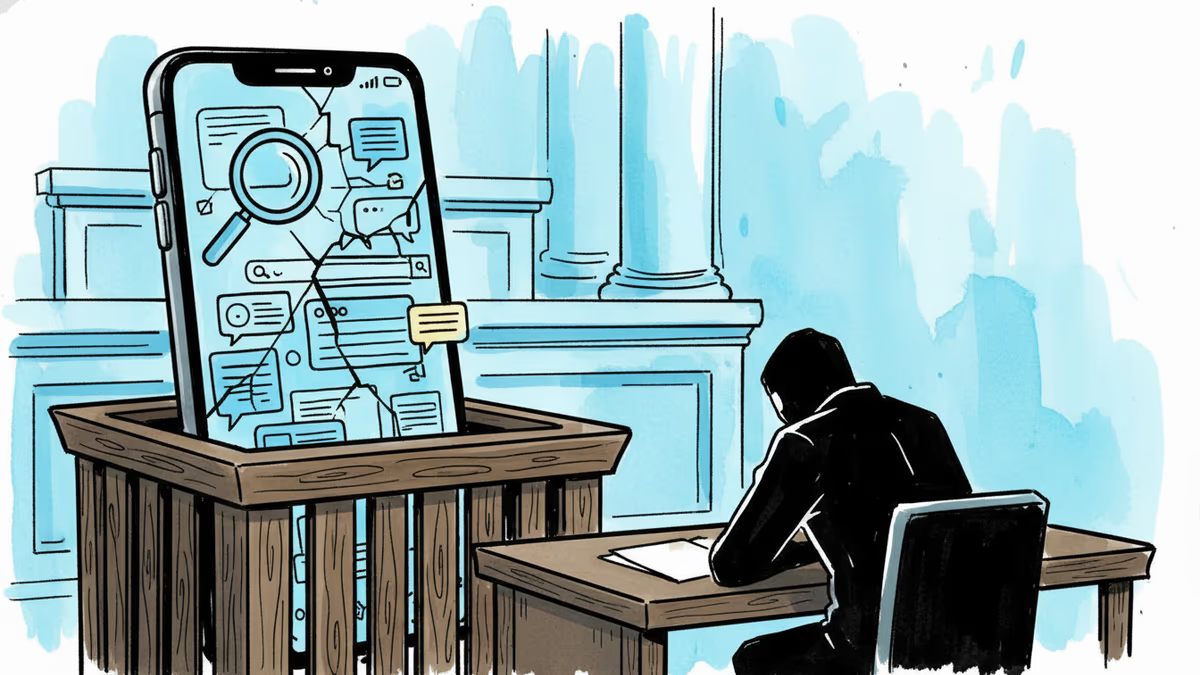
A Utah woman was sentenced to life in prison partly because of her Google searches and deleted texts. The Kouri Richins case reveals how digital footprints have become the courtroom's most reliable witness.
A critical vulnerability in Starlette—downloaded 325 million times per week—puts millions of AI agent servers at risk, exposing stored credentials for email, databases, and third-party services.
The FTC fined Cox Media and two ad firms $930,000 — not for actually eavesdropping on users, but for falsely claiming they could. The case raises uncomfortable questions about surveillance capitalism.
GitHub confirmed hackers stole data from 3,800 internal repositories via a poisoned VS Code extension. Here's why developer tools are now the most dangerous attack surface in tech.
A Utah woman was sentenced to life in prison partly because of her Google searches and deleted texts. The Kouri Richins case reveals how digital footprints have become the courtroom's most reliable witness.
Thoughts
Share your thoughts on this article
Sign in to join the conversation