
Apple Hires Halide Co-founder for Design Team
Sebastiaan de With, co-founder of popular iPhone camera app Halide, joins Apple's design team amid significant leadership changes and mixed reception of iOS 26's Liquid Glass design.
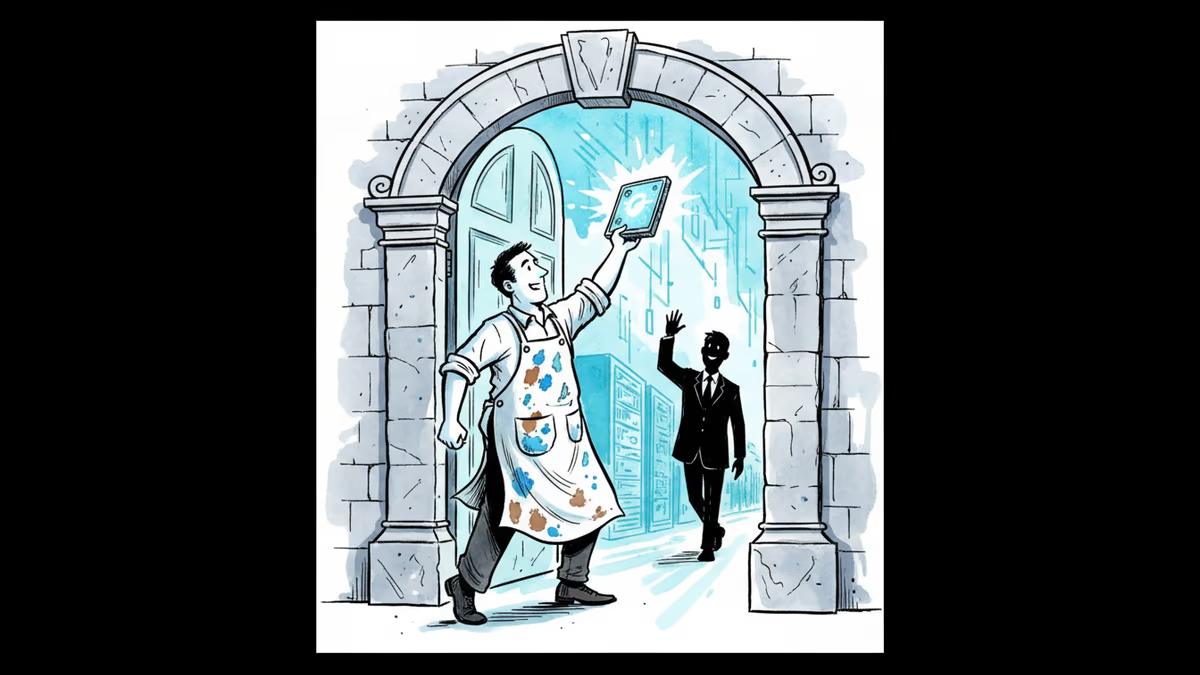
When the maker of one of the iPhone's most beloved third-party camera apps joins Apple's design team, it signals more than just a career move. Sebastiaan de With, co-founder of Halide and Kino, announced Wednesday that he's rejoining Apple after nearly a decade in the independent app world.
From Indie Developer to Apple Insider
De With isn't entirely new to Cupertino. This marks his second stint at Apple, where he previously worked on iCloud and Find My. After leaving Apple, he spent time at Sony, T-Mobile, and Mozilla before co-founding Lux with Ben Sandofsky in 2016. Their company created some of the most sophisticated photography apps for iPhone, earning praise from both amateur enthusiasts and professional photographers.
"So excited to work with the very best team in the world on my favorite products," de With posted on X. Meanwhile, Sandofsky assured users on Reddit that Halide development will continue under Lux, coinciding with today's public preview release of Halide Mark III, which focuses on "Looks" – a feature recreating film camera aesthetics.
Timing Tells a Story
De With's arrival comes at a pivotal moment for Apple's design division. The company's Liquid Glass design language introduced with iOS 26 received lukewarm reception from users and critics alike. More significantly, Apple's chief of user interface design, Alan Dye, departed for Meta in December, creating a leadership vacuum.

Perhaps most telling is the recent power shift reported by Bloomberg: John Ternus, widely considered Tim Cook's successor, took control of both hardware and software design in late 2025. This consolidation suggests Apple is rethinking how it approaches product development at the highest levels.
The Third-Party Perspective
Halide represents something unique in the App Store ecosystem. While Apple's built-in Camera app serves the masses, Halide carved out a niche for users who wanted manual controls, RAW shooting capabilities, and professional-grade features. The app became a testament to what's possible when developers push beyond platform limitations.
This hiring raises intriguing questions about Apple's relationship with its developer community. Is this talent acquisition or talent absorption? The company has a history of "Sherlocking" – incorporating third-party app features into its own software, sometimes rendering the originals obsolete.
Design Philosophy in Transition
De With brings a unique perspective: he understands both the constraints of working within Apple's ecosystem and the freedom of building outside it. His experience creating apps that feel distinctly Apple-like while offering capabilities Apple chose not to include could prove invaluable as the company navigates design challenges.
The photography space, in particular, has become increasingly competitive. With Google's computational photography advances and emerging AI-powered features, Apple needs to maintain its edge in an area where iPhones have traditionally excelled.
Authors
Related Articles
After 15 years of fragmented mobile messaging, Apple and Google are rolling out end-to-end encrypted RCS messaging between iPhones and Android devices. Here's what changed, why it took so long, and what it means for your privacy.
Apple agreed to pay $250 million to settle claims it misled iPhone 16 buyers about Apple Intelligence features. What this means for consumers, Big Tech marketing, and the AI industry.
Apple quietly removed the entry-level $599 Mac Mini, raising the starting price to $799 — just one day after Tim Cook warned of chip supply constraints on the earnings call.
Apple names John Ternus, its hardware engineering chief, as the next CEO. The shift from operator to product person signals where Apple thinks its next decade of growth will come from — and raises real questions about what comes next.
After 15 years of fragmented mobile messaging, Apple and Google are rolling out end-to-end encrypted RCS messaging between iPhones and Android devices. Here's what changed, why it took so long, and what it means for your privacy.
Apple agreed to pay $250 million to settle claims it misled iPhone 16 buyers about Apple Intelligence features. What this means for consumers, Big Tech marketing, and the AI industry.
Apple quietly removed the entry-level $599 Mac Mini, raising the starting price to $799 — just one day after Tim Cook warned of chip supply constraints on the earnings call.
Apple names John Ternus, its hardware engineering chief, as the next CEO. The shift from operator to product person signals where Apple thinks its next decade of growth will come from — and raises real questions about what comes next.
Thoughts
Share your thoughts on this article
Sign in to join the conversation