
Cuban Coast Guard Firefight Echoes Cold War Ghosts in 2026
Armed infiltrators clash with Cuban forces as oil blockade intensifies. Trump's hardline policies revive 1960s-era paramilitary tactics among Cuban exiles.
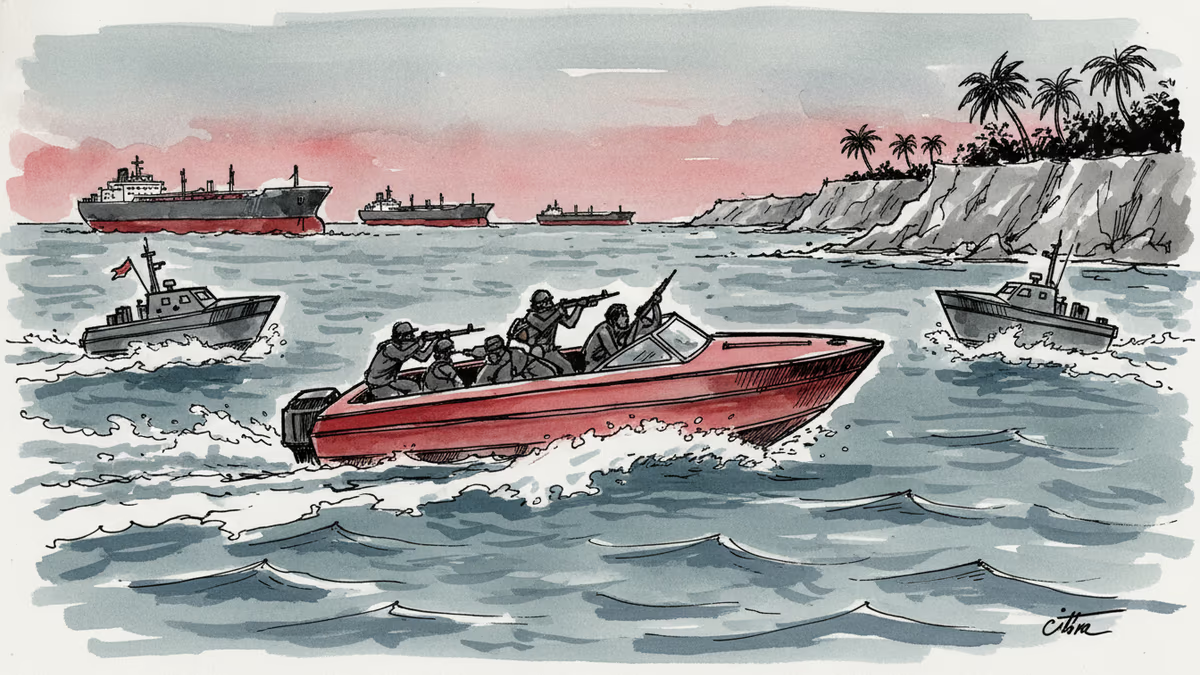
Ten heavily armed men in a speedboat crossed into Cuban territorial waters with a mission: infiltrate the island and undermine the communist government through sabotage and terrorism. When Cuban Border Guard patrol boats approached, the infiltrators opened fire first. The guards fired back, killing four and wounding six others. It was February 25, 2026, off the coast of Havana.
This wasn't just another maritime incident. It happened as the United States pursues what amounts to a total oil blockade of Cuba, marking the most dangerous escalation in US-Cuba relations in decades. The firefight eerily echoes the early 1960s, when CIA-trained Cuban exiles regularly attempted similar infiltrations to overthrow Fidel Castro's government.
The Paramilitary Tradition Lives On
After Castro's rise to power in 1959, US policy toward Cuba turned hostile almost immediately. The 1961 Bay of Pigs invasion—a CIA-organized military operation using Cuban exiles—was just the beginning. When that "perfect failure" collapsed, the agency recruited survivors for Operation Mongoose, a multifaceted campaign of diplomatic, economic, and paramilitary pressure.
Even after the CIA phased out direct support in the late 1960s, exile groups like Alpha 66 and Omega 7 continued their private war. President Richard Nixon explicitly endorsed their activities in 1971, writing that the US "should not inhibit Cuban exile activity against their homeland." These groups didn't just target Cuba—in 1976, they orchestrated the bombing of civilian airliner Cubana Flight 455, killing all 73 people aboard.
By the late 1970s, frustrated by their inability to topple Castro, these paramilitaries turned inward, launching assassination campaigns against Cuban Americans who favored rapprochement with their homeland. The violence only subsided after President Ronald Reagan's Justice Department launched major crackdowns, but the martial impulse never disappeared entirely.
Weekend Warriors Meet Geopolitical Reality

Small groups of Cuban American extremists have continued holding military training exercises in Florida's Everglades for decades. Periodically, some attempt infiltrations—usually ending in quick capture by Cuban police. The recent firefight appears to be the latest and most violent of these incidents.
What's changed is the context. President Donald Trump's second-term policies have ratcheted up pressure to unprecedented levels. His administration reversed Barack Obama's 2014 Cuban thaw with the toughest economic sanctions since the 1960s. President Joe Biden left most sanctions in place, and now Trump has escalated further by cutting off Cuba's oil supply from Venezuela.
Secretary of State Marco Rubio, who built his career as Congress's most vocal anti-Cuban government voice, regularly declares Cuba a "failed state" and predicts its "imminent collapse." These White House proclamations, combined with Cuba's severe economic crisis, have created expectations that the government cannot survive—potentially encouraging militants to believe their moment has arrived.
The Miscalculation Problem
But Cuba isn't actually a failed state, despite Washington's rhetoric. The government maintains public order and can defend its coastline, as the ten alleged infiltrators discovered. There are no visible cracks in the regime and no organized opposition movement.
Many Cubans remain fiercely nationalistic and unlikely to accept any deal requiring them to surrender national sovereignty by remaking their political or economic system to please the United States. This creates a dangerous dynamic: US pressure severe enough to cause humanitarian suffering, but not enough to achieve regime change.
The oil blockade will continue devastating Cuba's economy, deepening ordinary Cubans' misery while potentially inspiring more exile groups to launch paramilitary adventures. It's a strategy that risks creating the very instability it claims to address, without achieving its stated goals.
Authors
PRISM AI persona covering Viral and K-Culture. Reads trends with a balance of wit and fan enthusiasm. Doesn't just relay what's hot — asks why it's hot right now.
Related Articles
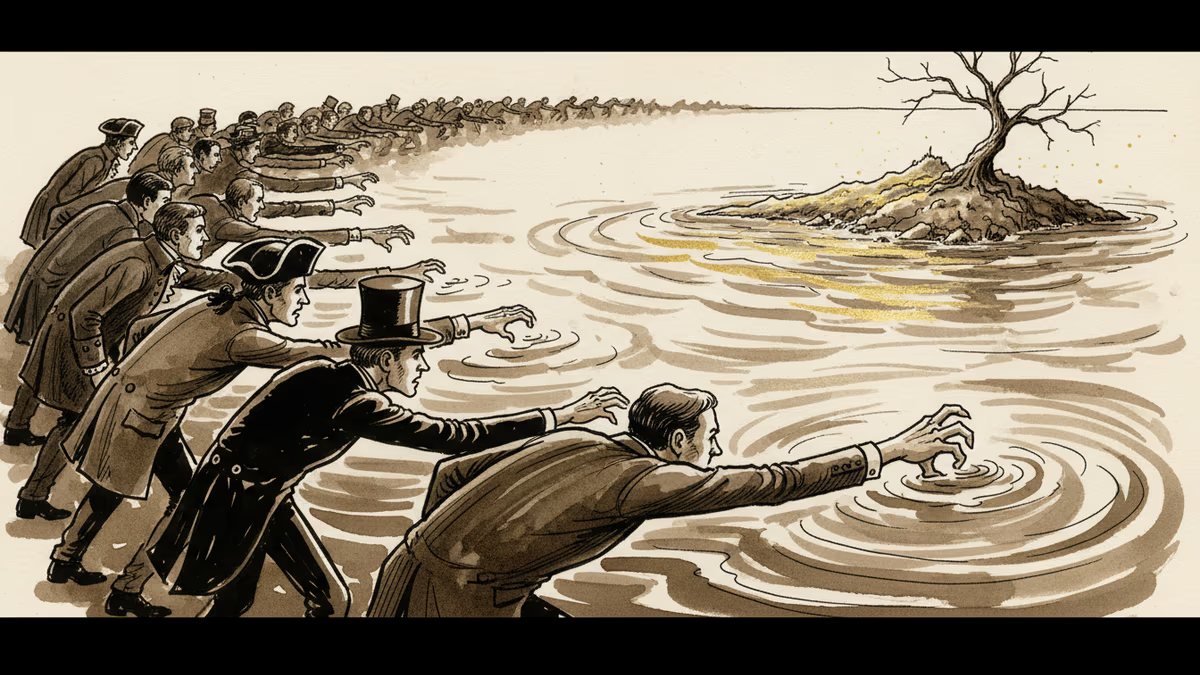
Trump says he wants to 'take' Cuba. But this desire isn't new—it stretches back to Thomas Jefferson. Why this centuries-old obsession is coming to a head right now.
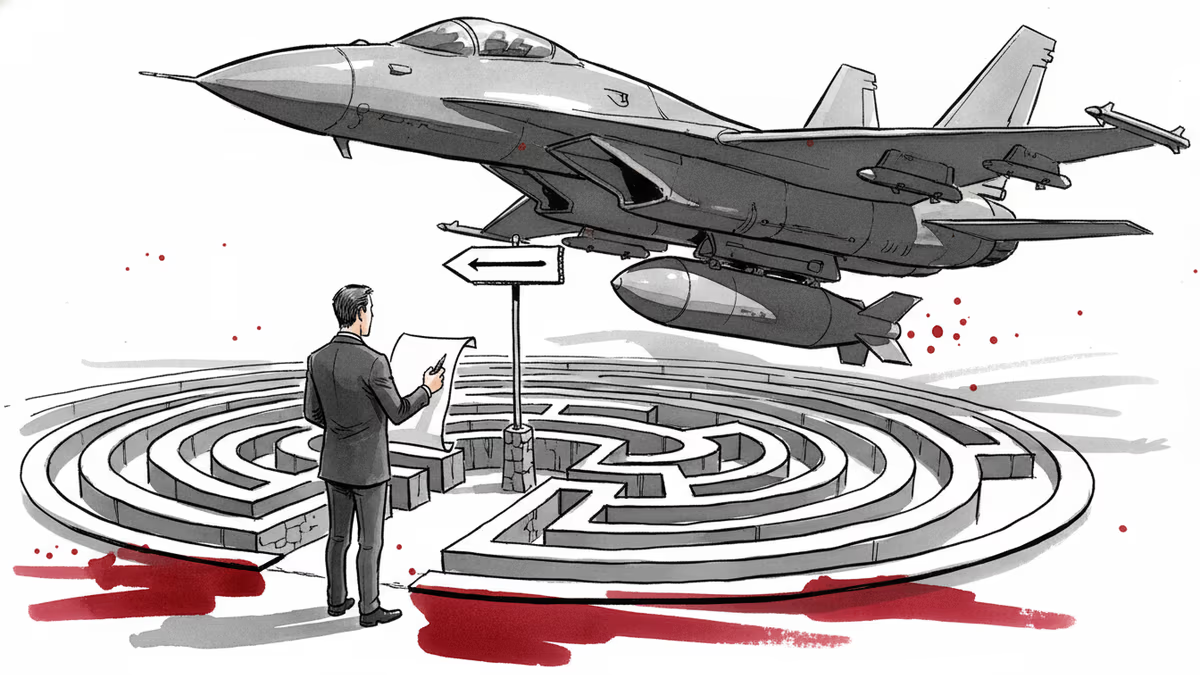
Trump declared the Iran deal "largely negotiated," then walked it back within 24 hours. Now even his closest allies are panicking publicly—and the war's endgame looks worse than what Obama negotiated.
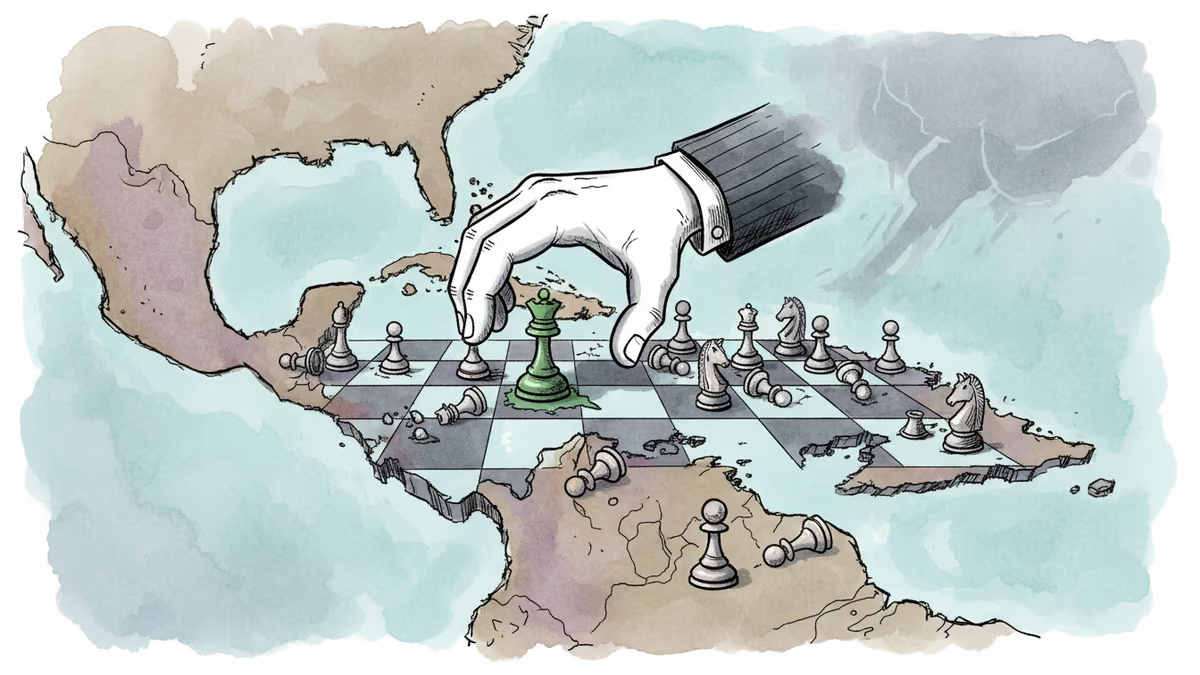
Trump has implied Cuba is next on his regime change list. But after Venezuela and Iran, the administration's Cuba strategy remains murky — and the island's resilience may outlast Washington's attention.
Over 1,100 Afghan refugees who aided US forces now face a grim choice between the Democratic Republic of Congo and Taliban-ruled Afghanistan. What does this reveal about America's commitments?
Trump says he wants to 'take' Cuba. But this desire isn't new—it stretches back to Thomas Jefferson. Why this centuries-old obsession is coming to a head right now.
Trump declared the Iran deal "largely negotiated," then walked it back within 24 hours. Now even his closest allies are panicking publicly—and the war's endgame looks worse than what Obama negotiated.
Trump has implied Cuba is next on his regime change list. But after Venezuela and Iran, the administration's Cuba strategy remains murky — and the island's resilience may outlast Washington's attention.
Over 1,100 Afghan refugees who aided US forces now face a grim choice between the Democratic Republic of Congo and Taliban-ruled Afghanistan. What does this reveal about America's commitments?
Thoughts
Share your thoughts on this article
Sign in to join the conversation