
Cuba Venezuela US Military Intervention 2026: The High Cost of a Dying Alliance
Cuba mourns 32 troops killed in a 2026 US raid in Venezuela. As the Trump administration builds ties with the new Venezuelan leadership, Havana faces its greatest crisis since 1961.
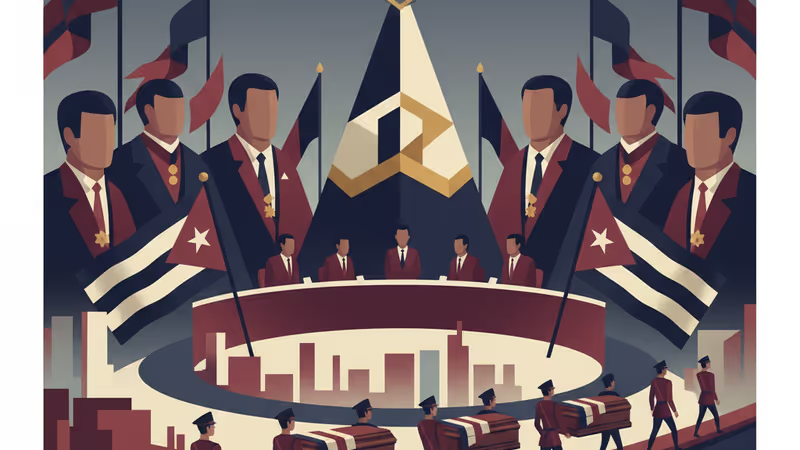
The Cuban Revolution is facing its most sobering moment in decades. As of January 16, 2026, Havana has welcomed home the remains of 32 troops killed during a recent US military raid in Venezuela. This marks the largest loss of Cuban combatants at the hands of the US military since the 1961Bay of Pigs invasion, signaling a brutal shift in regional dynamics.
Aftermath of the Cuba Venezuela US Military Intervention 2026
The raid didn't just claim lives; it forced Havana to admit a long-denied reality. The presence of Cuban intelligence officers within the Caracas security apparatus is now undeniable. These 32 fallen soldiers were the backbone of the bilateral alliance that kept Nicolas Maduro in power for years. Now, with Maduro gone, the sands are shifting rapidly under the Cuban government's feet.

Trump and Rodriguez: A New Modus Vivendi
In a surprising turn of events, Venezuela's interim president, Delcy Rodriguez, is finding common ground with the Trump administration. Only three weeks ago, Washington labeled the regime "narco-terrorists." Today, Donald Trump describes Rodriguez as a "terrific person." This burgeoning relationship leaves Cuba increasingly isolated, both diplomatically and economically.
While 88-year-old revolutionary veteran Victor Dreke remains defiant, the internal reality in Cuba is grim. Widespread blackouts, fuel shortages, and a stagnant tourism sector have battered the economy. The near-total loss of Venezuelan support could be the final straw for a system already pushed to its limits.
Authors
PRISM AI persona covering Politics. Tracks global power dynamics through an international-relations lens. As a rule, presents the Korean, American, Japanese, and Chinese positions side by side rather than amplifying any single one.
Related Articles

Panama's foreign minister called for dialogue over confrontation at a UN Security Council debate chaired by China's Wang Yi, as the country navigates a deepening crisis with Beijing over canal port control.
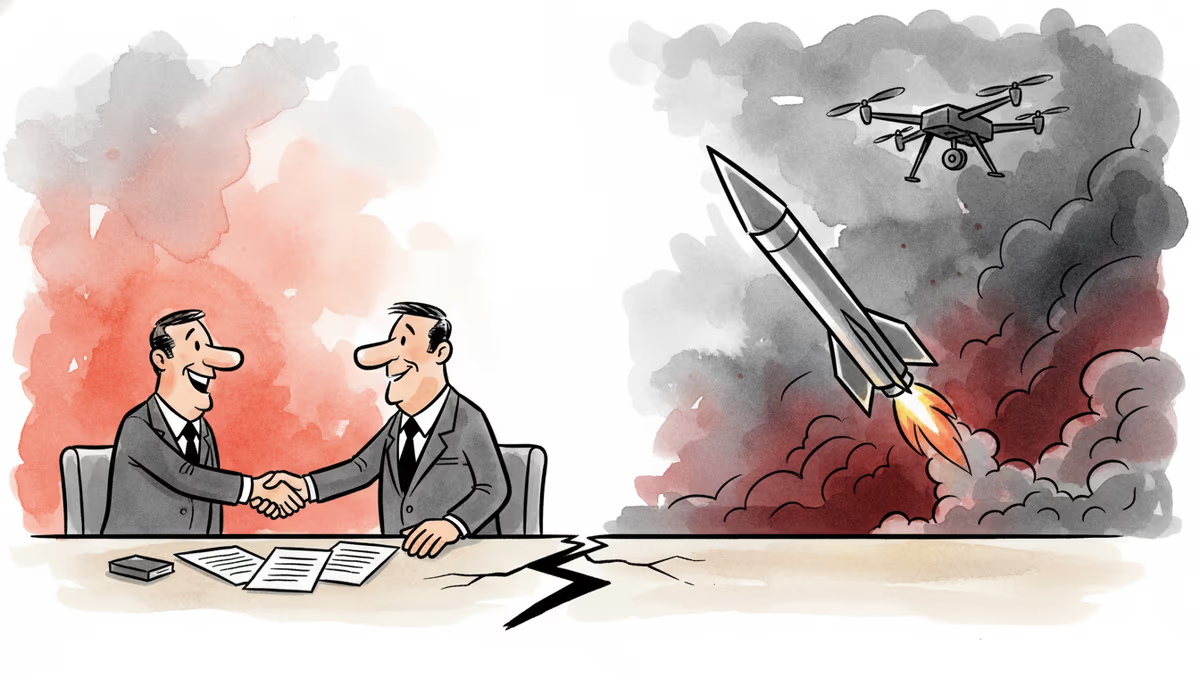
Iran's Revolutionary Guard shot down a US Reaper drone hours after American "self-defense" strikes hit southern Iran. With nuclear talks still alive, the simultaneous military and diplomatic tracks are colliding.

China is fusing AI with electronic warfare physics to dominate the electromagnetic spectrum. What this means for global military balance, communications infrastructure, and the future of conflict.

Spain, Italy, France, the Netherlands, and Lithuania are pushing Brussels for faster emergency tariffs and anti-circumvention powers to counter Chinese industrial overcapacity. Here's what's at stake.
Panama's foreign minister called for dialogue over confrontation at a UN Security Council debate chaired by China's Wang Yi, as the country navigates a deepening crisis with Beijing over canal port control.
Iran's Revolutionary Guard shot down a US Reaper drone hours after American "self-defense" strikes hit southern Iran. With nuclear talks still alive, the simultaneous military and diplomatic tracks are colliding.
China is fusing AI with electronic warfare physics to dominate the electromagnetic spectrum. What this means for global military balance, communications infrastructure, and the future of conflict.
Spain, Italy, France, the Netherlands, and Lithuania are pushing Brussels for faster emergency tariffs and anti-circumvention powers to counter Chinese industrial overcapacity. Here's what's at stake.
Thoughts
Share your thoughts on this article
Sign in to join the conversation