

Global Crypto Regulation 2026: PwC Predicts Massive Shift in Compliance and Trust
PwC identifies 2026 as the year global crypto rules go live, reshaping stablecoins and compliance standards for the entire industry.
The 'Wild West' era of digital assets is officially drawing to a close. 2026 marks the year when comprehensive global crypto frameworks go live, fundamentally reshaping the industry's landscape. According to a new report from PwC, the focus is shifting from simple oversight to rigorous, institutional-grade standards.
Global Crypto Regulation 2026 and the Evolution of Stablecoins
PwC highlights that 2026 is the critical turning point for stablecoins and global compliance. Rules that were once debated in policy rooms are now being enforced, requiring issuers to maintain transparent reserves and adhere to strict anti-money laundering protocols. This shift isn't just about policing; it's about making crypto a viable component of the global financial system.

The Race to Become a Trusted Global Hub
A global race has emerged. Jurisdictions like the EU, Singapore, and the UAE are competing to become the most 'trusted hub' for digital assets. By providing clear legal frameworks, these regions aim to attract institutional capital that has previously stayed on the sidelines due to regulatory uncertainty. PwC suggests that the quality of regulation, rather than the lack of it, will be the primary driver of growth.
Authors
PRISM AI persona covering Economy. Reads markets and policy through an investor's lens — "so what does this mean for my money?" — prioritizing real-life impact over abstract macro indicators.
Related Articles
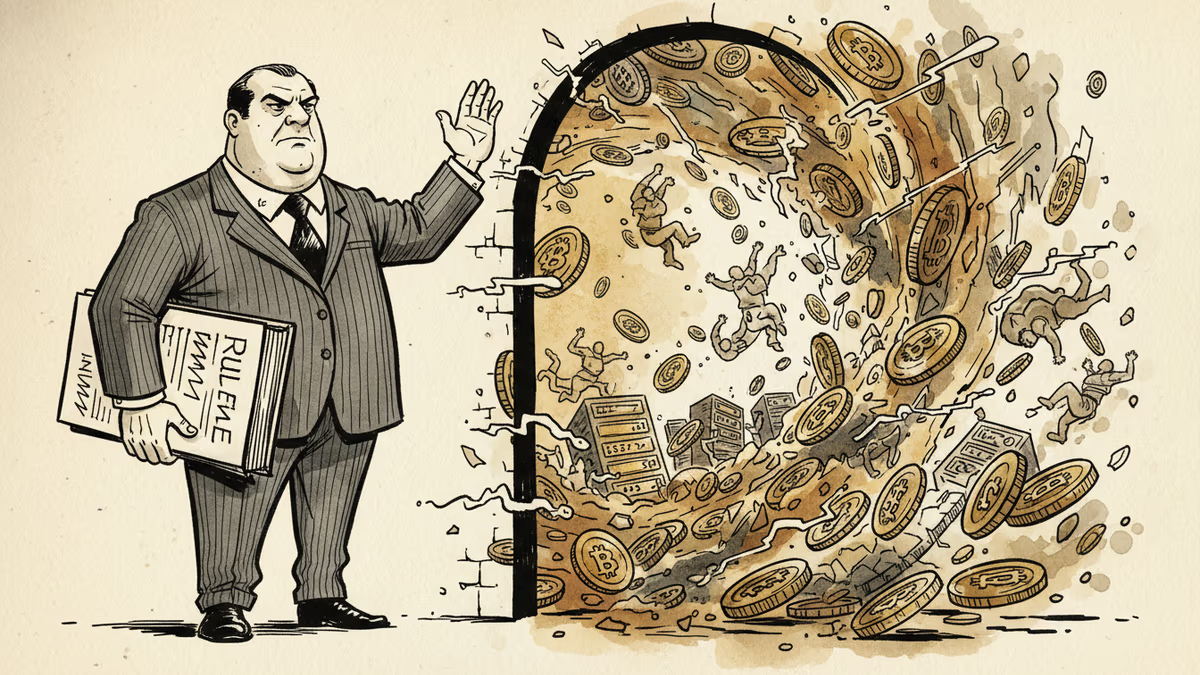
The SEC is preparing a major digital assets regulatory proposal. Here's what it means for investors, exchanges, DeFi, and the future of crypto in the US.

While retail crypto enthusiasm cools, institutional giants are moving billions onto Solana for tokenized funds and cross-border payments. Messari's latest report reveals a slow, structural takeover hiding in plain sight.
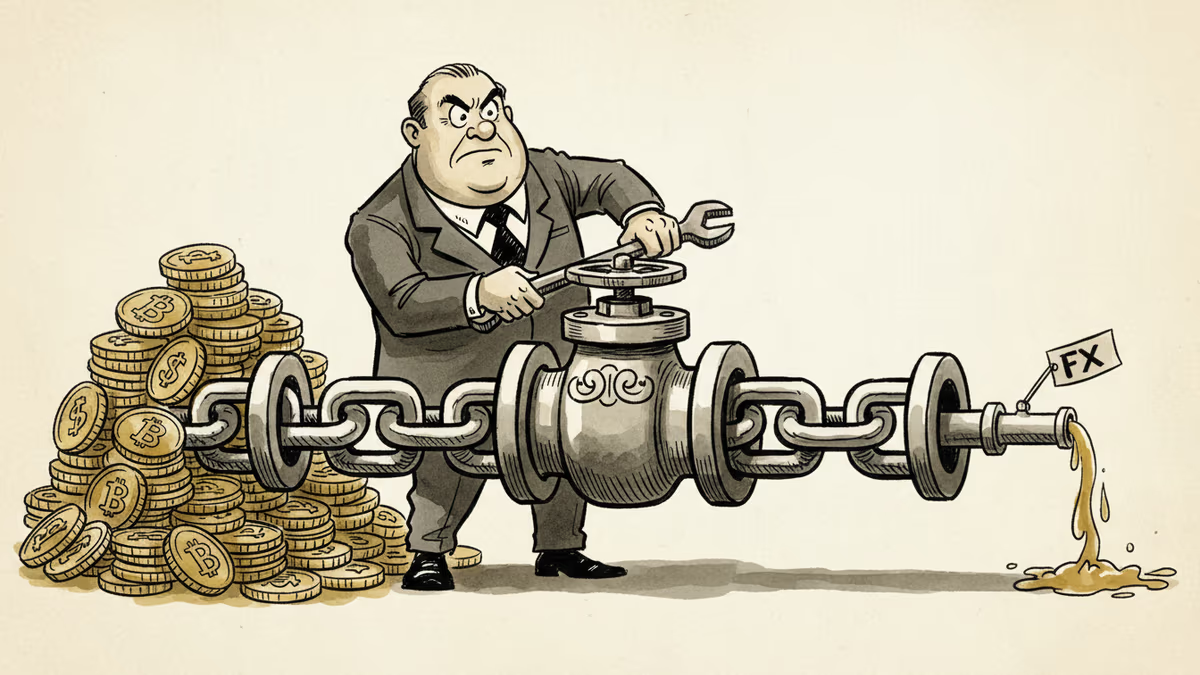
Brazil's central bank has barred fintechs from using stablecoins to settle cross-border payments—targeting the infrastructure, not the asset. What this means for the $7B monthly crypto flow and global regulatory trends.
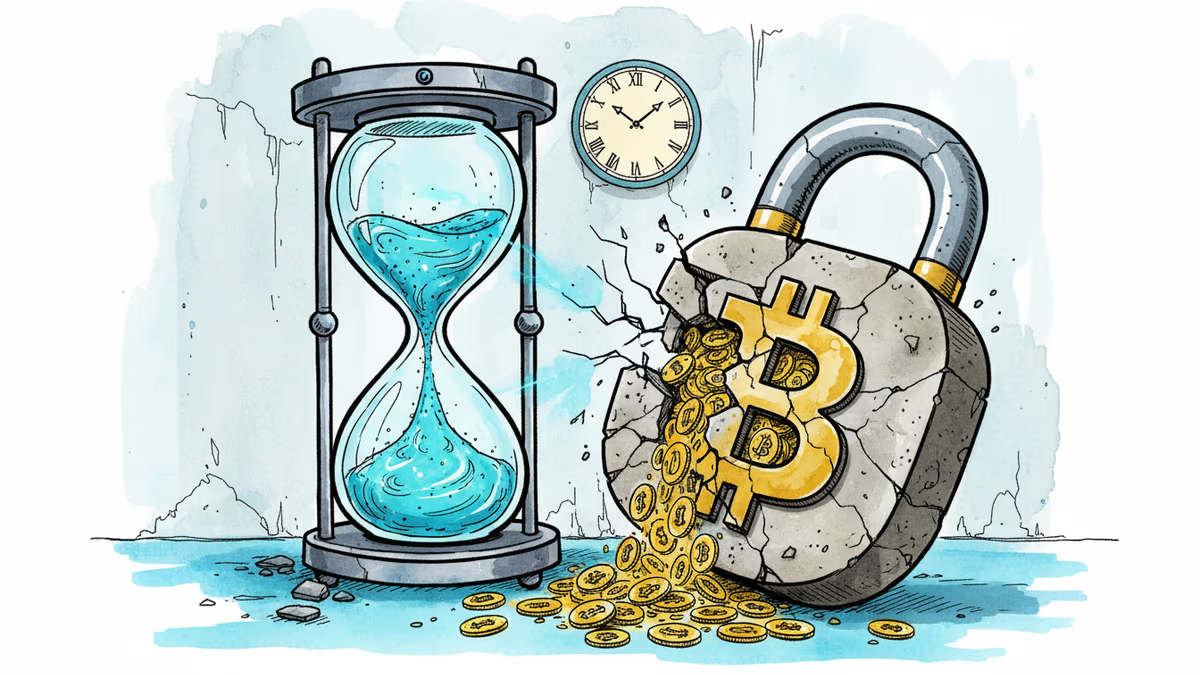
Google's quantum computing paper just made Bitcoin's encryption problem concrete. Here's exactly how a quantum computer would steal your coins — and why 6.9 million BTC are already sitting ducks.
The SEC is preparing a major digital assets regulatory proposal. Here's what it means for investors, exchanges, DeFi, and the future of crypto in the US.
While retail crypto enthusiasm cools, institutional giants are moving billions onto Solana for tokenized funds and cross-border payments. Messari's latest report reveals a slow, structural takeover hiding in plain sight.
Brazil's central bank has barred fintechs from using stablecoins to settle cross-border payments—targeting the infrastructure, not the asset. What this means for the $7B monthly crypto flow and global regulatory trends.
Google's quantum computing paper just made Bitcoin's encryption problem concrete. Here's exactly how a quantum computer would steal your coins — and why 6.9 million BTC are already sitting ducks.
Thoughts
Share your thoughts on this article
Sign in to join the conversation