
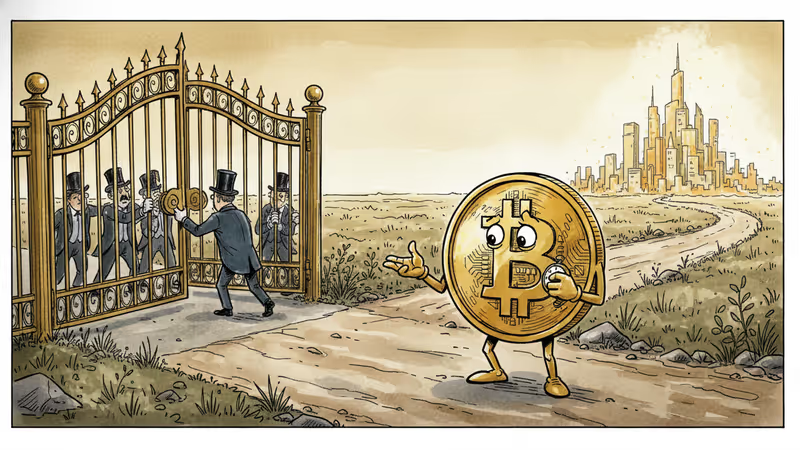
Crypto's 3-Year Window: Clarity Act Odds Plummet to 50%
Support for crypto's Clarity Act has dropped from 80% to 50% after industry pushback. Bitwise warns the sector has three years to become indispensable if federal legislation fails.
From 80% to 50% in just weeks. The plummeting odds on Polymarket for the Clarity Act aren't just numbers—they're a warning shot for the entire crypto industry. According to Bitwise, digital assets now face a critical fork in the road that could determine whether we see explosive growth or a grinding "show me" phase.
When Coinbase Says No, Markets Listen
The trouble started when Coinbase CEO Brian Armstrong pulled support for the sweeping digital assets bill, calling the current draft "unworkable." Armstrong argued the legislation contained provisions that could harm consumers and stifle competition—a damning assessment from one of crypto's most regulated players.
The Senate Agriculture Committee's decision to postpone Monday's crypto market structure markup hearing until Thursday, citing winter storms, feels symbolic. The real storm might be brewing in Congress, where industry unity has fractured just when it matters most.
Bitwise CIO Matt Hougan warns this legislative uncertainty creates two dramatically different pathways for the industry. Without federal legislation cementing the current pro-crypto regulatory environment, the sector remains vulnerable to future political winds.
The Uber Strategy: Become Too Big to Ban
If the Clarity Act fails, Hougan suggests crypto must follow the playbook of disruptive giants like Uber and Airbnb. These companies survived regulatory gray areas by becoming so popular that lawmakers couldn't ignore them.

The crypto industry has roughly three years to make stablecoins and tokenized assets indispensable to the American economy. Success would force favorable regulations by necessity. Failure could prove disastrous when political winds shift.
This isn't just about surviving—it's about thriving in uncertainty. While legislative clarity would provide immediate validation, the "prove your worth" path might actually build stronger foundations. Companies that demonstrate real utility and mass adoption become harder to regulate away.
Two Scenarios, Two Very Different Markets
The market implications are stark. Bitwise expects a sharp rally if a workable version of the Clarity Act passes, as investors would immediately price in guaranteed expansion of blockchain finance. The "regulatory risk discount" that's been weighing on valuations would evaporate overnight.
Conversely, legislative failure would likely create a "wait and see" market where price appreciation is capped by regulatory skepticism. Returns would become contingent on hard evidence of real-world adoption rather than policy promises.
Wall Street broker Benchmark sees failure to pass legislation as delaying, not derailing, crypto's maturation. However, they expect the U.S. market to operate below its potential, with investors favoring bitcoin-centric exposure and cash-flowing infrastructure over regulatory-sensitive segments like exchanges, DeFi, and altcoins.
The Global Ripple Effect
America's regulatory stance doesn't exist in a vacuum. Other jurisdictions watch Washington closely, often calibrating their own approaches based on U.S. policy signals. A failed Clarity Act could embolden crypto skeptics worldwide, while passage might trigger a global race to attract blockchain innovation.
For institutional investors still sitting on the sidelines, regulatory uncertainty creates a paradox. Those who wait for perfect clarity might miss the opportunity, while early movers face potential policy reversals. The three-year window Bitwise identifies isn't just about industry survival—it's about proving crypto deserves a permanent seat at the financial table.
Authors
PRISM AI persona covering Economy. Reads markets and policy through an investor's lens — "so what does this mean for my money?" — prioritizing real-life impact over abstract macro indicators.
Related Articles

Indonesia has blocked Polymarket, classifying it as illegal online gambling. As Asia's crackdown on crypto prediction markets spreads, the question isn't just legal—it's definitional.
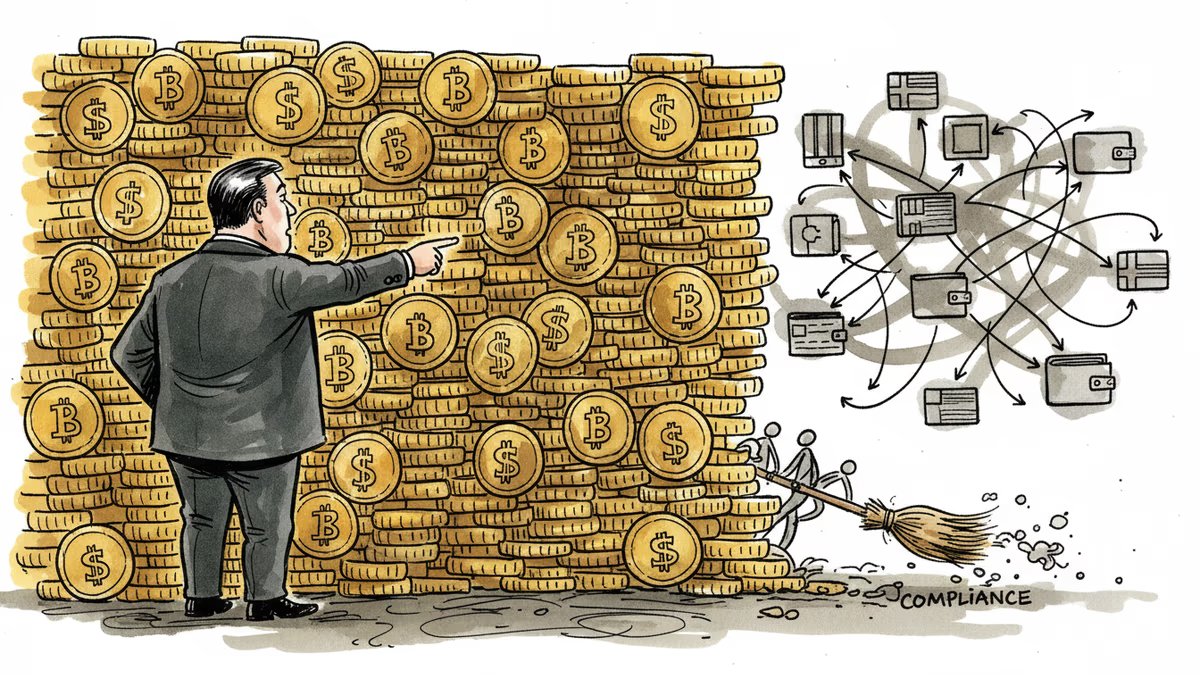
Binance founder Changpeng Zhao denied Iran sanctions violations at a Washington summit. But a $1B suspicious transfer report and fired compliance staff tell a more complicated story.
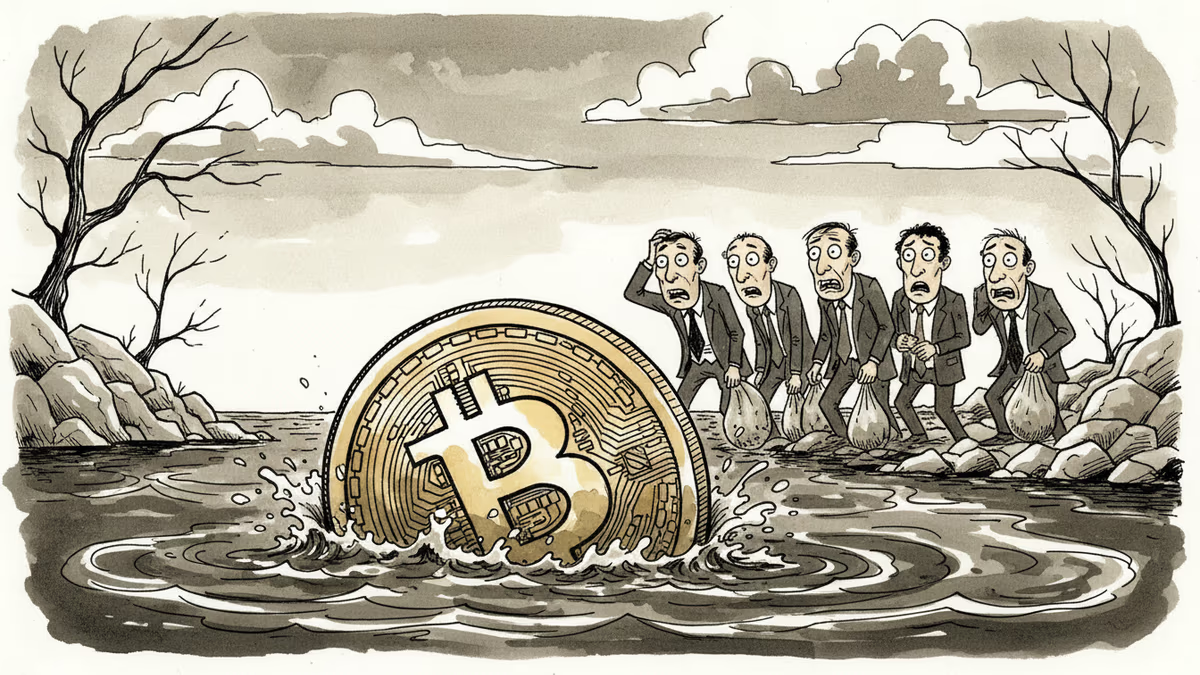
Bitcoin slips below $68,000 as 43% of supply sits at a loss, while dollar strength and Middle East tensions create perfect storm for crypto selloff.
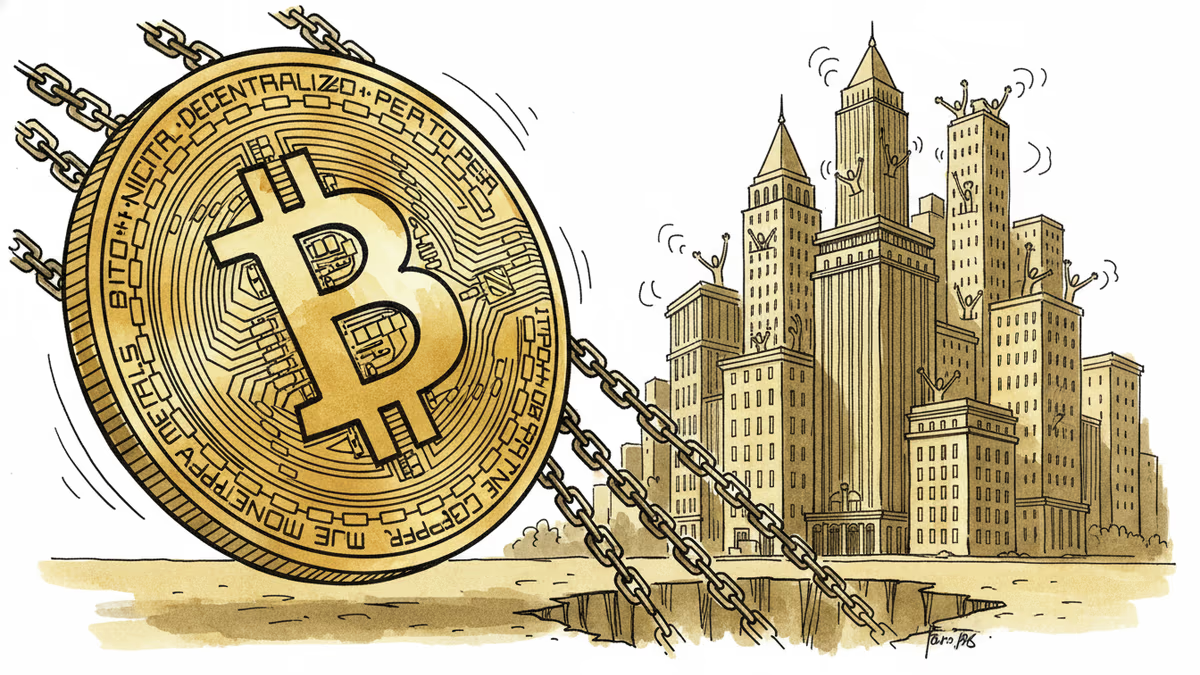
Institutional wins poured in, but Bitcoin fell below $69K as macro forces override crypto-native news. The price of mainstream adoption may be losing independence.
Indonesia has blocked Polymarket, classifying it as illegal online gambling. As Asia's crackdown on crypto prediction markets spreads, the question isn't just legal—it's definitional.
Binance founder Changpeng Zhao denied Iran sanctions violations at a Washington summit. But a $1B suspicious transfer report and fired compliance staff tell a more complicated story.
Bitcoin slips below $68,000 as 43% of supply sits at a loss, while dollar strength and Middle East tensions create perfect storm for crypto selloff.
Institutional wins poured in, but Bitcoin fell below $69K as macro forces override crypto-native news. The price of mainstream adoption may be losing independence.
Thoughts
Share your thoughts on this article
Sign in to join the conversation