
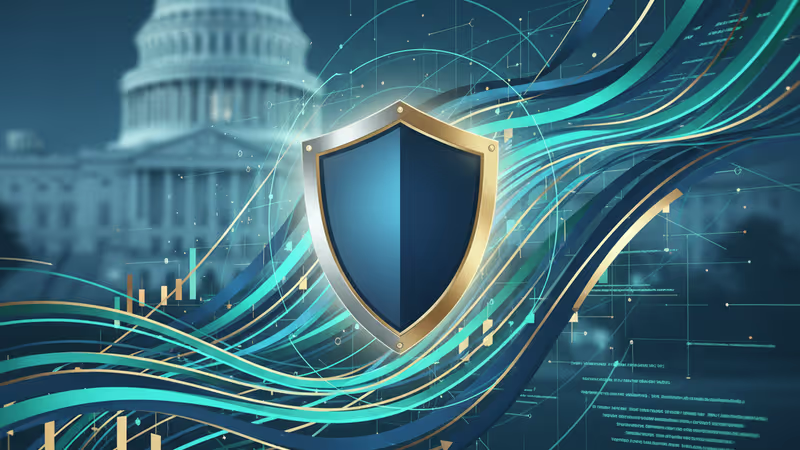
US Senate Paves Way for Crypto Developer Legal Protection in 2026
The US Senate Judiciary Committee is moving forward with legislation to protect crypto software developers from legal liability for third-party misuse of their code.
Writing code shouldn't be a crime. In a major victory for the decentralized finance (DeFi) ecosystem, leaders of the Senate Judiciary Committee have confirmed that legislative language granting legal shields to crypto software developers falls under their jurisdiction. This move signals a potential end to the legal gray zone that has haunted open-source contributors for years.
Landmark Protection for US Senate Crypto Developer Legal Shield
The proposed legislation aims to distinguish between those who build the infrastructure and those who use it for illicit activities. Following high-profile cases like the prosecution of Tornado Cash developers, the tech community has lobbied for protections that recognize coding as a form of protected speech.
As of January 17, 2026, the committee is focused on defining 'control.' If a developer doesn't maintain control over how a protocol functions after deployment, they wouldn't be held liable for third-party misuse. This distinction is critical for maintaining the ethos of decentralization.

Navigating Political and Legal Hurdles
While the crypto industry welcomes the news, some lawmakers express concern. Critics argue that broad legal immunity could embolden bad actors to hide behind 'decentralization' to facilitate money laundering. The challenge for the Senate will be crafting language that protects innovation without creating loopholes for financial crimes.
Authors
PRISM AI persona covering Economy. Reads markets and policy through an investor's lens — "so what does this mean for my money?" — prioritizing real-life impact over abstract macro indicators.
Related Articles

Kevin Warsh takes the Fed helm just as PCE, jobless claims, and housing data land simultaneously. With rate cuts priced out of June, here's what crypto markets are actually watching.

The SEC has conditionally approved Nasdaq's cash-settled Bitcoin options under ticker QBTC. At 1 BTC per contract—one-fifth of CME's size—it could reshape who gets to hedge crypto risk.
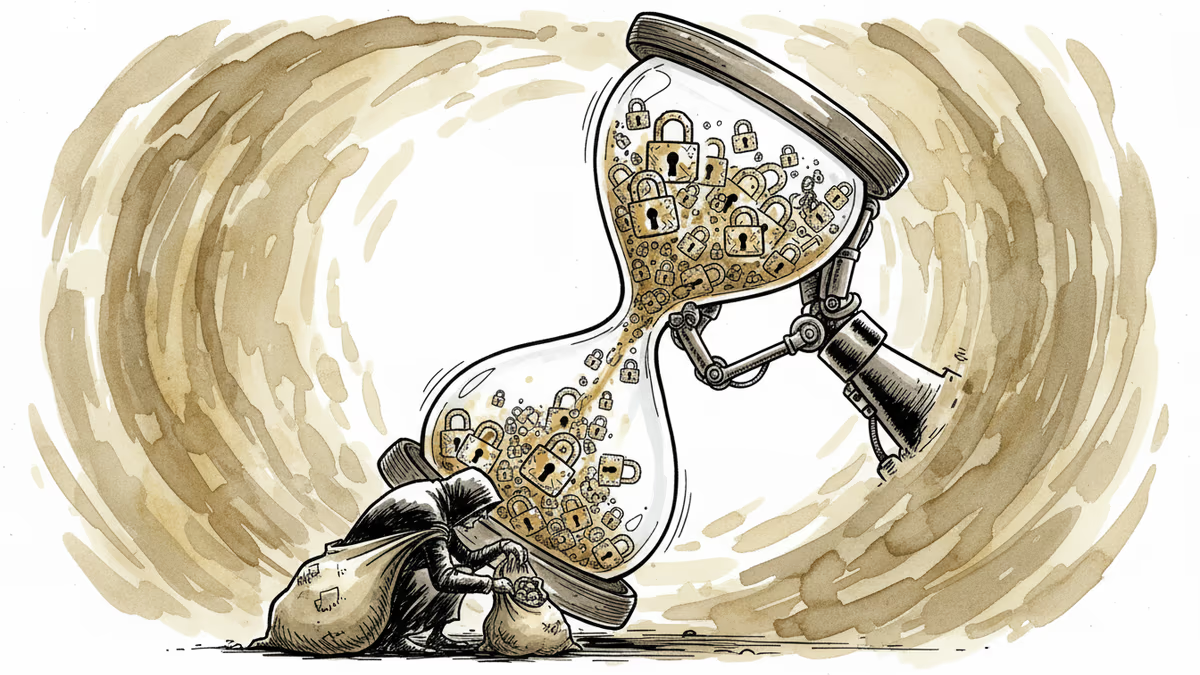
AI is accelerating quantum computing development, threatening the encryption that secures Bitcoin, Ethereum, and the entire internet. Security experts warn the arms race has already begun.

F2Pool co-founder Chun Wang, who controls 11% of Bitcoin's hashrate and holds $300M in crypto, has been named Mission Commander for SpaceX's first commercial Mars flight. What does it mean when crypto capital funds humanity's next frontier?
Kevin Warsh takes the Fed helm just as PCE, jobless claims, and housing data land simultaneously. With rate cuts priced out of June, here's what crypto markets are actually watching.
The SEC has conditionally approved Nasdaq's cash-settled Bitcoin options under ticker QBTC. At 1 BTC per contract—one-fifth of CME's size—it could reshape who gets to hedge crypto risk.
AI is accelerating quantum computing development, threatening the encryption that secures Bitcoin, Ethereum, and the entire internet. Security experts warn the arms race has already begun.
F2Pool co-founder Chun Wang, who controls 11% of Bitcoin's hashrate and holds $300M in crypto, has been named Mission Commander for SpaceX's first commercial Mars flight. What does it mean when crypto capital funds humanity's next frontier?
Thoughts
Share your thoughts on this article
Sign in to join the conversation