
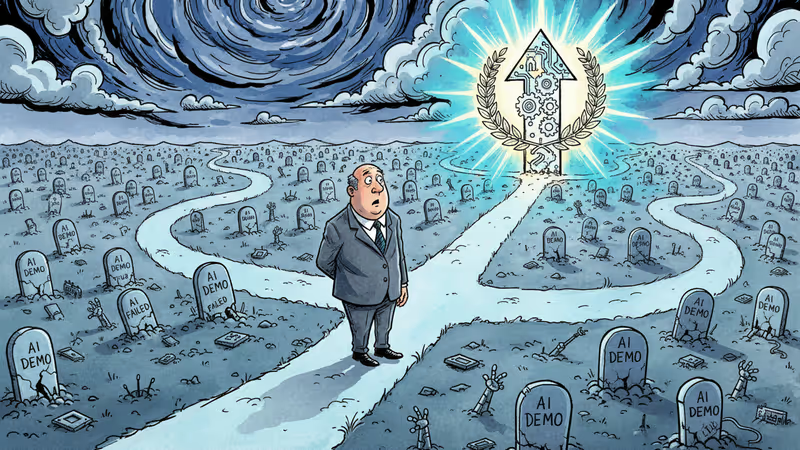
Why 90% of AI Projects Fail - Mistral's Blueprint for Success
While companies rush into generative AI, most projects fail to deliver value. Mistral AI reveals the 4 criteria that separate successful AI transformations from expensive experiments.
90% of AI projects fail to deliver measurable value. Despite the generative AI gold rush, most companies are stuck with expensive experiments that never see production.
Mistral AI has partnered with global giants like Cisco, Stellantis, and ASML to co-design AI solutions that actually work. Their secret? It's not about the technology—it's about choosing the right "iconic use case" from the start.
The Four Pillars of AI Success
Mistral's methodology centers on four non-negotiable criteria that separate transformative AI projects from corporate graveyards full of fancy demos.
Strategic value comes first. The use case must address core business processes or enable transformative capabilities. It needs to excite the C-suite, not just the IT department. An internal HR chatbot might be nice to have, but an externally-facing banking assistant that can block cards, execute trades, and suggest upsells? That's a revenue-generating asset.
Urgency follows closely. The project must solve a business-critical problem that people care about right now. If it's not urgent enough to justify taking time out of people's busy schedules, it's not urgent enough to succeed.
Impact and pragmatism mean building for production from day one. Too many AI prototypes end up as impressive demos that are never stable enough to put in front of real customers. Success requires scaffolding for evaluation, improvement, and governance frameworks.
Feasibility ties it all together. The best use case delivers ROI within three months, with prototypes live within weeks. Quick feedback loops from end users keep projects on track and enable rapid pivots when needed.
Six Types of Projects That Always Fail

Through countless enterprise workshops, Mistral has identified six categories of AI projects that consistently underdeliver:
Moonshots excite leadership but lack a path to quick ROI. Future investments are strategic but lack urgency. Tactical fixes solve immediate pain but don't move the needle. Quick wins build momentum but aren't transformative. Blue sky ideas could be game-changers but need maturity to be viable. Hero projects are high-pressure initiatives that lack executive sponsorship or realistic timelines.
Each category fails because it's missing at least two of the four essential criteria.
From Use Case to Deployment
Once the right use case is identified, Mistral moves quickly through validation and building phases. The validation phase includes data exploration, infrastructure planning, and governance setup. The building phase focuses on co-creation, transferring knowledge so partner organizations can operate independently.
This approach has proven successful across industries. Cisco increased customer experience productivity. Stellantis built more intelligent vehicles. ASML accelerated product innovation. Each started with one well-chosen use case that met all four criteria.
The Enterprise Reality Check
Most enterprises are drowning in possibilities. Every department has ideas for AI applications. Every vendor promises revolutionary results. But without a clear framework for evaluation, companies end up with scattered experiments that never scale.
The workshop approach that Mistral uses—bringing together subject-matter experts, end users, and leadership—helps cut through the noise. Representatives from different functions demo their processes and discuss business cases. Together, they agree on a winner that meets all four criteria.
The path to AI success starts with a single, well-chosen use case: bold enough to inspire, urgent enough to demand action, and pragmatic enough to deliver.
Authors
Related Articles
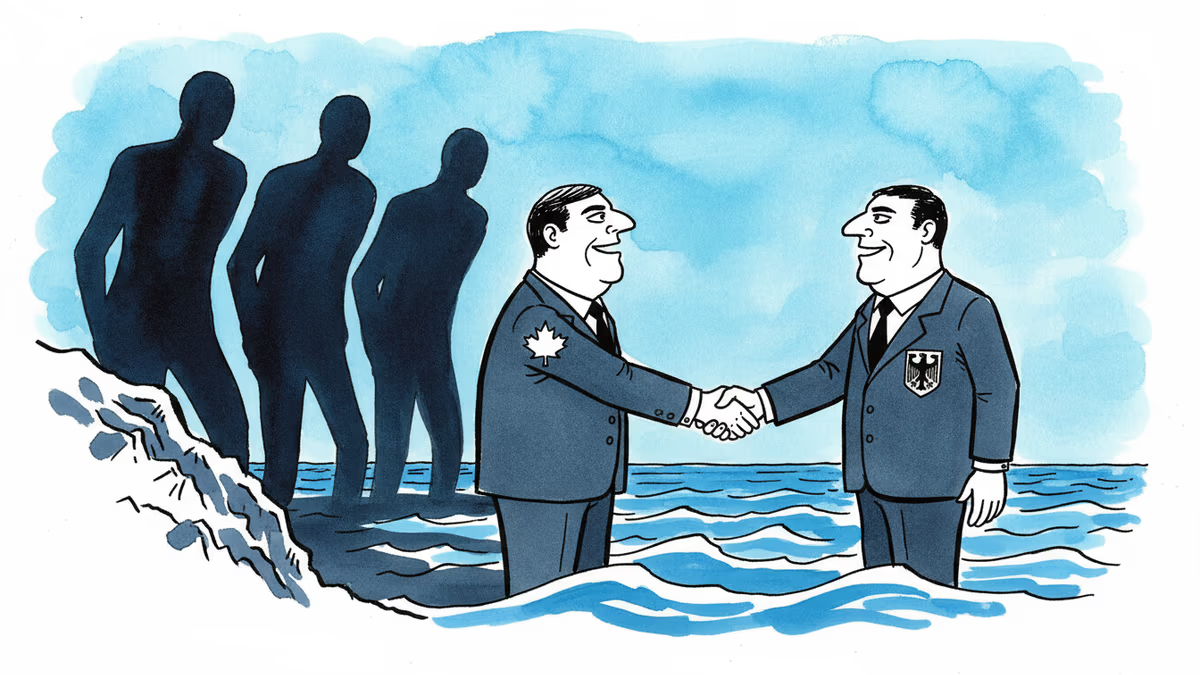
Cohere and Aleph Alpha are merging to build a transatlantic AI challenger valued at $20 billion. Their pitch: sovereignty, not just performance. Can it work?

Databricks CTO Matei Zaharia just won computing's top prize. His take on AGI, the security nightmare hiding inside AI agents, and why the real AI revolution is about research, not chatbots.
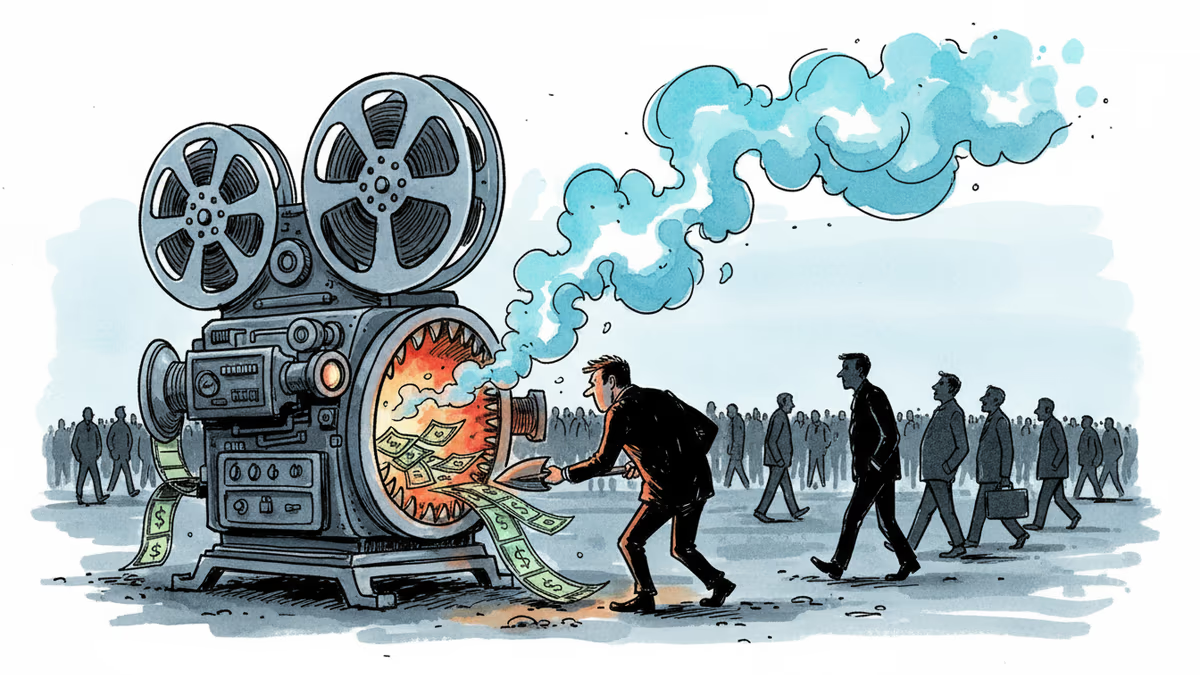
OpenAI killed Sora six months after launch — not because of a data scandal, but because it was hemorrhaging money while users walked away. A WSJ investigation reveals what really happened, and what it means for the AI industry.
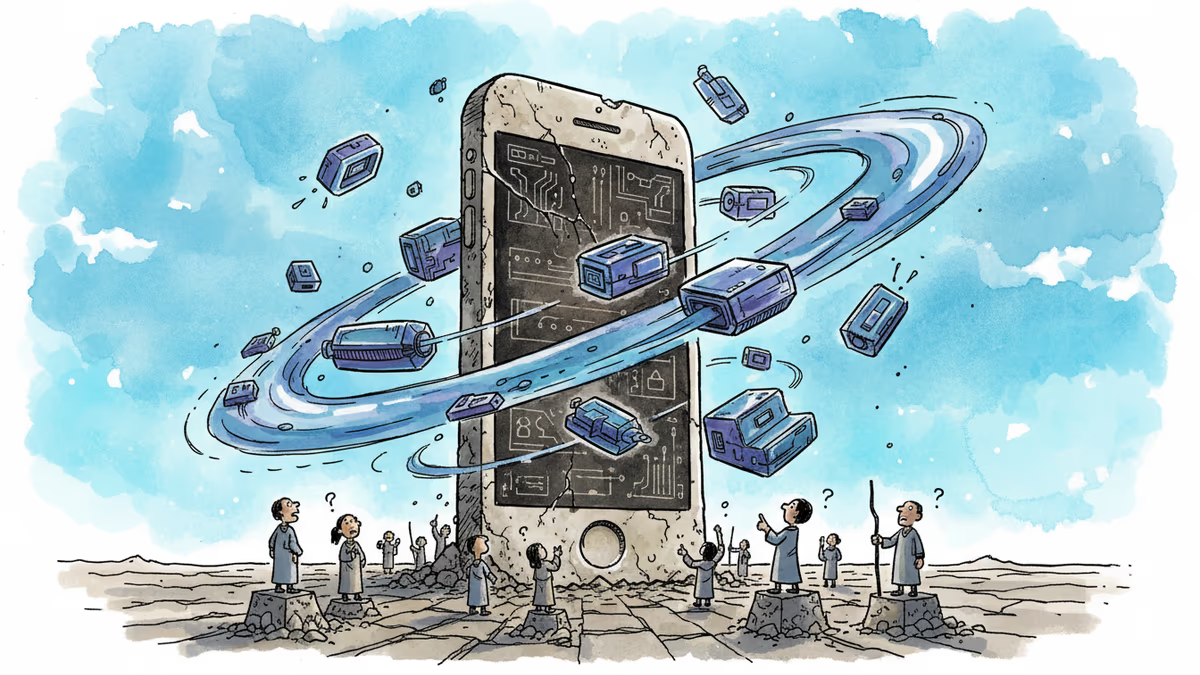
At Apple's 50th anniversary, top executives insisted the iPhone will anchor the AI era—and beyond. But is that confidence visionary or a warning sign?
Cohere and Aleph Alpha are merging to build a transatlantic AI challenger valued at $20 billion. Their pitch: sovereignty, not just performance. Can it work?
Databricks CTO Matei Zaharia just won computing's top prize. His take on AGI, the security nightmare hiding inside AI agents, and why the real AI revolution is about research, not chatbots.
OpenAI killed Sora six months after launch — not because of a data scandal, but because it was hemorrhaging money while users walked away. A WSJ investigation reveals what really happened, and what it means for the AI industry.
At Apple's 50th anniversary, top executives insisted the iPhone will anchor the AI era—and beyond. But is that confidence visionary or a warning sign?
Thoughts
Share your thoughts on this article
Sign in to join the conversation