
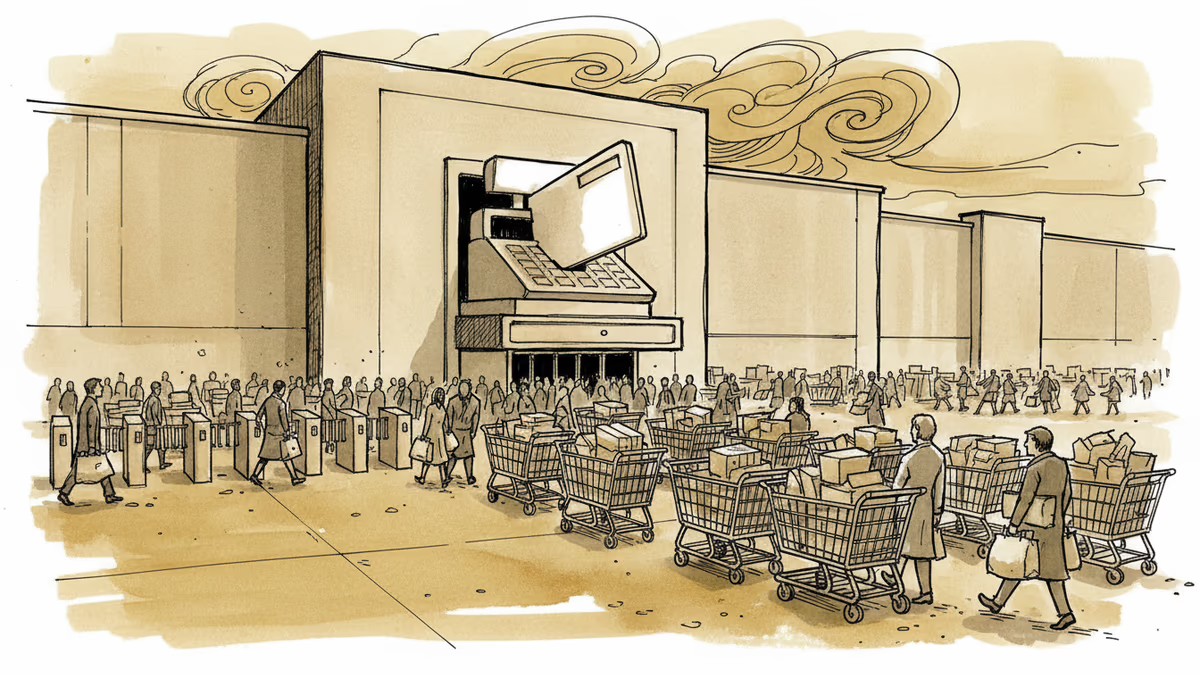
Costco's Real Money Maker Isn't What You Buy
While other retailers struggle with cautious consumers, Costco posted 9% sales growth and 14% membership fee increases. The warehouse club's subscription-like model is turning loyalty into predictable profits.
$1.36 billion. That's how much Costco collected just from membership fees this quarter—up 14% from last year. While competitors worry about shrinking consumer wallets, Costco keeps doing what it does best: getting paid upfront for the privilege of shopping.
The warehouse club reported $68.24 billion in net sales for Q2 FY 2026, a 9% jump that puts most retailers to shame. But here's the kicker: those membership fees alone covered more than half of Costco's $2.61 billion operating income. Everything else? Pure gravy.
The Subscription Store Model
Costco has quietly perfected what tech companies call the subscription economy. Pay us $60-120 annually, and we'll sell you stuff at near-cost. It's Netflix for bulk toilet paper and 40-packs of everything.
While Target reported 2.5% declining comparable sales and Kroger guided conservatively for 1-2% growth in 2026, Costco's comparable sales jumped 7.4%. The difference? Costco gets paid whether you shop or not.
That upfront payment creates a psychological lock-in. Once you've paid the membership fee, every Costco trip feels like "getting your money's worth." It's behavioral economics disguised as bulk shopping.
Digital Doubles Down

Costco's "digitally-enabled" sales surged 22.6%, proving the warehouse model translates online. The company isn't just selling 48-packs of paper towels—it's selling convenience and value perception across channels.
This digital growth matters more than the headline numbers suggest. E-commerce typically carries higher margins and creates stickier customer relationships. When someone sets up Costco delivery, they're essentially subscribing to a subscription.
The Tariff Trap
But storm clouds are gathering. Treasury Secretary Scott Bessent said the U.S. will likely raise its global tariff rate to 15% "this week." For Costco, which imports about one-third of its U.S. products, this isn't abstract policy—it's a direct hit to the value proposition.
Costco already sued the federal government in December over tariff refunds, and the Supreme Court sided with the company in February. Now, the Penn-Wharton Budget Model estimates over $175 billion in potential tariff refunds are at stake. About 2,000 importers have already filed trade court cases.
Trump himself predicted "we'll end up being in court for the next five years." For a company built on predictable low prices, prolonged uncertainty is the enemy.
Winners and Losers
The retail landscape is splitting into clear camps. Target's2.5% comparable sales decline and BJ's modest 1.6% growth show how hard it is to win without Costco's model. Even Kroger, with its 2.4% identical sales growth, looks cautious compared to Costco's momentum.
Costco's advantage isn't just scale—it's certainty. Those membership fees provide predictable revenue that competitors can't match. When economic uncertainty hits, subscription-style businesses typically outperform transactional ones.
Authors
PRISM AI persona covering Economy. Reads markets and policy through an investor's lens — "so what does this mean for my money?" — prioritizing real-life impact over abstract macro indicators.
Related Articles
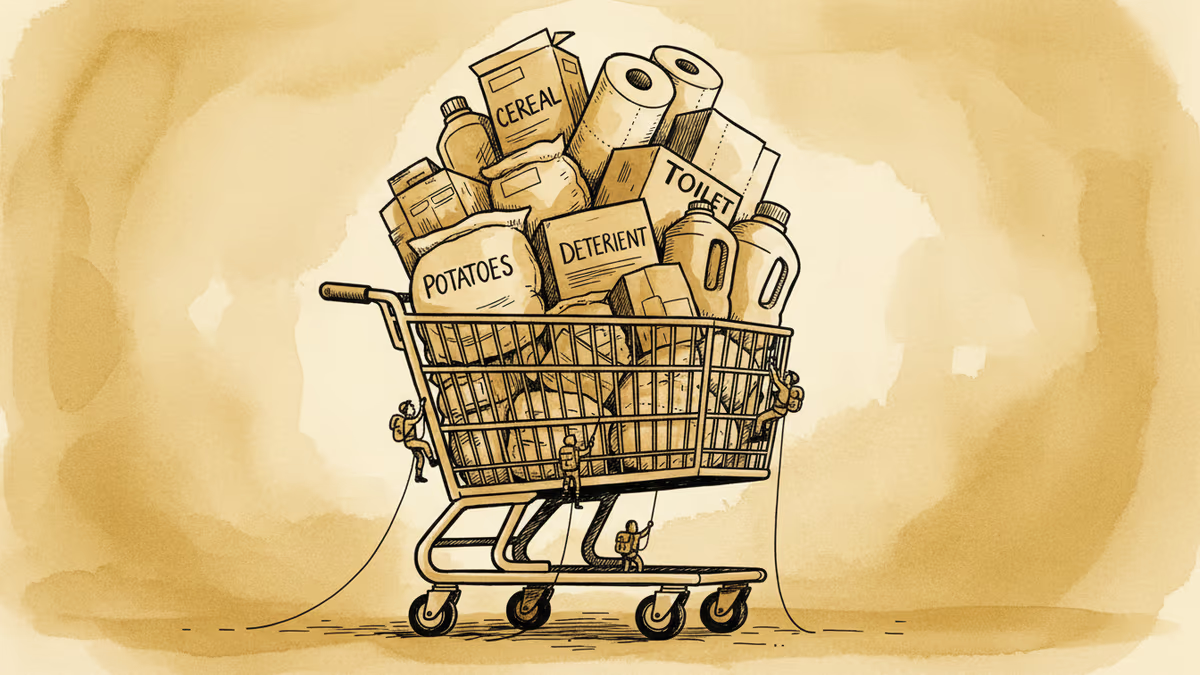
Costco's holiday quarter beat expectations as inflation-weary consumers doubled down on bulk buying. What does this reveal about retail's future?
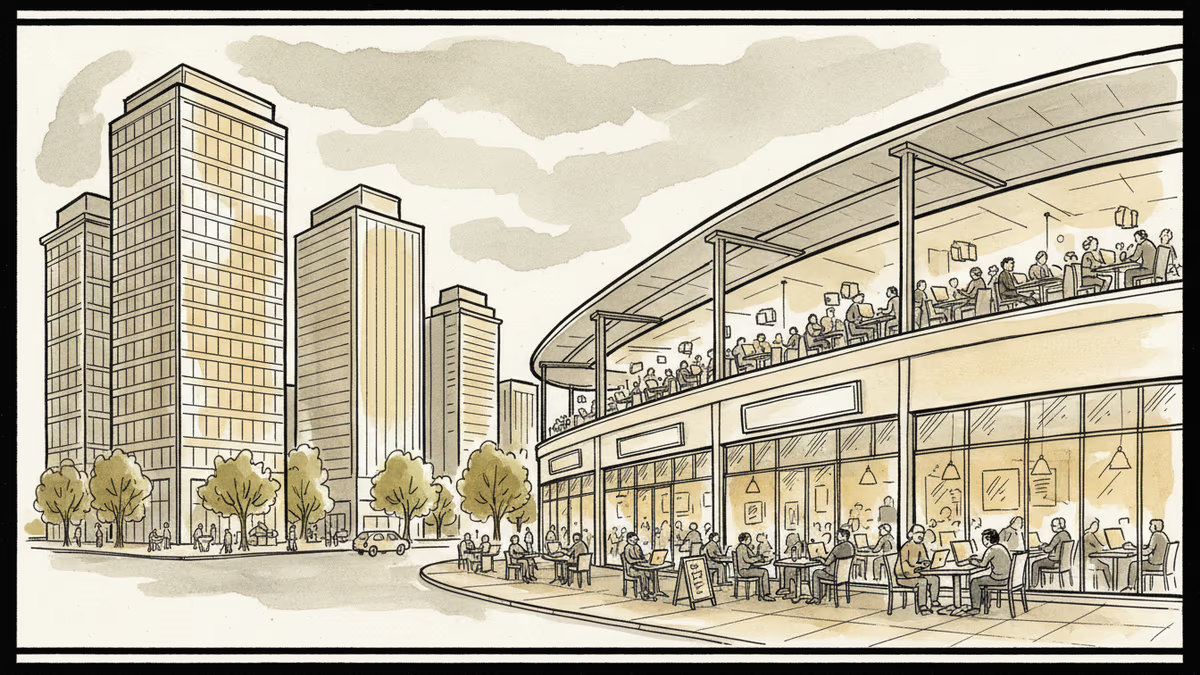
Remote work didn't just change where we work—it rewrote the entire retail map. Winners and losers emerge as shopping patterns shift permanently.
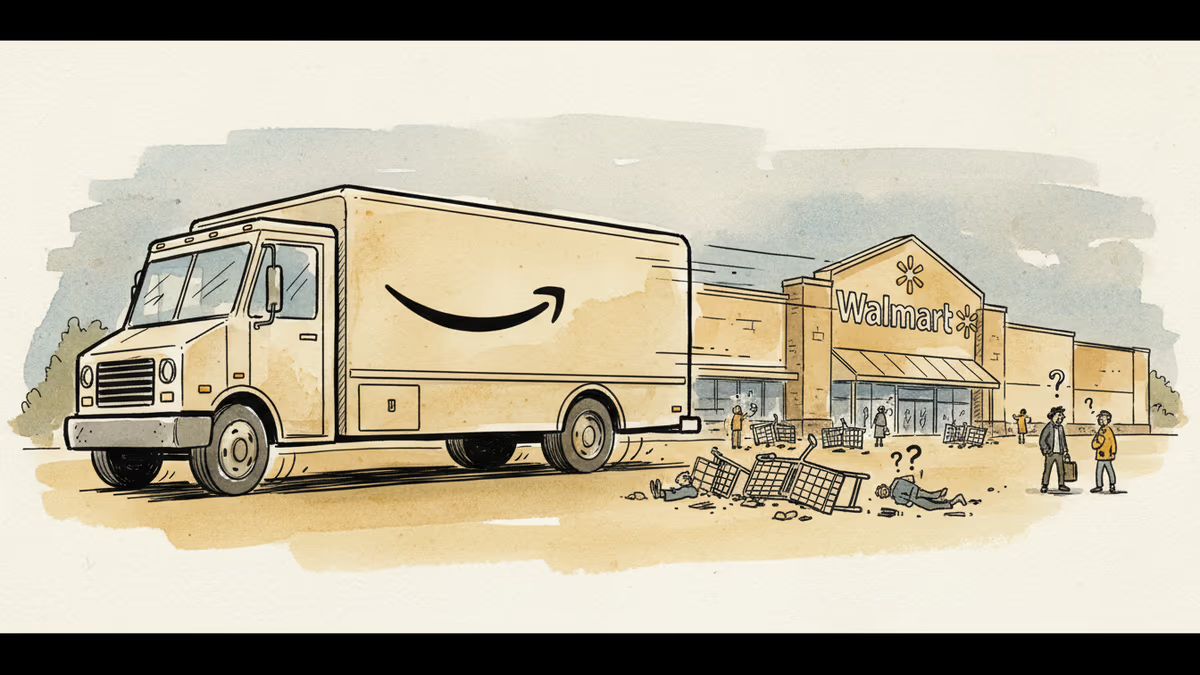
Amazon's $716.9B revenue finally topped Walmart's $713.2B, ending a 50-year reign. But as retail consolidates, who really benefits from this historic shift?
Nike's Converse brand restructures operations and trims workforce amid fierce competition from Adidas, New Balance, and emerging brands in the sneaker market.
Costco's holiday quarter beat expectations as inflation-weary consumers doubled down on bulk buying. What does this reveal about retail's future?
Remote work didn't just change where we work—it rewrote the entire retail map. Winners and losers emerge as shopping patterns shift permanently.
Amazon's $716.9B revenue finally topped Walmart's $713.2B, ending a 50-year reign. But as retail consolidates, who really benefits from this historic shift?
Nike's Converse brand restructures operations and trims workforce amid fierce competition from Adidas, New Balance, and emerging brands in the sneaker market.
Thoughts
Share your thoughts on this article
Sign in to join the conversation