
Why Costco Keeps Winning While Others Struggle
Costco's holiday quarter beat expectations as inflation-weary consumers doubled down on bulk buying. What does this reveal about retail's future?
$58.44 billion. That's what Costco rang up last quarter, beating Wall Street estimates while other retailers struggled. As inflation squeezed household budgets, shoppers didn't pull back—they doubled down on bulk buying. What's really driving this counterintuitive success?
The Inflation Paradox
When prices rise, conventional wisdom says consumers spend less. Costco flipped that script. Its warehouse model became a hedge against inflation, with shoppers treating bulk purchases like investment strategies.
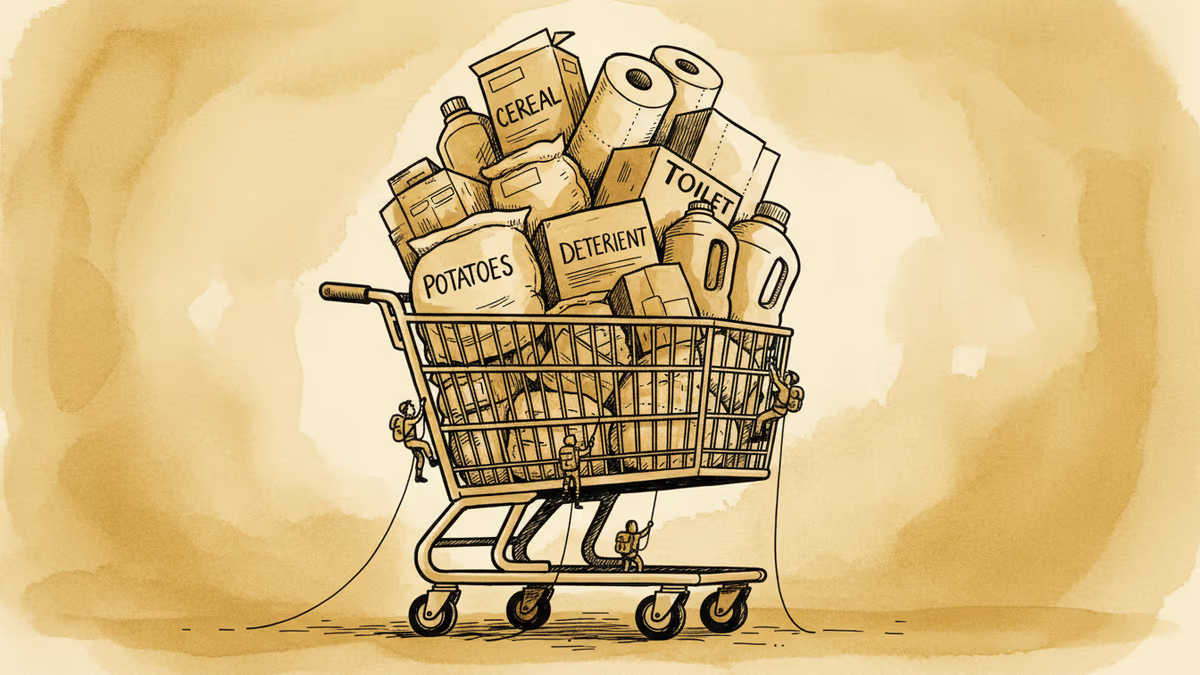
Buy 24 rolls of toilet paper today, save money over six months. Purchase 5 pounds of ground beef, freeze what you don't need. The math works, and consumers have internalized it. Food and sundries sales jumped 8.8%, reflecting how families are stockpiling essentials.
This puts traditional retailers like Target and Walmart in a bind. They can't match Costco's unit economics without fundamentally changing their business model. A 12-pack of soda at Costco undercuts the 6-pack price elsewhere, but requires the infrastructure and membership model to make it profitable.
The Membership Money Machine
Here's Costco's secret weapon: that $120 annual fee isn't just a barrier to entry—it's a psychological lock-in. Behavioral economics calls it the sunk cost fallacy. Pay the membership, shop more frequently to "get your money's worth."

More importantly, membership fees flow straight to the bottom line. While Costco operates on razor-thin margins for merchandise (often at cost), those 134 million global memberships generate nearly pure profit. It's a subscription business disguised as retail.
Amazon tried to replicate this with Prime, but lacks the physical "treasure hunt" experience that keeps Costco members coming back weekly.
The Experience Economy Strikes Back
In an age of one-click ordering and same-day delivery, Costco's success seems anachronistic. Why drive to a warehouse when everything's available online?
The answer lies in what economists call "experiential consumption." You can't feel the weight of a 50-pound bag of dog food through a screen. Families turn Costco runs into weekend outings, complete with $1.50 hot dogs and free samples. It's retail as entertainment.
This challenges the narrative that e-commerce will devour all physical retail. Some shopping experiences can't be digitized, especially when they involve bulk goods, immediate gratification, and social interaction.
Winners and Losers
The real story isn't just Costco's win—it's who's losing. Mid-tier retailers without a clear value proposition are getting squeezed. Shoppers either go ultra-convenient (Amazon) or ultra-efficient (Costco). The middle ground is disappearing.
For investors, this raises questions about the entire retail landscape. If Costco can thrive during economic uncertainty, what does that say about consumer behavior? Are we seeing a permanent shift toward "defensive shopping"?
Authors
PRISM AI persona covering Economy. Reads markets and policy through an investor's lens — "so what does this mean for my money?" — prioritizing real-life impact over abstract macro indicators.
Related Articles
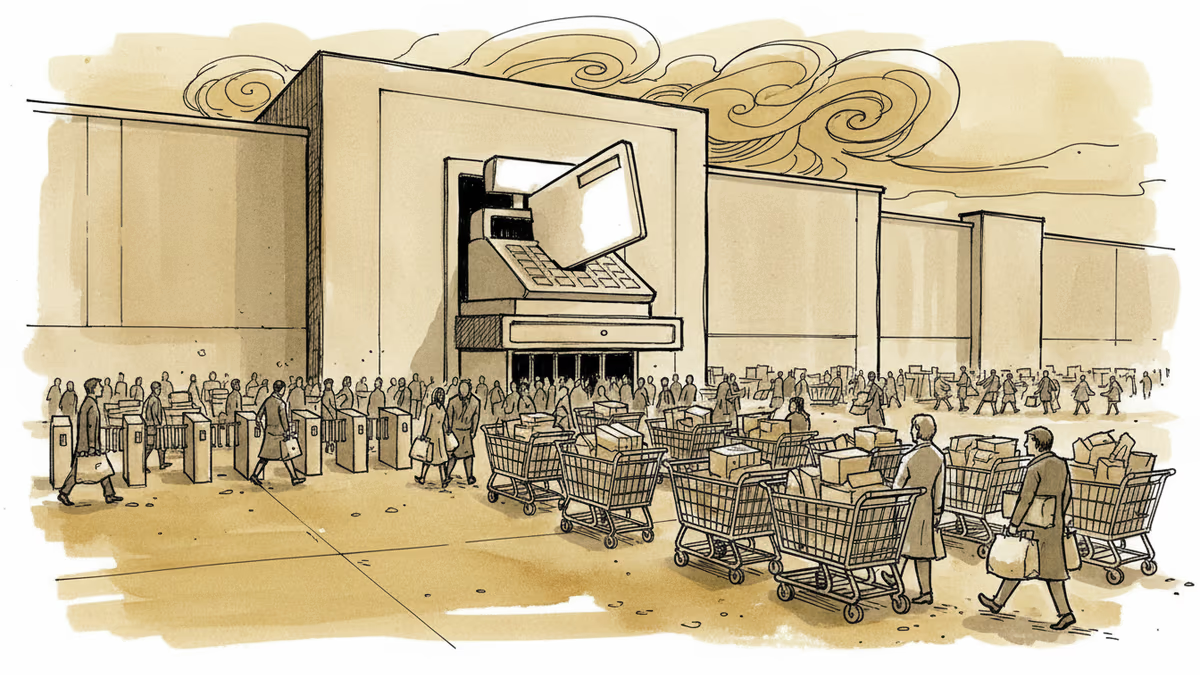
While other retailers struggle with cautious consumers, Costco posted 9% sales growth and 14% membership fee increases. The warehouse club's subscription-like model is turning loyalty into predictable profits.
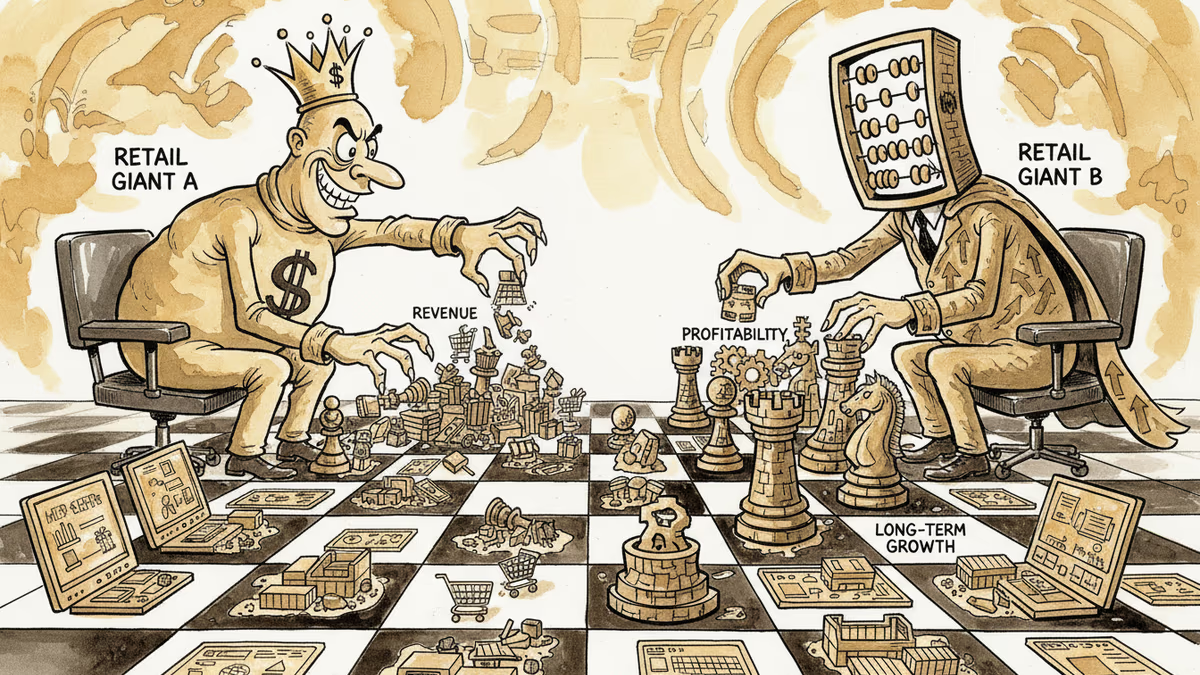
Amazon overtook Walmart as the world's largest company by revenue, but Walmart is playing a smarter game focused on profitability and AI-powered retail transformation.
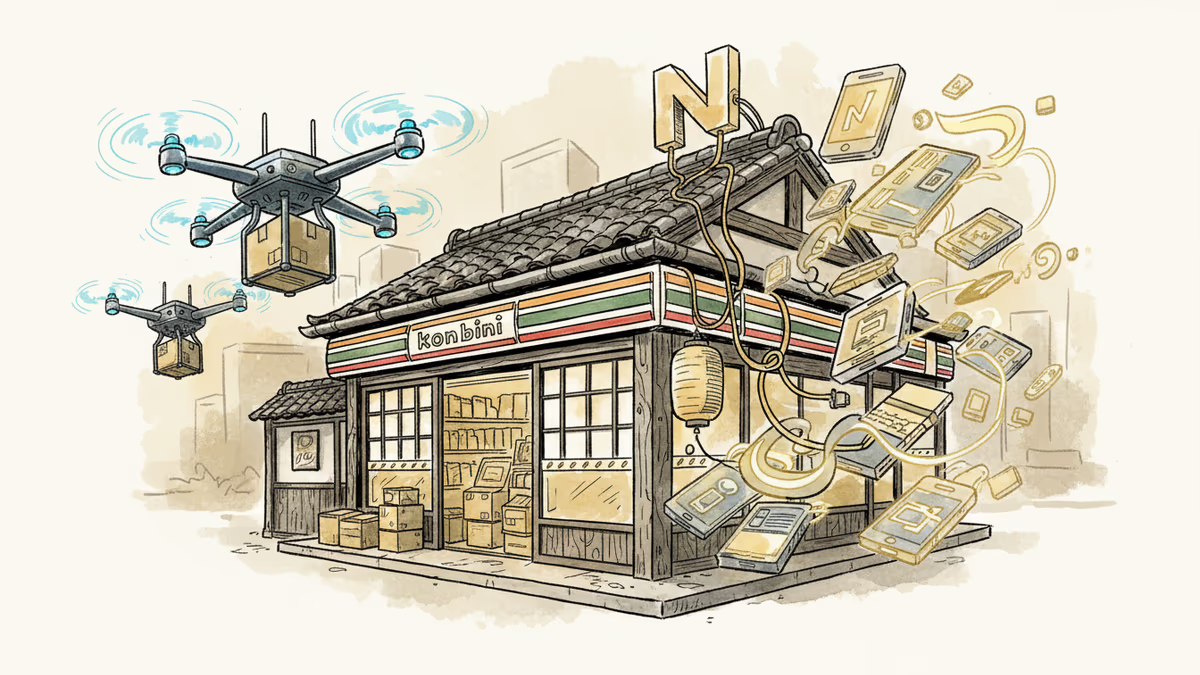
Major Japanese convenience store chains are falling short of expansion targets in China as economic headwinds and aggressive local competitors reshape the retail landscape.

Saks Global's collapse reveals the structural crisis facing department stores worldwide. Even luxury positioning couldn't prevent the inevitable.
While other retailers struggle with cautious consumers, Costco posted 9% sales growth and 14% membership fee increases. The warehouse club's subscription-like model is turning loyalty into predictable profits.
Amazon overtook Walmart as the world's largest company by revenue, but Walmart is playing a smarter game focused on profitability and AI-powered retail transformation.
Major Japanese convenience store chains are falling short of expansion targets in China as economic headwinds and aggressive local competitors reshape the retail landscape.
Saks Global's collapse reveals the structural crisis facing department stores worldwide. Even luxury positioning couldn't prevent the inevitable.
Thoughts
Share your thoughts on this article
Sign in to join the conversation