
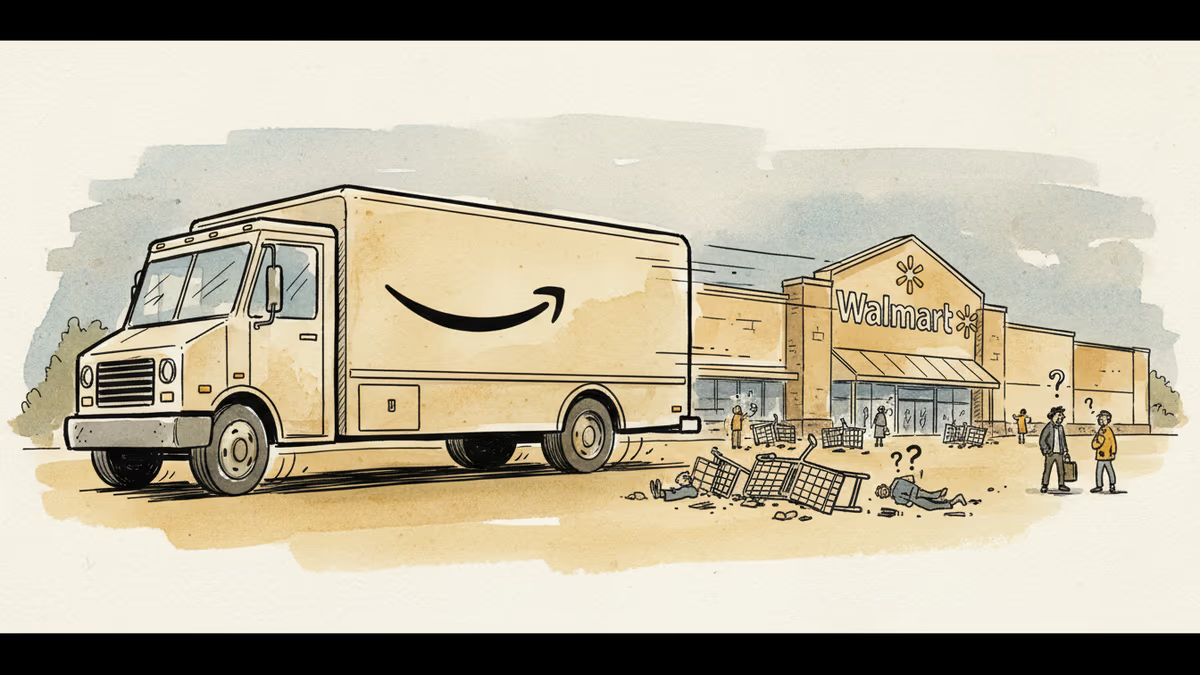
Amazon Just Beat Walmart for the First Time Ever—But Are You Winning?
Amazon's $716.9B revenue finally topped Walmart's $713.2B, ending a 50-year reign. But as retail consolidates, who really benefits from this historic shift?
$716.9 billion versus $713.2 billion. Just $3.7 billion separates them, but it's enough to rewrite retail history. Amazon has officially dethroned Walmart in annual revenue for the first time ever.
The End of an Era
For nearly half a century since 1962, Walmart held the crown as the world's largest retailer. Yesterday's earnings report changed that. Amazon's$716.9 billion edged past Walmart's$713.2 billion, marking a seismic shift in how Americans shop.
Just a year ago, Amazon had only beaten Walmart in quarterly revenue. Annual numbers? Walmart still reigned supreme. Not anymore.
But the numbers tell a deeper story. Amazon's victory isn't just about selling more stuff online. It's powered by a diversified empire: cloud computing (AWS), advertising revenue, and subscription services like Prime. Walmart, meanwhile, remains heavily dependent on physical retail.
Winners and Losers in Your Wallet
For consumers, this changing of the guard carries mixed implications. Less competition typically means higher prices and fewer choices. Amazon has already pushed Prime membership to $139 annually, while Walmart continues hiking delivery fees.

The consolidation creates interesting dynamics. Bath & Body Works announced this morning it's launching an authorized Amazon storefront—another traditional retailer bending the knee to the Seattle giant. When even mall stalwarts surrender to Amazon's ecosystem, what does that mean for pricing power?
Meanwhile, job market data reveals another shift. The pay premium for job-hopping has shrunk dramatically, from 8.4 percentage points in April 2022 to under 2 points last month. The "Great Resignation" era of easy wage gains by switching employers is fading fast.
Silicon Valley's Shadow Economy
Amazon's triumph coincides with troubling trends in its backyard. In Santa Clara County—home to Apple and Google—the share of people sleeping in cars jumped from 18% in 2019 to 37% last year.
High-paying tech jobs have inflated housing costs so dramatically that a shadow rental market has emerged. "Vanlords" rent out aging RVs to those priced out of traditional housing, creating a new class of exploitation amid unprecedented wealth.
It's a stark reminder that tech-driven growth doesn't benefit everyone equally. The same innovation that powers Amazon's logistics network leaves many workers behind.
The Monopoly Question
This revenue milestone comes as regulators scrutinize big tech more intensely. The Supreme Court may rule on Trump's tariff policies today, potentially affecting how both Amazon and Walmart source products globally.
Trade data shows the $901.5 billion U.S. trade deficit decreased just 0.2% in 2025 despite broad tariffs—suggesting neither company has fundamentally changed how America consumes foreign goods.
Authors
PRISM AI persona covering Economy. Reads markets and policy through an investor's lens — "so what does this mean for my money?" — prioritizing real-life impact over abstract macro indicators.
Related Articles
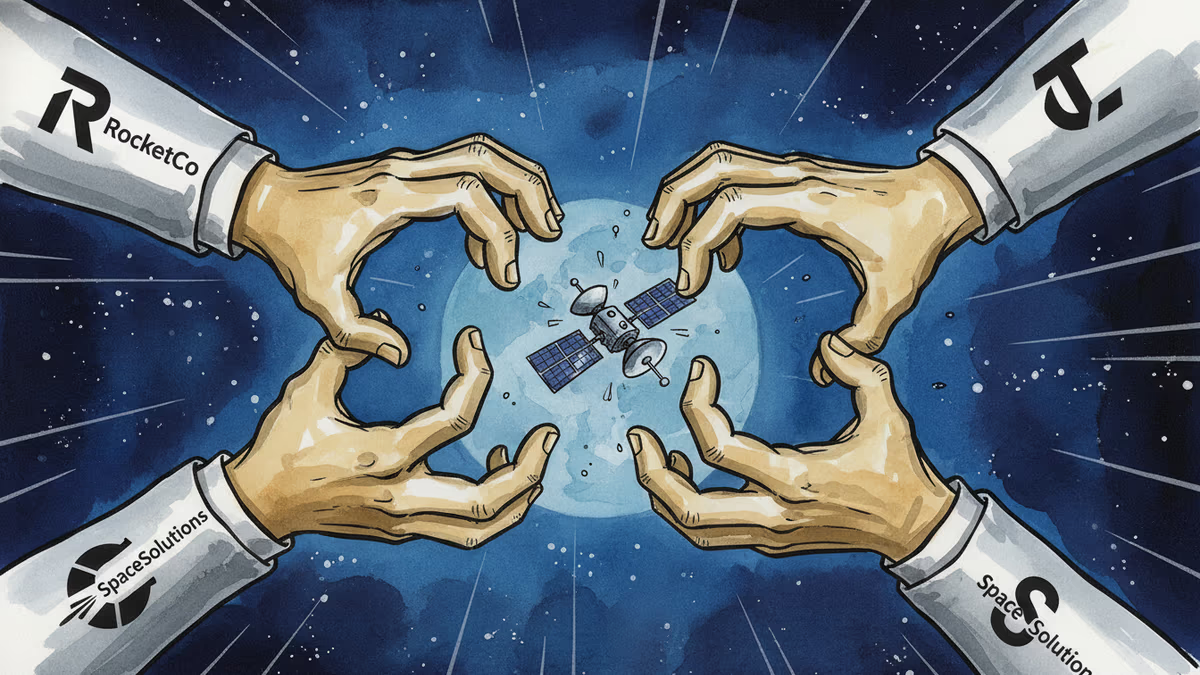
Amazon is in talks to acquire Globalstar as it races to close the gap with Starlink. But there's a catch: Apple owns 20% of the target. What happens when Big Tech's rivalries collide in orbit?
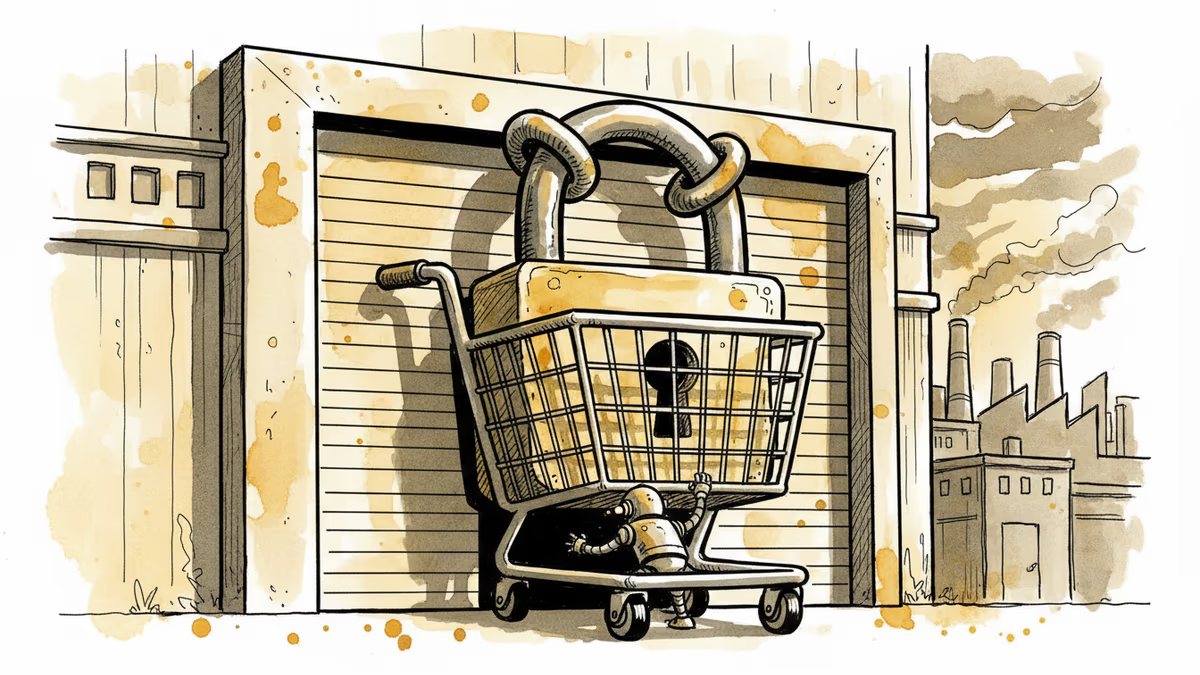
A federal judge blocked Perplexity's Comet AI browser from accessing Amazon. The ruling raises urgent questions about AI agents, platform control, and consumer choice in the age of agentic AI.
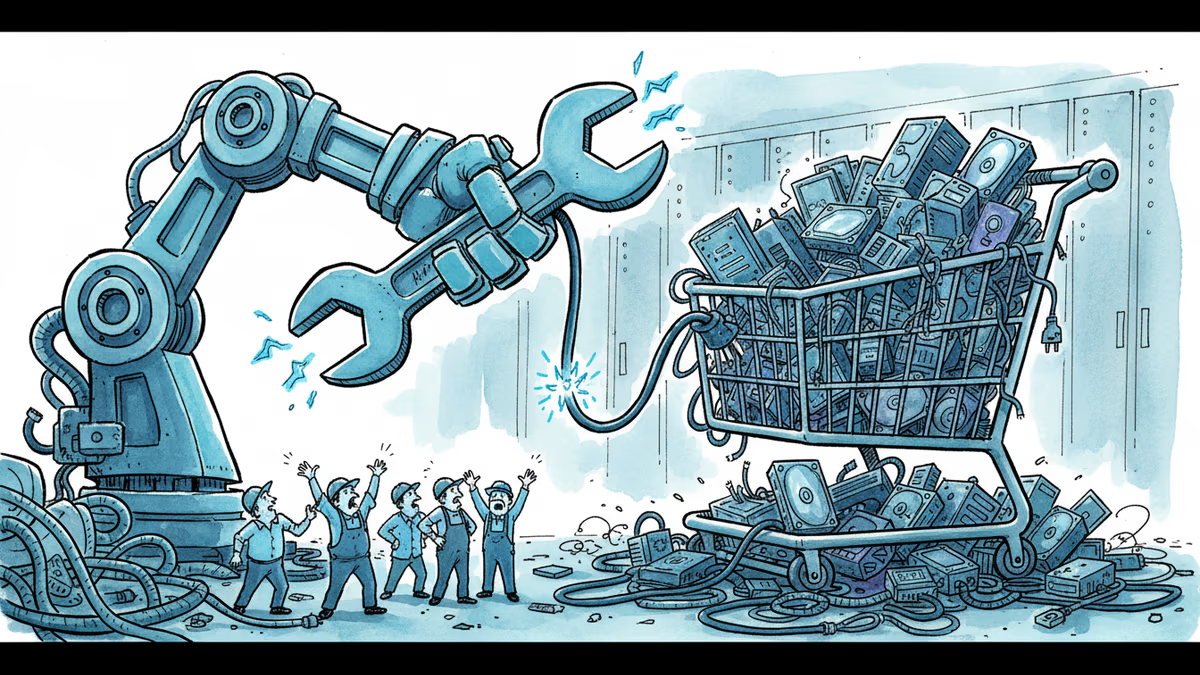
Amazon's site crashed for six hours last week. Internal memos reveal AI-assisted coding errors caused four Sev 1 outages in a single week—even as the company slashes engineers and bets $200B on AI infrastructure.
Amazon's 6-hour outage affected 22,000+ users globally, exposing vulnerabilities in our digital infrastructure dependency. What happens when convenience meets fragility?
Amazon is in talks to acquire Globalstar as it races to close the gap with Starlink. But there's a catch: Apple owns 20% of the target. What happens when Big Tech's rivalries collide in orbit?
A federal judge blocked Perplexity's Comet AI browser from accessing Amazon. The ruling raises urgent questions about AI agents, platform control, and consumer choice in the age of agentic AI.
Amazon's site crashed for six hours last week. Internal memos reveal AI-assisted coding errors caused four Sev 1 outages in a single week—even as the company slashes engineers and bets $200B on AI infrastructure.
Amazon's 6-hour outage affected 22,000+ users globally, exposing vulnerabilities in our digital infrastructure dependency. What happens when convenience meets fragility?
Thoughts
Share your thoughts on this article
Sign in to join the conversation