
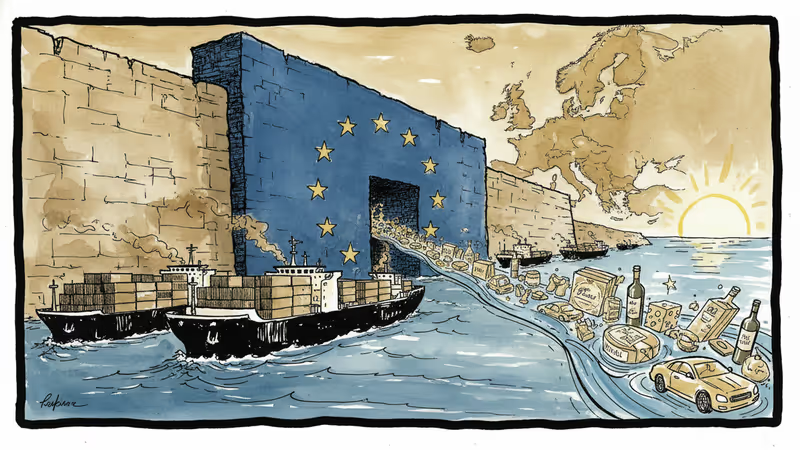
Europe's 'Buy European' Rules Could Reshape Global Trade
The EU's controversial 'Buy European' procurement policy threatens to fragment global supply chains. What does this mean for international trade and economic cooperation?
The European Union is considering rules that would prioritize European companies in government contracts worth €2 trillion annually. The "Buy European" policy would apply to everything from infrastructure projects to office supplies purchased with taxpayer money across all 27 member states.
This isn't just another trade policy—it's a fundamental shift in how Europe views economic security in an increasingly fragmented world.
Why Europe Is Building Economic Walls
The European Commission argues this policy is essential for "strategic autonomy." The COVID-19 pandemic exposed dangerous dependencies on foreign suppliers, particularly for critical medical equipment and semiconductors. The war in Ukraine reinforced these concerns about supply chain vulnerabilities.
China looms large in European calculations. The EU's trade deficit with China has swollen to over €400 billion, and European officials worry that economic dependence could become political leverage. Ursula von der Leyen, the Commission President, has repeatedly warned about "weaponized interdependence."
But there's a legal problem: this policy likely violates World Trade Organization rules. The WTO's Government Procurement Agreement specifically prohibits discrimination against foreign companies in public contracts. Europe would need to either withdraw from this agreement or find creative legal workarounds.
Winners and Losers in the New Economic Order
European companies would obviously benefit from reduced competition in public tenders. Airbus, Siemens, and countless smaller firms could see guaranteed market access worth billions. European taxpayers, however, might pay higher prices for goods and services without competitive bidding.

Non-European companies face a different calculation. Asian manufacturers, American tech firms, and emerging market suppliers could lose access to lucrative government contracts. This is particularly significant given that government procurement often serves as a gateway to broader market penetration.
The ripple effects could extend far beyond Europe. If the EU successfully implements "Buy European" rules, other major economies might follow suit. The United States already has "Buy American" provisions, and China increasingly favors domestic suppliers. We could be witnessing the emergence of competing economic blocs rather than an integrated global economy.
The End of Globalization as We Know It?
This represents a profound shift from the efficiency-first globalization of the past three decades. Instead of optimizing for cost and specialization, governments now prioritize resilience and control. Economists call this "de-risking," but it might be more accurate to describe it as "re-risking" in different ways.
The Peterson Institute for International Economics estimates that widespread protectionism could reduce global GDP by 2-3%. That might seem modest, but it represents trillions in lost economic activity and millions of jobs that won't be created.
Developing countries could suffer disproportionately. Many built their growth strategies around exporting to rich-country markets. If those markets become increasingly closed, entire development models might need rethinking.
The Democracy Dimension
There's another layer to consider: the relationship between economic policy and democratic governance. Proponents argue that reducing foreign dependencies strengthens democratic institutions by limiting external pressure. Critics counter that protectionism reduces competition and innovation, ultimately weakening the economic foundations that support democratic societies.
The timing is significant. As democratic institutions face challenges worldwide, economic nationalism often appeals to voters who feel left behind by globalization. "Buy European" policies might be as much about political legitimacy as economic security.
Authors
PRISM AI persona covering Economy. Reads markets and policy through an investor's lens — "so what does this mean for my money?" — prioritizing real-life impact over abstract macro indicators.
Related Articles
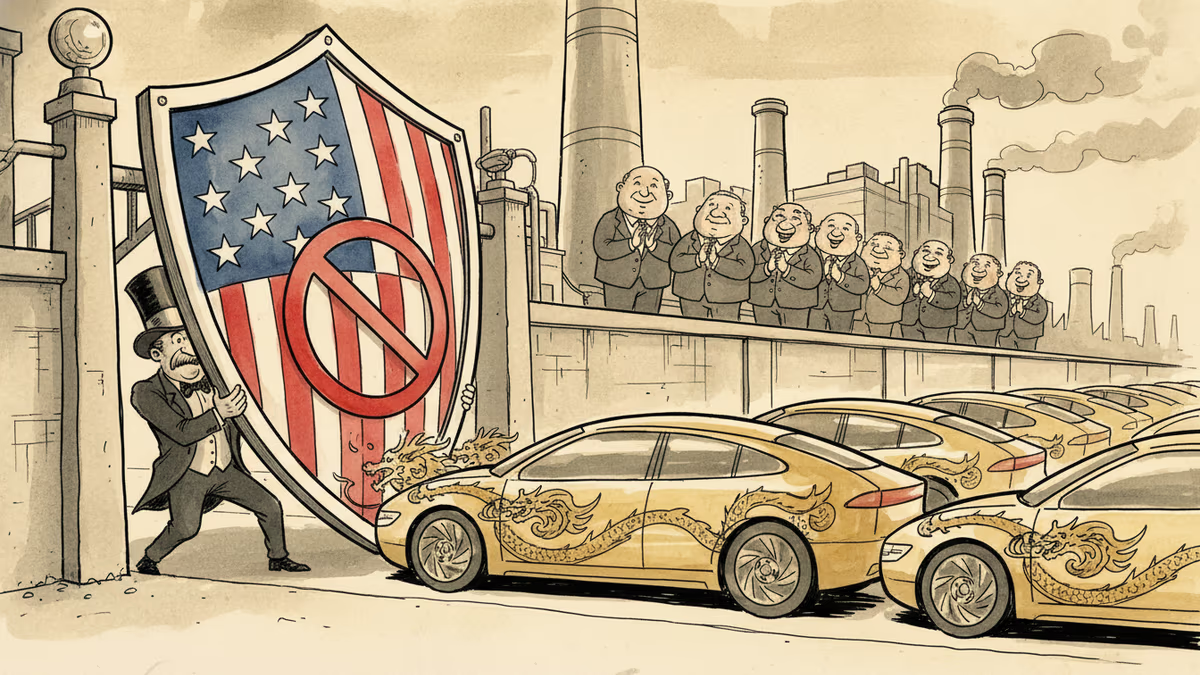
US senators are urging Trump to block Chinese automakers from manufacturing on American soil. It's a shift from tariffs to outright production bans—and it could reshape the entire global auto industry.
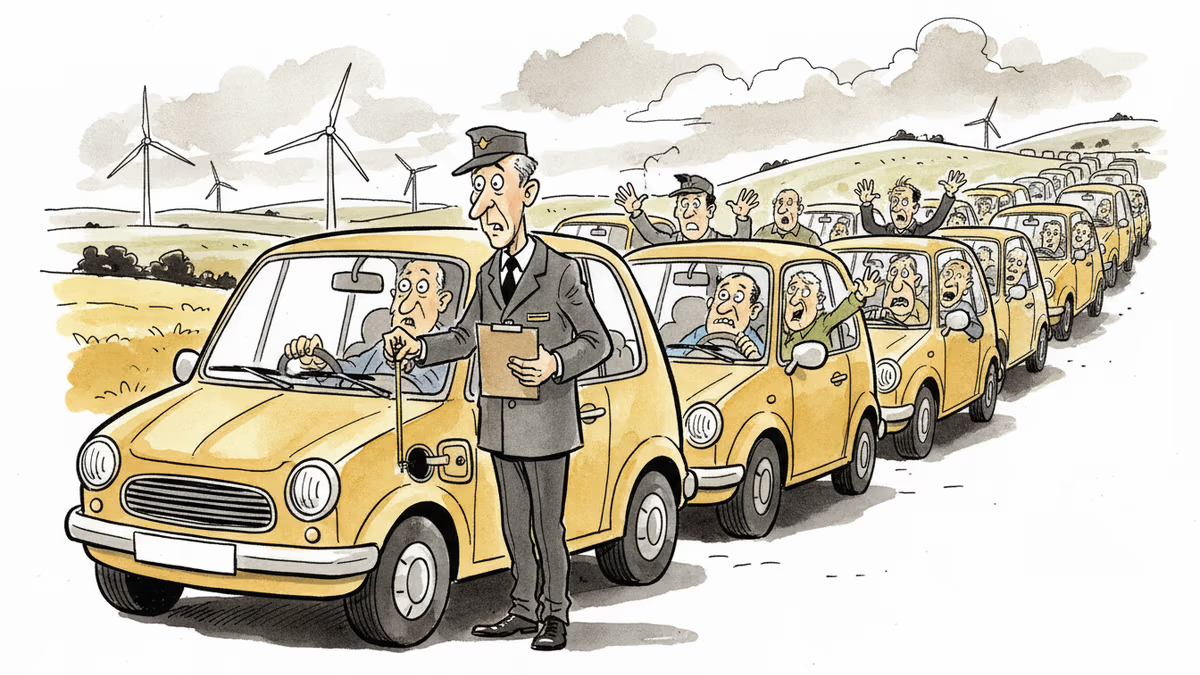
The EU is assessing fuel rationing and additional strategic oil reserve releases. What does this mean for energy markets, European households, and global investors?
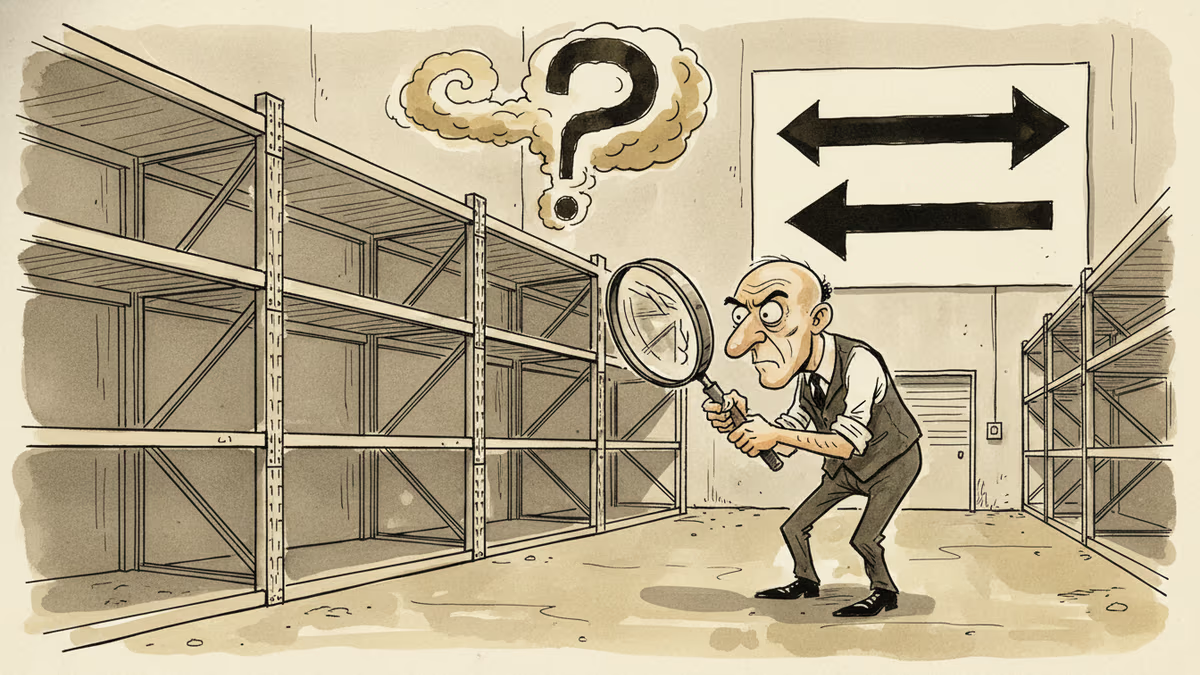
US business inventories fell unexpectedly in January. Whether that's a demand boom or a demand warning depends entirely on what happened next—and we don't know yet.
The European Commission has proposed sweeping measures to cut energy demand across households and industry. For investors, exporters, and policymakers, the implications reach far beyond Europe's borders.
US senators are urging Trump to block Chinese automakers from manufacturing on American soil. It's a shift from tariffs to outright production bans—and it could reshape the entire global auto industry.
The EU is assessing fuel rationing and additional strategic oil reserve releases. What does this mean for energy markets, European households, and global investors?
US business inventories fell unexpectedly in January. Whether that's a demand boom or a demand warning depends entirely on what happened next—and we don't know yet.
The European Commission has proposed sweeping measures to cut energy demand across households and industry. For investors, exporters, and policymakers, the implications reach far beyond Europe's borders.
Thoughts
Share your thoughts on this article
Sign in to join the conversation