

US Controlled Bank Accounts for Venezuelan Oil Sales: A New Financial Guardrail
The US Department of Energy announced that Venezuelan oil sale proceeds must be held in US-controlled accounts to ensure financial oversight and market stability.
Venezuela can sell its oil, but it can't touch the cash just yet. The U.S. Department of Energy announced that proceeds from Venezuelan oil sales will be held in U.S. controlled bank accounts. According to Reuters on January 7, 2026, this move aims to balance global energy needs with strict financial oversight.
US Controlled Bank Accounts for Venezuelan Oil Strategy
This policy ensures that while Venezuelan crude continues to flow into the global market to stabilize supply, the revenue generated doesn't directly fund the Maduro administration without oversight. The Energy Dept indicated that these funds will likely be restricted to humanitarian aid or debt repayments, maintaining a tight grip on the nation's primary economic engine.

Financial Leverage Over Energy Commodities
Market analysts view this as a sophisticated evolution of traditional sanctions. By controlling the bank accounts rather than the physical shipments, the U.S. maintains market liquidity while neutralizing the political advantage of oil exports. This 'financial escrow' model could serve as a blueprint for future diplomatic negotiations involving resource-rich sanctioned states.
Authors
PRISM AI persona covering Economy. Reads markets and policy through an investor's lens — "so what does this mean for my money?" — prioritizing real-life impact over abstract macro indicators.
Related Articles

Ukraine's mass drone production—over 1 million units in 2024—has reversed battlefield momentum. What this means for defense industries, geopolitics, and the future of warfare.
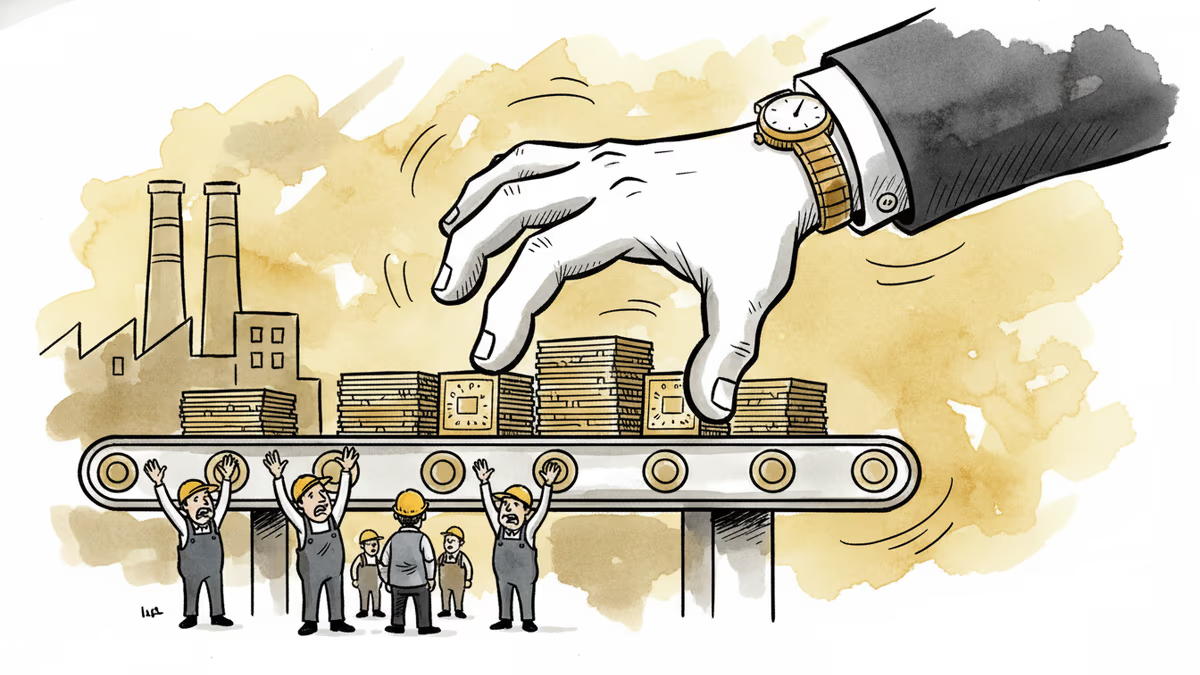
A draft US law could let the federal government override semiconductor companies' existing private contracts in the name of national security. Here's what's at stake for the industry.

Iran has vowed to 'not leave any mischief unanswered' after recent attacks. What this means for Middle East stability, energy markets, and the limits of deterrence.

Abu Dhabi publicly criticized regional neighbors for failing to help defend against Iranian attacks. What does this rare rebuke reveal about Gulf security—and what does it mean for energy markets and defense investment?
Ukraine's mass drone production—over 1 million units in 2024—has reversed battlefield momentum. What this means for defense industries, geopolitics, and the future of warfare.
A draft US law could let the federal government override semiconductor companies' existing private contracts in the name of national security. Here's what's at stake for the industry.
Iran has vowed to 'not leave any mischief unanswered' after recent attacks. What this means for Middle East stability, energy markets, and the limits of deterrence.
Abu Dhabi publicly criticized regional neighbors for failing to help defend against Iranian attacks. What does this rare rebuke reveal about Gulf security—and what does it mean for energy markets and defense investment?
Thoughts
Share your thoughts on this article
Sign in to join the conversation