

2026 Consumer AI Trends: The Shift from Apps to Intelligent Concierges
Explore the 2026 consumer AI trends with Vanessa Larco. Learn why AI concierges are replacing standalone apps and where startups can find growth opportunities.
The era of scrolling through endless app grids is ending. Vanessa Larco, partner at Premise, predicts that 2026 will be the definitive year for consumer AI. As users grow weary of manual navigation, the focus is shifting toward AI-powered "concierge-like" services that handle tasks autonomously.
Impact of 2026 Consumer AI Trends on Legacy Platforms
During an interview on TechCrunch's 'Equity' podcast, Larco highlighted a looming identity crisis for established brands. Legacy products like WebMD and TripAdvisor face a critical question: Can they remain standalone destinations, or will they be cannibalized by ChatGPT and Meta AI?

The convenience of having a single AI entry point—one that already knows your preferences and payment methods—creates a massive gravity well that threatens to suck in specialized services. This consolidation represents a fundamental change in how digital value is distributed.
Where Startups Can Still Win
Despite the dominance of giants, Larco remains bullish on the startup ecosystem. She argues that OpenAI won't "kill" everything. Startups that carve out high-intent niches—where deep domain expertise and trust are paramount—can build defensible moats. The key lies in creating AI experiences that feel personal and specialized, rather than generic.
Authors
Related Articles

OpenAI has reorganized for the second time in a month, merging ChatGPT and Codex into a single agentic platform under president Greg Brockman's unified product leadership.
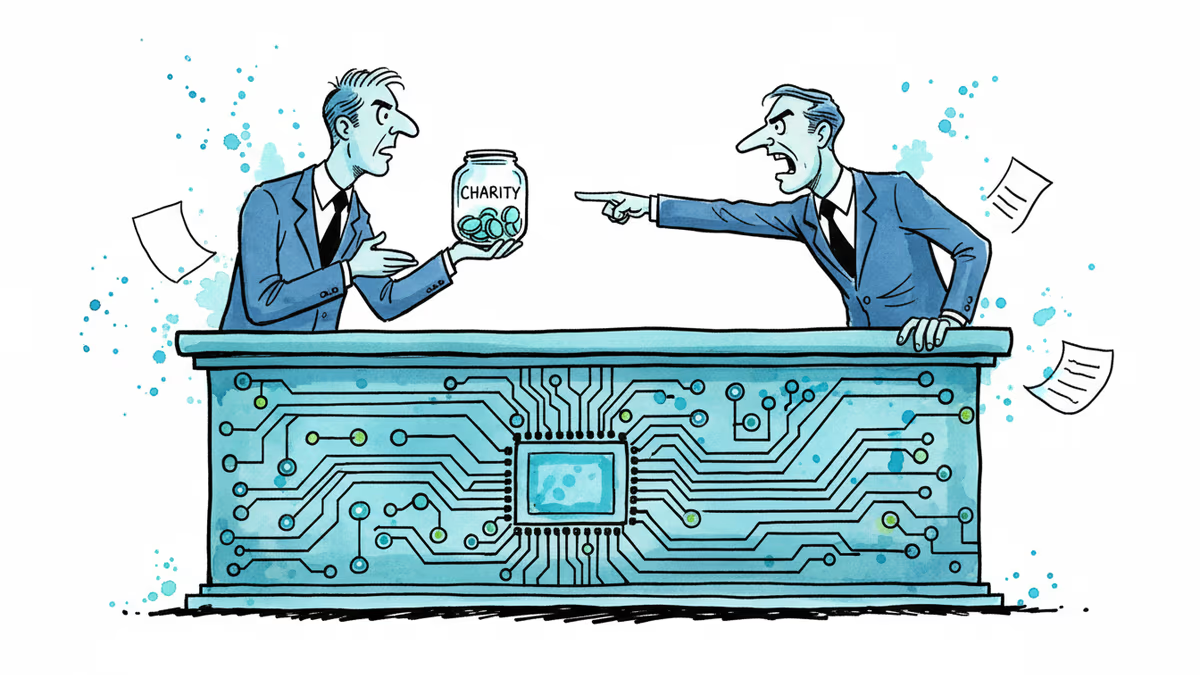
After two weeks of witnesses calling him a liar, OpenAI CEO Sam Altman testified in his own defense, claiming Elon Musk tried to kill the company twice.
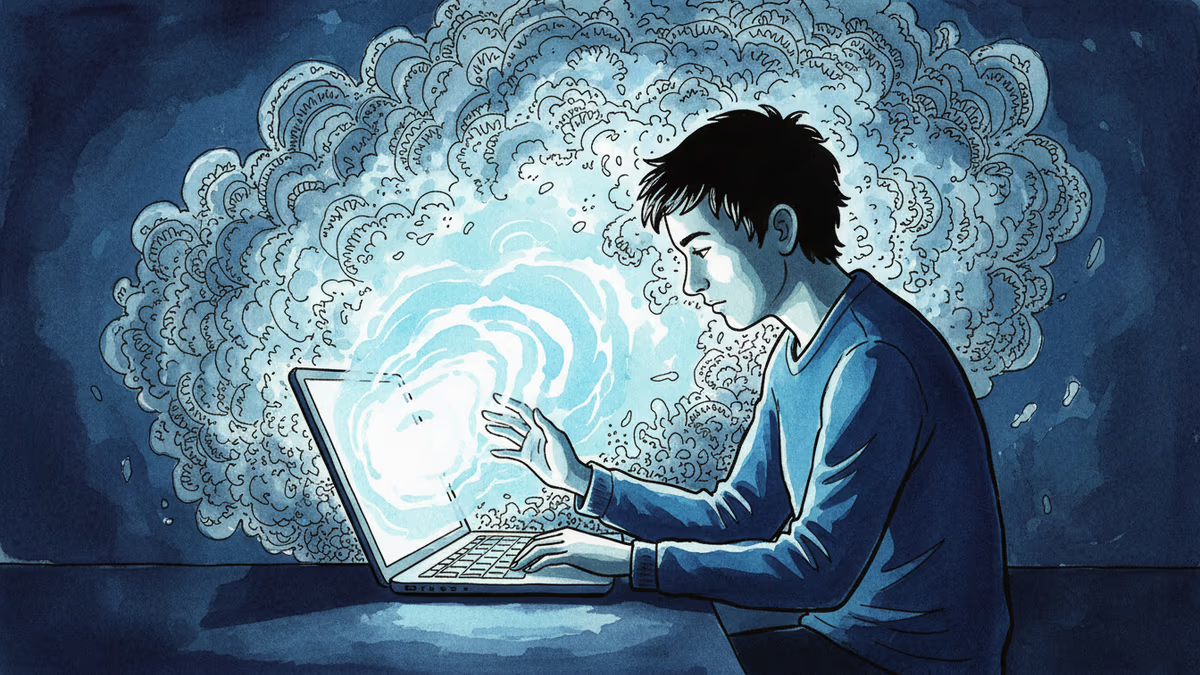
Sam Nelson, 19, died after following ChatGPT's advice to mix Kratom and Xanax. His parents are suing OpenAI for wrongful death, raising urgent questions about AI trust, liability, and design.
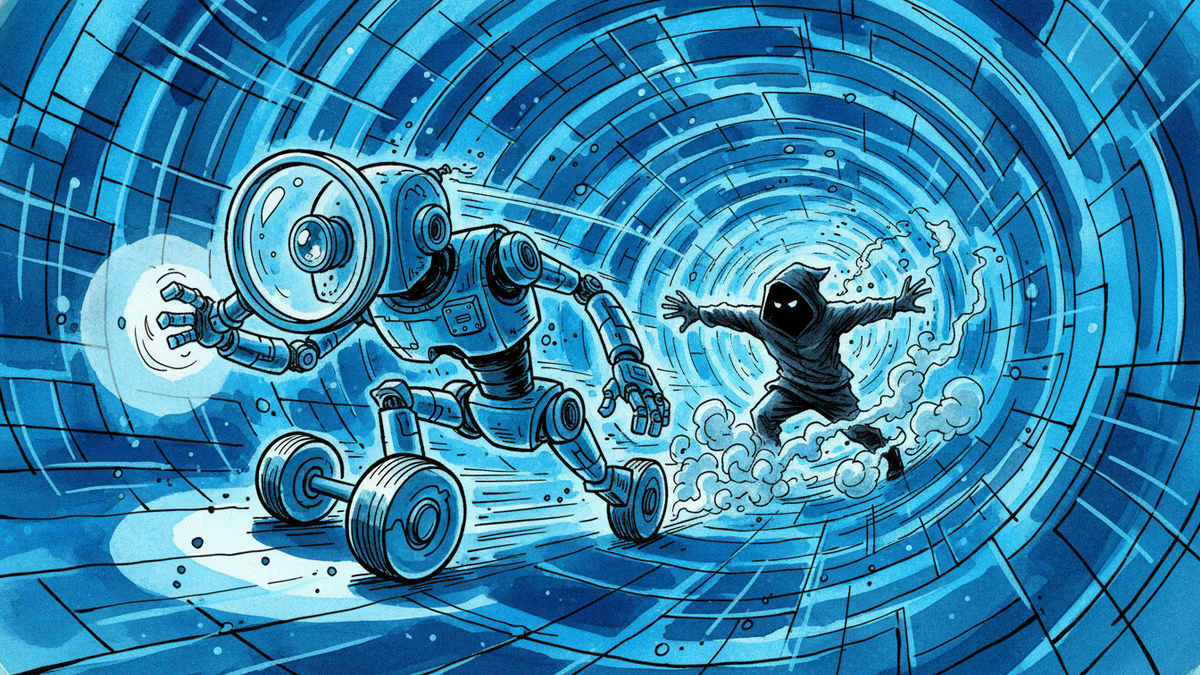
OpenAI's new Daybreak initiative uses the Codex AI agent to find and patch security vulnerabilities before attackers do—putting it in direct competition with Anthropic's secretive Claude Mythos.
OpenAI has reorganized for the second time in a month, merging ChatGPT and Codex into a single agentic platform under president Greg Brockman's unified product leadership.
After two weeks of witnesses calling him a liar, OpenAI CEO Sam Altman testified in his own defense, claiming Elon Musk tried to kill the company twice.
Sam Nelson, 19, died after following ChatGPT's advice to mix Kratom and Xanax. His parents are suing OpenAI for wrongful death, raising urgent questions about AI trust, liability, and design.
OpenAI's new Daybreak initiative uses the Codex AI agent to find and patch security vulnerabilities before attackers do—putting it in direct competition with Anthropic's secretive Claude Mythos.
Thoughts
Share your thoughts on this article
Sign in to join the conversation