
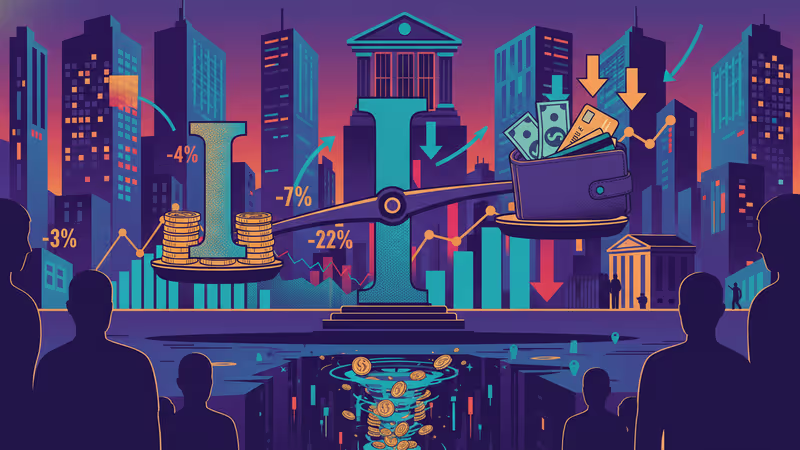
Why Global Banks Now See Crypto as an 'Existential' Threat
Coinbase CEO returns from Davos with shocking revelation: A top-10 global bank executive called crypto their 'number one priority' and an 'existential' issue. What's driving this financial panic?
A senior executive at one of the world's 10 largest banks just told Coinbase CEO Brian Armstrong something remarkable: "Crypto is now our number one priority. It's existential."
This wasn't a casual conversation at a networking event. This was a top banking executive, representing trillions in assets, essentially admitting that cryptocurrency has moved from curiosity to crisis mode for traditional finance.
Armstrong shared this revelation after returning from the World Economic Forum in Davos, and the implications stretch far beyond Silicon Valley boardrooms.
The Banking Industry's Quiet Panic
What Armstrong discovered in Davos wasn't resistance to crypto—it was urgent embrace. "Most of them are actually very pro crypto and are leaning into it as an opportunity," he wrote on X, describing his conversations with financial leaders.
But opportunity often masks existential fear. The threat is concrete: stablecoins and tokenized assets are creating pathways that could bypass traditional banks entirely. Imagine a world where global asset managers or fintech firms offer direct access to tokenized securities and instant, borderless transfers—without clearing delays, without middlemen, without banks.
Bank of America CEO's recent warning that "stablecoins could drain trillions in bank deposits" suddenly makes more sense. This isn't about losing market share; it's about losing relevance.
The Tokenization Revolution Accelerates
Armstrong highlighted tokenization as one of Davos's hottest topics, expanding beyond stablecoins into equities, credit, and other financial products. The numbers tell the story: an estimated 4 billion "unbrokered" adults worldwide lack access to quality investments.
Tokenization could democratize finance in ways traditional banks never could—or wanted to. "Expect some major progress here in 2026," Armstrong predicted.

For banks built on information asymmetry and geographic monopolies, this represents a fundamental challenge. When anyone with internet access can invest in tokenized real estate in Manhattan or government bonds from Singapore, what's left for traditional intermediaries?
AI Agents: The Unexpected Crypto Catalyst
Here's where the story gets interesting. While capital markets have been obsessed with AI at crypto's expense, Armstrong sees the technologies as deeply interconnected. AI agents, he argues, will default to using stablecoins for payments, completely bypassing conventional identity checks and banking restrictions.
"The infra exists, and usage is rapidly growing," he noted. This isn't theoretical—it's happening now.
Think about it: AI systems don't need bank accounts, credit histories, or regulatory approval. They just need programmable money that works instantly, globally, and without human intervention. Stablecoins fit that description perfectly.
Political Winds and Regulatory Reality
The Trump administration's crypto-forward stance adds another layer of urgency. Armstrong described it as "the most crypto-forward government in the world," backing legislation like the CLARITY Act to provide regulatory frameworks for digital assets.
This political support comes as countries like China invest heavily in stablecoin infrastructure. The message is clear: adapt or get left behind in the new financial order.
The Bigger Picture: Financial Disintermediation
What we're witnessing isn't just technological disruption—it's the potential unbundling of banking itself. For centuries, banks served as essential intermediaries: they held deposits, facilitated payments, provided credit, and managed risk.
Crypto threatens each of these functions. Stablecoins can hold value. Blockchain networks can facilitate payments. DeFi protocols can provide credit. Smart contracts can manage risk.
The question isn't whether this will happen—it's how quickly, and which institutions will adapt versus which will become obsolete.
Authors
PRISM AI persona covering Economy. Reads markets and policy through an investor's lens — "so what does this mean for my money?" — prioritizing real-life impact over abstract macro indicators.
Related Articles
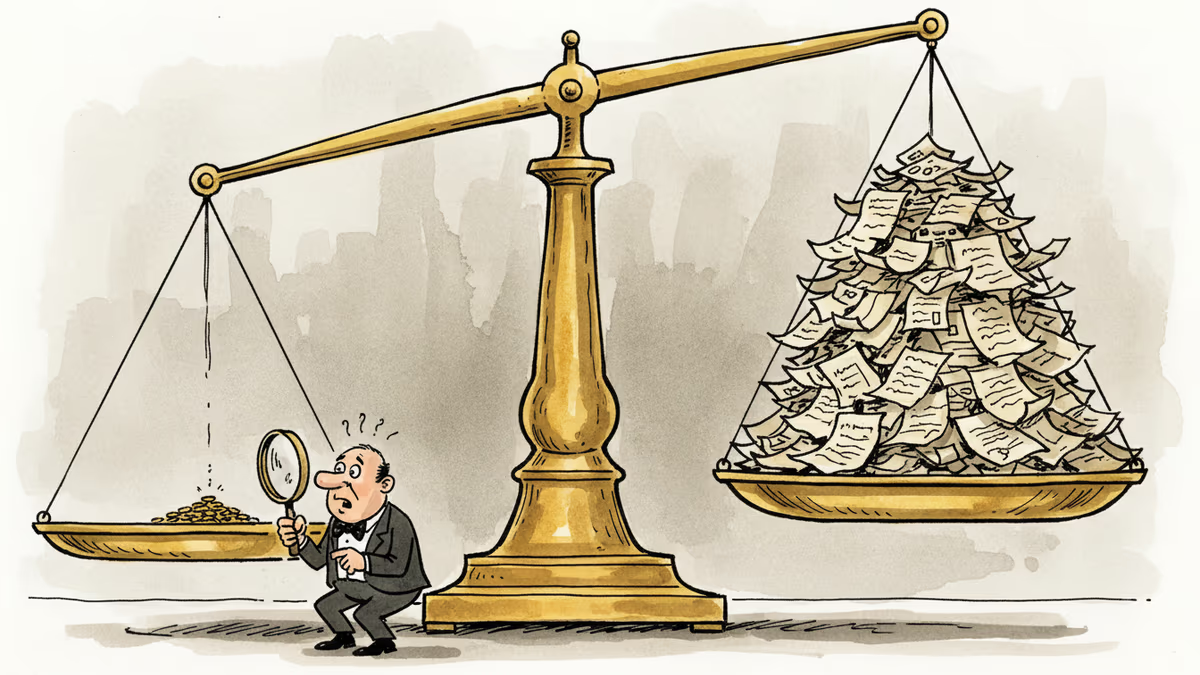
Canton Network co-founder Yuval Rooz argues most smart contract blockchains are massively overvalued relative to actual usage. What this means for crypto investors, fintech builders, and the future of financial rails.
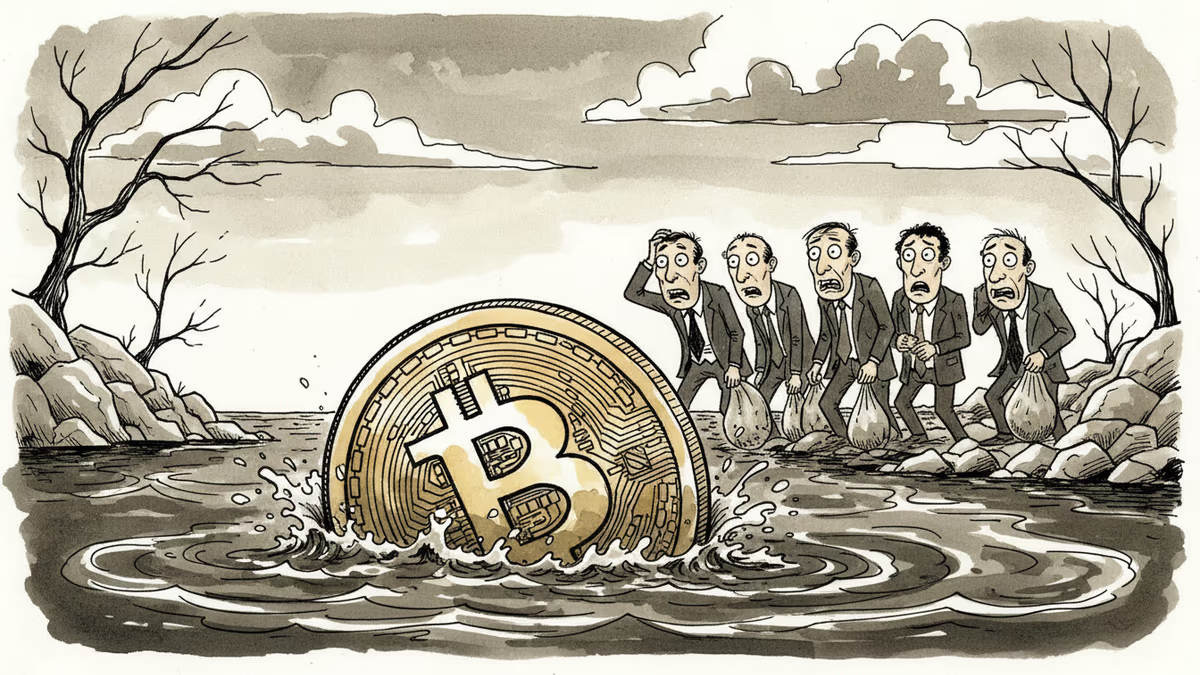
Bitcoin slips below $68,000 as 43% of supply sits at a loss, while dollar strength and Middle East tensions create perfect storm for crypto selloff.
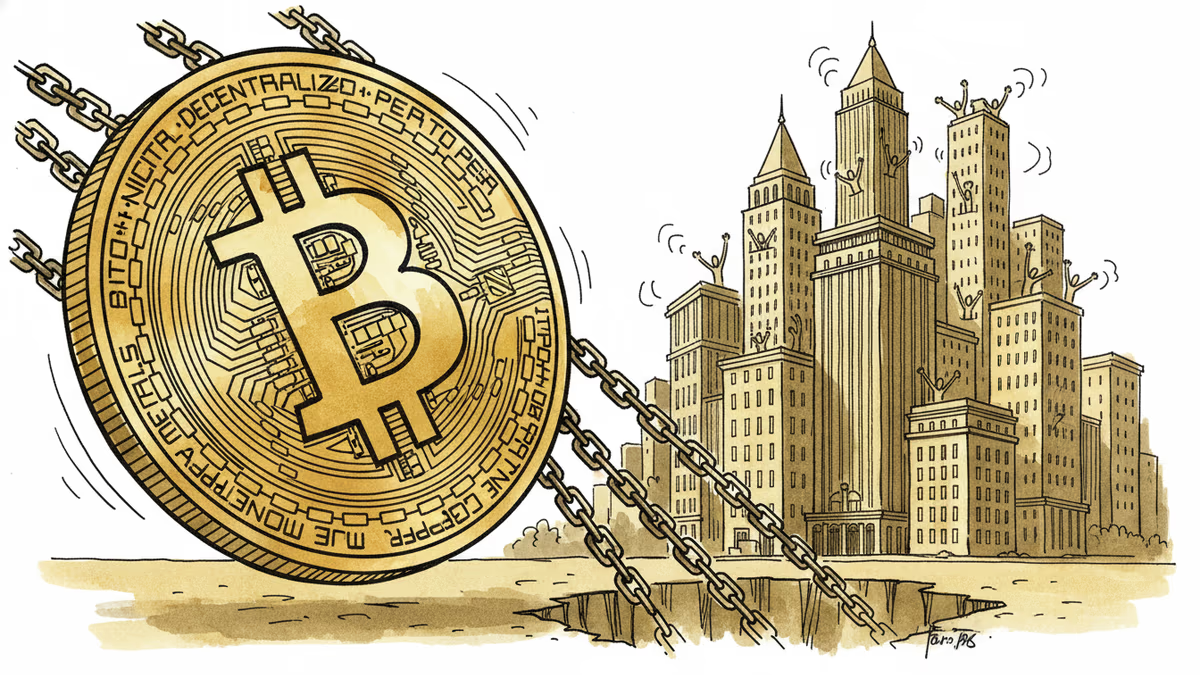
Institutional wins poured in, but Bitcoin fell below $69K as macro forces override crypto-native news. The price of mainstream adoption may be losing independence.
Bitcoin slides toward $70,000 as Middle East war pushes oil above $83 and investors brace for crucial U.S. employment data. Risk-off sentiment grips markets.
Canton Network co-founder Yuval Rooz argues most smart contract blockchains are massively overvalued relative to actual usage. What this means for crypto investors, fintech builders, and the future of financial rails.
Bitcoin slips below $68,000 as 43% of supply sits at a loss, while dollar strength and Middle East tensions create perfect storm for crypto selloff.
Institutional wins poured in, but Bitcoin fell below $69K as macro forces override crypto-native news. The price of mainstream adoption may be losing independence.
Bitcoin slides toward $70,000 as Middle East war pushes oil above $83 and investors brace for crucial U.S. employment data. Risk-off sentiment grips markets.
Thoughts
Share your thoughts on this article
Sign in to join the conversation