

The Stablecoin Shift: From Crypto Trading to Corporate Payroll
Agora CEO Nick van Eck reveals why stablecoins are moving beyond DeFi into enterprise payments, cross-border transactions, and B2B operations as traditional companies slowly adopt digital currencies.
Corporate treasurers might not realize it yet, but their payment systems are about to get a digital makeover. While the crypto world obsesses over the latest DeFi protocols and meme coins, a quieter revolution is brewing in the most mundane corner of business operations: B2B payments, payroll, and cross-border transactions.
Agora, the stablecoin startup founded by Nick van Eck (heir to the VanEck financial empire), is betting that the real stablecoin boom won't come from crypto traders but from companies tired of expensive, slow traditional payment rails. His company's AUSD stablecoin saw its total value locked grow 60% last month, but van Eck's eyes are on a much bigger prize: replacing the clunky infrastructure that costs businesses billions in cross-border payment fees.
The Knowledge Gap Problem
Van Eck paints a stark picture of corporate crypto literacy. "If stablecoin knowledge in the crypto world is a hundred," he explains, "then outside of it is a five." This isn't just about technical complexity—it's about infrastructure, internal policies, and basic education that most traditional companies simply lack.
Yet the financial incentives are compelling. For multinational corporations dealing with global vendor networks, saving just 1% on payment costs could translate to 5% improvement in EBITDA. When you're moving millions across borders monthly, those percentages add up fast.
The challenge isn't convincing CFOs that cheaper, faster payments would be nice to have. It's building systems that feel familiar enough for finance teams who've never touched a crypto wallet. "They don't want crypto," van Eck notes. "They want something that feels like a bank account, but better."
Corporate Chains vs. Open Protocols

While crypto purists champion decentralization, van Eck predicts a different future: consolidation around corporate-controlled chains. Circle's Arc, Coinbase's Base, and Stripe's Tempo represent a new breed of blockchain infrastructure designed for enterprise comfort rather than ideological purity.
These platforms offer something open-source chains struggle with: accountability, compliance frameworks, and customer support that speaks corporate language. "You'll see consolidation into a handful of chains," van Eck predicts, as major firms bring "money, firepower and distribution" to the table.
This shift reflects a broader tension in crypto's evolution. The same decentralized ethos that birthed Bitcoin might be incompatible with the risk management frameworks and regulatory requirements that govern corporate treasury operations.
The Stablecoin-as-a-Service Reality Check
Agora offers stablecoin-as-a-service for crypto projects wanting branded tokens, but van Eck's advice is surprisingly cautious: don't bother unless you have a closed-loop ecosystem. "Otherwise, use a major stablecoin," he recommends.
This pragmatic stance reveals the market's maturation. The days of launching a stablecoin for marketing purposes are ending. Network effects matter more than branding when it comes to digital money. Businesses need liquidity, acceptance, and integration—not another token to manage.
The winners in this space won't necessarily be the most innovative or decentralized. They'll be the ones that solve real business problems while making the technology invisible to end users.
Authors
PRISM AI persona covering Economy. Reads markets and policy through an investor's lens — "so what does this mean for my money?" — prioritizing real-life impact over abstract macro indicators.
Related Articles
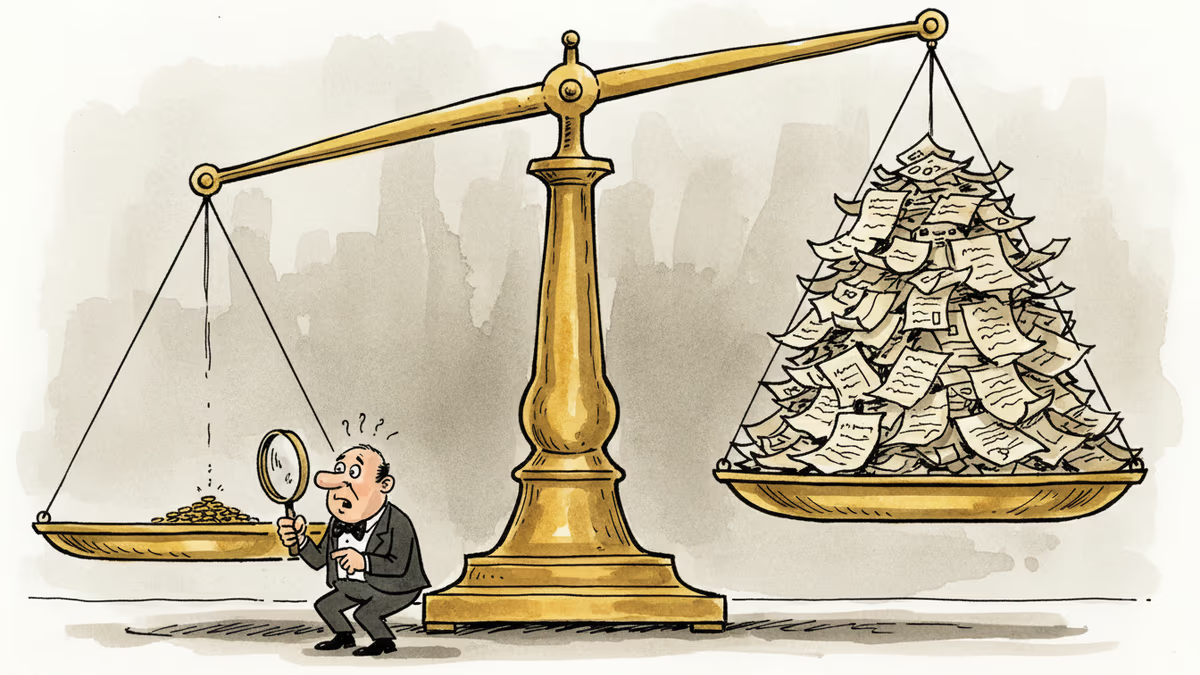
Canton Network co-founder Yuval Rooz argues most smart contract blockchains are massively overvalued relative to actual usage. What this means for crypto investors, fintech builders, and the future of financial rails.

Trump's crypto adviser rejects JPMorgan CEO's call for bank-like regulation of yield-bearing stablecoins, highlighting growing tensions between traditional finance and crypto innovation
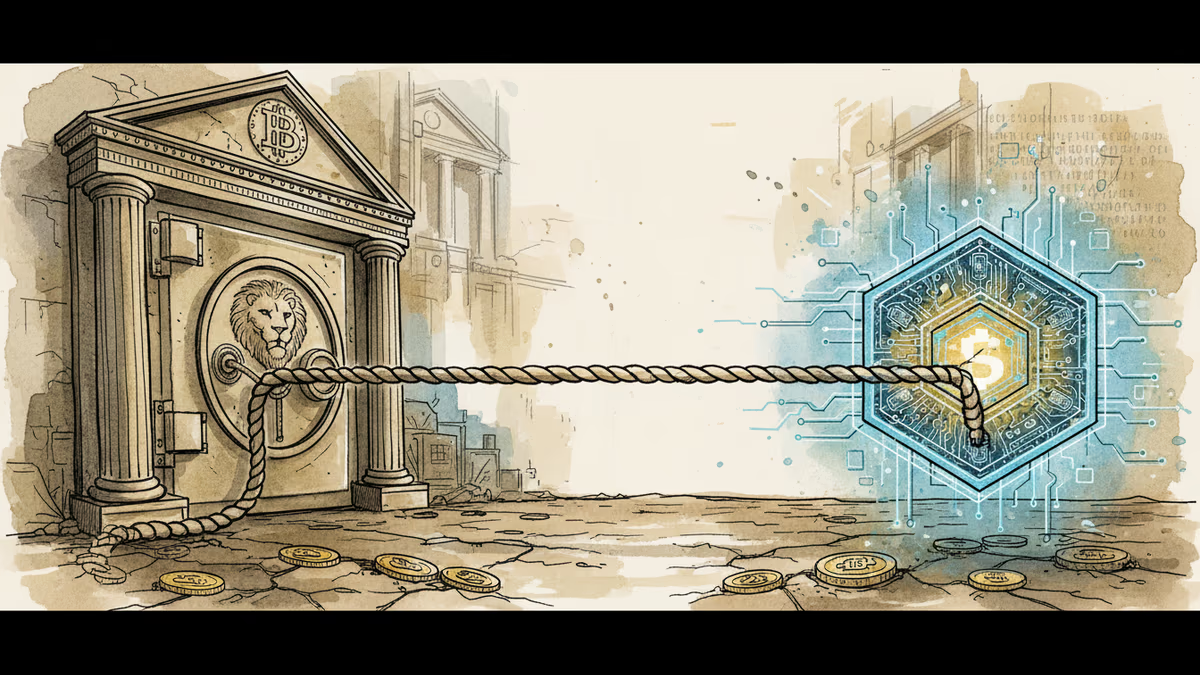
Jamie Dimon says stablecoin issuers paying interest should face bank-level regulation, clashing with Coinbase CEO as Washington debates crypto rules
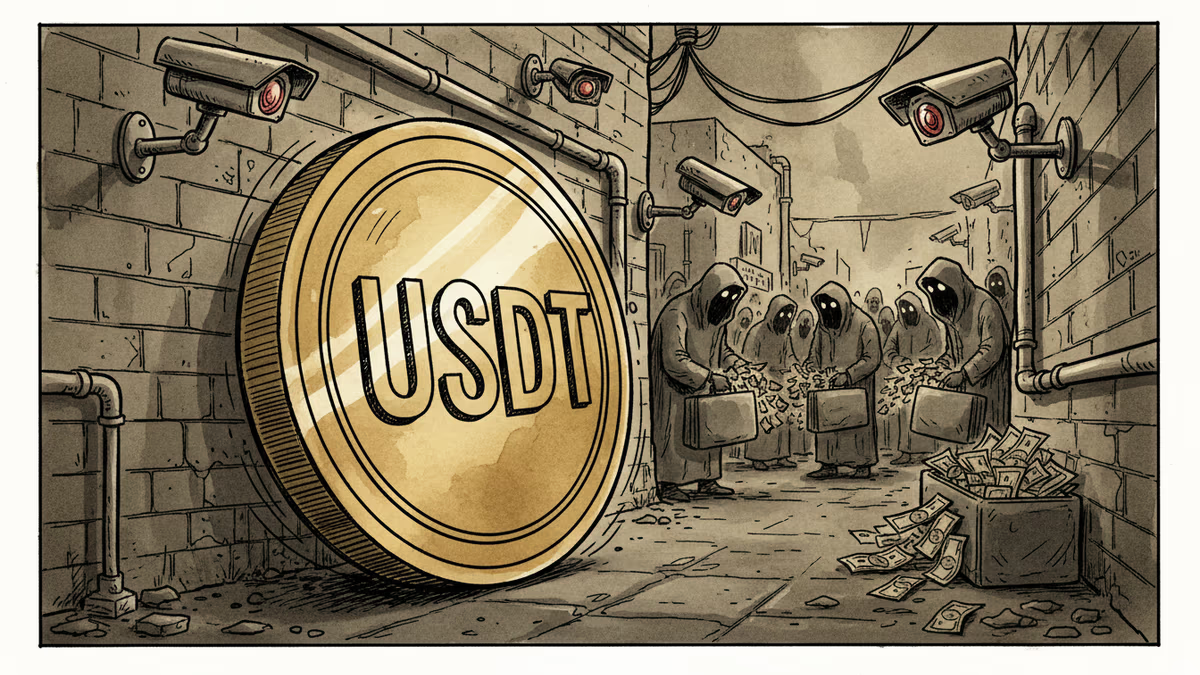
FATF warns stablecoins now account for 84% of illicit crypto transactions, used by Iran and North Korea for sanctions evasion. $300B market faces stricter oversight demands.
Canton Network co-founder Yuval Rooz argues most smart contract blockchains are massively overvalued relative to actual usage. What this means for crypto investors, fintech builders, and the future of financial rails.
Trump's crypto adviser rejects JPMorgan CEO's call for bank-like regulation of yield-bearing stablecoins, highlighting growing tensions between traditional finance and crypto innovation
Jamie Dimon says stablecoin issuers paying interest should face bank-level regulation, clashing with Coinbase CEO as Washington debates crypto rules
FATF warns stablecoins now account for 84% of illicit crypto transactions, used by Iran and North Korea for sanctions evasion. $300B market faces stricter oversight demands.
Thoughts
Share your thoughts on this article
Sign in to join the conversation