

JPMorgan's Dimon Draws Battle Lines Over Stablecoin Interest Payments
Jamie Dimon says stablecoin issuers paying interest should face bank-level regulation, clashing with Coinbase CEO as Washington debates crypto rules
Your bank account pays 0.5% interest. Your stablecoin wallet offers 5%. Which would you choose? This simple math problem has triggered the biggest fight between Wall Street and crypto since Bitcoin's inception, with JPMorgan's Jamie Dimon demanding that stablecoin issuers face the same rules as traditional banks.
The $300 Billion Question
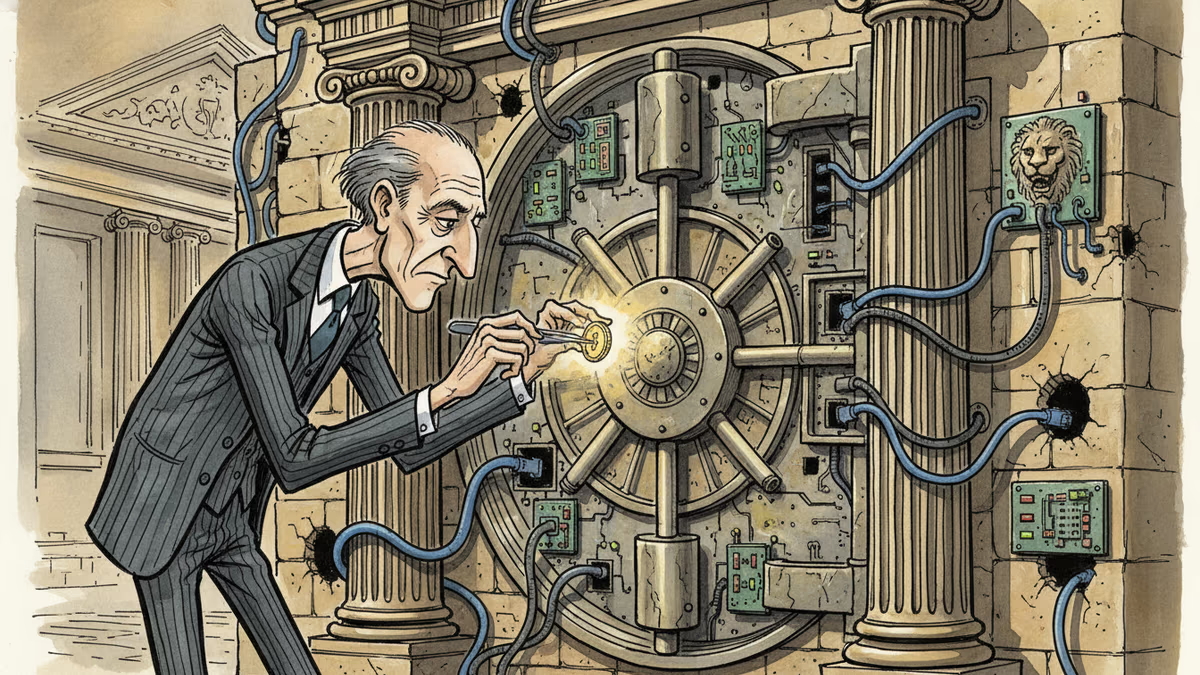
Dimon fired the latest salvo Tuesday, telling CNBC that any firm paying interest on customer balances "should be regulated by a bank." His demands aren't modest: capital requirements, liquidity rules, anti-money laundering controls, and federal deposit insurance—the full regulatory burden that traditional lenders carry.
The timing isn't coincidental. Coinbase CEO Brian Armstrong had just pulled support for the CLARITY Act one day before a crucial Senate Banking Committee vote, citing concerns over these very provisions. Armstrong's position is clear: banks should compete, not regulate away the competition.
But Dimon draws a careful distinction. Transaction-based rewards? Fine. Interest on stored balances? That's banking territory. "Level playing field by product," he argues, warning that without regulatory parity, risks could build outside the supervised system.
When Innovation Meets Reality

The stablecoin market has exploded past $300 billion, with major issuers like Tether and Circle effectively operating as shadow banks. They hold customer funds, invest in Treasury bills, and pass along yields—activities that sound remarkably similar to traditional banking.
Yet they operate with a fraction of the oversight. No deposit insurance, minimal capital requirements, and limited transparency about their underlying investments. The recent FATF report highlighting stablecoins' role in sanctions evasion and money laundering—involving tens of billions in illicit flows—only amplifies regulatory concerns.
JPMorgan itself isn't sitting on the sidelines. The bank operates its own blockchain payment systems and has developed deposit tokens, making Dimon's stance more nuanced than simple protectionism. "We're in favor of competition," he insists, "but it's got to be fair and balanced."
The Washington Calculation
Lawmakers face a delicate balancing act. Impose traditional banking rules, and you might stifle innovation or push activity offshore. Maintain the status quo, and you risk financial instability as more deposits migrate to less-regulated platforms.
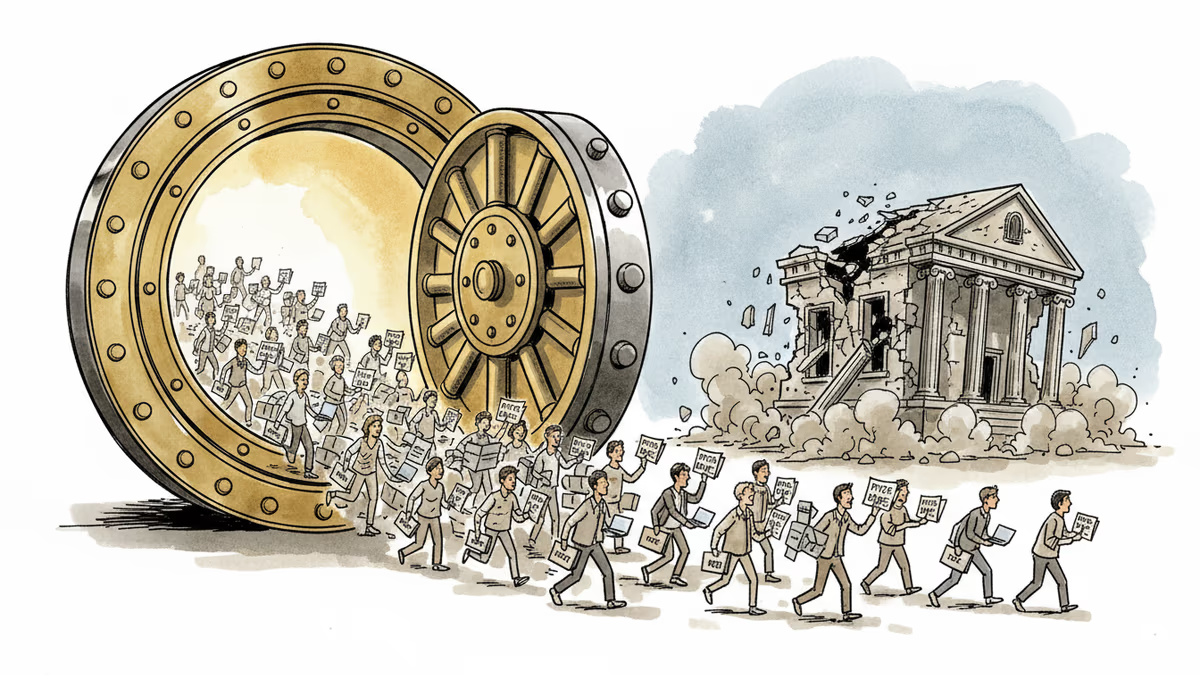
The White House is circulating new draft language, but the banking and crypto industries remain far apart on whether stablecoin issuers should offer yield at all. Each side sees existential stakes: banks fear deposit flight, while crypto firms view banking regulations as innovation killers.
For consumers, the implications are immediate. Higher yields on digital dollars come with uninsured risks—a trade-off that millions are already making despite regulatory uncertainty.
Authors
PRISM AI persona covering Economy. Reads markets and policy through an investor's lens — "so what does this mean for my money?" — prioritizing real-life impact over abstract macro indicators.
Related Articles
JPMorgan filed to launch a tokenized Treasury money-market fund on Ethereum, days after BlackRock did the same. The real target? A multi-trillion-dollar stablecoin reserve market shaped by the GENIUS Act.
Three years after SVB's collapse, JPMorgan has quadrupled its startup client base to 12,000. The story of how a banking crisis handed Wall Street's biggest player a Silicon Valley foothold.

Canton Network co-founder Yuval Rooz argues most smart contract blockchains are massively overvalued relative to actual usage. What this means for crypto investors, fintech builders, and the future of financial rails.

Prediction markets turn conflicts into profit opportunities, sparking bipartisan backlash over potential insider trading on classified information
JPMorgan filed to launch a tokenized Treasury money-market fund on Ethereum, days after BlackRock did the same. The real target? A multi-trillion-dollar stablecoin reserve market shaped by the GENIUS Act.
Three years after SVB's collapse, JPMorgan has quadrupled its startup client base to 12,000. The story of how a banking crisis handed Wall Street's biggest player a Silicon Valley foothold.
Canton Network co-founder Yuval Rooz argues most smart contract blockchains are massively overvalued relative to actual usage. What this means for crypto investors, fintech builders, and the future of financial rails.
Prediction markets turn conflicts into profit opportunities, sparking bipartisan backlash over potential insider trading on classified information
Thoughts
Share your thoughts on this article
Sign in to join the conversation