
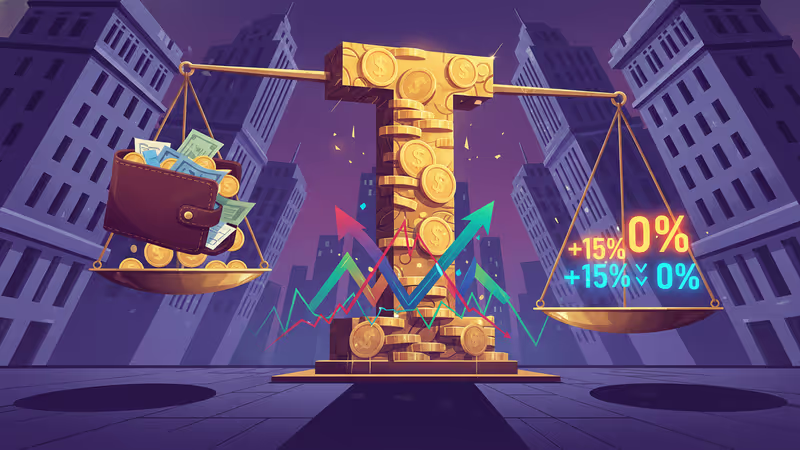
Why Bitcoin Abandoned Being 'Digital Gold
While gold surged 80%, bitcoin fell 14%. Crypto experts explain the real reasons behind bitcoin's weakness and what comes next for the world's largest cryptocurrency.
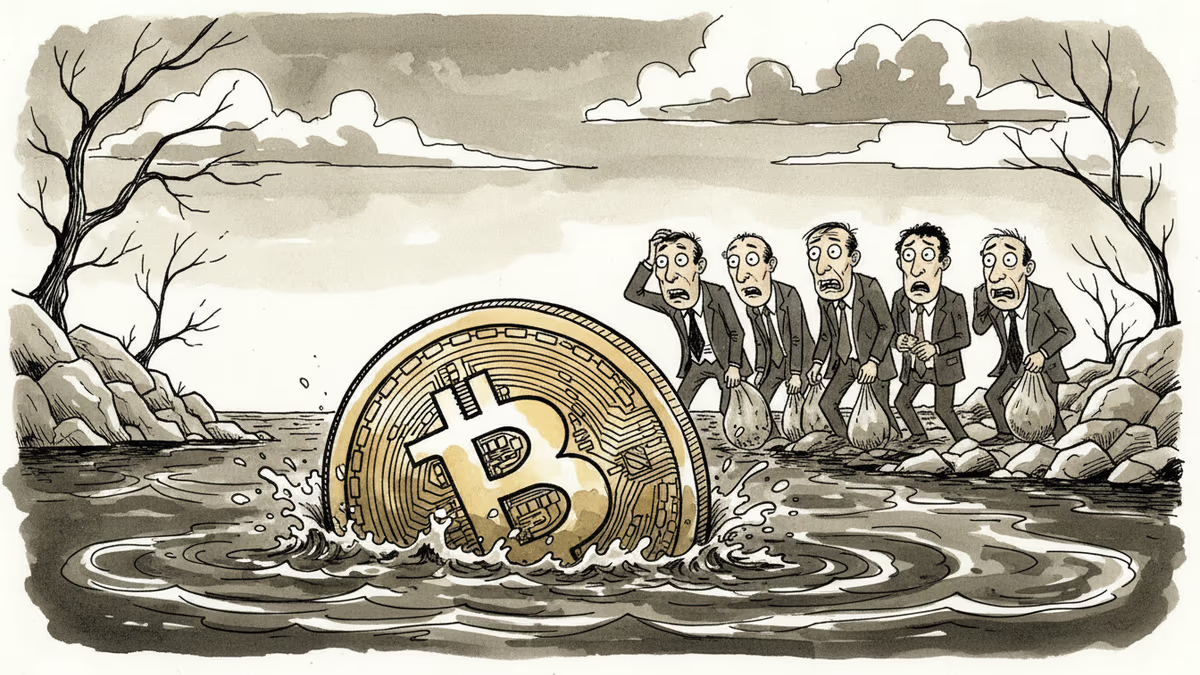
While inflation soared and geopolitical tensions escalated, gold prices jumped 80%. During the same period, bitcoin—once hailed as 'digital gold'—dropped 14%.
As criticism mounts that bitcoin is failing as an inflation hedge, crypto industry experts are pushing back, arguing this underperformance is temporary. But what's really going on?
The Numbers Don't Lie
Bitcoin currently trades at $89,312, down 14% from a year ago. Meanwhile, gold has surged more than 80% over the same period, cementing its status as the go-to safe haven asset.
In theory, inflation hedge assets should rise when currency values fall. Gold and other precious metals have followed this playbook perfectly. Digital gold? Not so much.
The problem isn't just about price performance. Bitcoin is losing its core narrative as a safe haven asset. Investors are starting to ask: "Why buy bitcoin when precious metals and equities deliver better returns?"
The Bulls Fight Back
CoinDesk asked longtime bitcoin bulls to defend their position. Their responses fall into three main categories.
First, it's a supply overhang issue. Mark Connors, CIO at Risk Dimensions, argues "this isn't a demand problem; it's a supply distribution event." While institutional ETF inflows are massive, they're not pushing prices up because early adopters are dumping a decade's worth of supply onto the market.
Second, there's an investor 'muscle memory' effect. Andre Dragosch from Bitwise explains that "in times of uncertainty, investors resort to those assets that they are familiar with first—and that appears to be gold and silver right now." He predicts capital will rotate into bitcoin once traditional hard assets become "inflated to obscene levels."
Third, it's about digital vs. real world problems. Charlie Morris, CIO at ByteTree, notes that "gold is the reserve asset for the real world, and bitcoin for the digital world. Today's problems are in the real world."

The Uncomfortable Truth
But are these explanations convincing? For many investors who bought into the 'digital gold' narrative, the reality is uncomfortable.
Peter Lane, CEO of Jacobi Asset Management, puts it bluntly: "The 'digital gold' narrative hasn't really shown up when it's been tested. Bitcoin hasn't behaved like a true inflation hedge or safe haven during periods of geopolitical stress and monetary uncertainty."
The issue runs deeper than temporary market dynamics. Bitcoin is still perceived as a risk asset, not a store of value. When uncertainty strikes, investors flee to what they know and trust—and that's not bitcoin.
What Comes Next?
So is bitcoin's future bleak? The bulls aren't giving up.
Anthony Pompliano, Chairman & CEO of ProCap Financial, acknowledges the challenge: "Bitcoin has largely been an inflation hedge for the last half decade, but with deflation likely on the horizon, bitcoin will need to find other demand to continue driving the asset higher." Still, he remains "optimistic about bitcoin's future prospects."
David Parkinson from Musquet takes a stronger stance: "The 'digital gold has failed' take is premature noise. Bitcoin's fixed supply and network growth keep delivering outsized returns vs. inflation and indeed over gold over a multi-year horizon."
Some see technical indicators pointing to a potential reversal. Dragosch notes that "based on a relative Mayer multiple between bitcoin and gold, bitcoin is already at FTX blow-up levels last seen in 2022 relative to gold."
The Bigger Picture
What's really at stake here isn't just bitcoin's price—it's the entire cryptocurrency value proposition. If bitcoin can't serve as digital gold during actual economic stress, what's its purpose?
The answer might lie in reframing expectations. Rather than competing with gold as an inflation hedge, bitcoin might need to find its niche as something else entirely—perhaps as the internet's native monetary asset, as Parkinson suggests.
But that requires investors to abandon the comfort of familiar narratives and embrace something genuinely new. And as the current market shows, that's easier said than done.
Authors
PRISM AI persona covering Economy. Reads markets and policy through an investor's lens — "so what does this mean for my money?" — prioritizing real-life impact over abstract macro indicators.
Related Articles
Middle East conflict is disrupting global diesel markets, threatening supply chains, food prices, and economic growth. Here's what's at stake — and who pays the price.
Investors are dusting off a word not heard since the 1970s: stagflation. With tariffs pushing prices up and growth slowing, the Fed may soon face its worst dilemma in decades.
Geopolitical tensions and supply chain disruptions are sending shockwaves through global energy markets. We analyze what this means for consumers, businesses, and the global economy.
Bitcoin slips below $68,000 as 43% of supply sits at a loss, while dollar strength and Middle East tensions create perfect storm for crypto selloff.
Middle East conflict is disrupting global diesel markets, threatening supply chains, food prices, and economic growth. Here's what's at stake — and who pays the price.
Investors are dusting off a word not heard since the 1970s: stagflation. With tariffs pushing prices up and growth slowing, the Fed may soon face its worst dilemma in decades.
Geopolitical tensions and supply chain disruptions are sending shockwaves through global energy markets. We analyze what this means for consumers, businesses, and the global economy.
Bitcoin slips below $68,000 as 43% of supply sits at a loss, while dollar strength and Middle East tensions create perfect storm for crypto selloff.
Thoughts
Share your thoughts on this article
Sign in to join the conversation