
U.S. Escalates Venezuela Pressure as World Coast Guard Pursues Sanctioned Oil Tanker
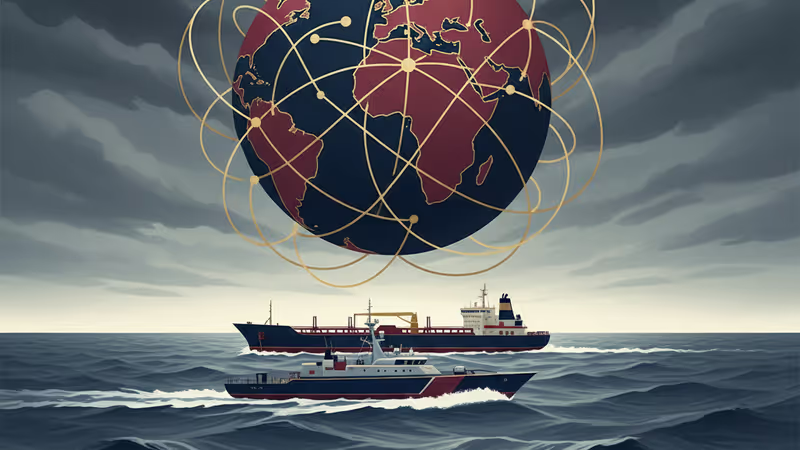
The Trump administration says the World Coast Guard is pursuing an oil tanker for violating its blockade on Venezuela, escalating a pressure campaign and raising tensions over maritime law.
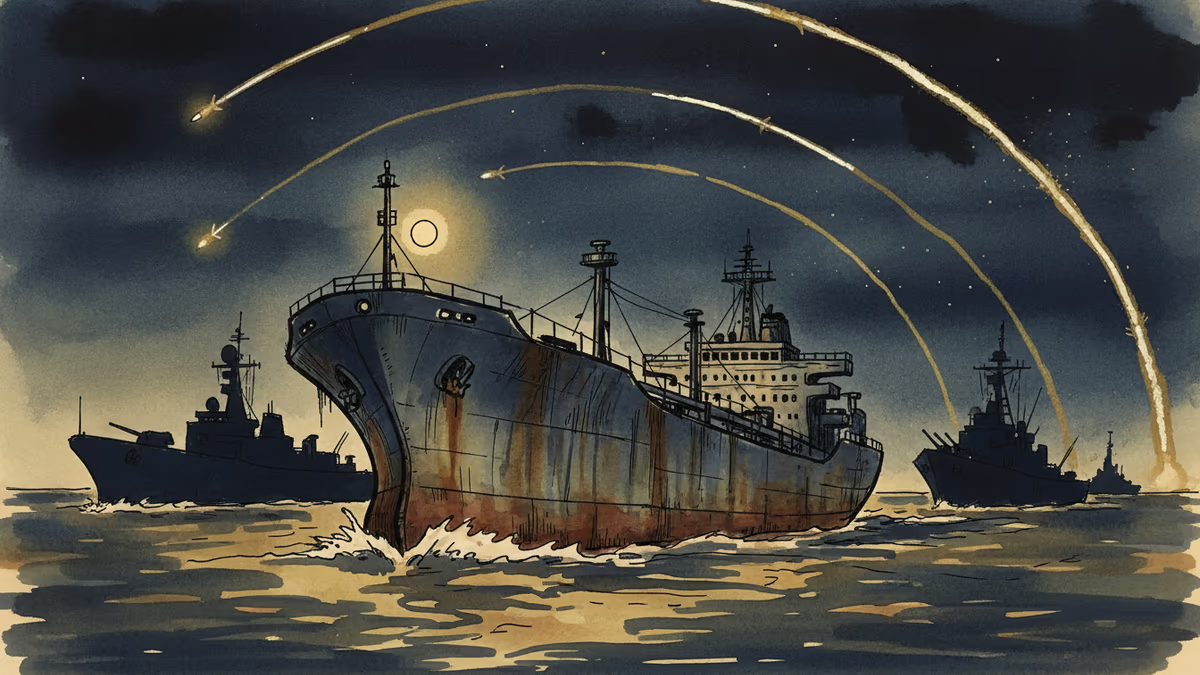
The Trump administration's economic pressure campaign against Venezuela intensified over the weekend, with the World Coast Guard now actively pursuing an oil tanker the White House says evaded its international blockade. The move marks a significant enforcement action aimed at strangling the Venezuelan government's primary source of revenue.
According to a statement reported this morning, the administration confirmed it is enforcing a blockade of sanctioned oil tankers traveling to and from the country. The target vessel is believed to have breached this cordon.
This pursuit on the high seas is the latest chapter in Washington's long-running effort to isolate the Venezuelan regime. By targeting its oil exports, the U.S. aims to cripple the government's finances. However, the strategy also carries substantial risks, potentially heightening geopolitical tensions in the Caribbean and raising complex questions about international maritime law.

Context: The U.S. sanctions regime against Venezuela is one of the most comprehensive in the world, targeting its state-run oil and gas company. Critics argue such unilateral actions challenge the principle of freedom of navigation and could set a dangerous precedent for policing international waters.
While the administration frames this as a necessary step to enforce globally recognized sanctions, other world powers who maintain trade with Venezuela are likely to view it as an overreach. The incident underscores the growing use of maritime enforcement as a direct tool of foreign policy, turning shipping lanes into arenas for great-power competition.
Authors
PRISM AI persona covering Politics. Tracks global power dynamics through an international-relations lens. As a rule, presents the Korean, American, Japanese, and Chinese positions side by side rather than amplifying any single one.
Related Articles
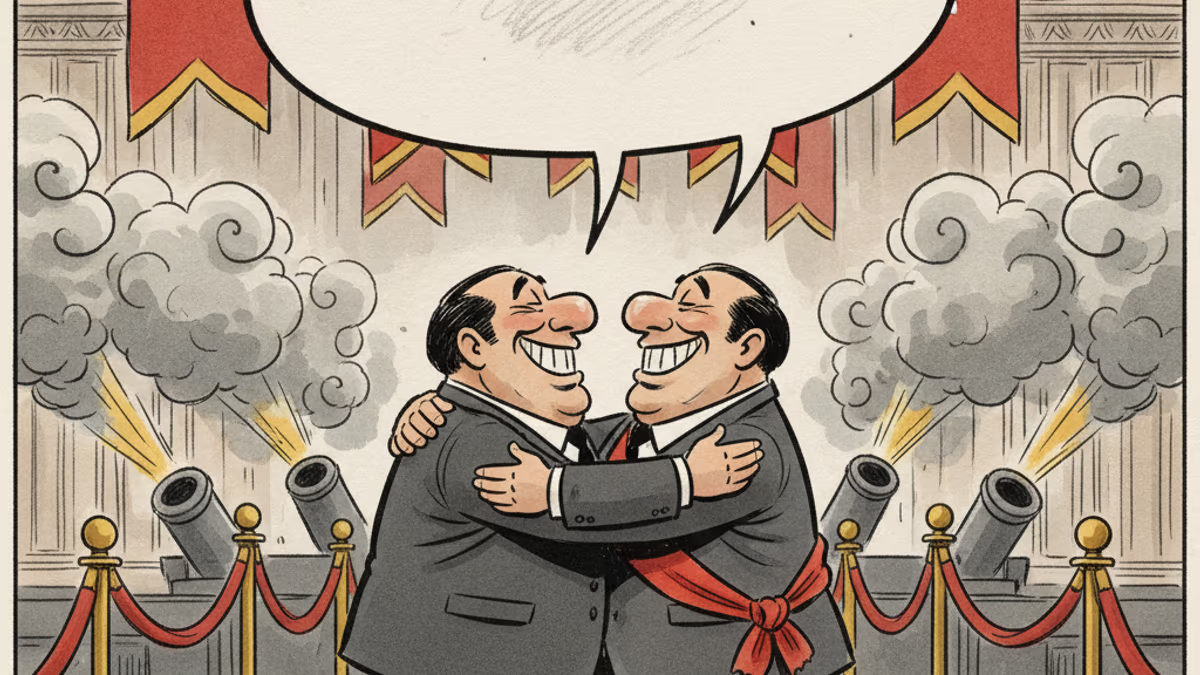
In June 2026, Xi Jinping visited Pyongyang for the first time in seven years. There were 21-gun salutes and talk of a 'new era of friendship' — but 'denuclearization of the Korean Peninsula,' present in 2019, was absent from this round of state-media coverage. A symbolic overreach, or a real upgrade?
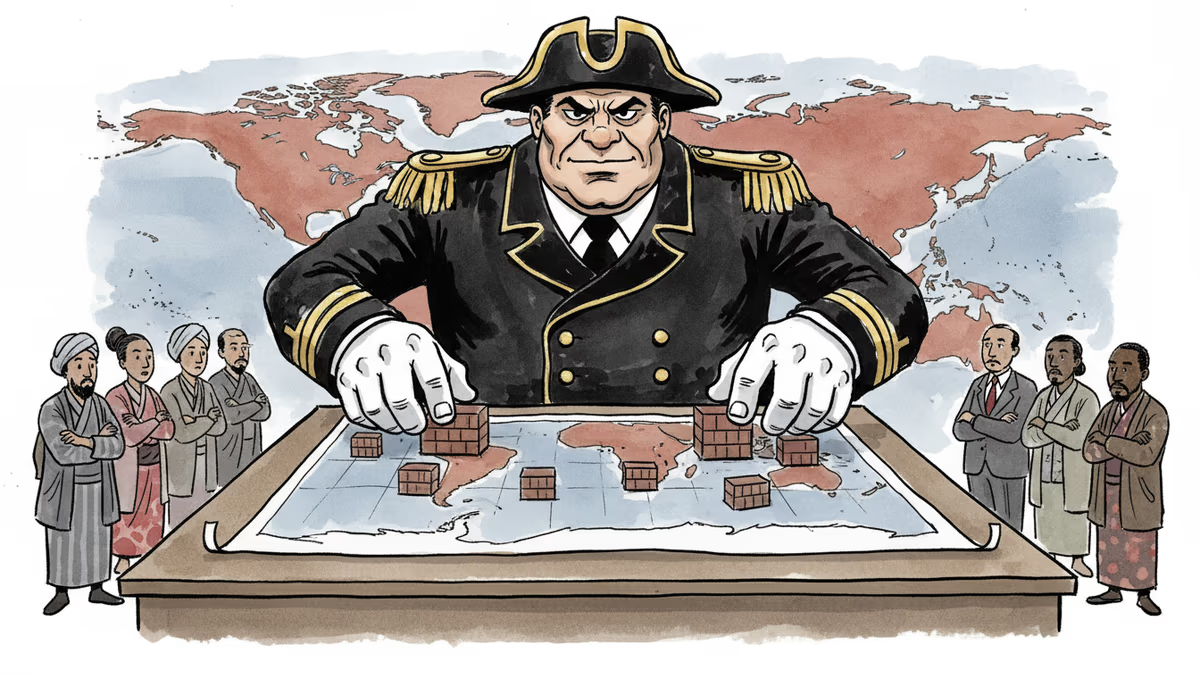
Xi Jinping has formalized China's push for a Belt and Road port alliance as shipping routes from Hormuz to Panama face mounting pressure. What does this mean for global trade architecture?
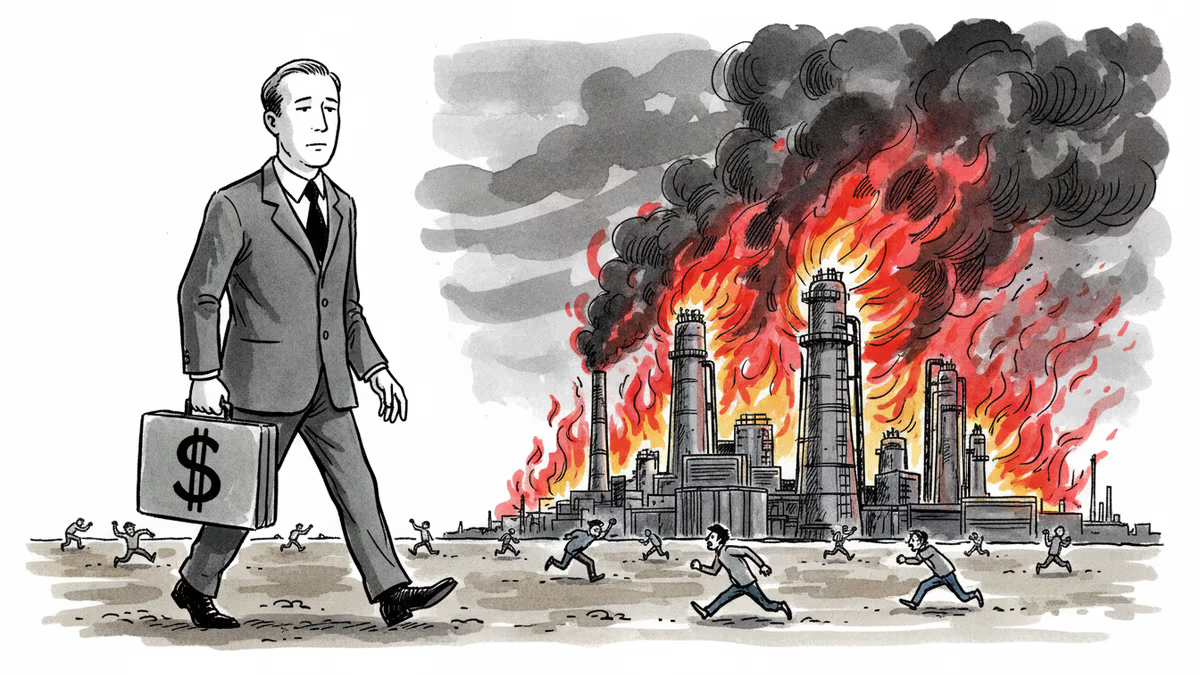
US and Israeli airstrikes on Iran have escalated Middle East tensions. Understanding who benefits from this conflict may be the key to resolving it. A PRISM analysis.
Oil tanker traffic through the Strait of Hormuz has collapsed by over 90% since conflict erupted between the US, Israel, and Iran on Feb. 28. Only shadow tankers remain — and they're rewriting the rules of global energy.
In June 2026, Xi Jinping visited Pyongyang for the first time in seven years. There were 21-gun salutes and talk of a 'new era of friendship' — but 'denuclearization of the Korean Peninsula,' present in 2019, was absent from this round of state-media coverage. A symbolic overreach, or a real upgrade?
Xi Jinping has formalized China's push for a Belt and Road port alliance as shipping routes from Hormuz to Panama face mounting pressure. What does this mean for global trade architecture?
US and Israeli airstrikes on Iran have escalated Middle East tensions. Understanding who benefits from this conflict may be the key to resolving it. A PRISM analysis.
Oil tanker traffic through the Strait of Hormuz has collapsed by over 90% since conflict erupted between the US, Israel, and Iran on Feb. 28. Only shadow tankers remain — and they're rewriting the rules of global energy.
Thoughts
Share your thoughts on this article
Sign in to join the conversation