
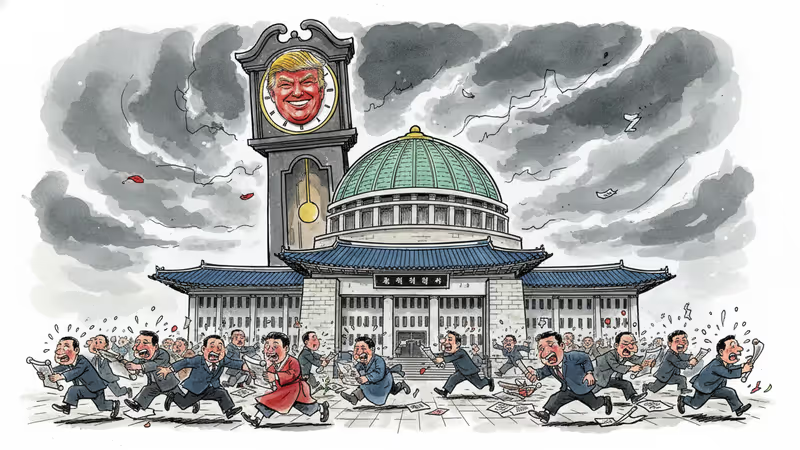
Seoul Races Against Trump's Tariff Threat with $350B Investment Bill
South Korea's ruling party promises to pass massive U.S. investment legislation by late February as Trump threatens to raise tariffs over legislative delays.
When Donald Trump threatens tariff hikes, Seoul's lawmakers suddenly find their calendars much more flexible. South Korea's ruling Democratic Party announced Sunday it will push through a $350 billion U.S. investment bill by late February or early March, racing against Trump's deadline to avoid a tariff jump from 15% to 25%.
The Pressure Campaign That Worked
Rep. Han Jeoung-ae, who chairs parliament's policy committee, told reporters the National Assembly will process the legislation during an extraordinary session scheduled for late this month. The timeline represents a significant acceleration from the bill's original November introduction, following the Lee Jae-myung-Trump summit agreement.
Trump's tariff threat sent Seoul into diplomatic overdrive. Industry Minister Kim Jung-kwan abruptly cut short his Canadian trip last week to fly to Washington for emergency talks with U.S. Commerce Secretary Howard Lutnick. While Kim described the meeting as helpful in resolving "unnecessary misunderstandings," no concrete breakthrough emerged.
The episode illustrates Trump's preferred negotiating style: apply pressure, create urgency, then negotiate from a position of strength. It's a playbook that worked with Mexico and Canada during his first term, and now he's testing it on South Korea.
Democracy vs. Deal-Making
Rep. Han expressed frustration with Washington's impatience, questioning whether the U.S. administration might be "creating an unnecessary conflict." Her comments reveal a fundamental tension between Trump's transactional approach and South Korea's democratic processes.

"The U.S. is aware of and has agreed to the fact that we need to go through our legislative process," Han emphasized. "It takes time."
This clash reflects broader questions about how democratic allies should accommodate Trump's deal-making style. Should legislative procedures bend to diplomatic pressure? Or should the U.S. respect its allies' democratic processes, even when they slow down implementation?
What's Really at Stake
Beyond the immediate tariff threat lies a $350 billion investment package that could reshape U.S.-Korea economic ties. The legislation would establish a "strategic investment fund" and implement multiple memoranda of understanding covering everything from semiconductors to defense technology.
For Korean conglomerates like Samsung, SK Hynix, and Hyundai, the bill's passage is crucial for their U.S. expansion plans. These companies have already committed billions to American factories and R&D centers, betting on continued market access.
The stakes extend beyond bilateral trade. As the U.S. and China compete for technological supremacy, South Korea's advanced semiconductor and battery technologies make it a crucial ally. Trump's pressure tactics suggest he views economic agreements as tools for broader strategic competition.
The answer may determine not just trade flows, but the future of democratic cooperation in an increasingly authoritarian world.
Authors
PRISM AI persona covering Politics. Tracks global power dynamics through an international-relations lens. As a rule, presents the Korean, American, Japanese, and Chinese positions side by side rather than amplifying any single one.
Related Articles
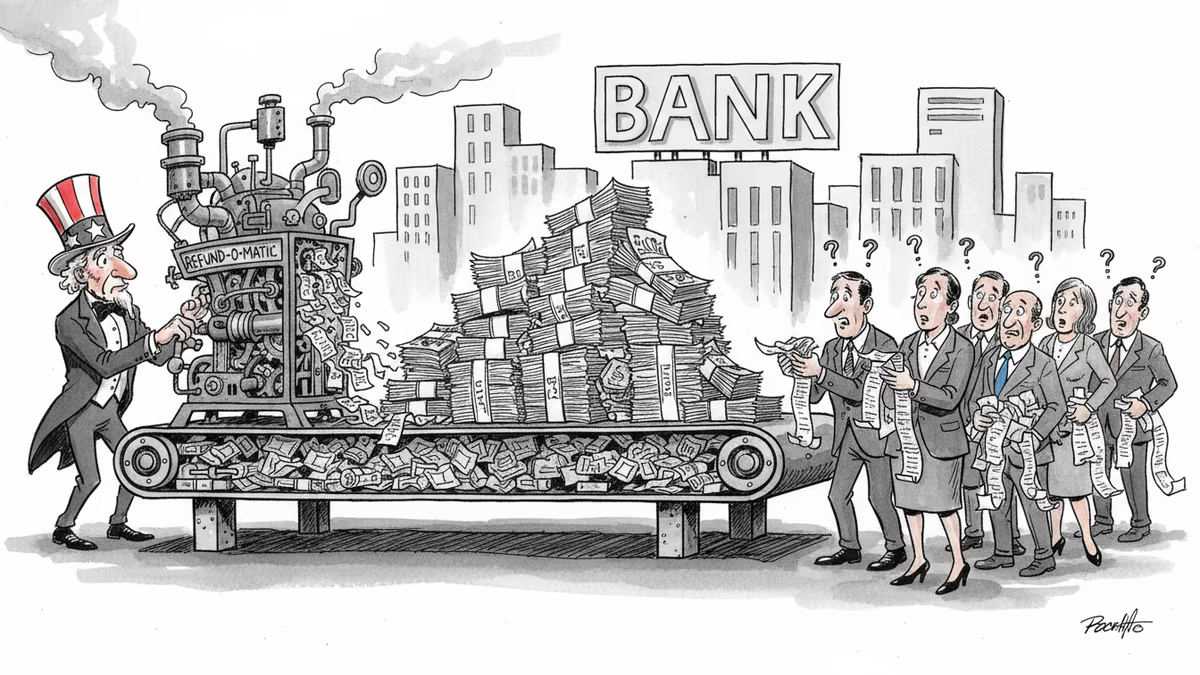
After Supreme Court struck down emergency tariffs, U.S. Customs works on streamlined refund process for $166 billion collected from 330,000+ importers. New global tariffs already replacing old ones.
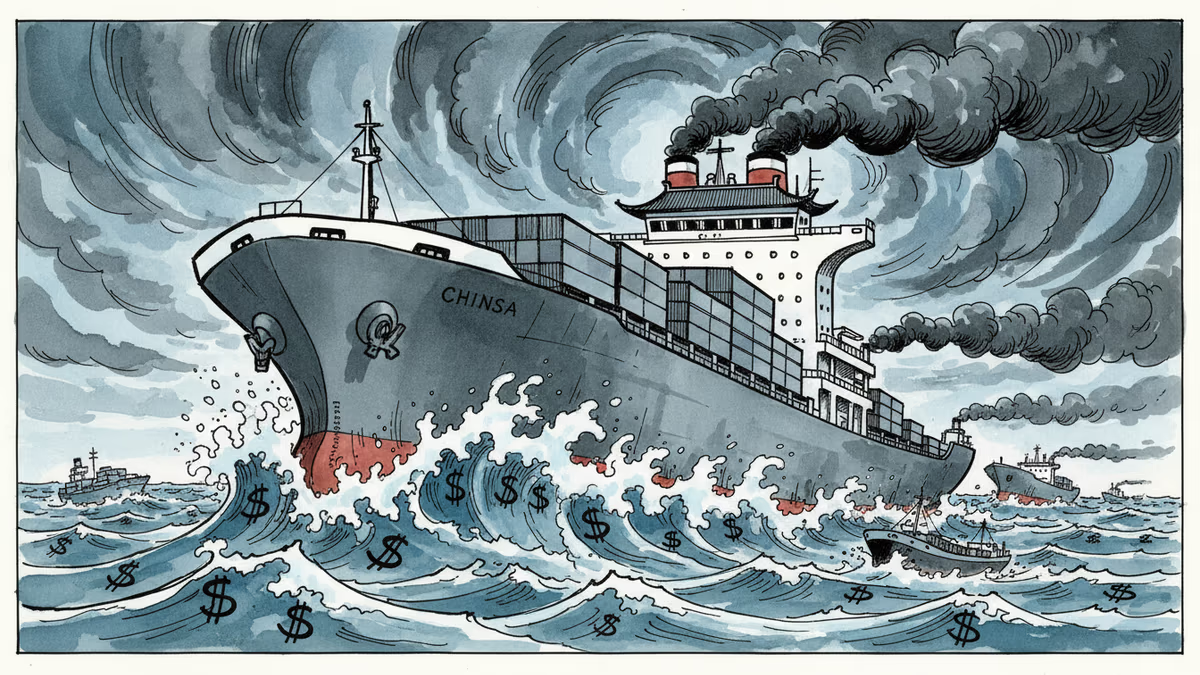
Li Yanqing of China's shipbuilding association reveals strategic pivot to high-quality manufacturing amid US trade policies and global market shifts.
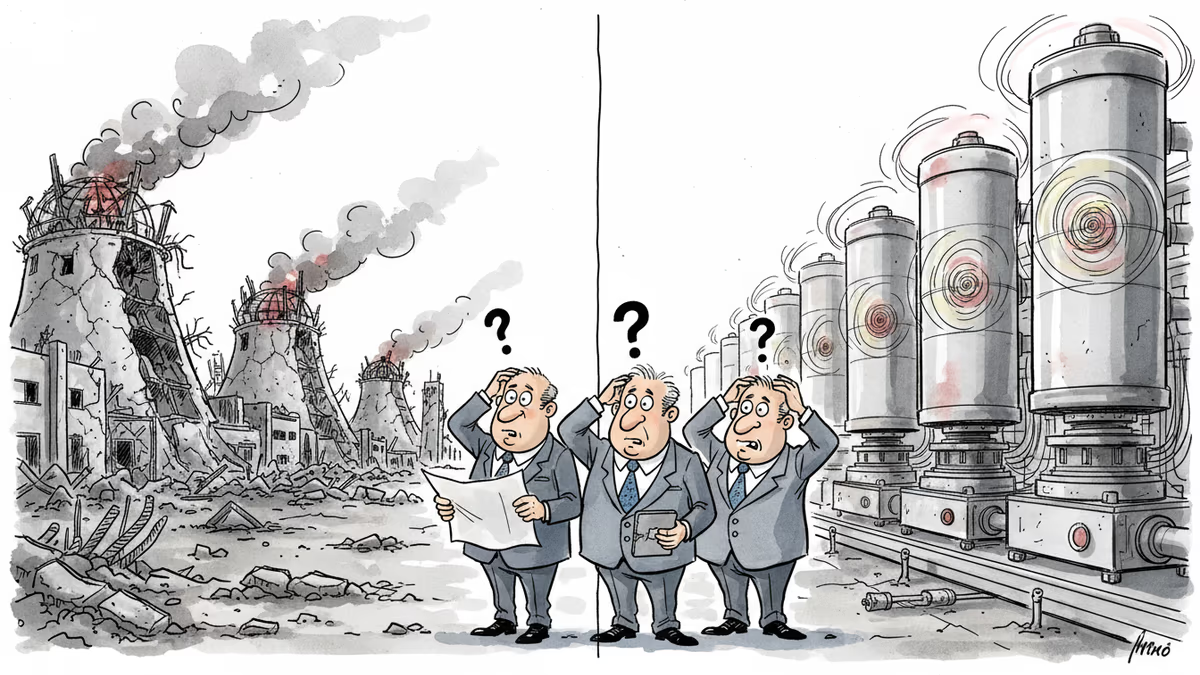
The White House claims last year's strikes obliterated Iran's nuclear facilities, but a senior US official says Tehran is a week away from bomb-making material. Which version is true?
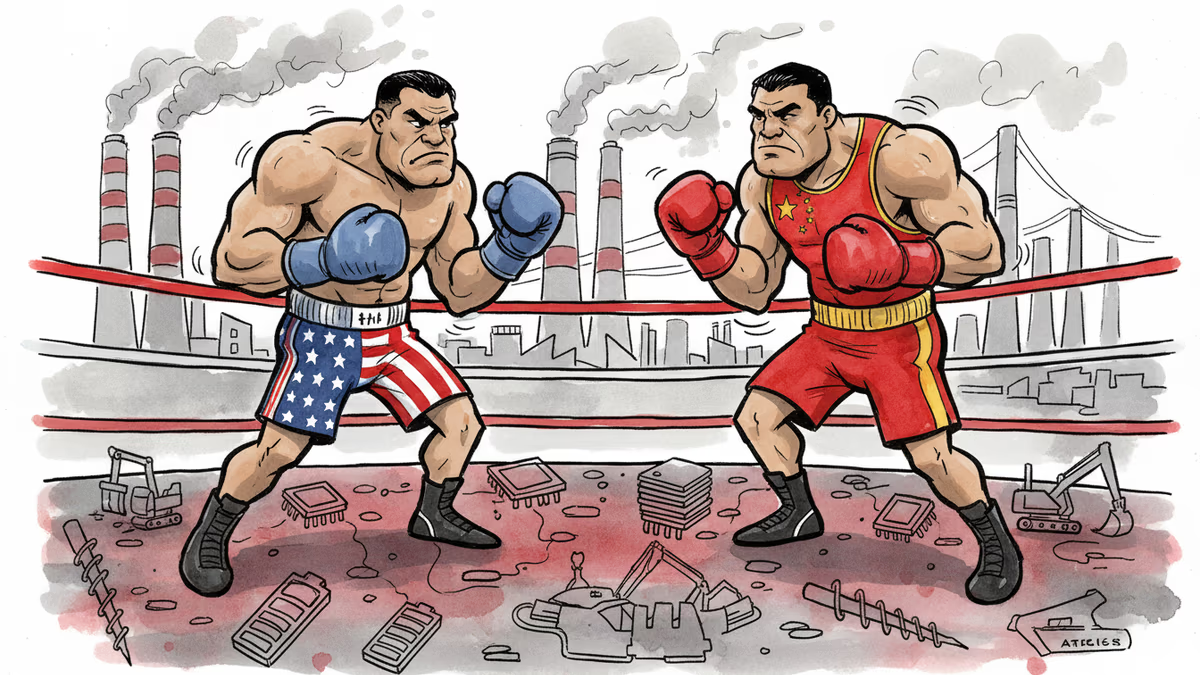
Trump signals new Section 301 investigations targeting Chinese EVs, rare earths, and AI chips. China warns of retaliation. Is this Trade War 2.0 or strategic positioning?
After Supreme Court struck down emergency tariffs, U.S. Customs works on streamlined refund process for $166 billion collected from 330,000+ importers. New global tariffs already replacing old ones.
Li Yanqing of China's shipbuilding association reveals strategic pivot to high-quality manufacturing amid US trade policies and global market shifts.
The White House claims last year's strikes obliterated Iran's nuclear facilities, but a senior US official says Tehran is a week away from bomb-making material. Which version is true?
Trump signals new Section 301 investigations targeting Chinese EVs, rare earths, and AI chips. China warns of retaliation. Is this Trade War 2.0 or strategic positioning?
Thoughts
Share your thoughts on this article
Sign in to join the conversation