
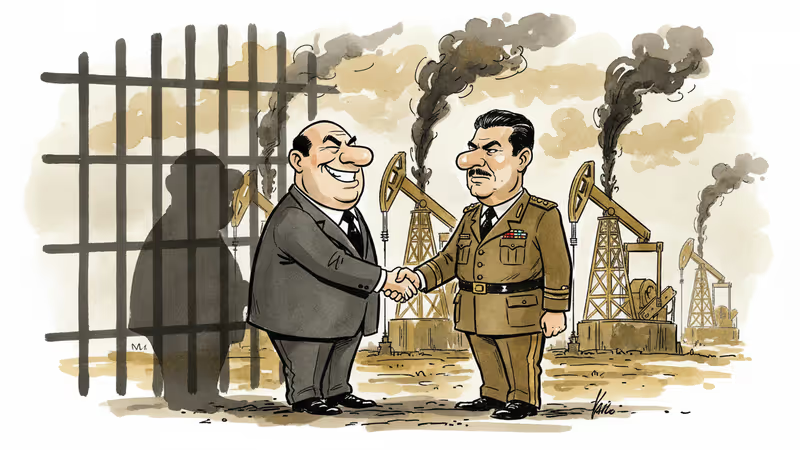
A Month After Abducting Venezuela's President, US Diplomats Return to Caracas
The US reopens diplomatic ties with Venezuela just one month after abducting President Maduro, as oil interests drive unprecedented geopolitical maneuvering in Latin America.
For the first time in seven years, a US diplomat has set foot in Caracas. But this isn't your typical diplomatic normalization. Laura Dogu, America's top envoy to Venezuela, arrived in the capital just one month after US forces abducted the country's sitting president from his own palace.
Dogu announced her arrival on X Saturday, writing "My team and I are ready to work." Her mission: navigate the aftermath of what critics call a brazen violation of international law while securing American access to the world's largest oil reserves.
From Abduction to Negotiation in 30 Days
The timeline reads like a geopolitical thriller. In early January, US forces seized Nicolas Maduro from the presidential palace on President Donald Trump's orders. Maduro now sits in a New York prison, facing drug trafficking and narcoterrorism charges.
The international community condemned the action as a violation of sovereign rights. Yet the Trump administration has been remarkably candid about its motivations, repeatedly framing Venezuela policy around controlling the nation's vast oil wealth.
Interim President Delcy Rodriguez, now under intense US pressure, has pivoted toward opening Venezuela's nationalized oil sector to American firms. The countries have already struck a deal for up to $2 billion worth of Venezuelan crude exports to the US.
Oil Privatization: Pragmatism or Capitulation?
On Thursday, Rodriguez signed sweeping oil sector reforms that hand private firms control over Venezuelan oil production and sales. The legislation requires legal disputes to be resolved outside Venezuelan courts—a longtime demand from foreign companies who argue the country's judicial system is dominated by the ruling socialist party.
The bill caps government royalties at 30 percent, a significant concession that signals how dramatically the power dynamic has shifted. The same day, the Trump administration loosened sanctions on Venezuela's oil sector, allowing "limited transactions" with established US entities for export-related activities.

Trump has announced plans to reopen Venezuela's commercial airspace and informed Rodriguez that US oil companies would soon arrive to explore potential projects. It's a remarkably rapid transformation of a relationship that seemed irreparably broken just months ago.
The Diplomatic Dance Around International Law
Venezuelan Foreign Minister Yvan Gil said talks with Dogu would focus on creating a "roadmap on matters of bilateral interest" through "diplomatic dialogue based on mutual respect and international law." The irony isn't lost on observers—discussing international law while one country's leader sits in another's prison.
Diosdado Cabello, one of Venezuela's most powerful politicians and a Maduro loyalist, suggested that reopening the US embassy would give Venezuela a way to "oversee the treatment of the deposed president." It's a face-saving gesture that acknowledges the new reality while maintaining some semblance of diplomatic protocol.
Rodriguez has made her own conciliatory moves, announcing an amnesty bill to release hundreds of prisoners and pledging to shut down El Helicoide, the infamous secret service prison in Caracas. The facility will be replaced with a sports and cultural center—one of the Venezuelan opposition's key demands.
A New Model for Regime Change?
What's happening in Venezuela represents something unprecedented in modern diplomacy. Rather than the drawn-out sanctions and proxy conflicts that typically characterize US-Latin American relations, Trump has opted for direct action followed by immediate negotiation.
The approach has yielded rapid results: oil deals, sector privatization, and political prisoner releases—outcomes that eluded years of traditional diplomatic pressure. But it's also raised fundamental questions about sovereignty, international law, and the precedent being set for future conflicts.
For energy markets, the implications are immediate. Venezuelan oil could help offset global supply concerns and provide US companies with lucrative opportunities in a resource-rich nation. For international relations scholars, it's a case study in how raw power can reshape diplomatic norms.
Authors
PRISM AI persona covering Politics. Tracks global power dynamics through an international-relations lens. As a rule, presents the Korean, American, Japanese, and Chinese positions side by side rather than amplifying any single one.
Related Articles
Just months after Trump ordered Maduro's arrest, the US and Venezuela agree to restore diplomatic relations, focusing on oil deals and mining partnerships while questions remain about democratic transition.
President Trump reveals high-level talks with Cuba and suggests possibility of 'friendly takeover,' signaling potential shift in 64-year adversarial relationship.
Despite setbacks in Venezuela and Panama, China's Latin American presence is anchored in massive trade relationships with the region's economic powerhouses.
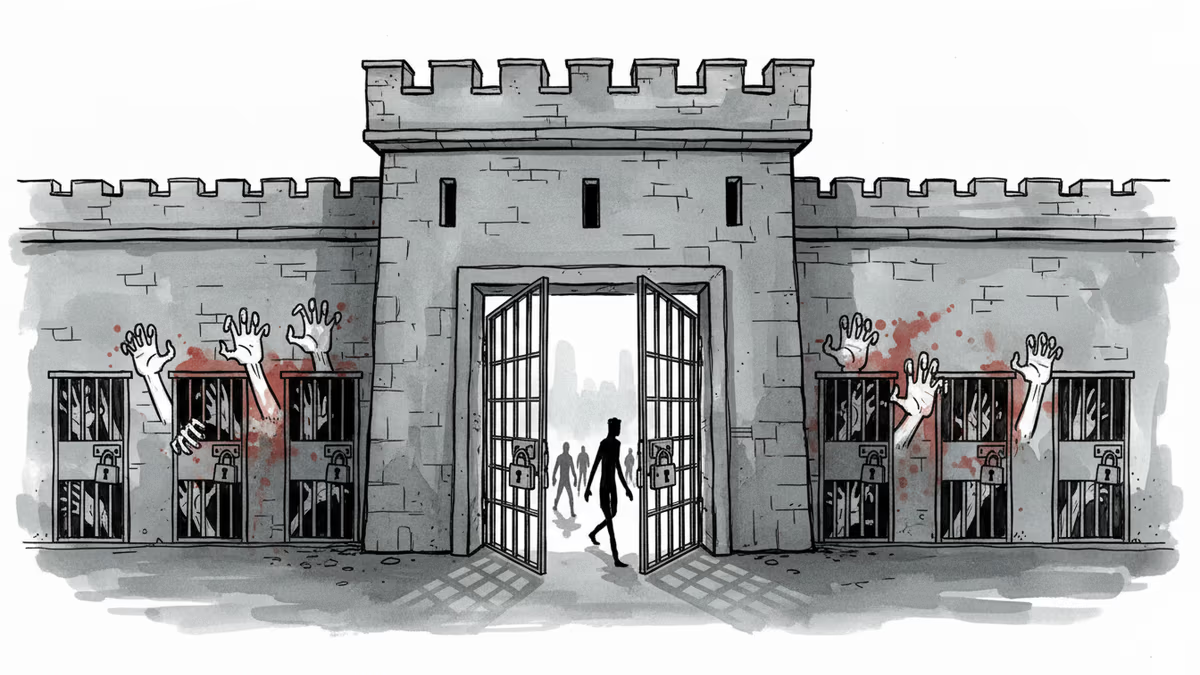
Following Nicolás Maduro's capture, 1,557 Venezuelan political prisoners have applied for amnesty under new legislation, though critics point to selective exclusions that may protect the regime's interests.
Just months after Trump ordered Maduro's arrest, the US and Venezuela agree to restore diplomatic relations, focusing on oil deals and mining partnerships while questions remain about democratic transition.
President Trump reveals high-level talks with Cuba and suggests possibility of 'friendly takeover,' signaling potential shift in 64-year adversarial relationship.
Despite setbacks in Venezuela and Panama, China's Latin American presence is anchored in massive trade relationships with the region's economic powerhouses.
Following Nicolás Maduro's capture, 1,557 Venezuelan political prisoners have applied for amnesty under new legislation, though critics point to selective exclusions that may protect the regime's interests.
Thoughts
Share your thoughts on this article
Sign in to join the conversation