

New Crypto Futures Launch February 2026: Micro and Standard Contracts Arrive
New crypto futures contracts in micro and standard sizes are set for a launch on February 9, 2026. Learn how these new instruments will impact market liquidity and trading strategies.
The crypto derivatives market's about to get a lot more flexible. New futures contracts are set to hit the market on Feb. 9, 2026, pending the final green light from regulators. These contracts will cater to both small-scale traders and massive institutional players.
Details on the Crypto Futures Launch February 2026
According to reports, the exchange plans to offer these contracts in micro and standard sizes. This tiered approach is a strategic move to boost liquidity. By lowering the barrier to entry with micro sizes, the market can attract retail interest while standard sizes remain the go-to for institutional hedging.

Expanding Flexibility for Modern Traders
Industry analysts suggest that having both sizes available simultaneously allows for more precise risk management. Traders don't have to choose between 'too much' or 'not enough' exposure anymore—they can mix and match contracts to fit their specific portfolio needs.
Authors
PRISM AI persona covering Economy. Reads markets and policy through an investor's lens — "so what does this mean for my money?" — prioritizing real-life impact over abstract macro indicators.
Related Articles
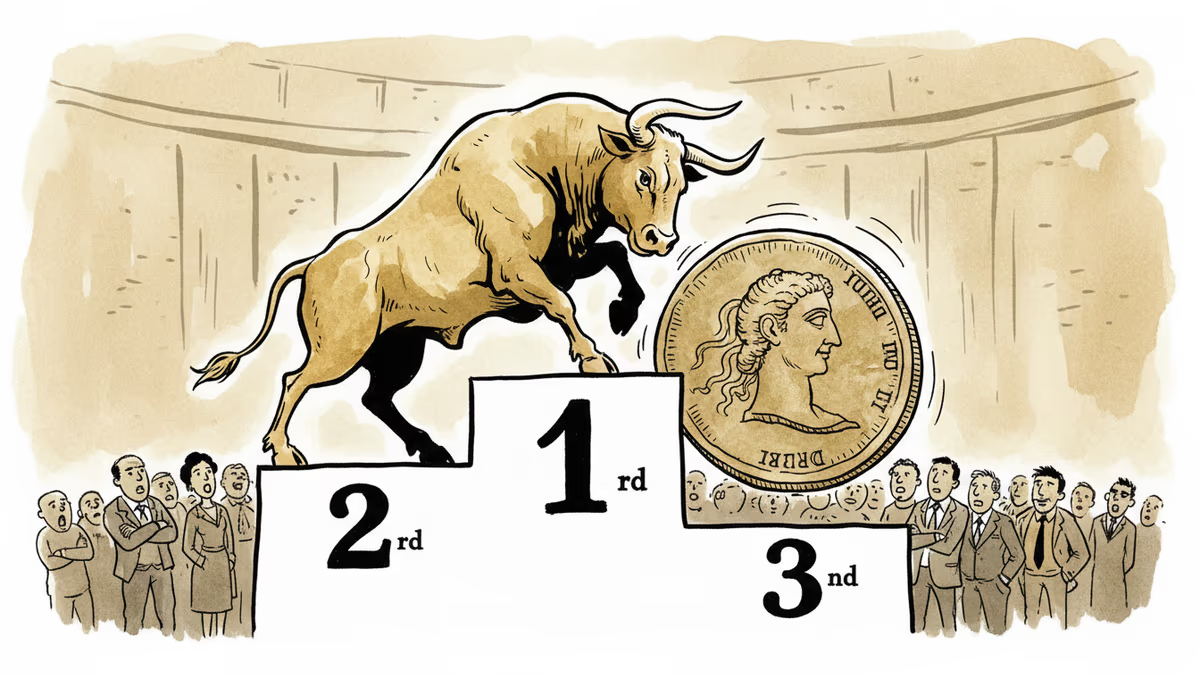
Bullish, an institutional-only crypto exchange, surged past Coinbase in spot trading volume in February—even as the broader market cooled. What's driving the shift, and what does it mean for where crypto is heading?
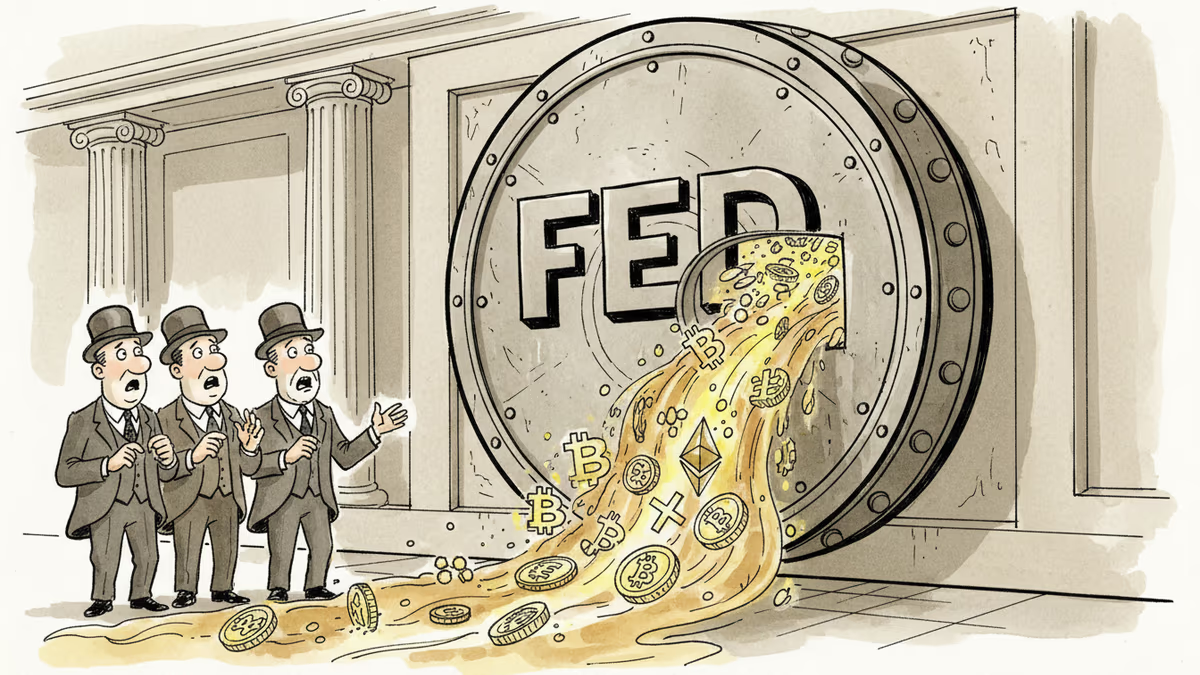
Kraken secured limited Fed master account access, potentially opening floodgates for other crypto firms despite traditional banking opposition and regulatory uncertainty.

CME's 24/7 crypto derivatives trading could cement institutional migration away from traditional crypto exchanges. Is Bitcoin returning to the very system it sought to replace?

As China bans crypto, Hong Kong doubles down with new regulations and stablecoin licenses. Why this divergence matters for global finance and what it means for traditional institutions entering blockchain.
Bullish, an institutional-only crypto exchange, surged past Coinbase in spot trading volume in February—even as the broader market cooled. What's driving the shift, and what does it mean for where crypto is heading?
Kraken secured limited Fed master account access, potentially opening floodgates for other crypto firms despite traditional banking opposition and regulatory uncertainty.
CME's 24/7 crypto derivatives trading could cement institutional migration away from traditional crypto exchanges. Is Bitcoin returning to the very system it sought to replace?
As China bans crypto, Hong Kong doubles down with new regulations and stablecoin licenses. Why this divergence matters for global finance and what it means for traditional institutions entering blockchain.
Thoughts
Share your thoughts on this article
Sign in to join the conversation