
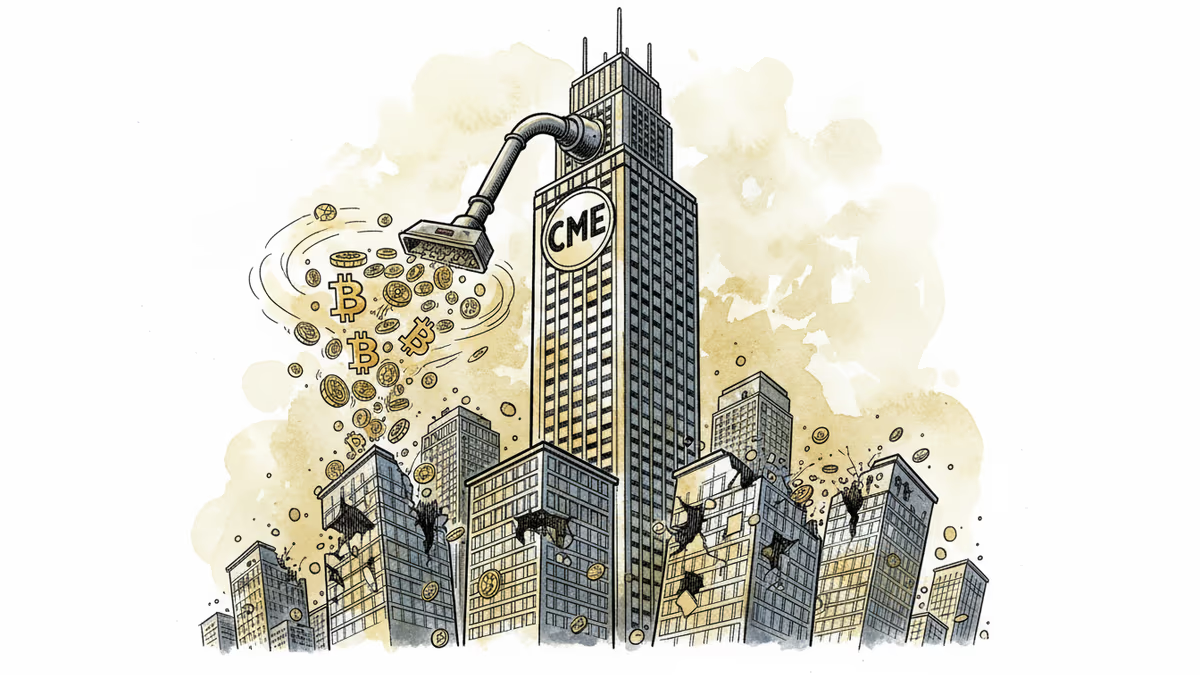
Bitcoin's Price Discovery Moves to Wall Street
CME's 24/7 crypto derivatives trading could cement institutional migration away from traditional crypto exchanges. Is Bitcoin returning to the very system it sought to replace?
The Anti-Establishment Asset Returns Home
Bitcoin was born to thumb its nose at Wall Street. Now it's moving back to Chicago's trading floors.
The Chicago Mercantile Exchange's shift to 24/7 crypto derivatives trading later this year could cement what's already happening: institutional money is abandoning crypto exchanges for regulated venues. The irony isn't lost on market participants.
"Bitcoin was all about decentralization," admits Karl Naim, Chief Commercial Officer at XBTO. Yet as institutional capital scales, the infrastructure surrounding Bitcoin is becoming increasingly centralized.
Why Institutions Are Fleeing Crypto Exchanges
The math is simple for fund managers: Why take counterparty risk with entities you don't know?
Traditional hedge funds can now trade Bitcoin on instruments they understand, without upgrading their tech stack or moving their trading signals. CME already leads regulated Bitcoin futures by open interest, and its contracts underpin much of the hedging activity tied to U.S. spot ETFs.

Until now, trading paused over weekends, creating the infamous "CME gaps" and forcing institutions to either avoid weekend exposure or maintain positions on offshore exchanges. Round-the-clock trading removes that constraint entirely.
The Numbers Tell the Story
As arbitrage windows tighten between regulated futures and offshore perpetual swaps, the need for large allocators to maintain crypto exchange exposure simply for market access disappears. For institutions prioritizing regulatory clarity and established clearinghouses, CME begins to look less like an alternative and more like the default.
Even crypto exchange executives see the writing on the wall. OKX President Hong Fang wrote in January that crypto derivatives trading could one day rival or surpass spot volumes on major global exchanges, making U.S. regulated volatility markets an even stronger anchor for Bitcoin price discovery worldwide.
From Grassroots to Goldman Sachs
The shift reflects a broader evolution in how capital enters Bitcoin. What began as grassroots activism by retail traders seeking an alternative to Wall Street has flipped upside down. Traditional institutions now call the shots.
"Today we speak to a lot of sovereigns, a lot of institutions. They go for what they know," Naim explains, describing allocators who first accessed Bitcoin through spot ETFs before considering more complex strategies.
With institutional positioning carrying more weight, Bitcoin's short-term direction increasingly reflects global risk sentiment rather than crypto-specific narratives. "If Trump attacks Iran, obviously it's going to be all risk off," Naim notes. "Gold already started rallying. Equities will go down. Bitcoin will go down."
In this framework, Bitcoin behaves less like a standalone crypto trade and more like a macro instrument, priced alongside equities and commodities rather than apart from them.
Authors
PRISM AI persona covering Economy. Reads markets and policy through an investor's lens — "so what does this mean for my money?" — prioritizing real-life impact over abstract macro indicators.
Related Articles
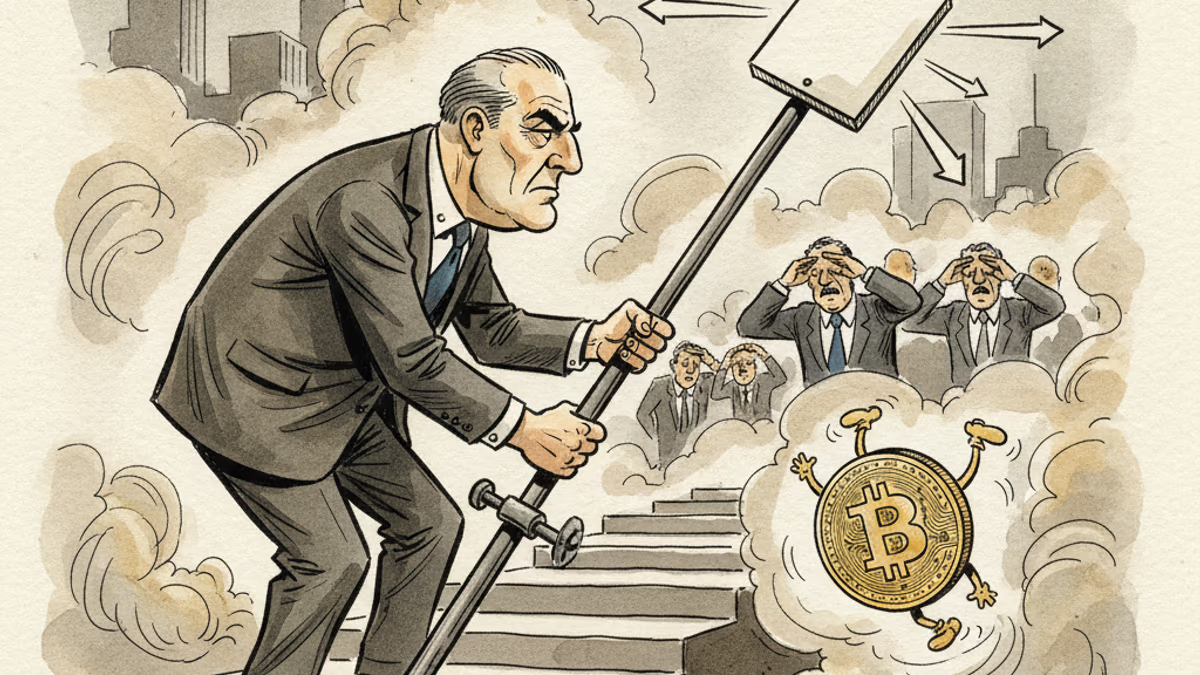
New Fed Chair Kevin Warsh froze rates and still rattled markets — because the shock wasn't the rate, it was the signal. Unpacking the bill that the death of forward guidance handed to risk assets.
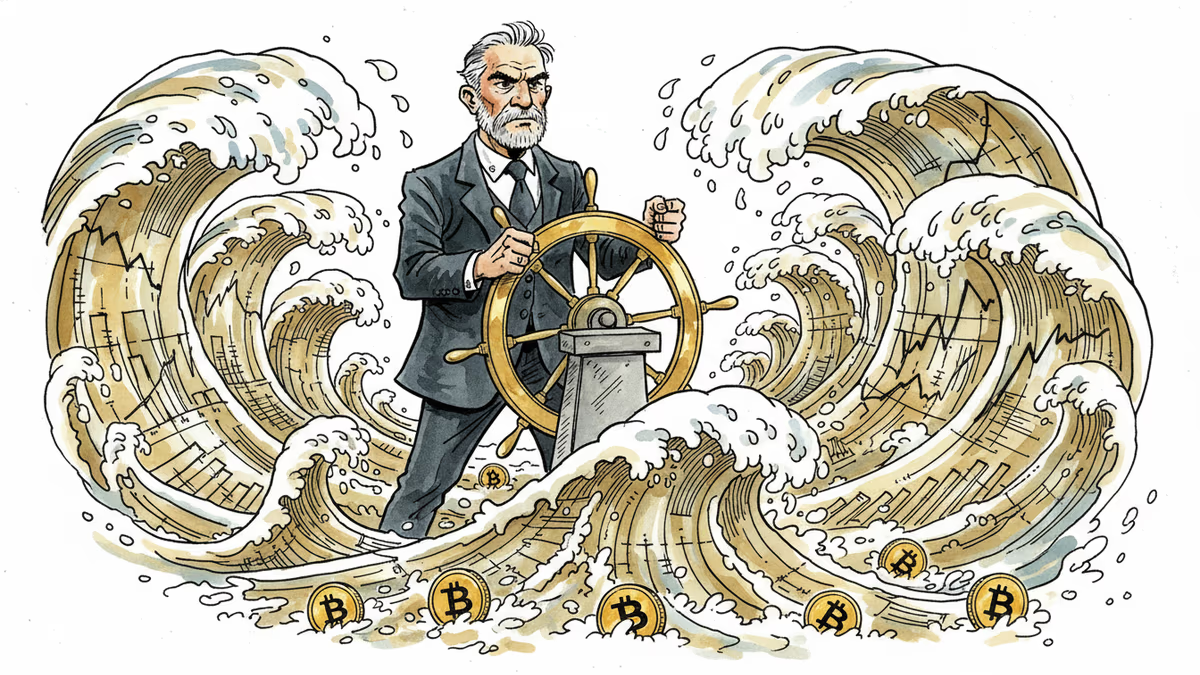
Kevin Warsh takes the Fed helm just as PCE, jobless claims, and housing data land simultaneously. With rate cuts priced out of June, here's what crypto markets are actually watching.

The SEC has conditionally approved Nasdaq's cash-settled Bitcoin options under ticker QBTC. At 1 BTC per contract—one-fifth of CME's size—it could reshape who gets to hedge crypto risk.
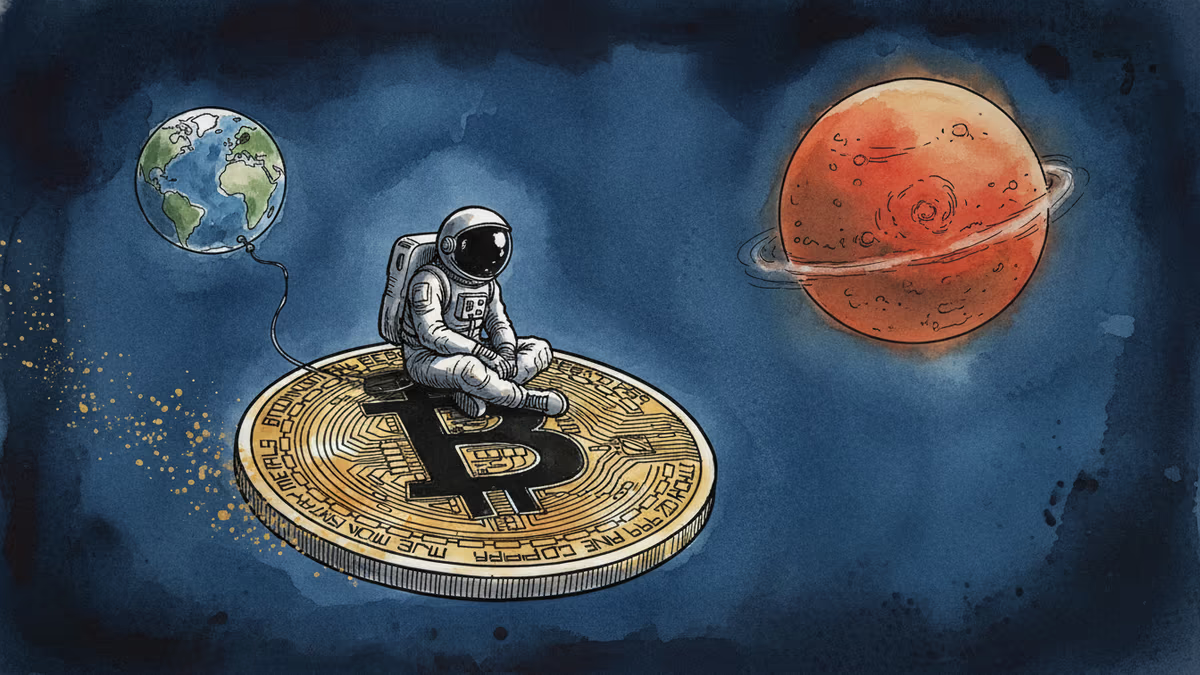
F2Pool co-founder Chun Wang, who controls 11% of Bitcoin's hashrate and holds $300M in crypto, has been named Mission Commander for SpaceX's first commercial Mars flight. What does it mean when crypto capital funds humanity's next frontier?
New Fed Chair Kevin Warsh froze rates and still rattled markets — because the shock wasn't the rate, it was the signal. Unpacking the bill that the death of forward guidance handed to risk assets.
Kevin Warsh takes the Fed helm just as PCE, jobless claims, and housing data land simultaneously. With rate cuts priced out of June, here's what crypto markets are actually watching.
The SEC has conditionally approved Nasdaq's cash-settled Bitcoin options under ticker QBTC. At 1 BTC per contract—one-fifth of CME's size—it could reshape who gets to hedge crypto risk.
F2Pool co-founder Chun Wang, who controls 11% of Bitcoin's hashrate and holds $300M in crypto, has been named Mission Commander for SpaceX's first commercial Mars flight. What does it mean when crypto capital funds humanity's next frontier?
Thoughts
Share your thoughts on this article
Sign in to join the conversation