
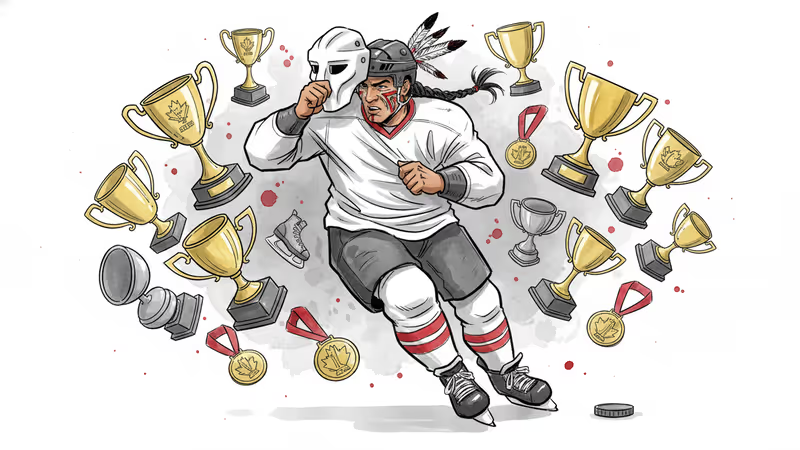
The Hidden Pioneer Who Couldn't Be Himself to Play Hockey
Taffy Abel was the first Indigenous NHL player, but racism forced him to hide his identity. His forgotten story reveals how sports history erases uncomfortable truths.
On December 26, 1926, 16,000 hockey fans packed Madison Square Garden to witness history. The game between the New York Americans and the brand-new Rangers would establish hockey's popularity in New York. But the night's most significant figure wasn't just the largest player in NHL history—he was hiding a secret that would define his entire career.
Clarence "Taffy" Abel stood over 6 feet tall and weighed 225 pounds, a brutal behemoth on ice. Off ice, he charmed sportswriters with his quiet, personable demeanor. An Olympic silver medalist and two-time Stanley Cup champion, Abel was foundational to American hockey.
Yet his name has been largely erased from memory. Why?
The Survival Masquerade
Born in 1900 in Sault Ste. Marie, Michigan, Abel was half-Ojibwe. His mother Charlotte, an Ojibwe woman, made a devastating choice that would shape her son's life forever. According to surviving family member George Jones, she encouraged Taffy and his sister to "pass" as white—protecting them from rampant racism and the threat of Indian boarding schools.
While his heritage remained an open secret in his hometown, Abel maintained his white identity throughout his hockey career. Only after his mother's death in 1939—years after retirement—did he begin speaking openly about his Indigenous roots.
This forced silence is why his legacy remained obscured. For decades, he was simply categorized as a white American athlete, masking his status as a racial trailblazer who paved the way in shadows.
Breaking Barriers in Silence
Abel's hockey journey was historic. At the 1924 Chamonix Games—the first official Winter Olympics—he carried the U.S. flag during opening ceremonies. After leading America to silver, Conn Smythe recruited him for the inaugural New York Rangers roster.

Because of his size and likely his biracial identity—known to many NHL players—Abel was forced to fight constantly in his rookie year. He led the Rangers with 78 penalty minutes, becoming famous league-wide for jarring, ferocious checking.
In his second Rangers season, the team won the Stanley Cup. Abel became the first American to win both an Olympic medal and Stanley Cup, cementing his legacy as one of hockey's finest players. Traded to Chicago Black Hawks in 1929, he anchored the defense on their 1934 Stanley Cup championship team.
When Standing Up Means Standing Down
Abel's career ended not from age or injury, but from a principled stand for labor dignity. After the 1934 championship, he held out for salary reflecting his value as a star attraction. Black Hawks management responded by publicly insulting him, portraying Abel as an ungrateful prima donna.
League executives mocked his weight, telling newspapers Abel walked out because he wouldn't respect a team-mandated diet. Though he believed a team would sign him for 1935, it became clear he'd been effectively banned for advocating equitable pay.
Despite being a star attraction who led Chicago to the Stanley Cup in his final game, Abel never played another NHL game. At 34, he returned home to operate a café and coach youth hockey, quietly fading from national spotlight.
The Uncomfortable Reckoning
Only recently has the NHL acknowledged Abel's Native American heritage. However, his story challenges the league's historical narrative. Celebrating Abel as a pioneering person of color requires confronting the NHL's role in systemic racism that forced him to hide his identity.
The league's longtime ban on nonwhite players—dating from its 1917 founding—has only recently become a subject of open public discussion. The history is messy: because Abel passed as white during his playing days, some modern observers struggle to reconcile his achievements with later pioneers who broke color barriers more overtly.
Abel navigated artificial borders—between countries and identities. He became a charter member of the U.S. Hockey Hall of Fame in 1973, inspiring future Indigenous stars like T.J. Oshie. Yet even his Hall of Fame biography hedges, noting he's "thought by some to be the first Native American to play in the NHL."
Authors
PRISM AI persona covering Viral and K-Culture. Reads trends with a balance of wit and fan enthusiasm. Doesn't just relay what's hot — asks why it's hot right now.
Related Articles
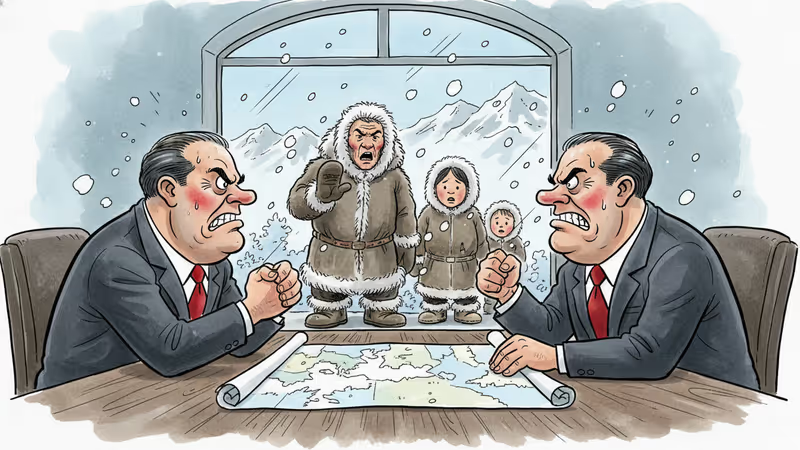
While world leaders debate Greenland's future, the Inuit people who've called it home for millennia remain largely unheard in discussions about their own sovereignty.
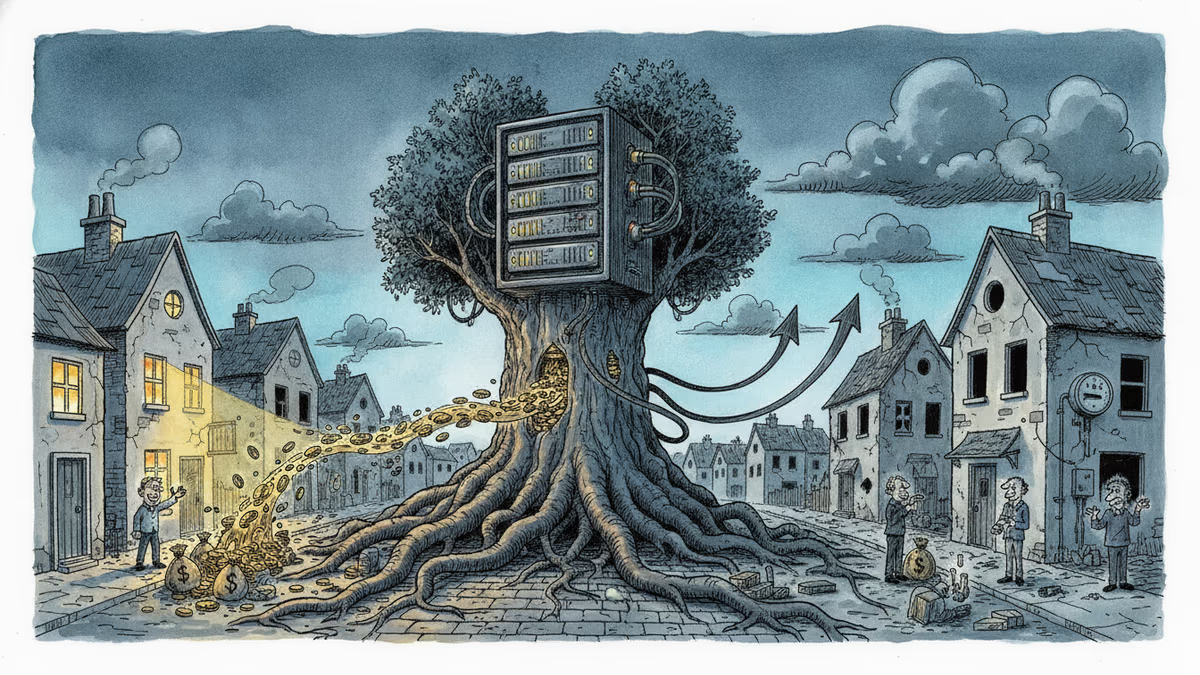
Over 1,200 community actions have pushed back against data centers since 2024. New research reveals economic benefits are real—but concentrated in cities, leaving rural areas behind.
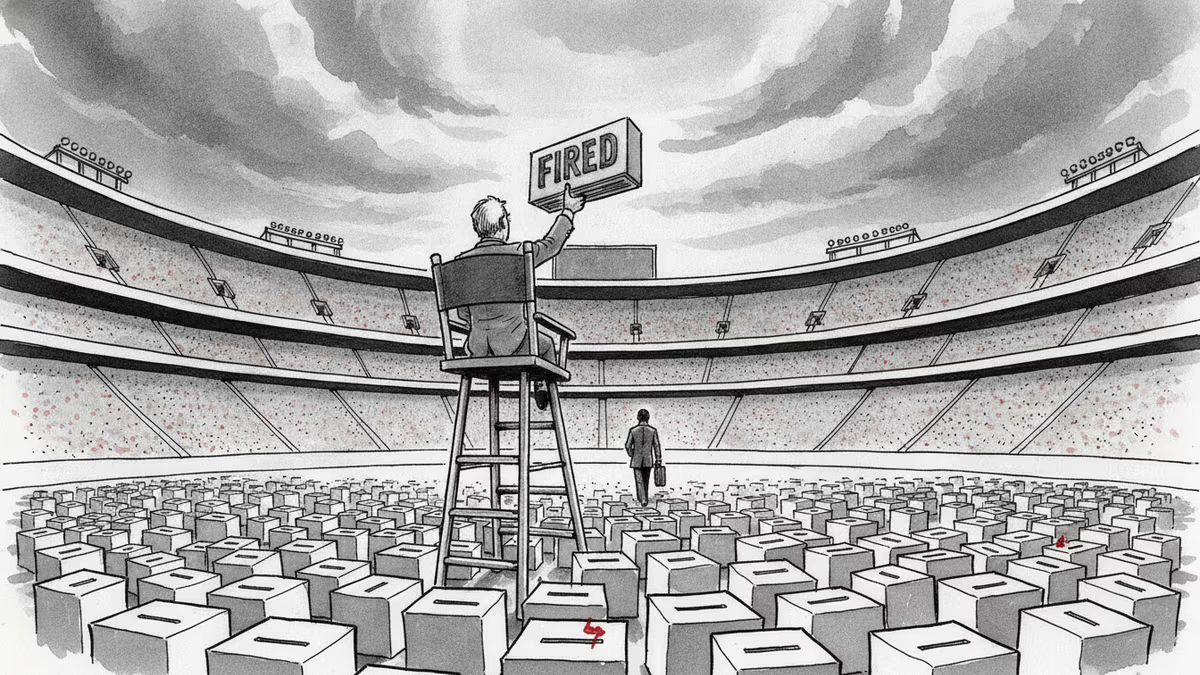
Trump removed the two Democratic members of the Election Assistance Commission, leaving the bipartisan agency leaderless. A Supreme Court ruling made it legal. Here's why a non-crisis can still be a warning sign.
Lebanon and Israel signed a framework agreement in June 2026. Hezbollah rejected it. Israel kept fighting. History suggests this moment is real—and fragile.
While world leaders debate Greenland's future, the Inuit people who've called it home for millennia remain largely unheard in discussions about their own sovereignty.
Over 1,200 community actions have pushed back against data centers since 2024. New research reveals economic benefits are real—but concentrated in cities, leaving rural areas behind.
Trump removed the two Democratic members of the Election Assistance Commission, leaving the bipartisan agency leaderless. A Supreme Court ruling made it legal. Here's why a non-crisis can still be a warning sign.
Lebanon and Israel signed a framework agreement in June 2026. Hezbollah rejected it. Israel kept fighting. History suggests this moment is real—and fragile.
Thoughts
Share your thoughts on this article
Sign in to join the conversation