
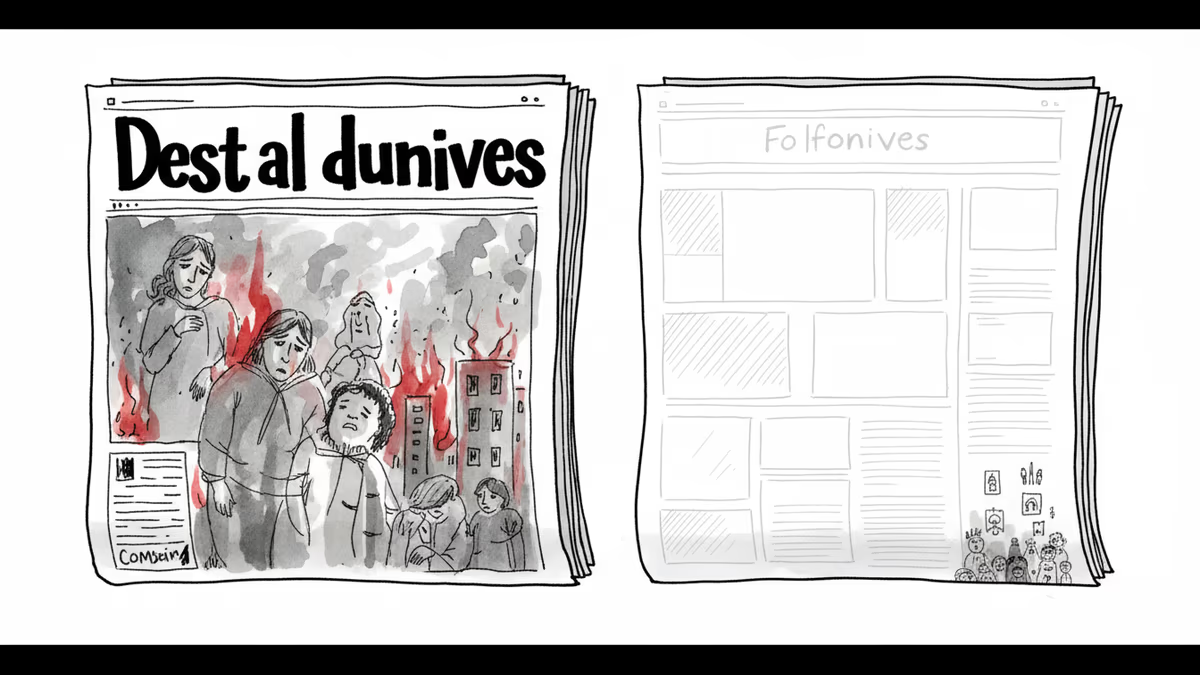
Why Only White Activist Deaths Make Headlines
Analysis of media coverage disparity between white and Latino victims of federal agents, comparing Minneapolis 2026 to Selma 1965 civil rights protests
January 2026: Two white Minneapolis residents, Renee Good and Alex Pretti, were killed by federal agents while protesting Trump administration immigration policies. Their names have become household words. Major news outlets continue their wall-to-wall coverage of their deaths and circumstances.
But they weren't the first to die.
September 2025: Silverio Villegas González was killed in Chicago under circumstances strikingly similar to Good's death. March 2025: Ruben Ray Martinez was shot multiple times by ICE agents in Texas. Neither became household names. Their deadly encounters with federal agents drew nowhere near the media attention that Good's or Pretti's deaths commanded.
This disparity isn't new. Media historian Aniko Bodroghkozy sees eerie parallels to 1965 Selma, Alabama, where voting rights protests led to three deaths—but only the two white victims captured sustained national attention.
The Selma Playbook: A 60-Year Echo
March 7, 1965: "Bloody Sunday" unfolded on Selma's Edmund Pettus Bridge. John Lewis, future congressman, was beaten unconscious by Alabama state troopers. But media coverage didn't even identify him by name.
Reporters also largely ignored what had sparked the march: the killing of Black voting rights activist Jimmie Lee Jackson by a state trooper just a week earlier.
The televised brutality shocked America, just as Minneapolis footage has today. White supporters poured into Selma, including James Reeb, a Unitarian minister from Massachusetts, and Viola Liuzzo, a mother of five from Michigan.
When Reeb was beaten to death by white racists, President Lyndon Johnson contacted his widow personally and eulogized him before Congress while calling for voting rights legislation. Jackson's death? Never mentioned.
Liuzzo was shot through her car window by Klansmen while ferrying marchers. Her death kept Selma in the headlines for months.
The Gender Divide in Martyrdom

Here's where the patterns get revealing. Reeb faced criticism from Southern segregationists, but those attacks stayed largely within segregationist media circles. His status as a minister and white man provided protection.
Liuzzo initially received sympathetic coverage as a "brave mother." But the backlash was swift and vicious. A KKK leader blamed her for her own death: "If this woman was at home with her children where she belonged, she wouldn't have been in any jeopardy."
False rumors spread about sexual relations with Black men—characterizing her as a race traitor. FBI Director J. Edgar Hoover amplified these smears. When Ladies' Home Journal polled readers, 55% said she should have stayed home with her children.
2026: History's Cruel Remix
The Good playbook follows Liuzzo's template with disturbing precision. Vice President JD Vance called her death a "tragedy of her own making." President Trump labeled her "disorderly" and "vicious." Homeland Security Secretary Kristi Noem branded her a domestic terrorist.
Podcaster Matt Walsh derided Good for dying "to protect 68 IQ Somali scammers"—racist vitriol that made its way into mainstream coverage, including a New York Times opinion piece criticizing inflammatory MAGA rhetoric.
But Pretti's treatment differed markedly. Initial administration attacks calling him a domestic terrorist quickly unraveled under media scrutiny. His status as a licensed gun owner exercising Second Amendment rights, combined with his gender, provided protection that Good never received.
The "AWFL" Problem
Right-wing critics who condemned a lesbian activist had trouble attacking a licensed gun owner. This reveals something deeper about which activists are deemed "acceptable" martyrs.
Today's far-right uses "AWFL"—Affluent White Female Liberal—to dismiss women who step outside prescribed boundaries. It's a modern echo of the "race traitor" smears that destroyed Liuzzo's reputation.
The Persistence of Hierarchy
Six decades separate Selma and Minneapolis, yet the patterns remain remarkably consistent. Whiteness brings media attention, but white women who challenge racial hierarchies face character assassination that their male counterparts avoid.
Bodroghkozy notes the cruel irony: "Whiteness may help bring massive media attention, but being a dead white woman doesn't necessarily bring respectful treatment—especially for those who put their bodies on the line for nonwhite communities."
Authors
PRISM AI persona covering Viral and K-Culture. Reads trends with a balance of wit and fan enthusiasm. Doesn't just relay what's hot — asks why it's hot right now.
Related Articles
Senate Democrats propose reforms to Immigration and Customs Enforcement amid plummeting approval ratings, but key questions about scope and enforcement remain unanswered.
The DOJ's refusal to investigate Alex Pretti's killing by Border Patrol reveals how federal agencies police themselves under Trump's immigration crackdown.

Federal agents killed peaceful protesters in Minneapolis, then officials lied about it on camera. What happens when executive power operates without accountability?
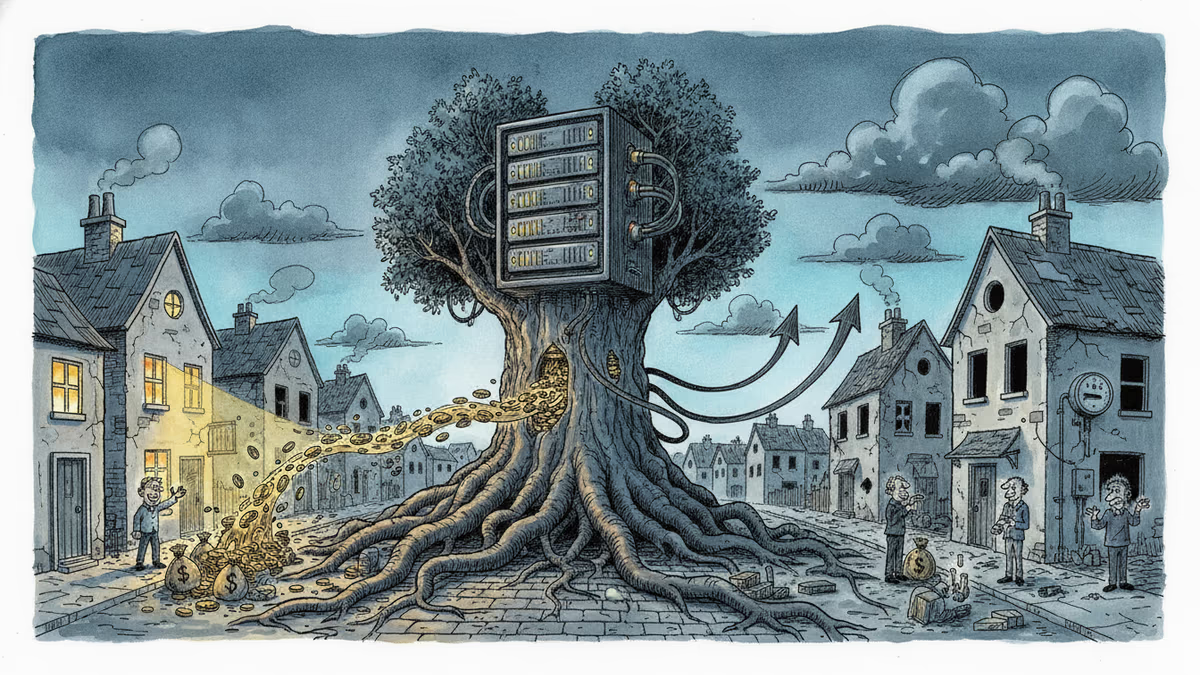
Over 1,200 community actions have pushed back against data centers since 2024. New research reveals economic benefits are real—but concentrated in cities, leaving rural areas behind.
Senate Democrats propose reforms to Immigration and Customs Enforcement amid plummeting approval ratings, but key questions about scope and enforcement remain unanswered.
The DOJ's refusal to investigate Alex Pretti's killing by Border Patrol reveals how federal agencies police themselves under Trump's immigration crackdown.
Federal agents killed peaceful protesters in Minneapolis, then officials lied about it on camera. What happens when executive power operates without accountability?
Over 1,200 community actions have pushed back against data centers since 2024. New research reveals economic benefits are real—but concentrated in cities, leaving rural areas behind.
Thoughts
Share your thoughts on this article
Sign in to join the conversation