
When Citizens Build Better Government Search Than Government
After the Epstein document release, developers used AI to make millions of government PDFs searchable. A look at how technology is reshaping government transparency and accountability.
3 Million PDFs and a "Gross" Search Experience
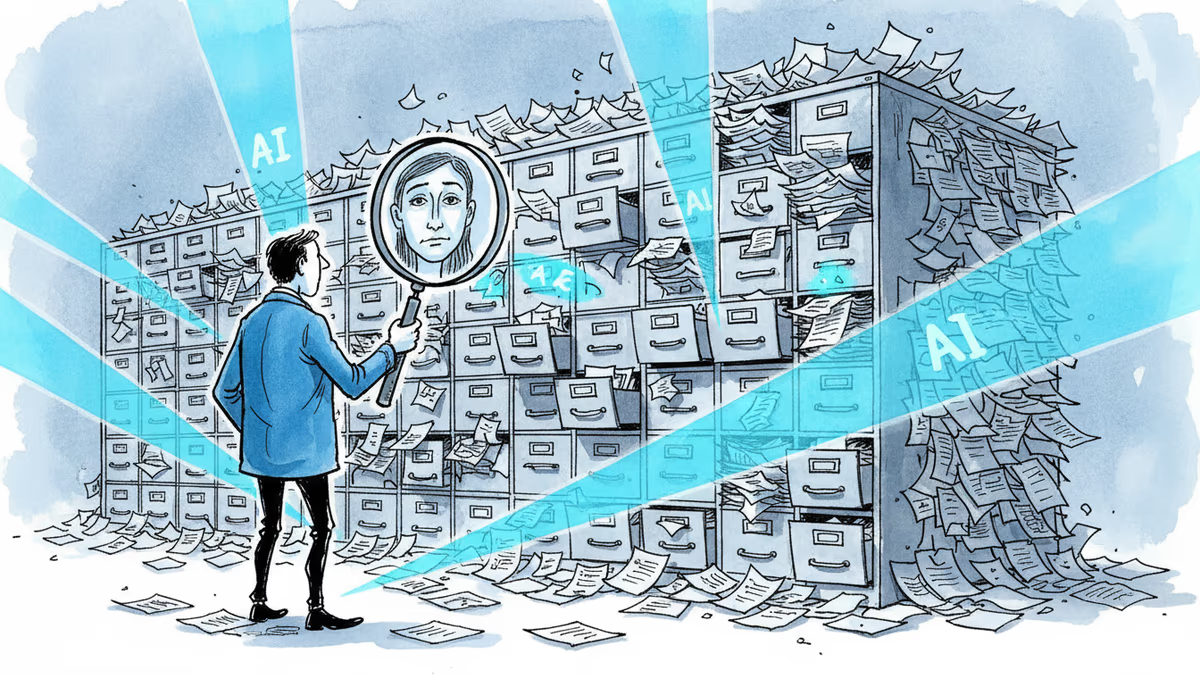
Last November, when the House Oversight Committee dropped 20,000 pages of Jeffrey Epstein documents, developer Luke Igel and his friends found themselves clicking through "garbled email threads" in what he called a frankly "gross" PDF viewer. Months later, the Department of Justice would release its own batch—3 million files—all PDFs, all barely searchable despite OCR processing.
"There was no interface," Igel said. The government's optical character recognition was so poor that the files were essentially unsearchable. So they decided to build their own.
What happened next reveals something profound about how technology is reshaping the relationship between citizens and their government.
The Accidental Transparency Revolution
Igel's team created something deceptively simple: AI-powered tools that could accurately extract text from PDFs and make millions of government documents searchable. Users could now query "flight logs," "financial transactions," or specific names across vast document troves in seconds.
The results were immediate and dramatic. Journalists found investigative leads in hours instead of months. Watchdog groups uncovered hidden clauses in government contracts. Researchers began pattern analysis that was previously impossible.
But not everyone was celebrating.
The Double-Edged Sword of Searchable Government

Transparency advocates hailed it as a victory for democracy. Citizens finally had meaningful access to information paid for with their tax dollars. "This is what government accountability looks like in the digital age," one open government researcher told The Verge.
Privacy experts raised red flags. Easy searchability meant easy misuse. Personal information and sensitive investigative details could be weaponized by bad actors. "Making something searchable doesn't just help the good guys," warned one digital rights attorney.
Government agencies offered carefully worded statements about "supporting transparency" while quietly reviewing their document release procedures. The message was clear: future releases might be more restrictive.
When Citizens Outbuild Government
This isn't just about the Epstein files. It's about a fundamental shift in who controls access to public information. For decades, government agencies have released documents in formats that were technically "public" but practically inaccessible. Citizens had to accept whatever interface—or lack thereof—agencies provided.
Now, a small team of developers with AI tools can build better search capabilities than entire government departments. They're not just consuming public information; they're making it truly public for the first time.
The implications extend far beyond any single document dump. What happens when every FOIA release, every court filing, every regulatory document becomes instantly searchable by anyone with internet access?
The Regulatory Reckoning Ahead
Congress is taking notice. Several representatives have quietly inquired about the tools being used to analyze their own document releases. The irony isn't lost on transparency advocates: lawmakers concerned about too much transparency in their transparency efforts.
Meanwhile, agencies are grappling with a new reality. They can no longer rely on format friction to limit public scrutiny. Every redaction, every delayed release, every "processing fee" now looks more suspect when citizens can demonstrate what's actually possible with modern technology.
The private sector is watching too. Legal tech companies see billion-dollar opportunities in government document processing. The question is whether citizen-built tools will remain free and open, or get absorbed into commercial platforms.
Authors
Related Articles

Samsung and SK unveiled a chip and AI investment package worth thousands of trillions of won on June 29. The headline number swings wildly by outlet, but the real contest isn't capital — it's water and power.

Viral videos show 2026 graduates jeering executives who praise AI at commencement ceremonies. It's not just rudeness — it's a signal about who pays for technological optimism.

Filipino virtual assistants using AI to ghost-manage LinkedIn profiles for executives is now a structured industry. 30 comments a day, fake engagement rings, and a platform struggling to tell real from fabricated.
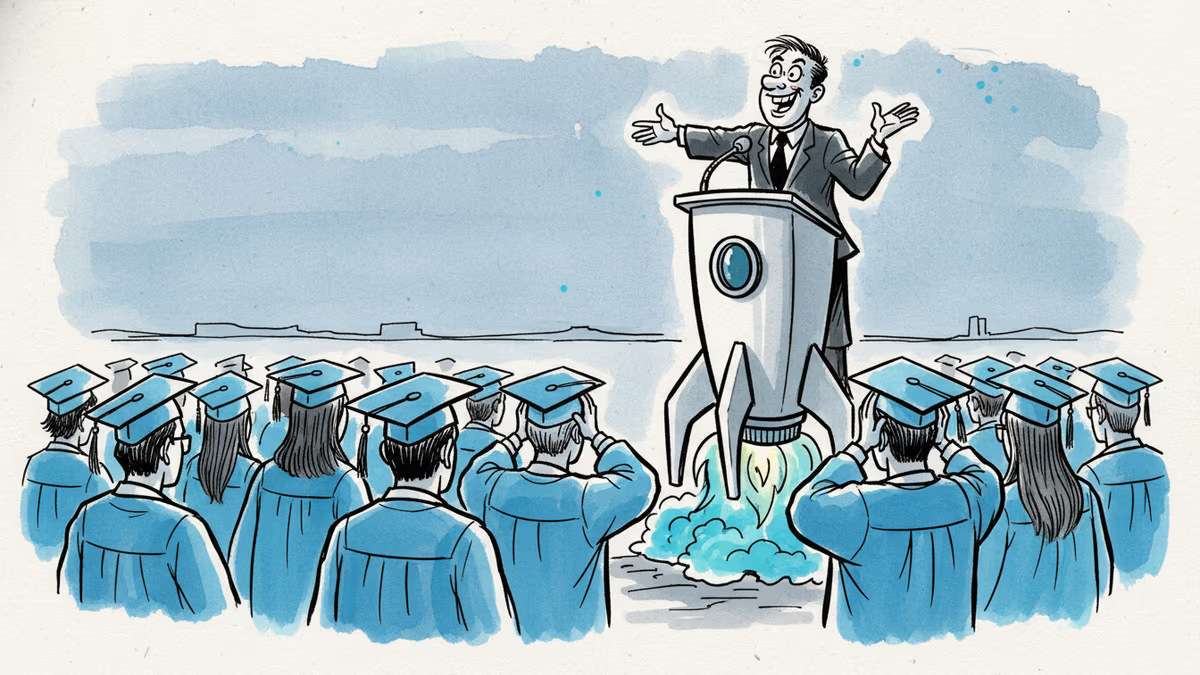
Two commencement speakers learned the hard way that AI enthusiasm doesn't land well with today's graduates. The backlash reveals a widening gap between tech optimism and Gen Z's economic reality.
Samsung and SK unveiled a chip and AI investment package worth thousands of trillions of won on June 29. The headline number swings wildly by outlet, but the real contest isn't capital — it's water and power.
Viral videos show 2026 graduates jeering executives who praise AI at commencement ceremonies. It's not just rudeness — it's a signal about who pays for technological optimism.
Filipino virtual assistants using AI to ghost-manage LinkedIn profiles for executives is now a structured industry. 30 comments a day, fake engagement rings, and a platform struggling to tell real from fabricated.
Two commencement speakers learned the hard way that AI enthusiasm doesn't land well with today's graduates. The backlash reveals a widening gap between tech optimism and Gen Z's economic reality.
Thoughts
Share your thoughts on this article
Sign in to join the conversation