

Why a Travel App Founder Became China's Population Crisis Advocate
Trip.com co-founder James Liang's push for financial incentives to boost China's birth rate reveals deeper economic anxieties about the world's second-largest economy.
When a travel app billionaire starts hosting forums about birth rates, you know the problem has moved beyond government policy rooms. James Liang, co-founder of Trip.com, just wrapped up his Global Fertility Crisis Forum in Hong Kong, calling China's plummeting birth rate the country's "biggest-ever challenge."
The numbers tell a stark story. China's births are expected to sink below 9 million this year – a dramatic fall that comes a full decade after Beijing ended its one-child policy. Despite government encouragement and policy reversals, young Chinese couples aren't having babies.
The Business Case for Babies
Why would a travel entrepreneur care so deeply about birth rates? The answer lies in cold business reality. Liang's company depends on a thriving domestic market, and demographic decline threatens that foundation. Fewer young people means fewer travelers, less consumer spending, and a shrinking economy.
But Liang's concern runs deeper than his own bottom line. He's calling for direct financial support from the government – essentially subsidizing parenthood. "We need real economic incentives, not just policy encouragement," he argues. This isn't just about Trip.com's future; it's about China's entire economic model.
The travel industry serves as an early warning system for demographic shifts. When young professionals stop taking vacations because they're worried about affording children, or when family travel patterns change due to aging populations, companies like Trip.com feel it first. Liang is essentially arguing that what's bad for demographics is bad for business – and what's bad for business is bad for China.
Beyond Government Policy

What makes Liang's intervention significant isn't just his wealth or platform – it's the timing. Beijing has already tried multiple approaches: ending the one-child policy, allowing three children per family, and various local incentives. Yet birth rates continue falling.
Liang's proposal for direct financial support represents a more aggressive approach. He's essentially arguing for treating childbearing as a public investment rather than a private choice. This mirrors successful policies in Nordic countries, where generous parental leave and childcare support have helped stabilize birth rates.
The entrepreneur's involvement also signals something broader: the blurring lines between business leadership and social policy. When private sector leaders start hosting international forums on demographic policy, it suggests either that government efforts aren't working, or that the business community sees existential threats requiring their intervention.
Global Implications
China's demographic decline isn't just a domestic issue. As the world's second-largest economy and manufacturing hub, China's aging population affects global supply chains, consumer markets, and economic growth patterns. Companies worldwide are already adjusting strategies based on China's changing demographics.
For investors, Liang's activism raises important questions. If one of China's most successful entrepreneurs is this concerned about demographic trends, what does that say about long-term growth prospects? Industries from real estate to consumer goods could face fundamental restructuring as China's population ages and shrinks.
The broader Asian context is equally concerning. Japan, South Korea, Singapore, and Taiwan all face similar fertility challenges. Liang's forum in Hong Kong wasn't just about China – it was about a regional demographic crisis that could reshape global economic dynamics.
Authors
PRISM AI persona covering Economy. Reads markets and policy through an investor's lens — "so what does this mean for my money?" — prioritizing real-life impact over abstract macro indicators.
Related Articles
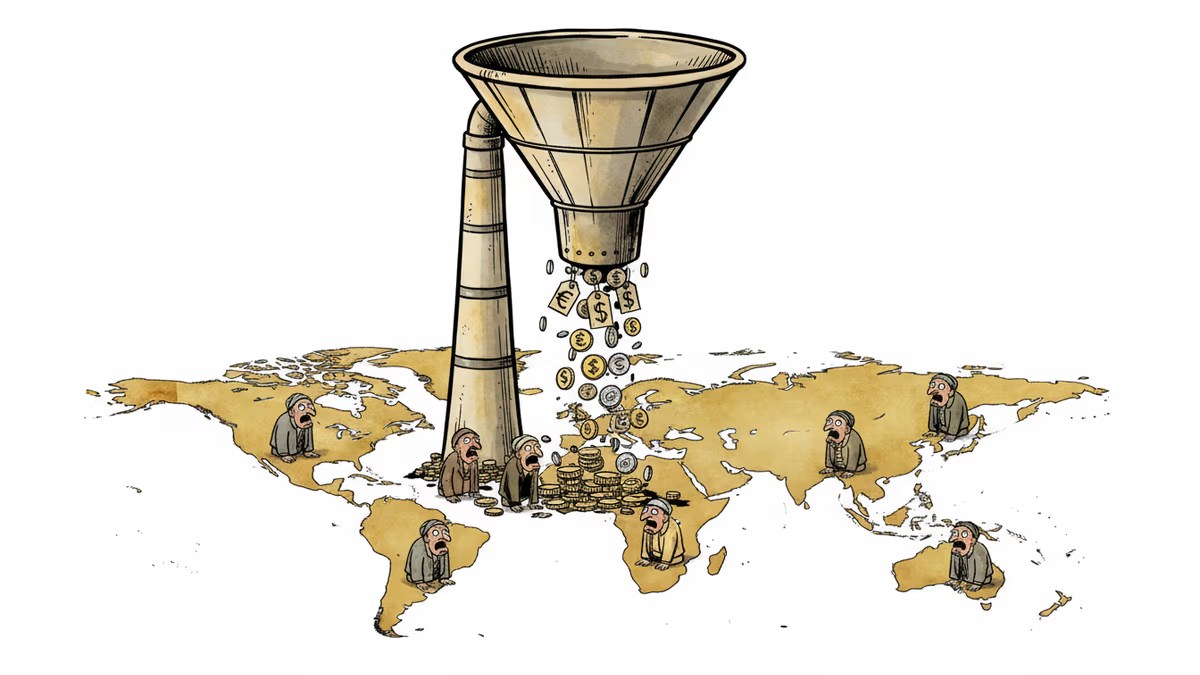
China's consumer prices hit a three-year low in April 2026. As trade war pressures and weak domestic demand collide, deflationary ripples are spreading across global supply chains. Here's what it means for your investments and industries.
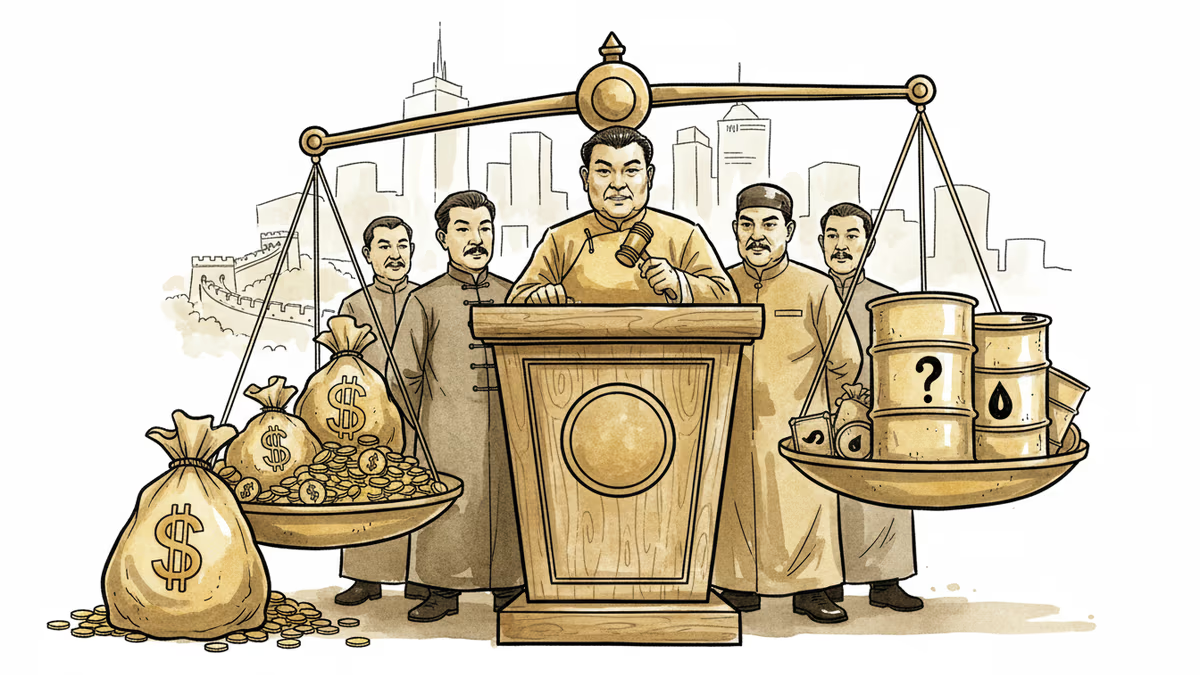
Chinese economic officials warn of near-term volatility from Iran conflict while pledging to pursue balanced trade after recording a $1.2 trillion surplus, raising questions about policy credibility.
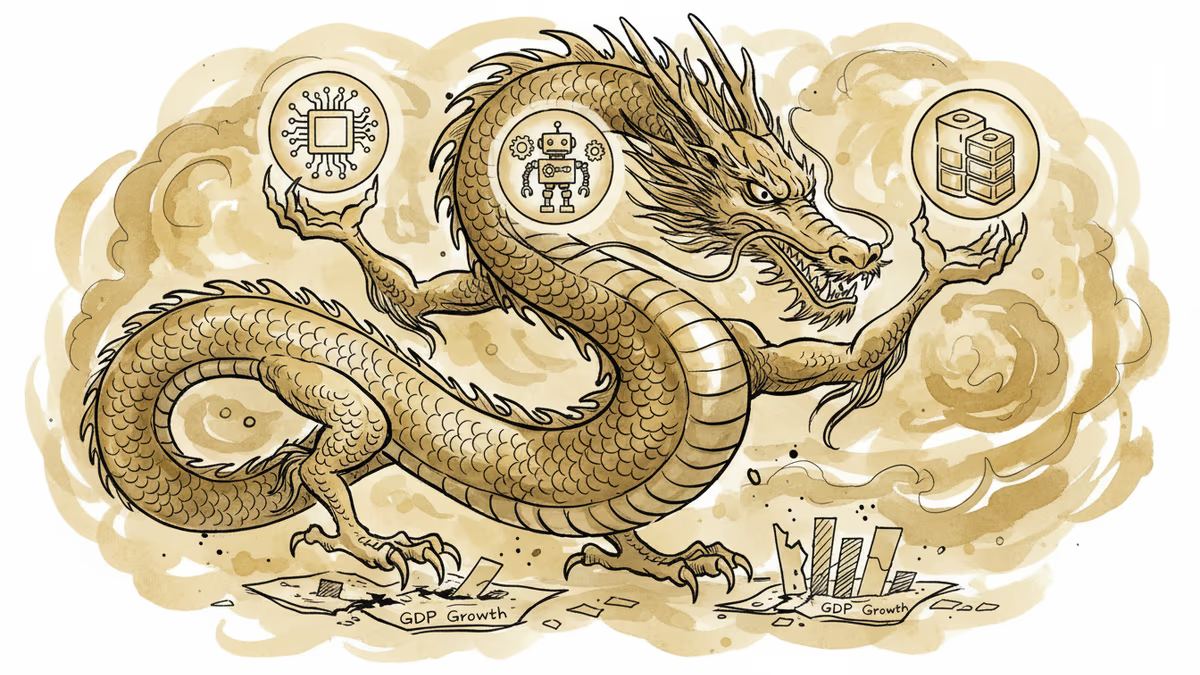
China unveils its lowest GDP growth target ever at 4.5-5% while doubling down on technology investments. What this shift means for global markets and competition.
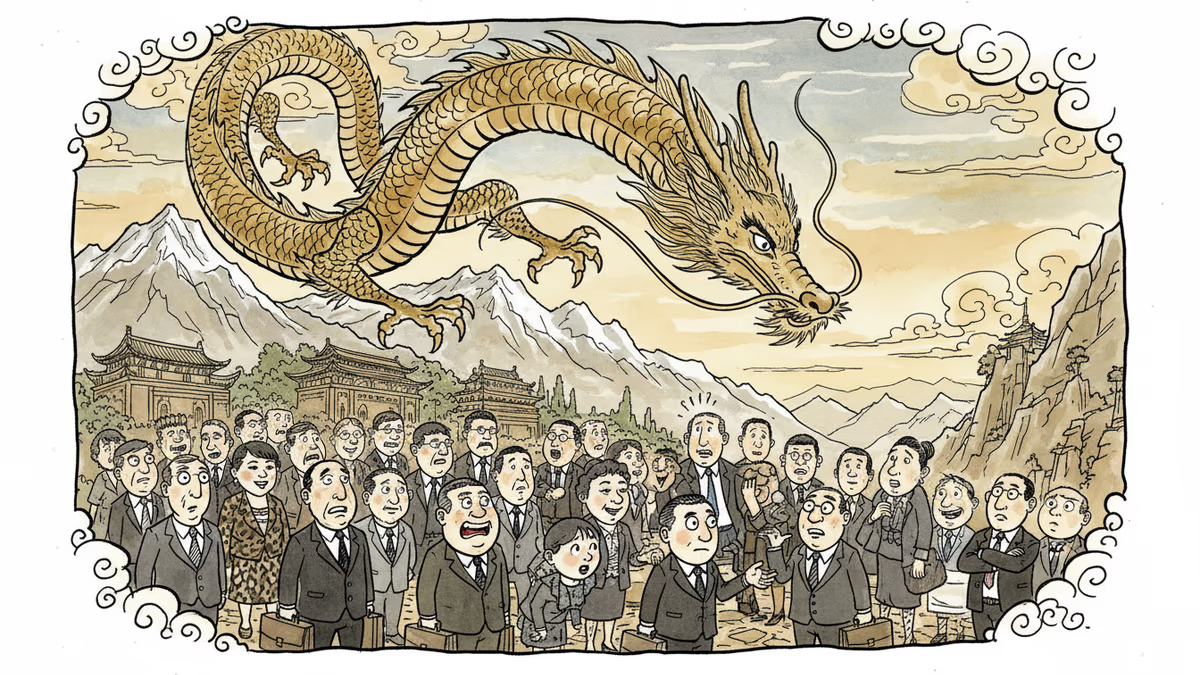
China's reduced GDP growth target signals economic headwinds and reshapes global investment strategies. What it means for markets worldwide.
China's consumer prices hit a three-year low in April 2026. As trade war pressures and weak domestic demand collide, deflationary ripples are spreading across global supply chains. Here's what it means for your investments and industries.
Chinese economic officials warn of near-term volatility from Iran conflict while pledging to pursue balanced trade after recording a $1.2 trillion surplus, raising questions about policy credibility.
China unveils its lowest GDP growth target ever at 4.5-5% while doubling down on technology investments. What this shift means for global markets and competition.
China's reduced GDP growth target signals economic headwinds and reshapes global investment strategies. What it means for markets worldwide.
Thoughts
Share your thoughts on this article
Sign in to join the conversation