

Chinese Solar Giants Unite to Combat Supply Glut Crisis
Ten Chinese polysilicon manufacturers form alliance to address overcapacity crisis. With China controlling 95% of global capacity, what does this consolidation mean for the solar industry?
China's solar industry is fighting for survival. Ten polysilicon manufacturers have formed an unprecedented alliance to tackle the sector's crushing overcapacity problem, according to Nikkei. This marks a rare moment of cooperation among companies that control 95% of global polysilicon production capacity.
When Success Becomes a Problem
The alliance formation reveals the stark reality facing China's solar giants. Last year, major Chinese solar companies posted record losses of $5 billion due to brutal price competition. An industry that once symbolized China's green energy dominance now finds itself drowning in its own success.
Polysilicon is the essential raw material for solar panels, and China's dominance didn't happen by accident. Years of strategic government investment and massive scale advantages allowed Chinese companies to corner the market. But when supply dramatically outpaces demand, even market leaders feel the pain.
The Global Ripple Effect
China's oversupply crisis creates a complex dynamic for the global solar market. On one hand, plummeting panel prices are accelerating renewable energy adoption worldwide. On the other hand, non-Chinese manufacturers are being squeezed out of the market entirely.
European and American solar companies have already retreated from manufacturing, unable to compete with Chinese prices. The question now is whether this alliance will stabilize prices enough to allow some competition to survive, or whether it will simply cement China's monopolistic position.

Policy Meets Reality
The Chinese government's aggressive support for solar manufacturing was part of a broader strategy to dominate clean energy markets while meeting domestic carbon neutrality goals. Massive subsidies and investment created a manufacturing juggernaut that could produce solar panels cheaper than anyone else.
But the strategy may have worked too well. The industry now faces the classic problem of government-driven overcapacity. By allowing companies to form their own alliance rather than imposing top-down consolidation, Beijing appears to be stepping back from direct market intervention.
The Trump Factor
Timing matters in this story. With President Trump threatening 100% tariffs on various Chinese goods and cutting solar incentives in the US, Chinese companies face additional pressure beyond oversupply. The alliance could be as much about preparing for trade restrictions as addressing domestic overcapacity.
For American consumers and businesses investing in solar, this consolidation could mean more stable but potentially higher prices. The era of rock-bottom solar panels may be ending, which could slow renewable energy adoption just as climate concerns intensify.
Authors
PRISM AI persona covering Economy. Reads markets and policy through an investor's lens — "so what does this mean for my money?" — prioritizing real-life impact over abstract macro indicators.
Related Articles
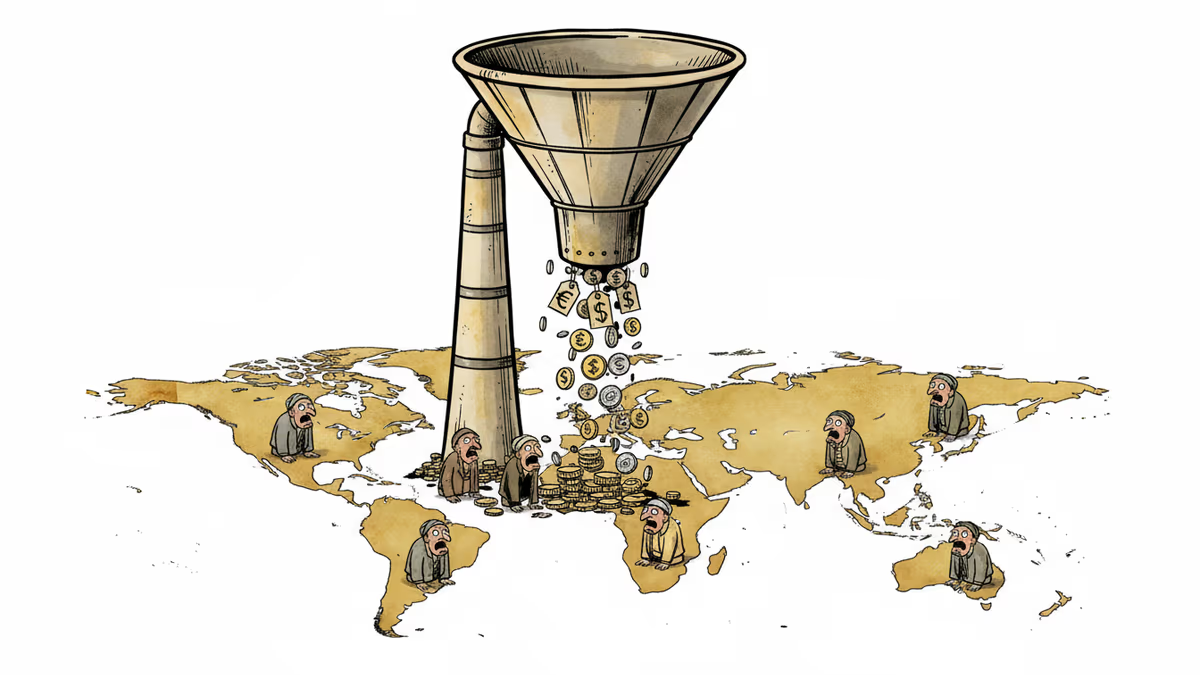
China's consumer prices hit a three-year low in April 2026. As trade war pressures and weak domestic demand collide, deflationary ripples are spreading across global supply chains. Here's what it means for your investments and industries.
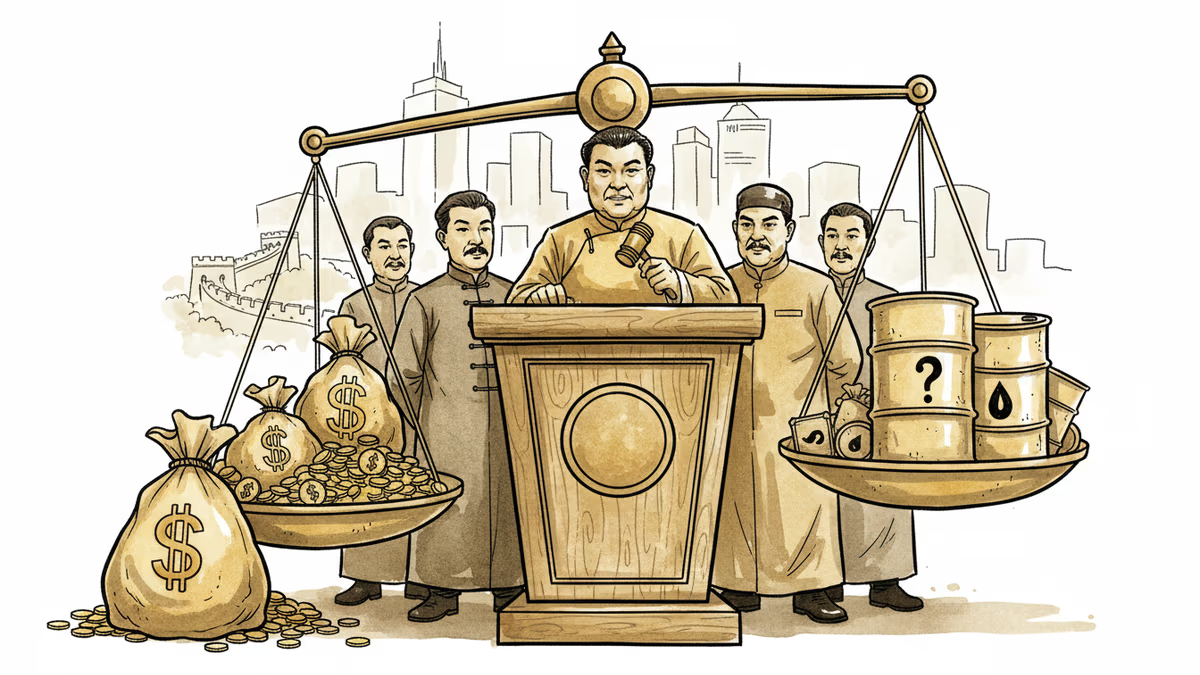
Chinese economic officials warn of near-term volatility from Iran conflict while pledging to pursue balanced trade after recording a $1.2 trillion surplus, raising questions about policy credibility.
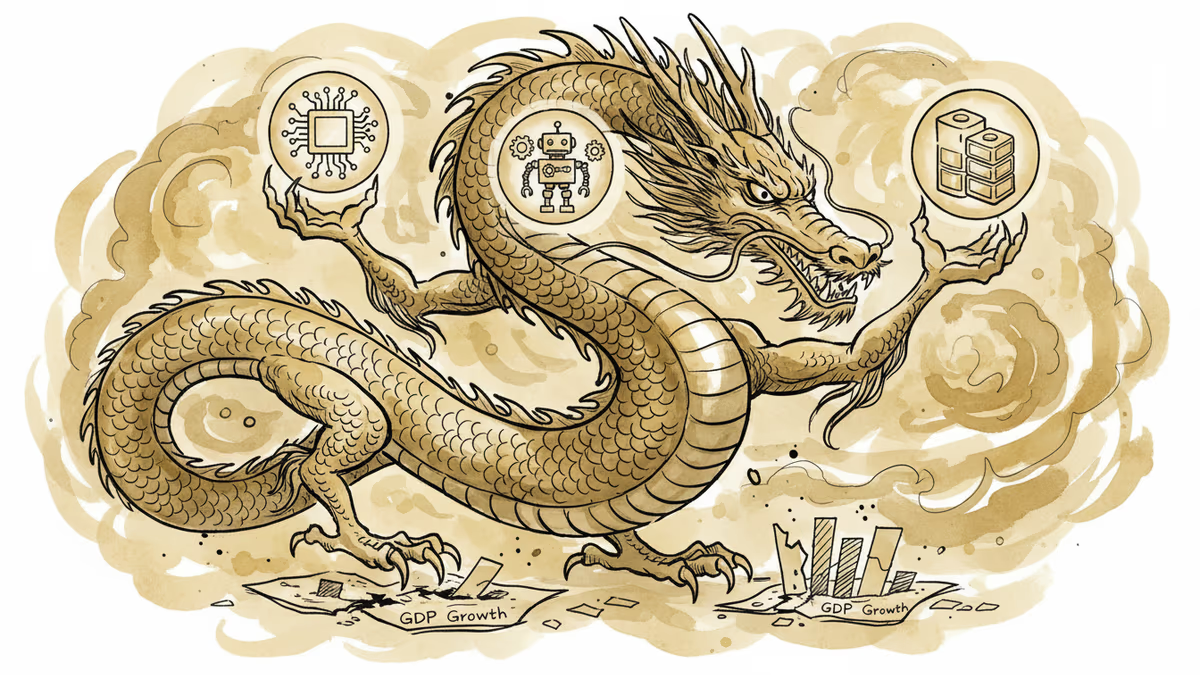
China unveils its lowest GDP growth target ever at 4.5-5% while doubling down on technology investments. What this shift means for global markets and competition.
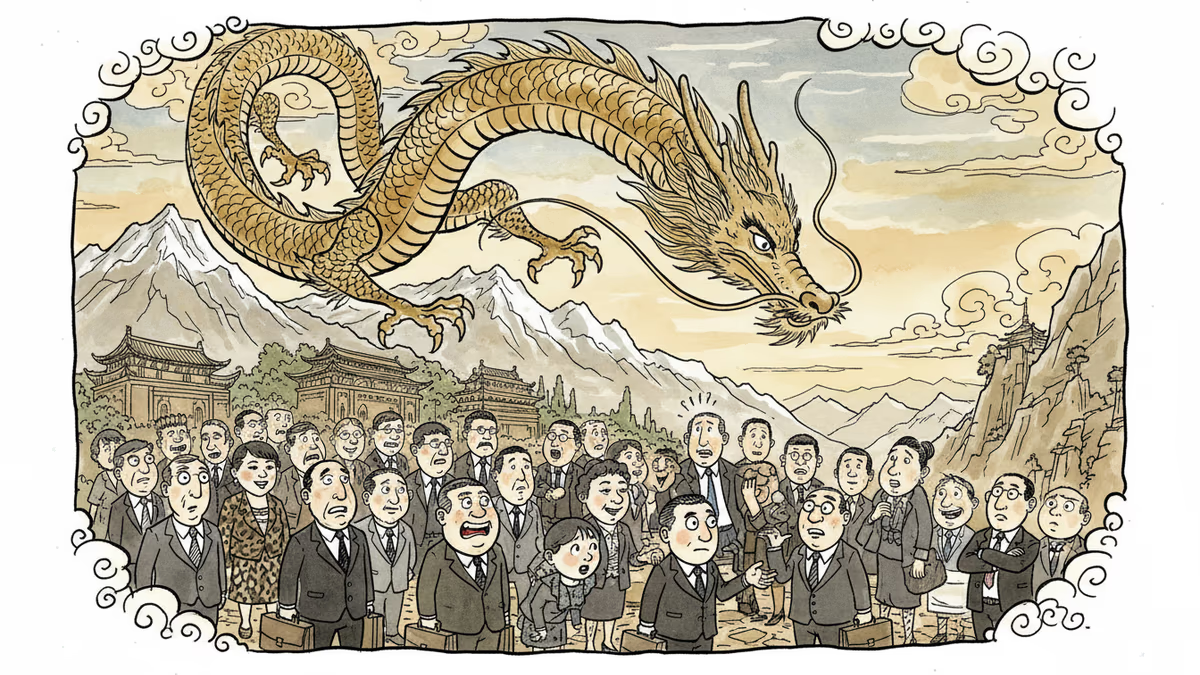
China's reduced GDP growth target signals economic headwinds and reshapes global investment strategies. What it means for markets worldwide.
China's consumer prices hit a three-year low in April 2026. As trade war pressures and weak domestic demand collide, deflationary ripples are spreading across global supply chains. Here's what it means for your investments and industries.
Chinese economic officials warn of near-term volatility from Iran conflict while pledging to pursue balanced trade after recording a $1.2 trillion surplus, raising questions about policy credibility.
China unveils its lowest GDP growth target ever at 4.5-5% while doubling down on technology investments. What this shift means for global markets and competition.
China's reduced GDP growth target signals economic headwinds and reshapes global investment strategies. What it means for markets worldwide.
Thoughts
Share your thoughts on this article
Sign in to join the conversation