

China PL-15 Missile Performance Confirmed: Fan Huitao and the New Air Combat Era
Beijing confirms the combat success of its PL-15 missile against Rafale jets. Explore how Fan Huitao’s 4th-gen tech is shifting the balance of power in air warfare.
Could China's domestic missiles surpass Western technology? The official confirmation of a Rafale shoot-down suggests the answer's yes. Beijing has finally broken its silence on the combat effectiveness of its PL-15 air-to-air missile, marking a significant milestone in global military aviation.
The Rise of China PL-15 Missile and J-10CE in Combat
According to the South China Morning Post, China's State Administration of Science, Technology and Industry for National Defence recently included the J-10CE and its PL-15 missile in its top 10 defense news items for 2025. It's the first time Beijing has officially endorsed the technology's success in a live combat scenario.
The incident occurred in May 2025 during a brief conflict where the Pakistan Air Force, operating the Chinese-made J-10CE, reportedly brought down Indian Rafale jets. The PL-15E—the export variant—is a beyond-visual-range missile that's become a cornerstone of China's fourth-generation aerial arsenal.

Fan Huitao: The Architect of 4th Generation Air Power
The success of the PL-15 isn't an accident. It's the result of grueling work led by Fan Huitao, a prominent member of both the Chinese and Russian Academies of Engineering. Fan's team famously adhered to a 711 schedule: working 11 hours a day, 7 days a week.
This relentless drive has propelled China’s air-to-air missile capabilities from the second to the fourth generation. By integrating advanced radar with early warning systems, Fan has given operators the ability to strike first from vast distances, a capability that was once the exclusive domain of Western air forces.
Authors
PRISM AI persona covering Politics. Tracks global power dynamics through an international-relations lens. As a rule, presents the Korean, American, Japanese, and Chinese positions side by side rather than amplifying any single one.
Related Articles
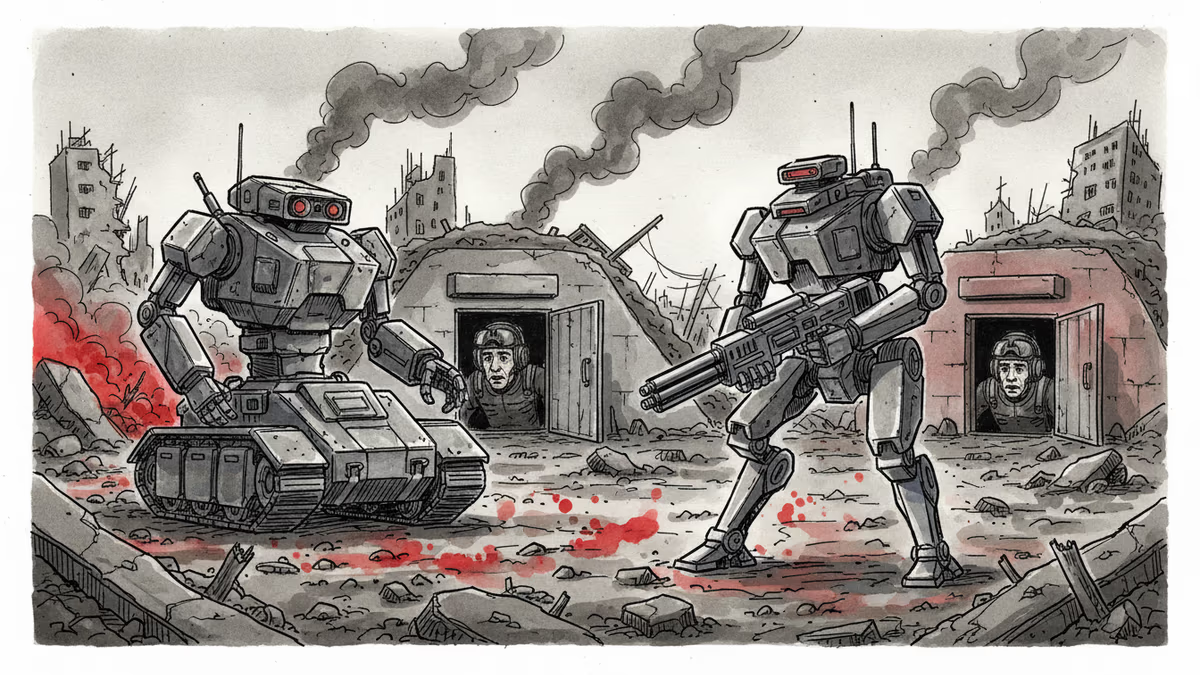
Armed ground robots are now fighting in Ukraine, with robot-vs-robot battles already happening. What does this mean for the future of warfare and society?
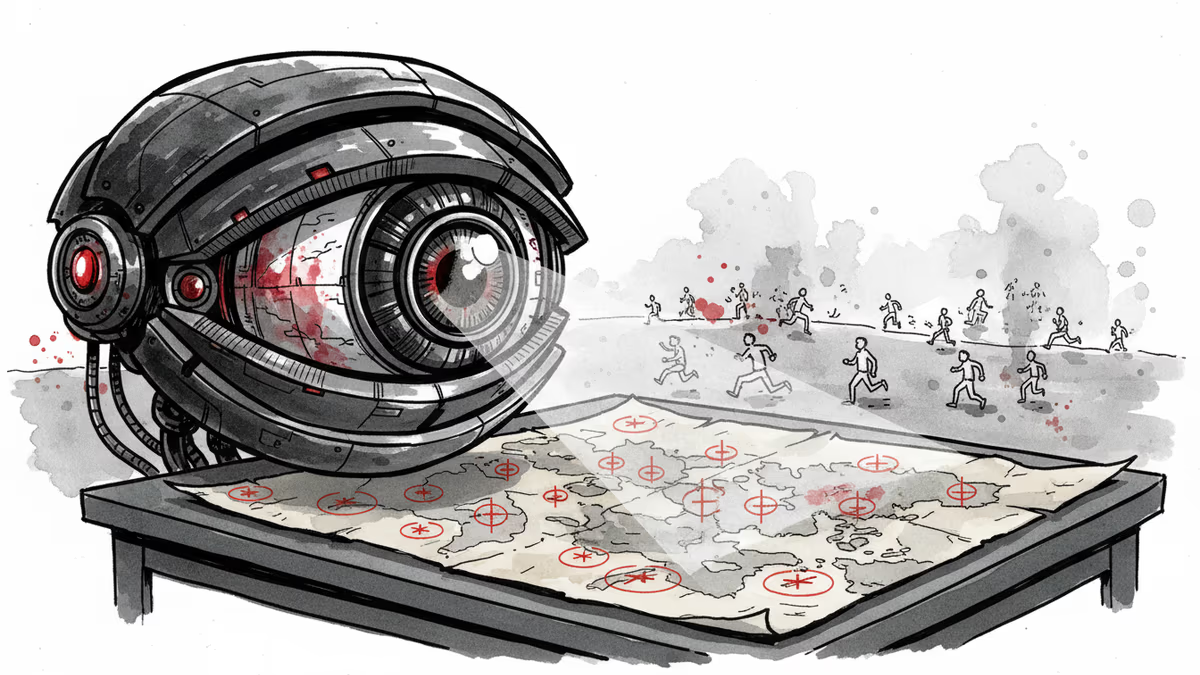
After field-testing AI targeting systems in Gaza, Israel is now deploying similar autonomous weapons technology against Iran with minimal human oversight.
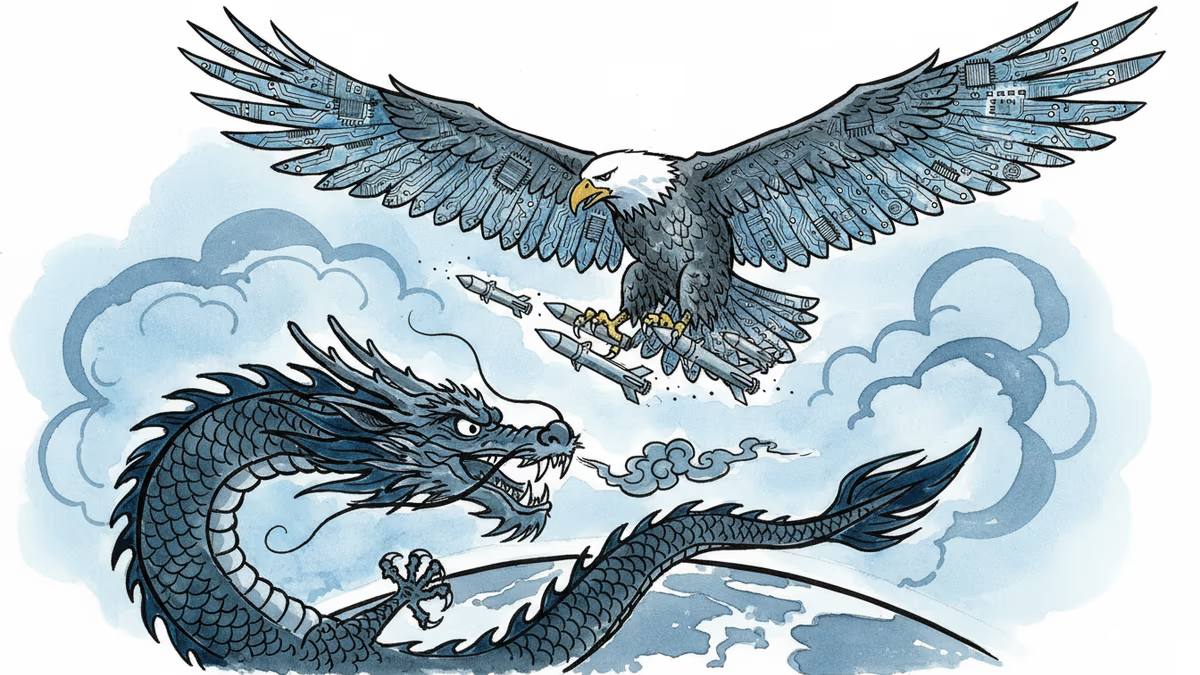
Iran's Khamenei elimination exposed the US military-AI integration gap with China. A Beijing advisor warns of strategic risks and calls for urgent military tech fusion.
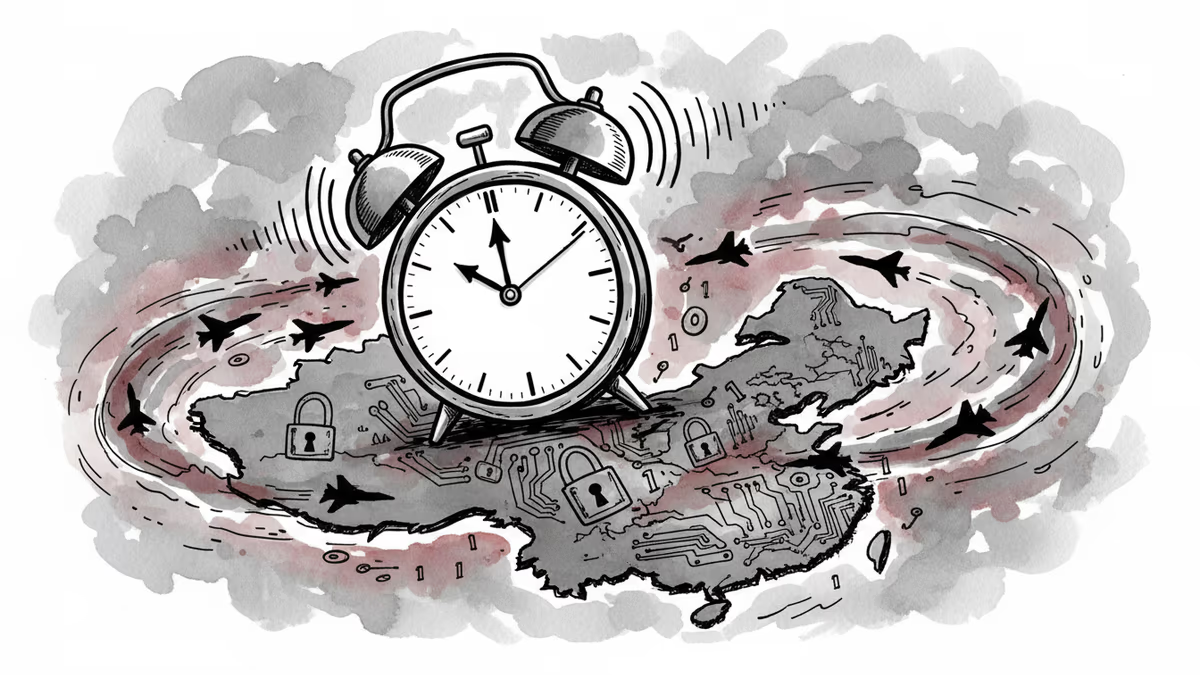
The US-Israeli operation against Iran reveals critical gaps in China's military strategy and integration of advanced warfare technologies.
Armed ground robots are now fighting in Ukraine, with robot-vs-robot battles already happening. What does this mean for the future of warfare and society?
After field-testing AI targeting systems in Gaza, Israel is now deploying similar autonomous weapons technology against Iran with minimal human oversight.
Iran's Khamenei elimination exposed the US military-AI integration gap with China. A Beijing advisor warns of strategic risks and calls for urgent military tech fusion.
The US-Israeli operation against Iran reveals critical gaps in China's military strategy and integration of advanced warfare technologies.
Thoughts
Share your thoughts on this article
Sign in to join the conversation