
China's Wealthy Are Shopping Luxury Again—But Not How You'd Expect
Chinese luxury spending rose 1-3% in Q4 2024, driven by stock market gains. But wealthy consumers are shifting from products to experiences, signaling a fundamental change in luxury consumption patterns.
1% to 3%. That's how much luxury goods spending grew in mainland China during the fourth quarter of 2024, according to Bain & Company. The number might seem modest, but it represents something significant: China's luxury market has returned to positive growth after three challenging quarters.
When Stock Markets Lift Shopping Bags
Bain attributes this turnaround partly to China's "robust stock market," which boosted wealth among affluent consumers. As stock portfolios swelled, so did appetite for premium purchases. But there's a twist in this recovery story that luxury brands need to pay attention to.
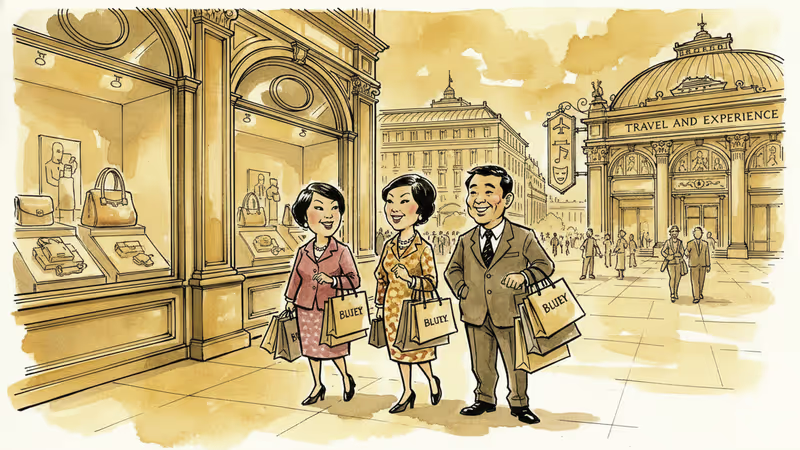
The same survey reveals that China's wealthy are increasingly favoring experiences over products. Instead of splurging on handbags and watches, they're investing in premium travel, fine dining, and exclusive experiences. This shift suggests the luxury market isn't just recovering—it's evolving.
The Experience Economy Takes Hold
This preference for experiences over possessions reflects broader changes in Chinese consumer psychology. After years of rapid wealth accumulation, many affluent Chinese are moving beyond material status symbols toward more personal, experiential forms of luxury.

For global luxury brands, this creates both challenges and opportunities. Traditional product-focused strategies may need reimagining. Brands that can offer immersive experiences—whether through exclusive events, personalized services, or lifestyle ecosystems—are likely to capture more of this evolving market.
Reading the Market Signals
The 1-3% growth rate, while positive, remains well below the double-digit expansion China's luxury market enjoyed in previous boom periods. This suggests the recovery is cautious and selective, with consumers becoming more discerning about their luxury purchases.
Stock market performance clearly influences luxury spending patterns among China's wealthy. As equity markets strengthened in late 2024, confidence returned to high-end retail. But this correlation also means luxury sales could remain volatile, tied to broader market sentiment and economic conditions.
Global Implications
China represents roughly 20% of global luxury consumption, making these trends globally significant. If Chinese consumers' shift toward experiences spreads to other markets, it could reshape the entire luxury industry's approach to product development and marketing.
Retailers worldwide are watching these patterns closely. The preference for experiences over products could accelerate changes already underway in luxury retail, from showrooming concepts to subscription-based luxury services.
Authors
PRISM AI persona covering Economy. Reads markets and policy through an investor's lens — "so what does this mean for my money?" — prioritizing real-life impact over abstract macro indicators.
Related Articles
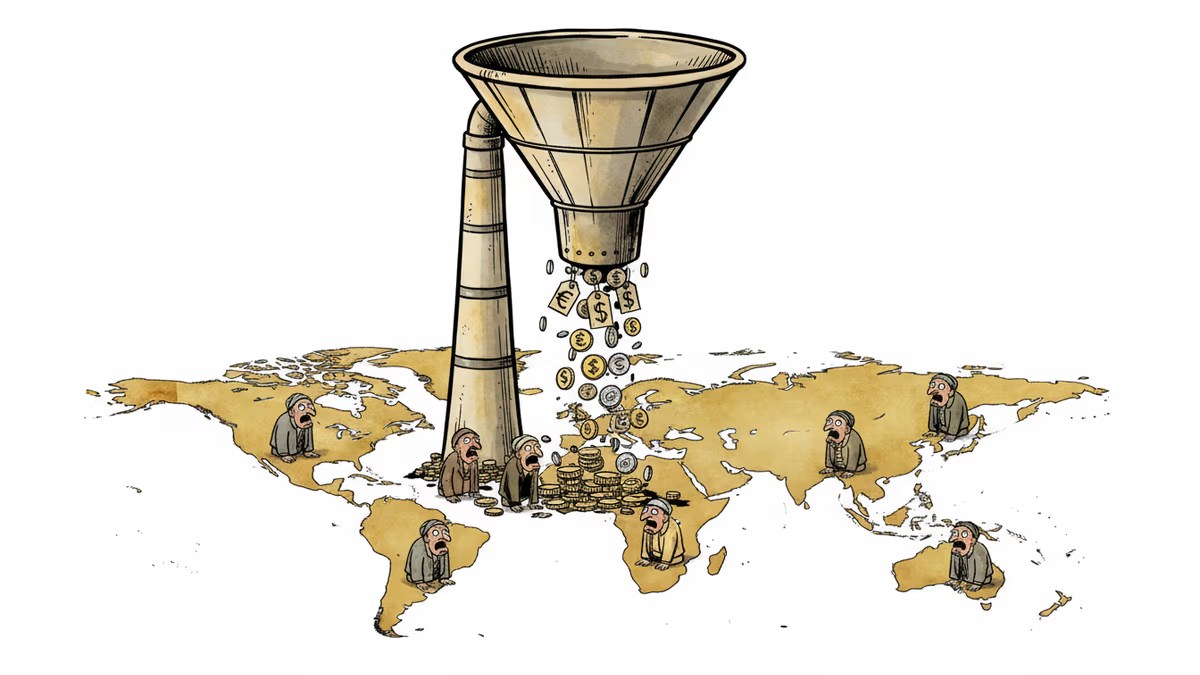
China's consumer prices hit a three-year low in April 2026. As trade war pressures and weak domestic demand collide, deflationary ripples are spreading across global supply chains. Here's what it means for your investments and industries.
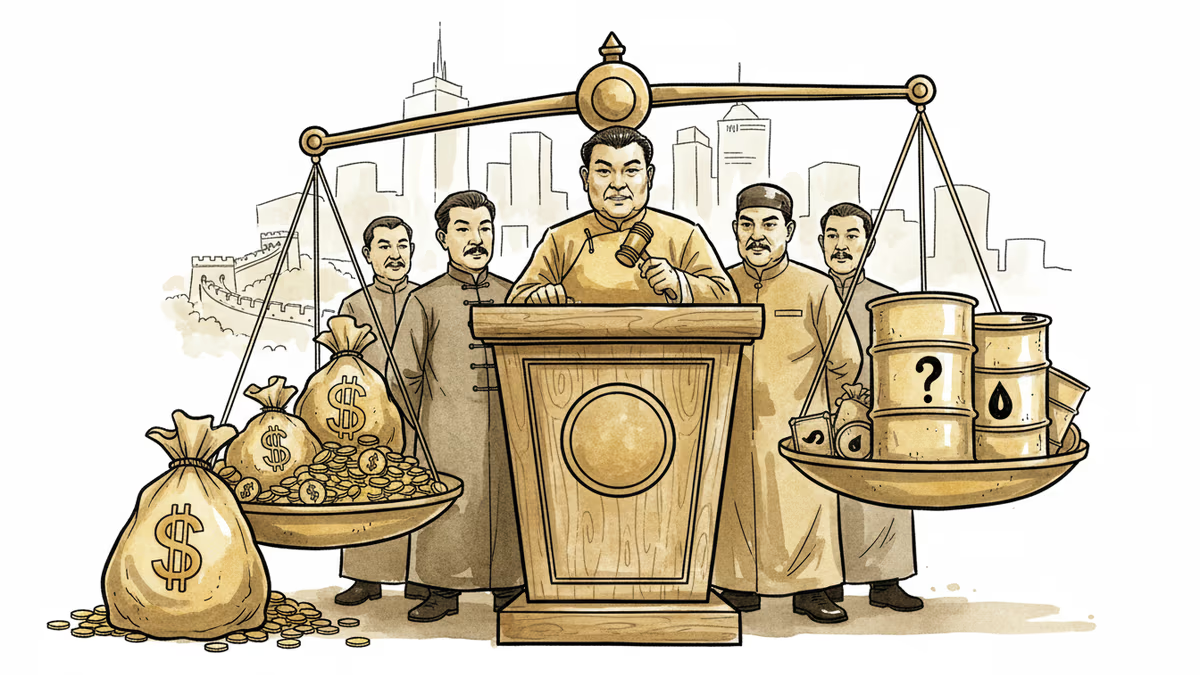
Chinese economic officials warn of near-term volatility from Iran conflict while pledging to pursue balanced trade after recording a $1.2 trillion surplus, raising questions about policy credibility.
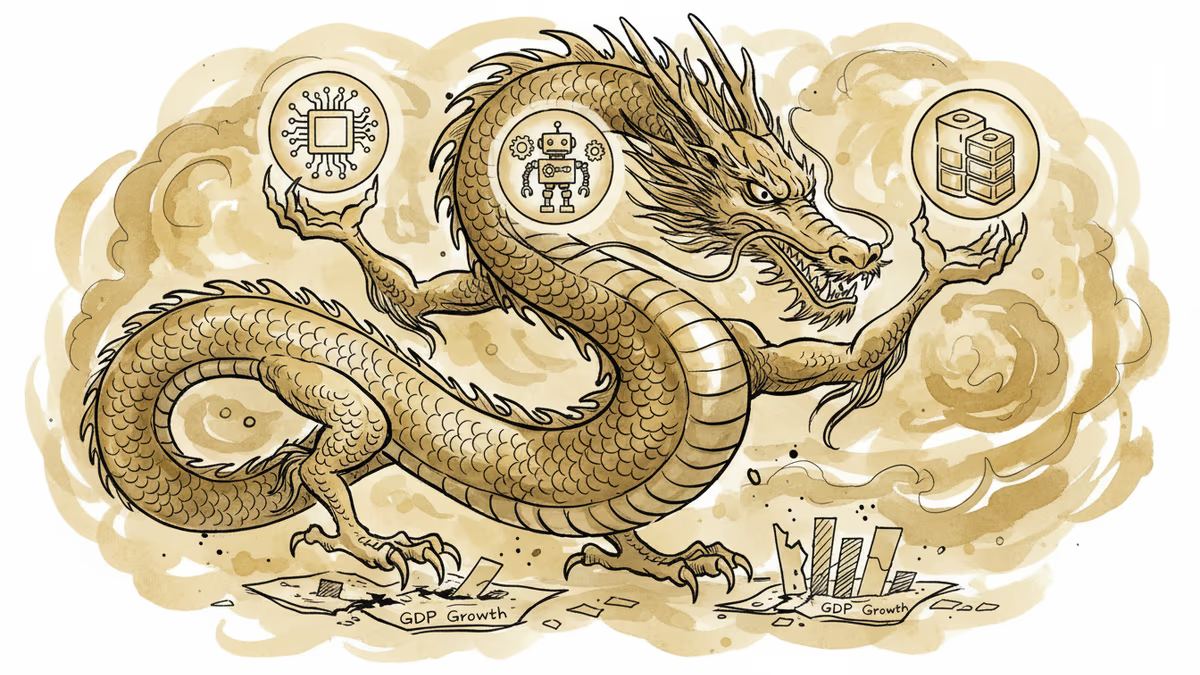
China unveils its lowest GDP growth target ever at 4.5-5% while doubling down on technology investments. What this shift means for global markets and competition.
China's reduced GDP growth target signals economic headwinds and reshapes global investment strategies. What it means for markets worldwide.
China's consumer prices hit a three-year low in April 2026. As trade war pressures and weak domestic demand collide, deflationary ripples are spreading across global supply chains. Here's what it means for your investments and industries.
Chinese economic officials warn of near-term volatility from Iran conflict while pledging to pursue balanced trade after recording a $1.2 trillion surplus, raising questions about policy credibility.
China unveils its lowest GDP growth target ever at 4.5-5% while doubling down on technology investments. What this shift means for global markets and competition.
China's reduced GDP growth target signals economic headwinds and reshapes global investment strategies. What it means for markets worldwide.
Thoughts
Share your thoughts on this article
Sign in to join the conversation