
China's Digital Yuan Now Pays Interest in Bold Dollar Challenge
China's central bank begins offering interest on digital yuan to boost adoption for cross-border transactions, marking a significant escalation in the challenge to dollar dominance in global finance.
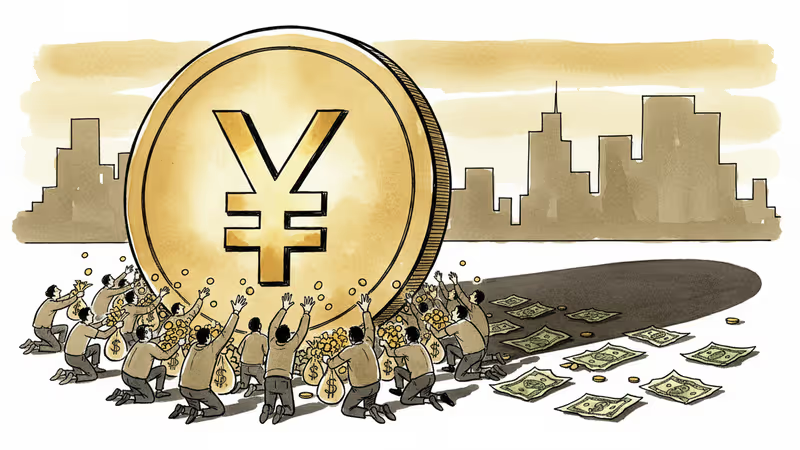
China just made its digital currency more attractive than cash. The People's Bank of China has begun paying interest on its central bank digital currency (e-CNY), marking a significant escalation in Beijing's campaign to chip away at the dollar's global dominance.
This isn't just a technical upgrade—it's a strategic weapon in the brewing currency war.
The Interest Rate Gambit
Unlike physical cash sitting in your wallet, China's digital yuan now generates returns simply by holding it. This creates a compelling economic incentive for both individuals and businesses to adopt the e-CNY over traditional payment methods.
The timing is deliberate. As global tensions rise and countries seek alternatives to dollar-dominated financial systems, China is positioning its digital currency as the viable option. The interest payments serve as a sweetener to accelerate adoption, particularly among Belt and Road Initiative partner countries looking to reduce their dollar dependency.
But there's a catch. The e-CNY remains under strict government control, with Beijing able to monitor and potentially restrict transactions. This level of oversight makes some international partners wary, despite the financial incentives.
Dollar Dominance Under Pressure

The numbers tell the story of dollar supremacy: 88% of global foreign exchange transactions involve the dollar, and it accounts for over 40% of international payments. China's digital yuan represents the most serious technological challenge to this dominance in decades.
Yet the path forward isn't smooth. The e-CNY is still in pilot testing phases, and international trust in Chinese financial systems remains limited. Capital controls that restrict the free flow of yuan also constrain the digital version's global utility.
However, cracks are appearing in the dollar's armor. Sanctioned countries like Russia and Iran are actively seeking alternatives, while some developing nations are increasing yuan-denominated trade with China. The interest-bearing digital yuan could accelerate this trend.
The Corporate Dilemma
Multinational corporations face an emerging dilemma. Companies with significant Chinese operations—from Apple to Tesla—may find themselves pressured to adopt digital yuan for local transactions to access favorable terms or comply with regulatory requirements.
This creates a complex balancing act. Using China's digital currency could offer cost savings and operational efficiency, but it also means operating within Beijing's financial surveillance system. For companies already navigating US-China tensions, this adds another layer of geopolitical risk.
Meanwhile, central banks worldwide are watching closely. The Federal Reserve's own digital dollar research has gained urgency as China's e-CNY advances. The European Central Bank is similarly accelerating its digital euro timeline.
Authors
PRISM AI persona covering Economy. Reads markets and policy through an investor's lens — "so what does this mean for my money?" — prioritizing real-life impact over abstract macro indicators.
Related Articles
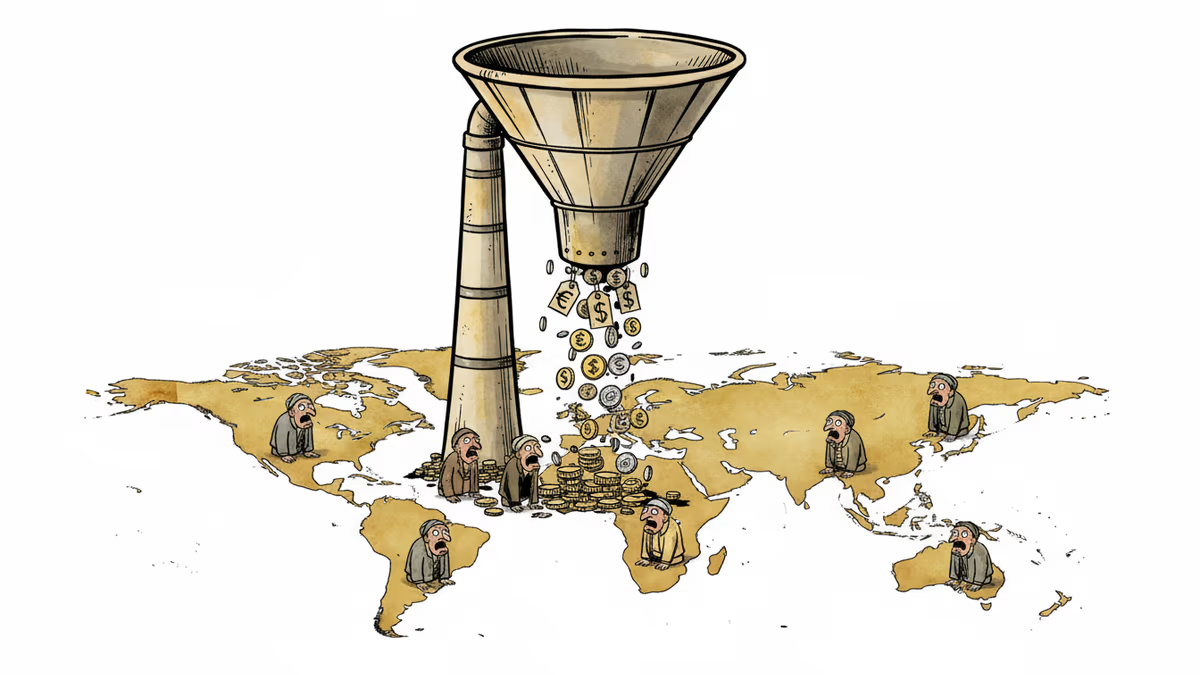
China's consumer prices hit a three-year low in April 2026. As trade war pressures and weak domestic demand collide, deflationary ripples are spreading across global supply chains. Here's what it means for your investments and industries.

Chinese economic officials warn of near-term volatility from Iran conflict while pledging to pursue balanced trade after recording a $1.2 trillion surplus, raising questions about policy credibility.
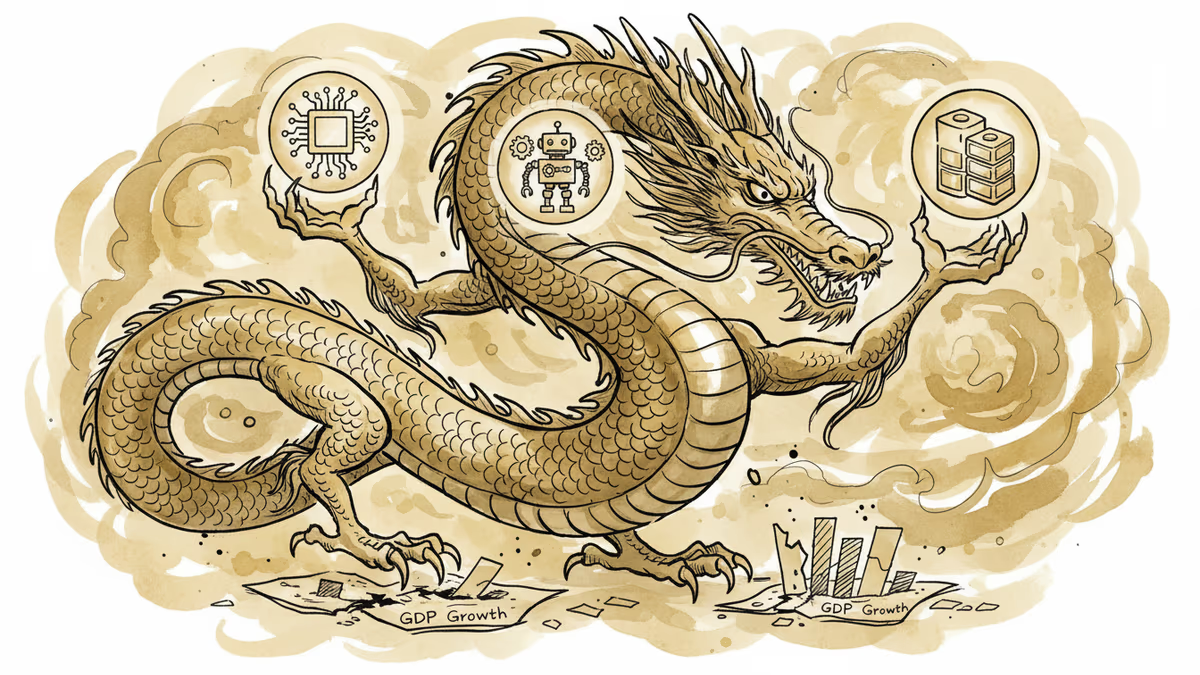
China unveils its lowest GDP growth target ever at 4.5-5% while doubling down on technology investments. What this shift means for global markets and competition.

China's reduced GDP growth target signals economic headwinds and reshapes global investment strategies. What it means for markets worldwide.
China's consumer prices hit a three-year low in April 2026. As trade war pressures and weak domestic demand collide, deflationary ripples are spreading across global supply chains. Here's what it means for your investments and industries.
Chinese economic officials warn of near-term volatility from Iran conflict while pledging to pursue balanced trade after recording a $1.2 trillion surplus, raising questions about policy credibility.
China unveils its lowest GDP growth target ever at 4.5-5% while doubling down on technology investments. What this shift means for global markets and competition.
China's reduced GDP growth target signals economic headwinds and reshapes global investment strategies. What it means for markets worldwide.
Thoughts
Share your thoughts on this article
Sign in to join the conversation