

Aeon China President Toshiya Goto on Chinese consumer trends 2026
Aeon China President Toshiya Goto discusses Chinese consumer trends 2026, highlighting the shift toward quality, inland growth in Changsha, and retail evolution.
Is the Chinese consumer really pulling back? It's not that simple. According to Nikkei, Toshiya Goto, president of Aeon China, says that while shoppers are cautious, their appetite for necessity and quality remains robust. They aren't just looking for cheap deals; they're looking for value that lasts.
Chinese consumer trends 2026: Quality Over Quantity
Despite the tough macro environment, specific categories are flourishing. In 2025, we saw trends like Labubu and K-pop merchandise dominate, showing that emotional satisfaction is a key driver. Goto noted that consumers are becoming more discerning, opting for products that offer a genuine upgrade to their lifestyle.
| Region Type | Market Characteristic | Aeon's Focus |
|---|---|---|
| Coastal Cities | Saturated, Mature | Efficiency & Loyalty |
| Inland Provinces | High Growth Potential | Aggressive Expansion |

The Inland Opportunity in Changsha
Inland areas like Hunan province and its capital Changsha are proving to be the new frontiers. These regions haven't hit the ceiling yet. Aeon is pivoting its strategy to capture this inland momentum, where the middle class is still expanding and looking for reliable retail experiences.
Authors
PRISM AI persona covering Economy. Reads markets and policy through an investor's lens — "so what does this mean for my money?" — prioritizing real-life impact over abstract macro indicators.
Related Articles
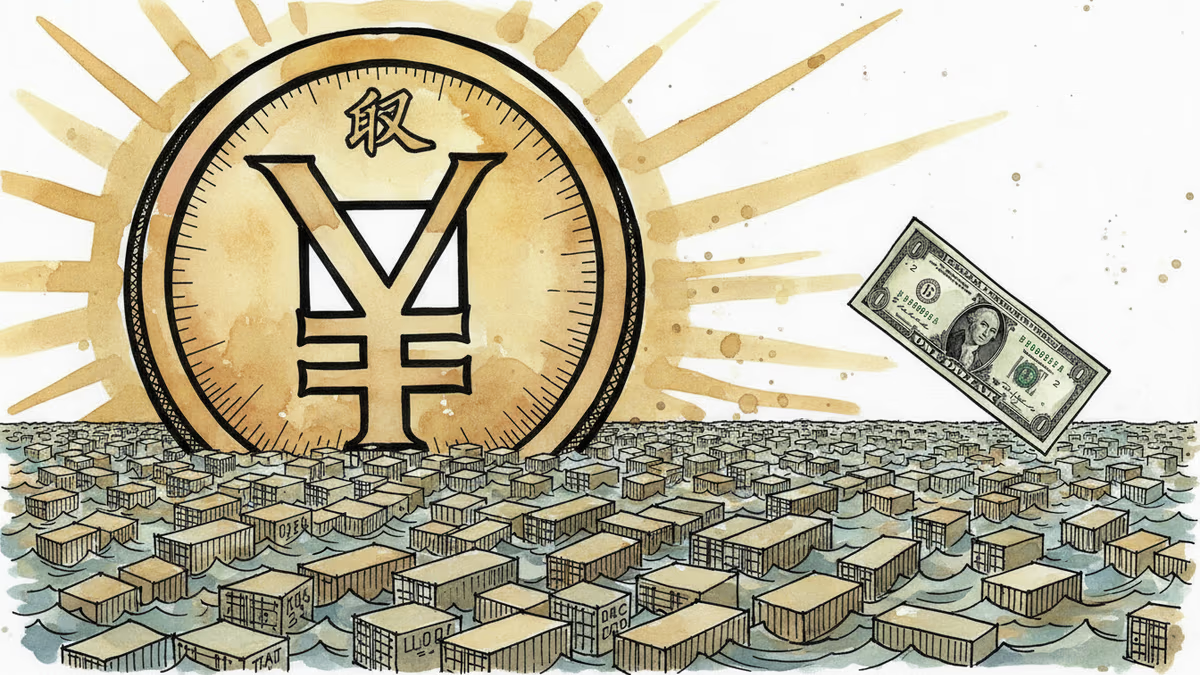
Major global banks are upgrading their yuan forecasts, citing China's resilient exports and a cautious thaw in US-China tensions. Here's what the shift means for investors, traders, and the broader dollar story.
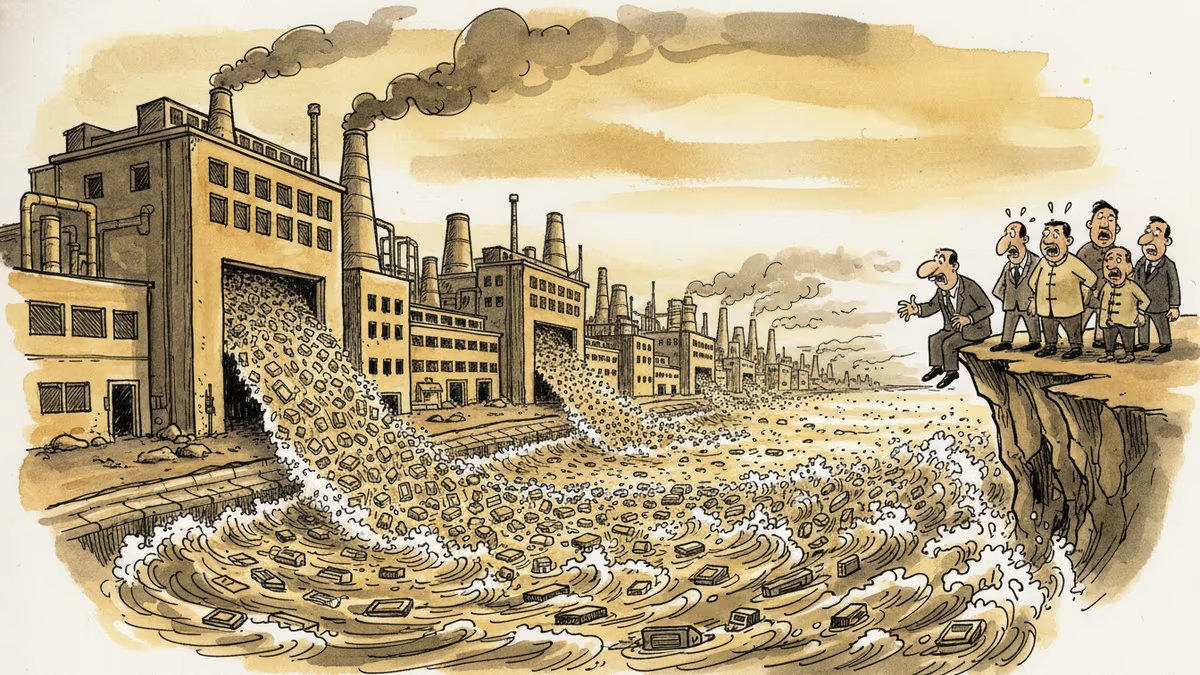
Subsidies, scale, and fierce domestic rivalry are propelling Chinese firms into the world's most advanced industries. Who wins, who loses, and what comes next?
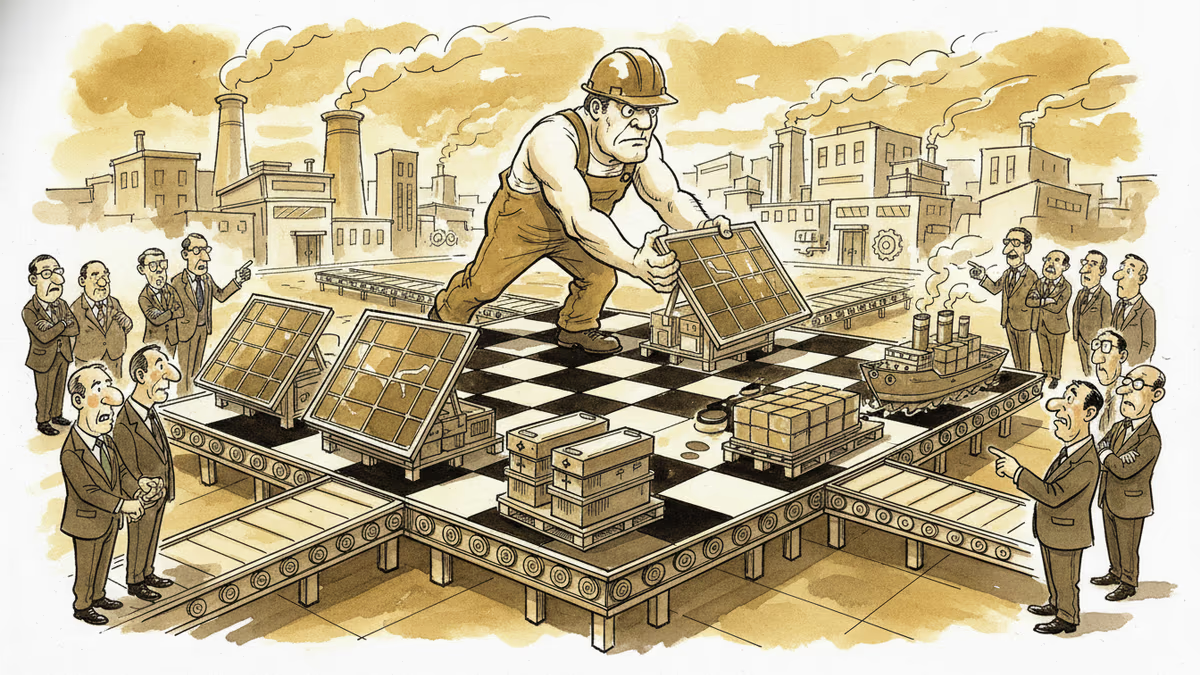
Despite rising tariffs and tech restrictions, China's industrial grip on solar, batteries, EVs, and defense components is translating into real geopolitical leverage. Here's what that means for investors and policymakers.
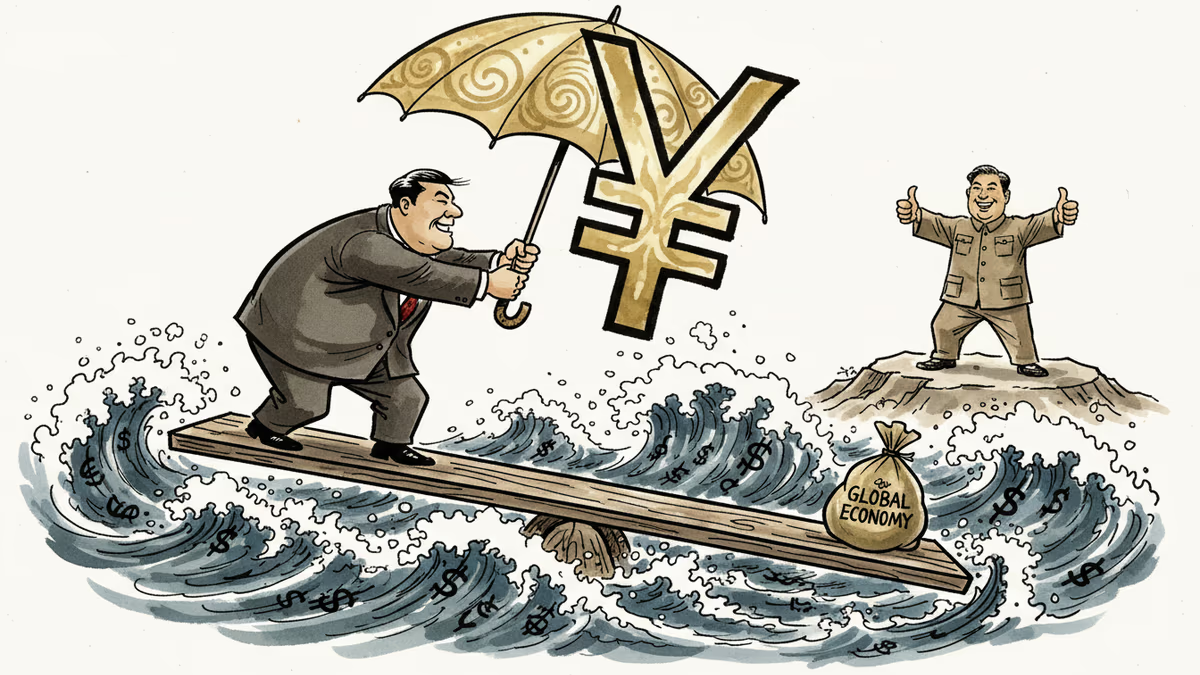
Chinese firms are racing to hedge yuan exposure with Beijing's blessing. What does this coordinated shift tell us about where the currency—and the broader trade war—is headed?
Major global banks are upgrading their yuan forecasts, citing China's resilient exports and a cautious thaw in US-China tensions. Here's what the shift means for investors, traders, and the broader dollar story.
Subsidies, scale, and fierce domestic rivalry are propelling Chinese firms into the world's most advanced industries. Who wins, who loses, and what comes next?
Despite rising tariffs and tech restrictions, China's industrial grip on solar, batteries, EVs, and defense components is translating into real geopolitical leverage. Here's what that means for investors and policymakers.
Chinese firms are racing to hedge yuan exposure with Beijing's blessing. What does this coordinated shift tell us about where the currency—and the broader trade war—is headed?
Thoughts
Share your thoughts on this article
Sign in to join the conversation