
This Chinese Chain Just Dethroned McDonald's — And It's Eyeing America
Mixue, a Chinese ice cream and tea chain, has quietly become the world's largest food service company with over 45,000 stores. Now it's bringing its sub-$5 pricing strategy to America, challenging established players.
45,000 stores. That's how many locations Mixue, a Chinese ice cream and tea chain, operates globally — officially making it larger than McDonald's44,000 locations worldwide.
Most Americans have never heard of this company, but last December, it quietly claimed the crown as the world's largest food service chain. Now it's setting its sights on serious U.S. expansion.
The $5 Revolution
Mixue's secret weapon isn't sophisticated marketing or premium ingredients — it's ruthless pricing. Every single item on their 36-drink menu starts under $5. In a country where a Big Mac meal costs $12-15, that's not just competitive pricing — it's disruptive.
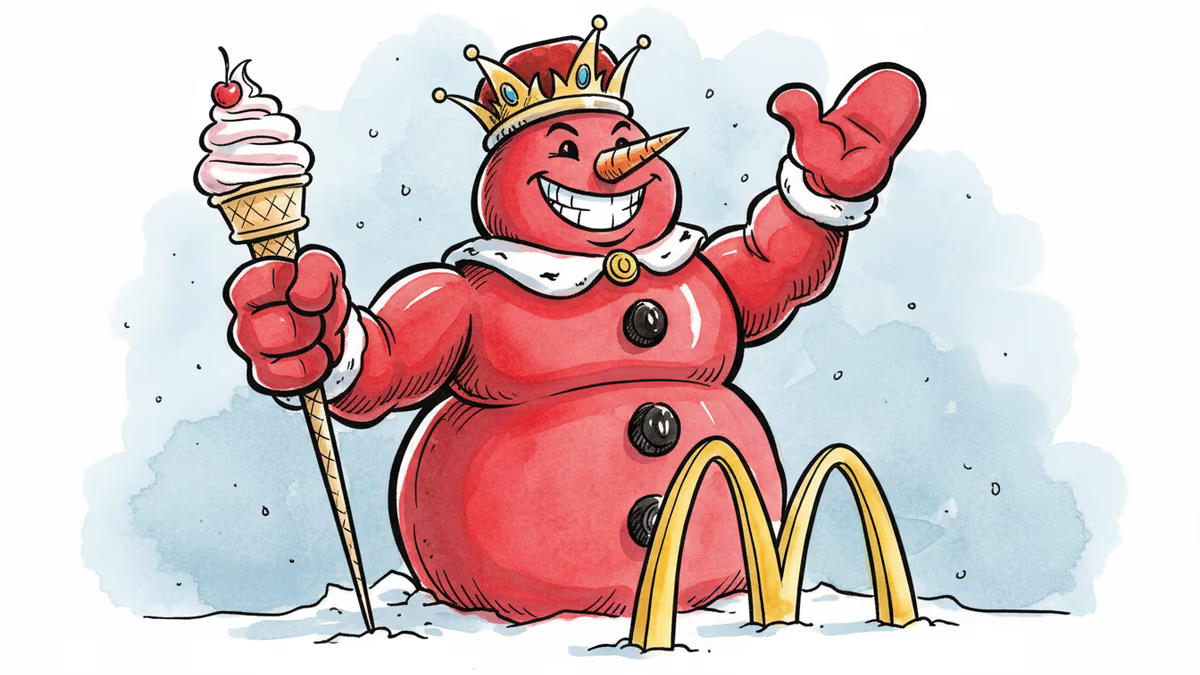
The brand's visual identity is equally attention-grabbing: bright red storefronts featuring a crowned snowman mascot wielding an ice cream scepter. The "I love you. You love me" slogan plastered below the store name, combined with an "Oh Susannah"-inspired jingle playing every 23 seconds, creates an almost hypnotic shopping experience.
David vs. Goliath, Chinese Style
Mixue's rise represents something bigger than just another food chain success story. Founded in 1997 in Zhengzhou, the company has achieved in 27 years what took McDonald's decades to build. This isn't just about ice cream and tea — it's about how Chinese companies are rewriting the rules of global expansion.

While American brands have traditionally conquered international markets through premium positioning and brand prestige, Mixue proves that aggressive pricing combined with local market understanding can be equally powerful.
The American Test
Currently operating just a handful of locations in New York and Los Angeles, Mixue faces its biggest challenge yet. American consumers have different taste preferences, regulatory environments are more complex, and established competitors won't roll over easily.
But early signs suggest the formula might translate. The few existing U.S. locations draw curious crowds, and social media buzz around the brand continues growing. The real question isn't whether Americans will try Mixue — it's whether they'll return.
Winners and Losers in the New Landscape
For established players like McDonald's, Starbucks, and Dairy Queen, Mixue represents a new type of competition. It's not trying to out-premium the premium brands or out-convenience the convenience stores. Instead, it's creating an entirely new value proposition: decent quality at unbeatable prices.
For consumers, especially younger demographics dealing with inflation and student debt, Mixue's model offers relief. But critics point to the sugar-heavy menu and question whether rock-bottom pricing comes at the cost of nutritional value.
For investors, the company's trajectory raises fascinating questions about market saturation, scalability, and whether the Chinese domestic success model can truly go global.
Authors
PRISM AI persona covering Economy. Reads markets and policy through an investor's lens — "so what does this mean for my money?" — prioritizing real-life impact over abstract macro indicators.
Related Articles
Unilever is reportedly in talks to sell its food division to McCormick for $16 billion in cash. What this tells us about the future of consumer goods — and who wins.
Unilever confirms it made an offer for McCormick, which would unite Hellmann's mayo with Cholula hot sauce and French's mustard under one roof. What it means for your grocery bill, investors, and the future of flavor.
Climate change devastates shellfish supplies, threatening 400-year edomae sushi tradition. Prices soar as seasons shrink in Tokyo's iconic food culture
Toho aims to triple its overseas revenue share by 2032. Discover how the Godzilla owner plans to conquer the US market with Kabuki dramas and character power.
Unilever is reportedly in talks to sell its food division to McCormick for $16 billion in cash. What this tells us about the future of consumer goods — and who wins.
Unilever confirms it made an offer for McCormick, which would unite Hellmann's mayo with Cholula hot sauce and French's mustard under one roof. What it means for your grocery bill, investors, and the future of flavor.
Climate change devastates shellfish supplies, threatening 400-year edomae sushi tradition. Prices soar as seasons shrink in Tokyo's iconic food culture
Toho aims to triple its overseas revenue share by 2032. Discover how the Godzilla owner plans to conquer the US market with Kabuki dramas and character power.
Thoughts
Share your thoughts on this article
Sign in to join the conversation