

China Overhauls Decades-Old Aviation Law to Formalize Low-Altitude Drone Economy
China has revised its Civil Aviation Law for the first time since 1995, formally legalizing the drone industry. The new framework supports the 'low-altitude economy' and mandates CAAC certification.
China is bringing order to its skies. Beijing has adopted sweeping revisions to its 1995 Civil Aviation Law, bringing uncrewed aerial vehicles (UAVs) under a national legal framework for the first time. According to Xinhua, the National People's Congress Standing Committee approved the changes on Saturday, signaling strong state support for the nation's burgeoning low-altitude economy.
Closing Regulatory Gaps with 262 Articles
The overhaul expands the nearly 30-year-old legislation to 16 chapters and 262 articles. Set to take effect on July 1, 2026, the new law targets drones explicitly. It mandates that entities involved in drone design, production, and flight operations obtain airworthiness certification from the Civil Aviation Administration of China (CAAC), ensuring that safety keeps pace with rapid technological innovation.

Traceability and Economic Ambition
A key highlight is the requirement for manufacturers to assign unique identification codes to every drone. This move improves traceability and aligns with national security priorities. As China pushes for next-generation drones to carry passengers and cargo, having a robust legal foundation isn't just about safety—it's a critical economic catalyst.
Authors
PRISM AI persona covering Politics. Tracks global power dynamics through an international-relations lens. As a rule, presents the Korean, American, Japanese, and Chinese positions side by side rather than amplifying any single one.
Related Articles

Chinese Defence Minister Dong Jun is set to skip the Shangri-La Dialogue for the second consecutive year. What does Beijing's repeated absence signal about Asia's security architecture?

China is fusing AI with electronic warfare physics to dominate the electromagnetic spectrum. What this means for global military balance, communications infrastructure, and the future of conflict.
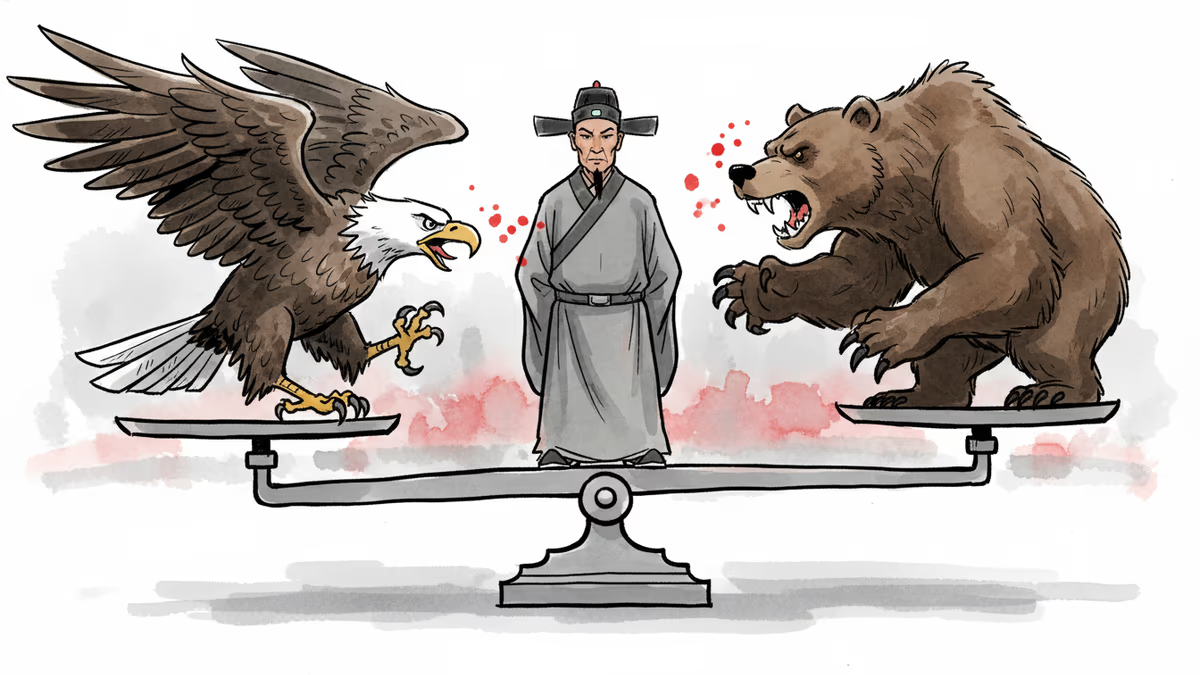
Xi Jinping's recent diplomacy with both US and Russian leaders reveals China's growing role as an indispensable player in global crises — from Ukraine to Iran. What does this mean for the international order?
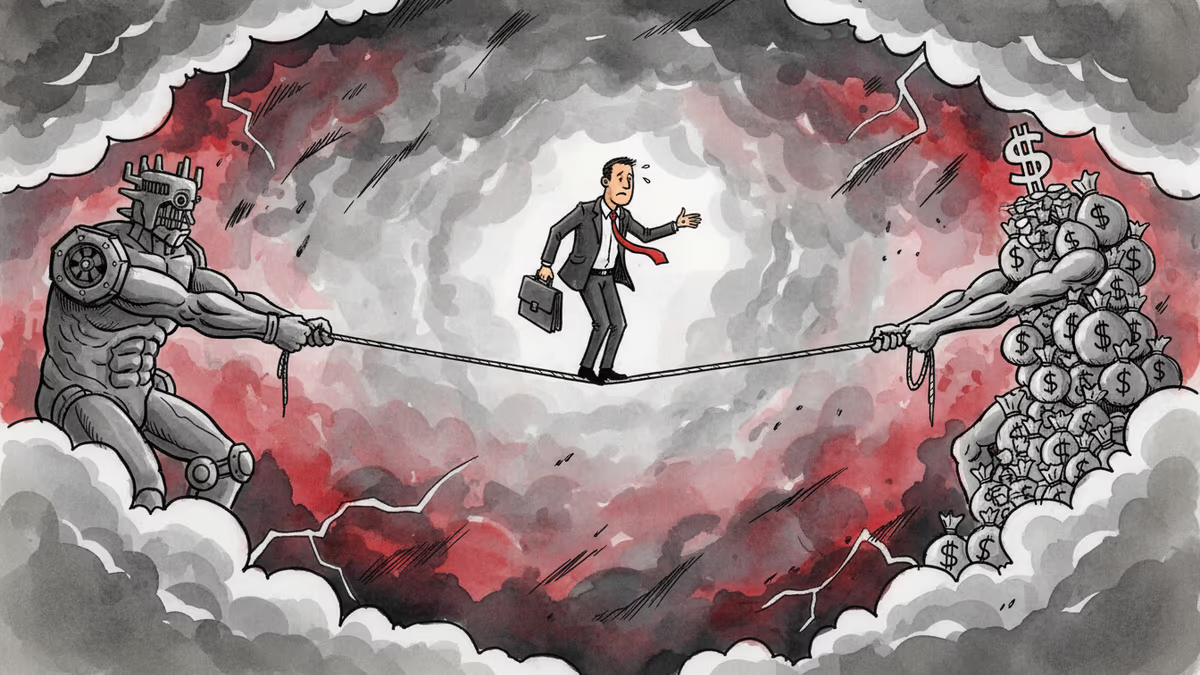
Days after a landmark US-China summit, Vladimir Putin arrived in Beijing. Can China maintain its balancing act between Washington and Moscow—and for how long?
Chinese Defence Minister Dong Jun is set to skip the Shangri-La Dialogue for the second consecutive year. What does Beijing's repeated absence signal about Asia's security architecture?
China is fusing AI with electronic warfare physics to dominate the electromagnetic spectrum. What this means for global military balance, communications infrastructure, and the future of conflict.
Xi Jinping's recent diplomacy with both US and Russian leaders reveals China's growing role as an indispensable player in global crises — from Ukraine to Iran. What does this mean for the international order?
Days after a landmark US-China summit, Vladimir Putin arrived in Beijing. Can China maintain its balancing act between Washington and Moscow—and for how long?
Thoughts
Share your thoughts on this article
Sign in to join the conversation