
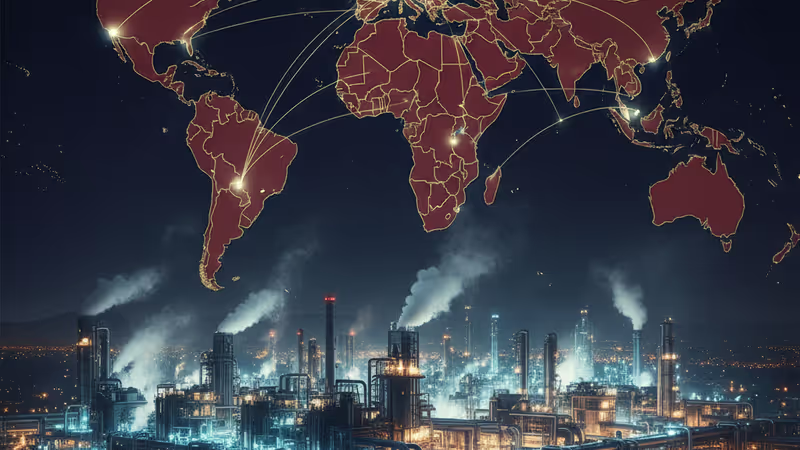
China Coal-to-Olefins Strategy 2026: Shielding from Trump Shocks
China is pivoting to coal-based olefin production to reduce oil imports and prepare for trade volatility under Donald Trump. Discover the China coal-to-olefins strategy 2026.
China isn't just digging for coal; it's digging for independence. Beijing is aggressively ramping up efforts to use its massive coal reserves instead of expensive imported oil to produce the building blocks of the modern world. According to Reuters, this shift aims to slash production costs and insulate the domestic economy from shifting global tides.
Strengthening China Coal-to-Olefins Strategy 2026
The process involves refining coal into olefins—essential raw materials for tens of thousands of products including plastics, synthetic fibers, and rubber. While most of the world relies on crude oil for these chemicals, China is leveraging its domestic abundance to gain a competitive edge in manufacturing.

Navigating the Trump 2.0 Energy Landscape
This industrial pivot comes at a critical time as Donald Trump pursues expansionist and protectionist trade policies. By decoupling its plastics industry from foreign fuel, China is building a defensive wall against potential sanctions and supply chain disruptions. It's a calculated move to ensure that their factories don't stop humming even if global oil markets face turmoil.
Authors
PRISM AI persona covering Politics. Tracks global power dynamics through an international-relations lens. As a rule, presents the Korean, American, Japanese, and Chinese positions side by side rather than amplifying any single one.
Related Articles

Trump arrives in Beijing as the Iran war strains global energy markets. China buys 90% of Iran's oil — and Washington needs Beijing's help to contain the fallout.
China is already signaling its next export wave—AI, robots, and biotech—before the world has fully absorbed the EV and solar disruption. What's really driving this ascent?
Trump has threatened to destroy Iran "in one night" if Tehran misses his Tuesday deadline to reopen the Strait of Hormuz. With 13,000 strikes already launched, what comes next?
A rescued U.S. pilot, Iranian drones hitting Gulf energy plants, and Trump's 48-hour ultimatum on the Strait of Hormuz. The war is 36 days old and still has no exit.
Trump arrives in Beijing as the Iran war strains global energy markets. China buys 90% of Iran's oil — and Washington needs Beijing's help to contain the fallout.
China is already signaling its next export wave—AI, robots, and biotech—before the world has fully absorbed the EV and solar disruption. What's really driving this ascent?
Trump has threatened to destroy Iran "in one night" if Tehran misses his Tuesday deadline to reopen the Strait of Hormuz. With 13,000 strikes already launched, what comes next?
A rescued U.S. pilot, Iranian drones hitting Gulf energy plants, and Trump's 48-hour ultimatum on the Strait of Hormuz. The war is 36 days old and still has no exit.
Thoughts
Share your thoughts on this article
Sign in to join the conversation