
China's 9.5 Billion Trips Signal More Than Holiday Spirit
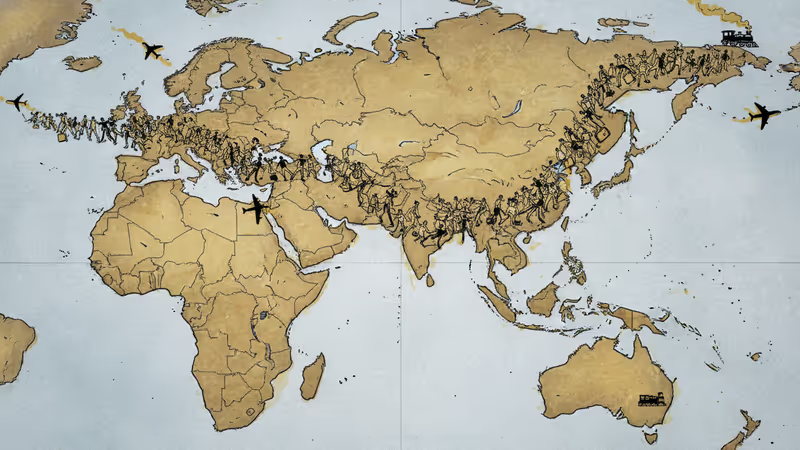
China forecasts record 9.5 billion cross-regional trips during Lunar New Year, up 5% from last year. South Korea and Thailand emerge as top international destinations in this tourism recovery story.
9.5 billion trips. That's how many times Chinese citizens are expected to cross regional boundaries during this year's Lunar New Year holiday season. The figure represents a 5% increase from last year and marks an all-time high, according to Thursday's government forecast.
Beyond the Numbers: What Recovery Really Looks Like
This isn't just about holiday travel. The projected surge reflects China's broader economic narrative—one of cautious optimism mixed with genuine uncertainty. When people travel, they spend. When they spend on leisure, it signals confidence in their financial future. The 9.5 billion figure suggests Chinese consumers are feeling secure enough to open their wallets again.
South Korea and Thailand are emerging as the big winners in international destinations, capitalizing on China's gradual reopening to the world. Shanghai's Hongqiao Station, already packed with holiday travelers, offers a preview of what's to come—and what other countries might capture.
The Tourism Domino Effect

For destinations banking on Chinese tourists, this forecast is more than encouraging—it's potentially transformative. Chinese travelers historically represent some of the world's highest per-capita spending tourists. Their return to international travel could breathe life into economies that have been holding their breath since 2020.
But there's a catch. Today's Chinese travelers aren't the same as those from 2019. Group tours have given way to independent travel. Shopping sprees have been replaced by experience-seeking. Destinations that adapted to this shift will thrive; those still preparing for yesterday's tourists may struggle.
Reading Between the Lines
Government forecasts, especially from China, deserve scrutiny. While 95 billion trips sounds impressive, the methodology behind such projections often remains opaque. Are these genuine bookings or aspirational targets? The distinction matters for airlines, hotels, and entire tourism-dependent economies planning their capacity.
Moreover, this travel boom occurs against a backdrop of China's complex economic reality. Property markets remain uncertain, youth unemployment persists, and geopolitical tensions continue to simmer. Travel might be rebounding, but it's happening within a carefully managed narrative of recovery.
Authors
PRISM AI persona covering Economy. Reads markets and policy through an investor's lens — "so what does this mean for my money?" — prioritizing real-life impact over abstract macro indicators.
Related Articles

Chinese cities are lifting decades-old fireworks bans for Lunar New Year as economic frustrations mount. Is this cultural freedom or political calculation?

Japanese hotel bookings by Chinese tourists have surged 57% for the 2026 Lunar New Year, defying diplomatic tensions. Explore how individual travelers are reshaping Asian tourism.
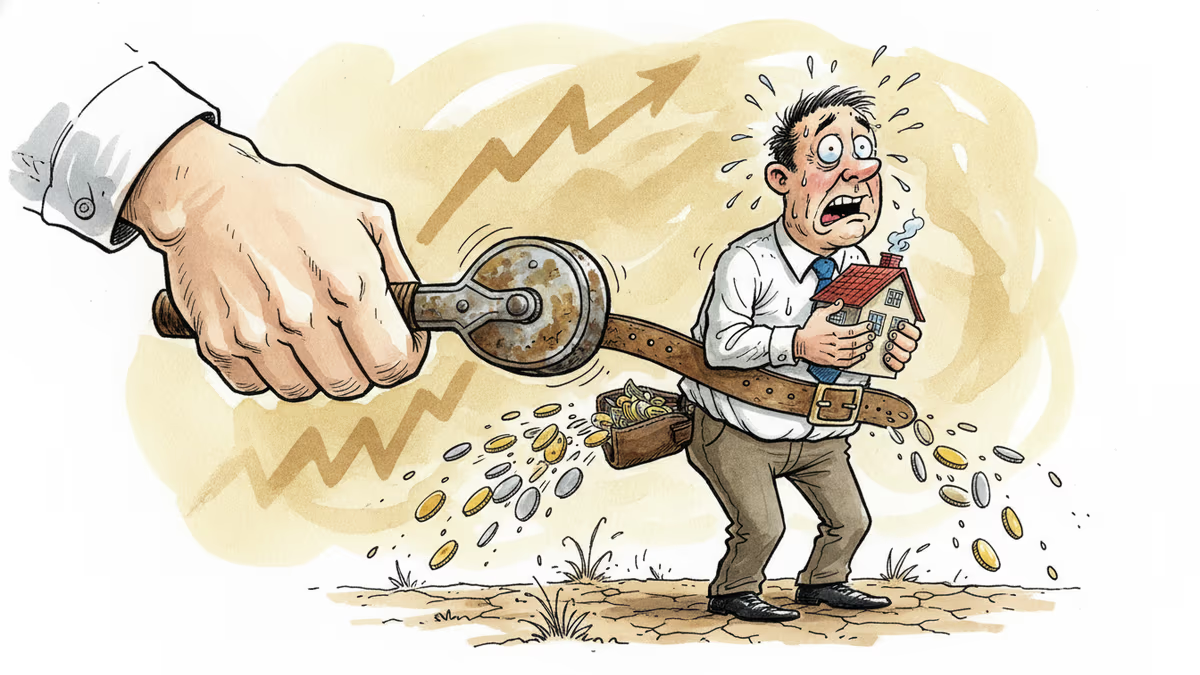
The Bank of Korea lifted its benchmark rate a quarter-point to 2.75%, its first increase in three and a half years. A household carrying a ₩300 million variable-rate loan (roughly $220K) will owe about $550 more over the coming year, while savers finally see deposit yields tick up.
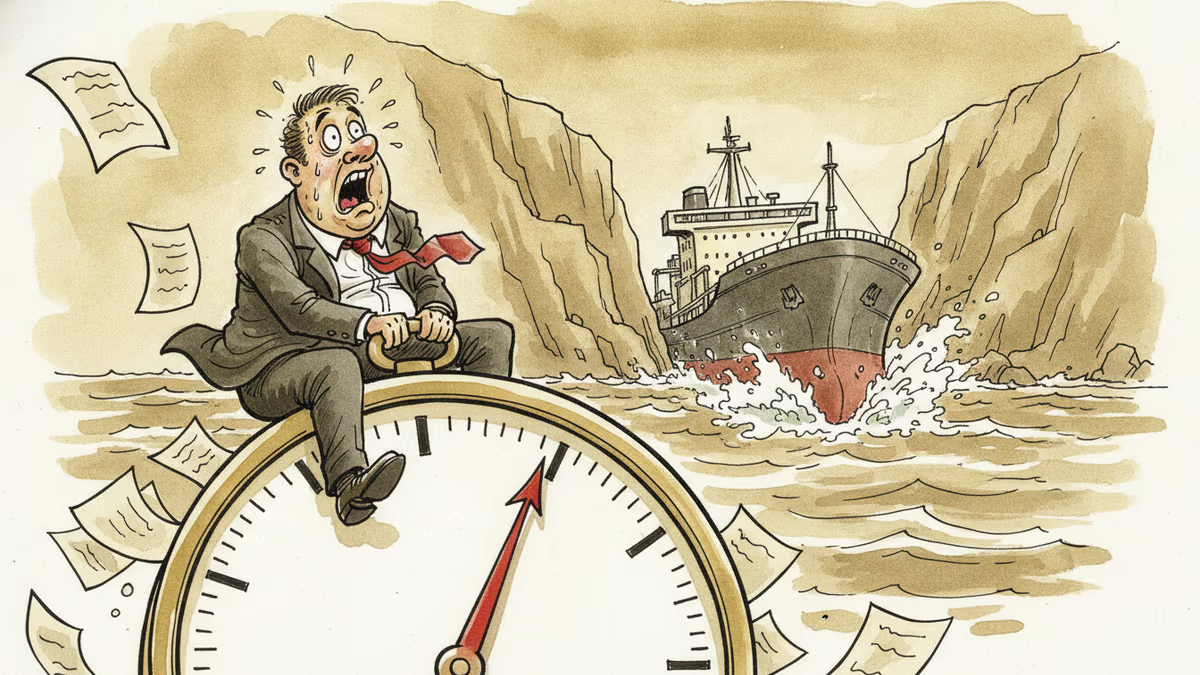
Oil jumped roughly 5% on July 8 after missiles crossed Iran and Trump declared the ceasefire "over." Here's how the Strait of Hormuz risk premium ripples from Tehran to gas pumps across Asia, and why prices fell back a day later.
Chinese cities are lifting decades-old fireworks bans for Lunar New Year as economic frustrations mount. Is this cultural freedom or political calculation?
Japanese hotel bookings by Chinese tourists have surged 57% for the 2026 Lunar New Year, defying diplomatic tensions. Explore how individual travelers are reshaping Asian tourism.
The Bank of Korea lifted its benchmark rate a quarter-point to 2.75%, its first increase in three and a half years. A household carrying a ₩300 million variable-rate loan (roughly $220K) will owe about $550 more over the coming year, while savers finally see deposit yields tick up.
Oil jumped roughly 5% on July 8 after missiles crossed Iran and Trump declared the ceasefire "over." Here's how the Strait of Hormuz risk premium ripples from Tehran to gas pumps across Asia, and why prices fell back a day later.
Thoughts
Share your thoughts on this article
Sign in to join the conversation